UV Damage to Fences in Los Angeles: What It Does and How to Prevent It
By BabyLoveGrowth AI

Ultraviolet (UV) light is the invisible part of sunlight that breaks down paint, stain, plastics and wood fibers, and Los Angeles gives your fence a lot of it. On a west-facing wall in Brentwood or an open driveway in Encino, the finish takes the hit first, and the material underneath follows once the finish fails. The best defense is choosing materials and finishes built for sun from the start: powder-coated aluminum, coated steel and wrought iron are the materials we install for exactly this reason, and a finish that is maintained properly keeps its color and its protection.
This guide explains what UV does to each material, how to tell it apart from other kinds of wear, how to protect what you already own, and when repair stops making sense.
TL;DR
- UV does not just fade color. It breaks down the finish, and on metal a failed finish lets rust start, on wood it dries and cracks the surface, and on vinyl it causes yellowing and brittleness.
- Powder-coated aluminum and properly coated steel or wrought iron are the strongest choices for Los Angeles sun, because the protection is a baked-on finish rather than a thin paint layer.
- Chalky residue, uniform fading on the sun side and fine surface cracks point to UV. Rust bubbles at joints and bottoms point to moisture or coating failure.
- Finishes need upkeep: paint metal only in mild, dry conditions, and reseal wood on a schedule.
- Gate hardware, motors and keypads sit in the same sun as the fence, so plan for them together.
Table of Contents
- What Los Angeles sun does to a fence
- How each material handles UV
- How to tell UV damage from other wear
- Protecting a fence or gate finish
- Repair or replace?
- What a sun-smart fence looks like in practice
- Perspective
- Plan your fence or gate with the sun in mind
- FAQ
- Sources
What Los Angeles sun does to a fence
UV radiation breaks the chemical bonds in organic materials, which is why color is the first thing to go. Pigments fade, clear coats turn hazy, and the binder that holds paint together starts to powder. That powder is the chalky film you wipe off with your hand.
Heat adds to the problem. Metal expands in the afternoon and contracts at night, and that cycle flexes joints and finishes every day. A dark fence in full sun on a hillside in Bel Air or Sherman Oaks can get far hotter than the air around it, so coatings age faster than the weather report suggests.
Three stages show up on most fences:
- Color shift. Dark finishes fade lighter, light finishes yellow or dull. Nothing is structurally wrong yet.
- Surface breakdown. The finish chalks, peels or crazes into fine cracks.
- Material damage. The base material is exposed. Metal rusts, wood checks and splits, plastics turn brittle.
The goal is to stop at stage one. Everything past it costs real money.
Coastal homes add a second force. If your property is near Santa Monica or the Westside shoreline, sun and salt air work together on metal, and we cover that in our article on coastal fence corrosion in Los Angeles.
How each material handles UV
Materials fail in different ways. Knowing the pattern helps you choose and helps you read what you are seeing on a fence you already have.
| Material | What UV does | What to expect in LA sun |
|---|---|---|
| Wood (cedar, redwood, pine) | Grays, dries, checks, warps | Needs regular sealing; weathering shows even when maintained |
| Standard vinyl | Yellows, chalks, turns brittle | Light colors hold up better; impact cracks follow brittleness |
| Composite | Pigment fades, surface chalks over time | Better than wood, but color change is the long-term issue |
| Powder-coated aluminum | Minimal color shift with a quality coating | Strong match for sun and heat; no rust |
| Coated steel and wrought iron | Finish can chalk; rust starts where coating fails | Very durable when the coating is intact and touched up |
Wood
Wood contains lignin, the natural glue between fibers, and sunlight degrades it. The surface cells discolor to a weathered gray, and without protection the boards dry, check and cup. Manufacturer guidance for wood fences says a water-repellent finish with a UV stabilizer slows discoloration but does not stop it, and that the same guide recommends cleaning, then resealing, within 90 days of installation and then every year or two.
For a design-forward property in Beverly Hills or Santa Monica, that is a lot of recurring work to keep a clean look.
Vinyl
Standard vinyl yellows and chalks under strong sun, then becomes brittle. Brittle panels crack on impact, and yellowing cannot be reversed, because it is a change in the plastic itself rather than dirt on top. If you are weighing vinyl against other options, our rundown of vinyl fencing alternatives shows what to consider instead.
Composite
Composite lasts longer than wood in the sun, but its pigments can fade and its surface can chalk after extended exposure. Quality varies with how the surface layer is made, so it suits some designs better than others.
Aluminum
Aluminum does not rust, so the only thing sun can touch is the finish. A powder coat is a dry paint powder that is electrostatically applied and baked on, creating a harder shell than brushed or sprayed paint. That is why aluminum is a natural fit for the clean, modern lines that many Los Angeles homeowners want. For the design and installation details, see our aluminum fence installation guide for upscale LA homes.
Steel and wrought iron
Steel and wrought iron bring strength, weight and a custom look. Their weak point is not the sun itself but what happens after the finish ages: once a coating chalks, peels or chips, bare metal meets moisture and rust begins. Heat cycling can also stress welds and joints. A well-applied coating and prompt touch-ups keep these fences going for decades, and our custom fencing work is built around fabricating and finishing steel and iron for that long life.
How to tell UV damage from other wear
Fences get damaged by sun, water, salt, sprinklers, soil and impact. A few checks tell you which one you are looking at.

Look at which side is worse. UV damage is strongest on the faces that get the most direct sun, usually south and west. Damage that follows the ground line, sprinkler overspray or a downspout is moisture.
Rub a clean cloth across the surface. On a sun-aged painted or powder-coated surface, a chalky residue in the color of the fence on the cloth is a classic sign of binder breakdown.
Compare covered and uncovered areas. Look under a hinge, behind a bracket or beneath a post cap. If the hidden color is richer than the exposed color, you are seeing fading.
Check texture. Fine spiderweb cracks across a painted or plastic surface suggest UV. Deep splits along wood grain suggest repeated drying and wetting.
Check for rust. Orange bubbles under paint, or streaks from joints and bottoms of pickets, mean the coating has already failed. That is the stage where sun damage has become a corrosion problem. A cause worth ruling out on any metal fence is soil contact or standing water at the post base.
Check gates separately. Gates move, so they show wear earlier. Sagging, sticking latches and faded keypads or plastic covers can all point to sun and heat working on hardware.
If a fence shows several of these signs at once, a photo set from different times of day is useful to bring to a professional assessment.
Protecting a fence or gate finish
Choose the finish before the fence
Most of the protection you will ever get is decided at purchase. UV resistance built into the material, such as a baked-on powder coat, lasts because it is part of the product rather than a layer you have to renew. For a longer view of how materials compare over time, read how to compare fence material lifespans.
A few choices help in Los Angeles sun:
- Lighter or mid-tone colors show fade and chalking less than very dark colors, and they run cooler.
- Satin or semi-gloss finishes on metal tend to look cleaner than flat finishes as they age.
- Sealed ends and proper drainage keep moisture from joining the sun’s work at the bottoms of pickets and posts. Good fence post installation matters for the same reason.
Maintain what you have
Wash the fence once or twice a year with mild soap and water and a soft brush. Dust and grime hold moisture against the surface and hide early damage. Skip harsh solvents and abrasive pads on powder-coated surfaces.
For wood, plan on cleaning and resealing with a UV-stabilizing product on the schedule the product maker gives, and set expectations: a maintained wood fence will still weather.
Repaint metal in the right conditions
If you touch up or repaint a metal fence, timing matters. Painting guidance says not to paint below 50°F or above 90°F, because direct sun can push metal surface temperatures well above the air temperature. The paint then dries too fast and bubbles. The same guidance points to early morning on a mild, overcast day, with humidity under 85% and no rain expected for 24 hours. In much of Los Angeles, that means late fall through early spring mornings, or the marine-layer hours in coastal areas.

Touch up chips quickly. A small exposed spot of steel is where rust starts.
Do not forget the gate
Automated gates add motors, control boards, sensors, keypads and cables to the sun exposure picture. Housings that sit in full afternoon sun get hot, and plastic components age faster. When we plan gate automation and access control, the placement of operators and keypads is part of the design, not an afterthought.
Repair or replace?
The decision follows the stage of damage.
- Color shift only. Clean, and if the finish is intact, leave it or refresh it. No structural reason to act.
- Chalking or localized peeling on metal. Repair is practical: remove loose coating, treat any rust, prime and repaint in mild weather, or have the section recoated.
- Widespread rust or deep pitting. Individual panels or sections may need replacing, and the cause of moisture exposure should be fixed at the same time.
- Yellowed or brittle vinyl. Yellowing cannot be fixed. Cracked panels can be swapped, but the remaining panels are the same age and share the same condition.
- Gray, split or warped wood. Sanding and resealing can restore sections that are still sound. Boards that have split or warped usually need replacing.
- Sagging gates. Check hinges and post alignment first. If posts have moved or the leaf is distorted, the fix is structural.
If you are replacing more than a quarter or so of a run, it often makes sense to compare a full material change. Our guide to premium fencing for upscale LA homes lays out the options. Also check permit and height rules before you rebuild: in Los Angeles, the front-yard limit can decide what you are allowed to put up, as we explain in our post on the 42-inch rule.
Terrain affects the budget too. Slopes in Studio City, Pasadena or Bel Air change post depth and panel stepping, which we cover in how terrain impacts fence costs.
What a sun-smart fence looks like in practice
Here is a typical decision for a Westside homeowner. A Brentwood property has a 60-foot front run facing west and a driveway gate that sees afternoon sun all year. The old wood fence has grayed and the gate sags.
The sun-smart approach is to pick powder-coated aluminum or coated steel for the fence panels, choose a mid-tone color, specify a gate frame with a baked-on finish, and put the operator and keypad where they are shaded or at least not on the hot west face. The result needs washing, not annual resealing.
The same logic works for a property manager overseeing several upscale homes: finishes that need less recurring work mean fewer service calls and a more consistent look across properties.
Perspective
We design for the sun first, because in Los Angeles it is the one condition every fence faces from day one. A finish that looks perfect at handover but chalks in a few summers is a design failure, not a maintenance chore.
That is why our work centers on aluminum, steel and wrought iron with durable finishes, and why we pair fence design with gate and automation planning rather than treating them as separate jobs. The materials, the coating and the placement of every motor and keypad are decisions made together.
We also build around local rules, including permit requirements and HOA expectations, so the fence you choose for its looks is one you can actually install and keep.
Moin
Plan your fence or gate with the sun in mind
If your fence is fading, chalking or rusting at the joints, or you are planning a new fence or gate in Los Angeles, our team handles fence installation, driveway and pedestrian gates, gate automation and access control. Published ranges on our site are $1,500 to $4,000 for a manual driveway gate and $1,500 to $4,500 for an automatic gate retrofit. Other work is quoted after you describe the property, and our online estimator is the fastest place to start.
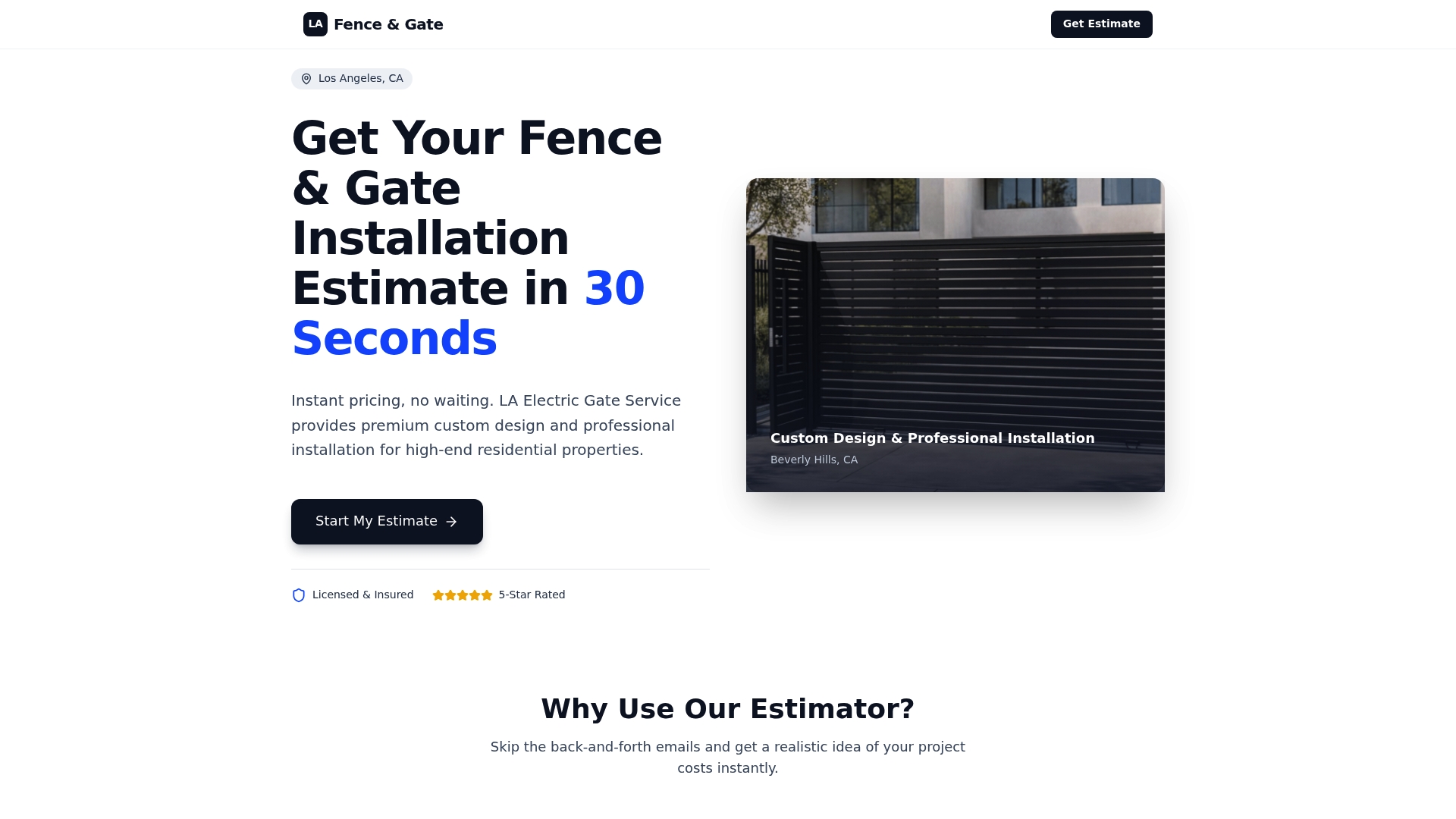
For a gate that sees direct sun, start with our driveway gates page and choose a finish and color that suit the exposure.
FAQ
How long does UV damage take to show on a fence in Los Angeles?
Color shift can appear within a few seasons on wood stain, paint and standard vinyl, especially on south and west faces. Powder-coated aluminum and well-coated steel change far more slowly. Timing depends on the material, the color and the exposure of each side.
Can faded or chalky metal be restored?
Often yes, as long as the metal underneath is sound. The surface is cleaned, loose coating is removed, any rust is treated, and the section is primed and repainted or recoated. Paint in mild, dry conditions, because heat and humidity affect how it cures.
Which fence material handles Los Angeles sun best?
Powder-coated aluminum is a strong choice because it cannot rust and its coating is baked on. Coated steel and wrought iron are also excellent when the finish is kept intact. Lighter or mid-tone colors help keep surfaces cooler and make aging less visible.
Does sun damage affect automated gates?
Yes. Motors, control boxes, keypads and cables sit in the same sun and heat as the fence. Placing equipment out of direct afternoon sun and choosing durable housings and finishes helps them last. This is easiest to plan when the gate and fence are designed together.
Do I need a permit to replace a sun-damaged fence in Los Angeles?
It depends on height, location and what you are replacing. Front-yard height limits and other rules can apply even to like-for-like replacements, and HOAs may have their own requirements. Our guide on choosing a fence contractor in Los Angeles shows what to ask about permits before work starts.