Why Upgrade Residential Fences: A Homeowner's Guide
By BabyLoveGrowth
Why Upgrade Residential Fences: A Homeowner’s Guide
Your fence is one of the first things people notice about your property, yet most homeowners only think about it when something breaks. Understanding why upgrade residential fences decisions matter goes well beyond replacing rotted boards. A well-planned fence upgrade improves your home’s security, transforms its curb appeal, and adds measurable market value. For homeowners in Los Angeles, Beverly Hills, Santa Monica, and surrounding neighborhoods, it also means navigating local permit requirements, California’s unique climate stressors, and a real estate market where first impressions carry serious weight.
Table of Contents
- Key takeaways
- Why upgrade residential fences for security
- Curb appeal and the visual case for upgrading
- Cost considerations and long-term savings
- When the timing is right to upgrade
- Comparing materials for Los Angeles homes
- My perspective on why this upgrade matters more than most
- Plan your fence upgrade with Fence-gate-estimator
- FAQ
Key takeaways
| Point Details | |
| Security goes high-tech | Smart gate automation and durable materials provide layered protection for families, children, and pets. |
| Curb appeal drives value | A new fence can increase property value by nearly 10%, making it one of the strongest ROI home upgrades. |
| Material choice matters | Structural vinyl and aluminum outperform wood in California’s drought, UV, and wildfire conditions. |
| Timing saves money | Replacing a fence before hidden rot spreads avoids compounded repair costs and safety hazards. |
| Local compliance is non-negotiable | LA permit rules and HOA guidelines affect height, style, and placement before any installation begins. |
Why upgrade residential fences for security
Security is the most cited reason homeowners finally commit to a fence upgrade, and modern options deliver far more than a wooden board between you and the street.
Today’s high-performance fence materials, like structural-grade vinyl and architectural aluminum, significantly outperform traditional cedar and pressure-treated pine. According to The 2026 Residential Perimeter Report, these materials are rapidly replacing older wood options in California due to better resistance to drought, UV exposure, and wildfire stress. That matters for security too. A fence that warps, cracks, or loses posts creates physical entry points that a solid aluminum or vinyl panel will not.
Beyond materials, fence design choices directly affect how secure your perimeter actually is:
- Height and spacing: Taller panels with minimal horizontal footholds discourage climbing. Six-foot solid privacy panels are a common choice in neighborhoods like Encino and Sherman Oaks where street-level visibility is a concern.
- Structural integrity: Reinforced posts set in concrete resist forced entry far better than surface-mounted alternatives.
- Gate hardware: Upgraded gate latches with keyed locks or electronic keypads close the most common vulnerability in any fence line.
- Smart automation: Fence automation features, including video intercoms, remote access control, and automatic locking, allow you to monitor and manage entry from your phone.
Integrating your fence upgrade with energy-efficient security systems creates a layered approach that addresses both physical and electronic access control. For families with children or pets, a secure perimeter also means containment. Experts confirm that smart gate automation combined with sturdy materials provides optimized protection for everyday household safety.
Pro Tip: If you have a corner lot or a sloped property in areas like Bel Air or Pasadena, ask your installer about post-depth requirements. Shallow posts in hillside soil are a leading cause of fence failure during wind events.
Curb appeal and the visual case for upgrading
A fence is the frame around your home’s portrait. The wrong one cheapens everything behind it. The right one pulls the entire property together in a way that feels intentional and polished.
Here is a practical sequence for making fence upgrades visually count:
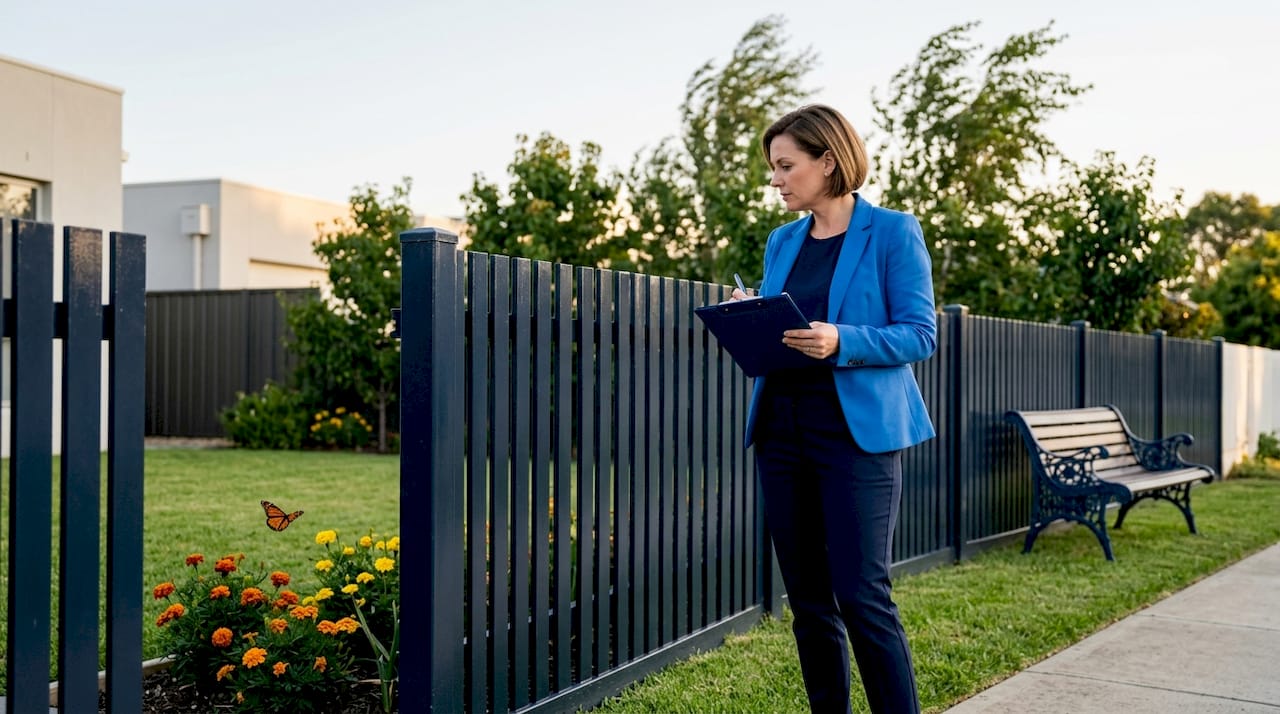
- Start with material and color. Landscape designers consistently point out that dark stains and slatted panels make gardens appear larger and homes look more upscale. A charcoal or matte black aluminum fence against a white stucco exterior is a combination that reads as premium with very little additional work.
- Match your architectural style. Spanish Colonial and Mediterranean homes common in West Hollywood and Culver City pair well with wrought iron or ornamental aluminum. Modern minimalist homes in Santa Monica suit horizontal slatted wood or powder-coated steel panels.
- Add depth with integrated planting. A living green wall or climbing jasmine along a solid fence panel softens the boundary while adding texture. This is particularly effective on narrow urban lots where hard surfaces dominate.
- Replace or upgrade gate hardware. Decorative hinges, custom finials, and brushed metal hardware cost relatively little per linear foot but dramatically change the impression at the entry point.
- Consider lighting. Low-voltage path and post-cap lighting along a new fence creates nighttime curb appeal that photographs well and impresses buyers if you ever list the property.
The financial case is real. A new fence can boost curb appeal and add nearly 10% to property value, according to data confirmed by multiple Los Angeles real estate agents. That return places fence upgrades alongside kitchen and bathroom improvements as one of the more reliable home investment categories.
Pro Tip: Before choosing a fence color, hold a paint chip or powder-coat sample against your home’s exterior in both morning and afternoon light. Colors shift dramatically in Southern California’s intense sun, and what looks sharp in the showroom can wash out or clash by midday.
Cost considerations and long-term savings
Fence upgrade costs in Los Angeles are higher than national averages. Labor rates, permit fees, and terrain complexity all push the numbers up. But the long-term math often favors upgrading sooner rather than later.
Here is how typical materials compare on cost and durability for LA-area installations:
| Material Avg. cost per linear foot (installed) Maintenance level Lifespan | |||
| Pressure-treated wood | $18–$28 | High (annual sealing, rot repair) | 10–15 years |
| Structural vinyl | $28–$40 | Low (occasional cleaning) | 25–30 years |
| Architectural aluminum | $35–$55 | Very low (no rust, no painting) | 30+ years |
| Composite | $30–$50 | Low | 20–25 years |
The pattern is clear. Homeowners who invest more upfront in quality materials spend less over a decade on repairs compared to those who choose the cheapest option initially. A wood fence that costs $20 per linear foot and requires repainting, board replacement, and post repair every few years will exceed the lifetime cost of a $45 per linear foot aluminum fence that needs almost nothing.
Additional financial factors to plan for:
- Permit fees: Los Angeles requires permits for most fence installations above a certain height. Budget between $150 and $500 depending on project scope and your city’s fee schedule.
- Terrain surcharges: Sloped lots in hillside communities like Brentwood or Glendale add labor time and material costs. You can review terrain-related cost factors specific to LA before budgeting.
- Resale timing: If you plan to sell within five years, a new fence often pays back close to its full cost in faster sales and stronger offers.
When the timing is right to upgrade
Most homeowners wait too long. They notice a leaning post or a split board and patch it, not realizing the damage runs deeper.
Hidden wood rot is the most dangerous pattern in aging fences. Moisture weakens fence structures internally before surface signs appear, meaning a fence that looks 70% fine can be structurally compromised throughout. Hidden rot often goes undetected until boards start falling or a gate no longer closes properly.
Watch for these specific signs that replacement beats repair:
- Posts that move when pressed by hand. Ground-level rot has compromised the anchor.
- Boards that feel soft or spongy. Moisture has entered the wood grain and will spread.
- Gaps wider than two inches at ground level. A child or small pet can exit the yard without warning.
- Rust bleeding from fasteners. In LA’s coastal air near Santa Monica or Marina del Rey, salt moisture accelerates metal corrosion in older wood fences.
- Fence sections leaning more than five degrees. Wind resistance is now significantly reduced.
Lifestyle changes also create clear upgrade triggers. Adding a dog, having a toddler, building an ADU, or converting to a pool property all increase the functional demands on your perimeter fence. Permit and HOA regulations in Los Angeles also change occasionally, so a fence installed 15 years ago may no longer meet current code. Checking compliance before a real estate transaction is far less stressful than discovering a violation during escrow.
Comparing materials for Los Angeles homes
California’s environment is genuinely demanding for outdoor structures. Drought cycles dry and crack wood. UV intensity bleaches and degrades finishes. Wildfire risk in the hills around Pasadena, La Cañada Flintridge, and Burbank creates an entirely different set of material concerns.
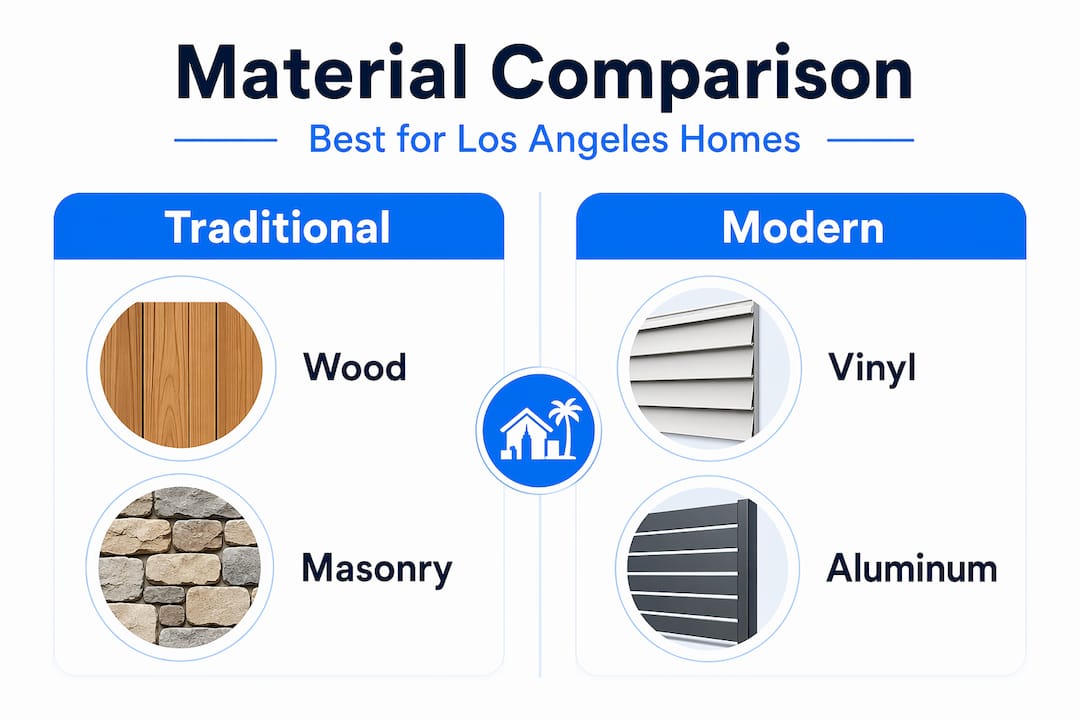
Here is a direct comparison of how major materials perform against LA-specific conditions:
| Material UV resistance Fire resistance Wind performance Water resistance | ||||
| Pressure-treated wood | Low | Low | Moderate | Low |
| Structural vinyl | High | Moderate | Moderate | High |
| Architectural aluminum | High | High | High | High |
| Composite | High | Moderate | Moderate | High |
| Wrought iron | Moderate | High | High | Low (rusts) |
Structural vinyl and aluminum lead the table in California’s conditions. Aluminum, in particular, has become the material of choice for upscale LA neighborhoods because it requires no painting, never rusts, and holds up through decades of sun and wind without degrading. Shadowbox and mesh designs also perform better in high-wind zones common in coastal and canyon-adjacent areas. For homeowners near the coast or in fire-adjacent hillside zones, the gap between wood and non-combustible materials is not just aesthetic. It is a meaningful risk reduction. You can explore aluminum installation specifics for LA homes to understand fabrication details and finish options before committing to a material.
My perspective on why this upgrade matters more than most
I have seen hundreds of homeowners treat their fence as an afterthought, then regret it at the worst possible moment. A fence that fails during a wind event, or one that turns away a potential buyer at the curb, costs far more than a proactive upgrade would have.
What strikes me most is how underestimated the daily value of a good fence really is. It is not just about security or aesthetics in some abstract sense. It is the peace of mind of knowing your child cannot slip out of the yard unnoticed. It is the satisfaction of pulling into your driveway and seeing a property that looks cared for. These things add up in quality of life ways that no renovation calculator captures.
My honest advice on material choice: do not let upfront cost be your primary filter. I have watched homeowners choose a budget wood fence twice in ten years and spend more in total than if they had chosen aluminum from the start. The savings are real, but only if you commit to quality the first time.
Contractor selection matters just as much as material. Ask for proof of licensing, pull permits properly, and do not skip the post depth conversation. A beautiful fence installed incorrectly will fail prematurely regardless of what it is made of. In Los Angeles, where terrain, coastal air, and wildfire proximity all create real stressors, quality workmanship is not a luxury. It is what makes the investment last.
— Moin
Plan your fence upgrade with Fence-gate-estimator
Ready to move from planning to action? Fence-gate-estimator gives Los Angeles homeowners an immediate, accurate cost estimate based on your specific property size, preferred materials, and design features.
Whether you are budgeting for custom fencing solutions tailored to your lot’s dimensions, exploring automated driveway gate options, or comparing pedestrian entry configurations, the platform uses current local material and labor rates to build transparent cost breakdowns. You can also add pedestrian gate options and gate automation features directly to your estimate. The tool accounts for LA’s permit considerations and terrain variables that generic national calculators simply miss. Get your instant estimate today and go into contractor conversations with real numbers, not guesswork.
FAQ
How much does a residential fence upgrade cost in Los Angeles?
Costs in Los Angeles typically range from $18 to $55 per linear foot installed, depending on material, with aluminum and vinyl at the higher end. Permit fees, terrain complexity, and gate additions increase the total.
Does upgrading a fence increase home value?
Yes. A new fence can increase property value by nearly 10%, making it one of the stronger ROI home improvements, particularly in competitive LA real estate markets.
What fence material lasts longest in California?
Architectural aluminum and structural-grade vinyl consistently outperform wood in California’s UV, drought, and wildfire conditions, with aluminum exceeding 30 years of functional life with minimal maintenance.
Do I need a permit to replace my fence in Los Angeles?
Most fence replacements in LA that exceed a certain height require a city permit, and HOA communities may have additional style and dimension restrictions. Always verify compliance before starting work to avoid costly rework.
When should I replace rather than repair my fence?
Replace rather than repair when posts move under hand pressure, boards feel soft or spongy, or sections lean visibly. Hidden rot spreads internally before surface damage becomes obvious, making early replacement the more cost-effective choice.
Recommended
- Expert aluminum fence installation guide for upscale LA homes | LA Electric Gate Service
- Fence & Gate Installation Cost Calculator Los Angeles
- Custom fence components: build luxury, security, and style in LA | LA Electric Gate Service
- Fence post installation in Los Angeles: 5 key essentials | LA Electric Gate Service