Zinc Fails in 18–36 Months on Los Angeles Coastal Fences
By BabyLoveGrowth AI
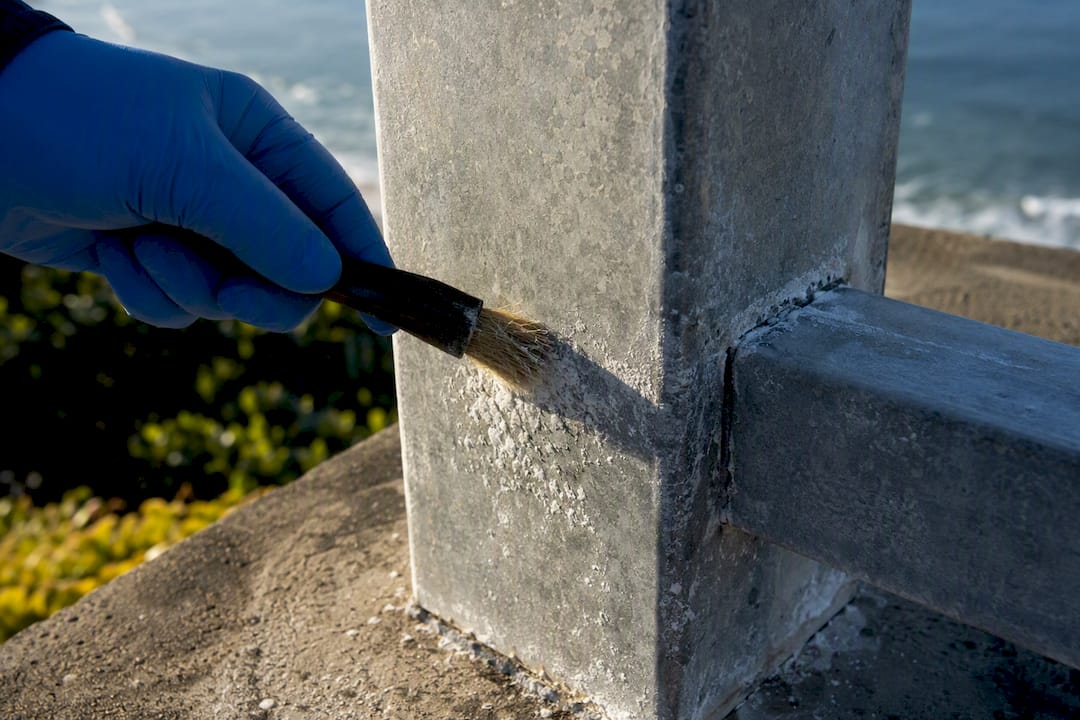
If your Los Angeles property sits within about 2 miles of the ocean, treat your fence as a coastal install. Swap zinc-plated hardware for 316 stainless or marine-grade aluminum now, hose down sheltered corners and post bases this weekend, and run an instant local estimate before you call a contractor. Waiting rarely saves money. It just moves the repair from “hardware swap” to “full rebuild.”
TL;DR:
- Zinc-plated hardware fails within 18 to 36 months near the coast, while stainless steel or marine-grade aluminum typically last over a decade with routine rinsing.
- Installing stainless fasteners, avoiding dissimilar metals, and sealing drilled holes significantly reduce rust and corrosion in salt-air environments.
- Rinsing exposed surfaces every 2 to 3 months and inspecting fasteners annually can add years to the lifespan of coastal fences at minimal cost.
- Retrofits only replace hardware if the posts and structure are solid, but severe pitting or leaning posts require full fence replacement with marine-grade materials.
- Budget considerations should prioritize higher-quality, moveable parts and hardware, with a professional estimate available online to plan accurate costs before contracting.
Table of Contents
- How Bad Is Coastal Fence Corrosion in Los Angeles, and How Fast Does It Happen?
- What Are the Best Materials for Coastal Fences and Gates in Los Angeles?
- Which Hardware Specs Actually Prevent Rust in Salt Air?
- How Often Should You Rinse and Inspect a Coastal Fence?
- Should You Retrofit Your Fence or Replace It Entirely?
- What Los Angeles Homeowners Get Wrong About Coastal Fencing
- Get an Instant Coastal Fence Estimate for Your Los Angeles Property
- Sources
- FAQ
How Bad Is Coastal Fence Corrosion in Los Angeles, and How Fast Does It Happen?
Salt air does not stop at the sand. Installers treat anything up to roughly 2 miles from the ocean as coastal, with the worst degradation concentrated within the first half-mile, which covers most of Santa Monica, Venice, Manhattan Beach, and Pacific Palisades, plus stretches of Malibu that catch onshore wind year-round. Homes in Brentwood or Culver City sit farther inland, but a strong sea breeze still carries enough salt to shorten hardware life compared to Burbank or Glendale.
The material determines the clock:
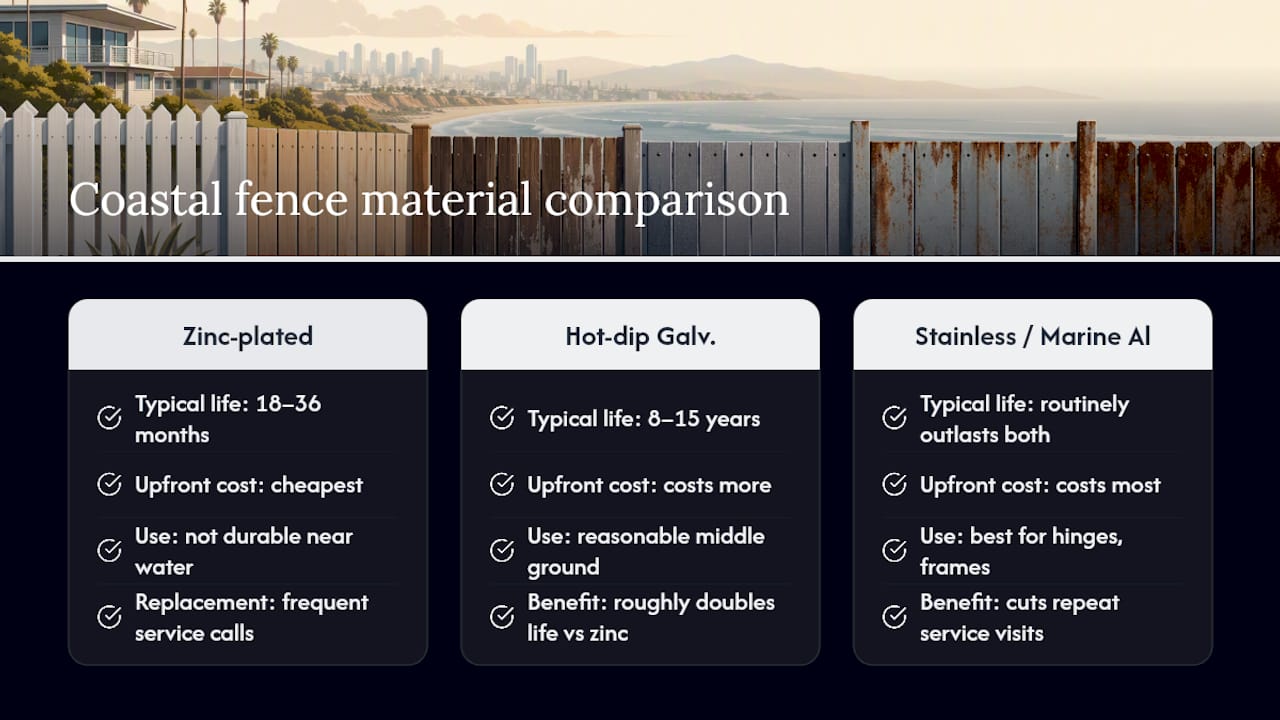
- Zinc-plated hardware: fails in 18 to 36 months in direct coastal exposure.
- Bare steel: may reach structural failure within several years.
- Hot-dip galvanized steel: usually holds up for many years, often up to over a decade.
- 316 stainless and properly specified aluminum: perform reliably over the long term with routine care.
Watch for rust streaks bleeding down pickets, gates that sag or drag on their hinges, and latches that stick or seize. Those are early signals, not cosmetic quirks, and they show up long before a post actually gives way.
What Are the Best Materials for Coastal Fences and Gates in Los Angeles?
Material choice matters more here than almost anywhere else in the county, because the same fence that lasts 20 years in Pasadena might need major repairs in 5 if it’s installed a block from the Santa Monica Pier.
Posts. Marine-grade aluminum is the safest long-term bet. If budget is tight, hot-dip galvanized steel with a marine-rated powder coat over it is a reasonable middle ground.
Panels and pickets. Powder-coated aluminum, Class-A vinyl, and composite boards all resist salt damage well. Class-A vinyl uses thicker wall construction than budget vinyl and holds up noticeably better against South Bay salt exposure. If you want the look of western red cedar, you can still have it, but only with stainless fasteners throughout and a real commitment to seasonal upkeep. Cedar without that combination is the fastest path to a rotted, rust-streaked fence on a coastal lot.
Gates. Gates take the most abuse because they move, and moving parts wear the finish faster than static panels do. Specify 316 stainless for every hinge, latch, and fastener, and lean toward marine-grade aluminum construction for the frame itself. Heavier driveway gates benefit from reinforced aluminum, which holds tension better than standard-gauge material over years of daily use.
By the numbers: zinc-plated hardware is the cheapest option upfront, but it’s also the shortest-lived, failing in as little as 18 months near the water. Hot-dip galvanized steel costs more but buys you roughly 8 to 15 years. Stainless and marine-grade aluminum cost more again, but they routinely outlast both and cut down on repeat service calls for hinges and latches.
Think of it as a multiplier scale: zinc is the baseline, hot-dip galvanizing roughly doubles your service life for a modest premium, and stainless or aluminum can multiply it several times over when you factor in avoided replacement trips.
Powder-coated aluminum and marine-grade alloys resist pitting well enough that, in US coastal practice, they’re considered industry-standard choices for low-maintenance metal fencing near saltwater.
Which Hardware Specs Actually Prevent Rust in Salt Air?
This is where most fence failures actually start, not with the panels themselves but with the small parts holding them together.
Insist on 316 stainless, not 304. 304 stainless pits under chloride attack, which makes it a poor fit for anywhere near the ocean. 316 stainless contains molybdenum, which resists that pitting, and it’s the grade recommended for hinges, screws, lag bolts, and every exposed fastener on a coastal install.
Isolate dissimilar metals. When two different metals touch in salt-laden air, they form a small electrochemical cell that eats away at the weaker one. This is galvanic corrosion, and it’s the reason a “new” aluminum gate can develop pitting around its steel hinges within a year. The fix is inexpensive: nylon washers, plastic sleeves, or isolation gaskets between the two metals at every contact point.
Protect coating edges. A quality powder coat needs a properly pre-treated substrate, either hot-dip galvanized or zinc-primed steel underneath, never bare metal. Cut edges and drilled holes are where the coating is thinnest, and that’s exactly where most field failures begin.
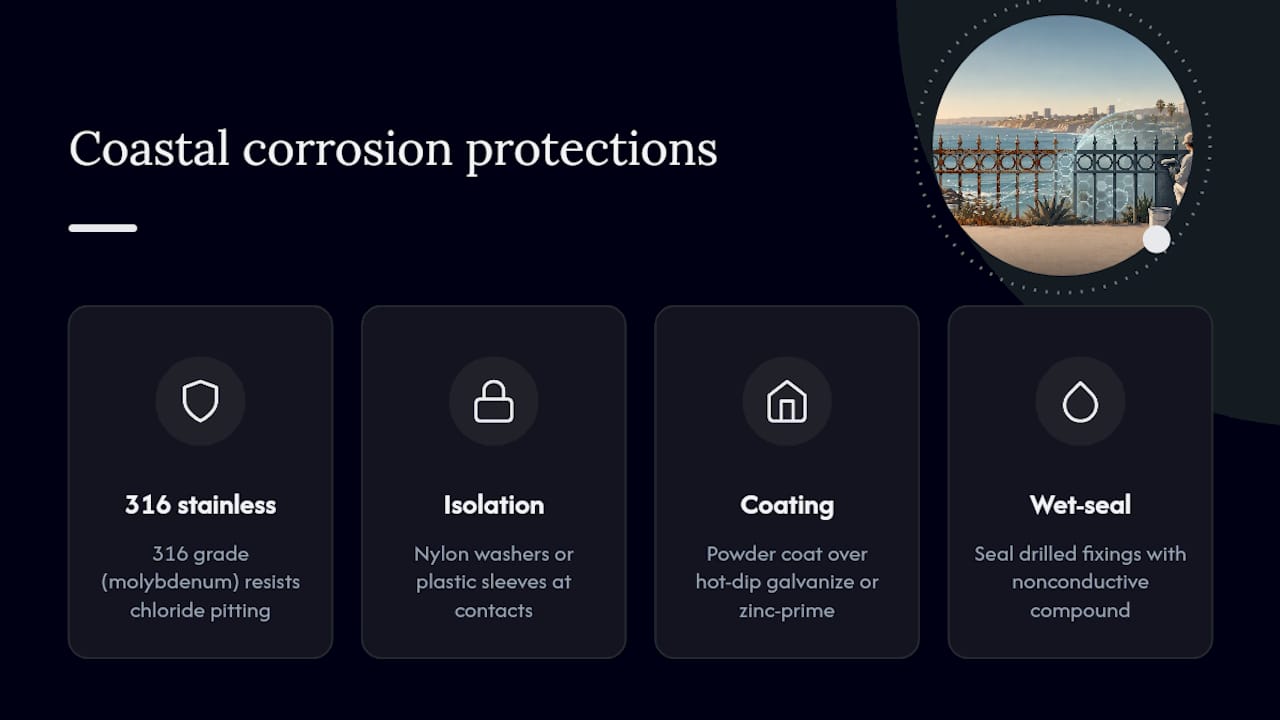
Pro Tip: Ask your installer to seal every drilled fixing point with a nonconductive wet-seal compound before final assembly. It takes five extra minutes per joint and prevents the exact spot where most coastal gate hinges start rusting from the inside out.
How Often Should You Rinse and Inspect a Coastal Fence?
A simple routine beats an expensive repair every time, and the schedule is easier to stick to than most homeowners expect.
- Rinse exposed surfaces every 2 to 3 months. A garden hose is enough. You’re removing salt deposits before they concentrate.
- Flush sheltered and hidden spots once a year. Areas behind rails, under caps, and along the underside of gates trap salt that rain never reaches, and these hidden zones often corrode faster than the surfaces exposed to open air.
- Do a full annual inspection. Check fasteners, hinges, post bases, and coating for chips. Replace any zinc-plated hardware you find on sight, since it’s already on borrowed time.
- Handle the small stuff immediately. Crown the concrete around post bases so water sheds away instead of pooling, swap any leftover ring-shank nails for stainless equivalents, and touch up powder-coat chips before bare metal starts absorbing salt.
These four habits, done consistently, routinely add years to a coastal fence’s working life for very little cost or effort.
Should You Retrofit Your Fence or Replace It Entirely?
The answer depends on what’s actually failing, not just what looks tired.
Retrofit works when the structure itself is sound, meaning solid posts and intact wood or vinyl, but the hardware is what’s failing. A typical retrofit removes old zinc nails, swaps hinges and latches for 316 stainless, and replaces post caps. On a 150-foot residential fence in the Los Angeles area, this kind of hardware retrofit generally runs well below full replacement cost and can add a decade or more of service life to an otherwise solid structure.
Replace when:
- Posts show soft spots, cracking, or lean noticeably out of plumb.
- Metal components show severe pitting rather than surface rust.
- You’ve already repaired the same section two or three times.
For a full replacement in a coastal LA neighborhood, marine-grade aluminum, Class-A vinyl, or hot-dip galvanized steel with proper powder coating are the materials worth specifying. Before scheduling an onsite quote, run your project through Fence-gate-estimator for an instant installed-cost baseline, so you walk into that first contractor conversation already knowing what a fair number looks like.
What Los Angeles Homeowners Get Wrong About Coastal Fencing
Most homeowners underspend on the parts nobody sees until they fail: hinges, fasteners, and post hardware. It’s why Santa Monica and Malibu properties increasingly go with marine-grade aluminum or 316 stainless despite the higher sticker price. They’ve already paid for one zinc-plated gate that seized shut after two winters.
The practical rule is simple. Spend more on anything that moves or fastens, and never put a wood fence near the ocean without stainless fasteners throughout. Save money on the parts that just stand there.
— Moin
Get an Instant Coastal Fence Estimate for Your Los Angeles Property
There are online tools that offer quick cost ranges based on current Los Angeles material and labor rates, helping homeowners prepare before contacting contractors.
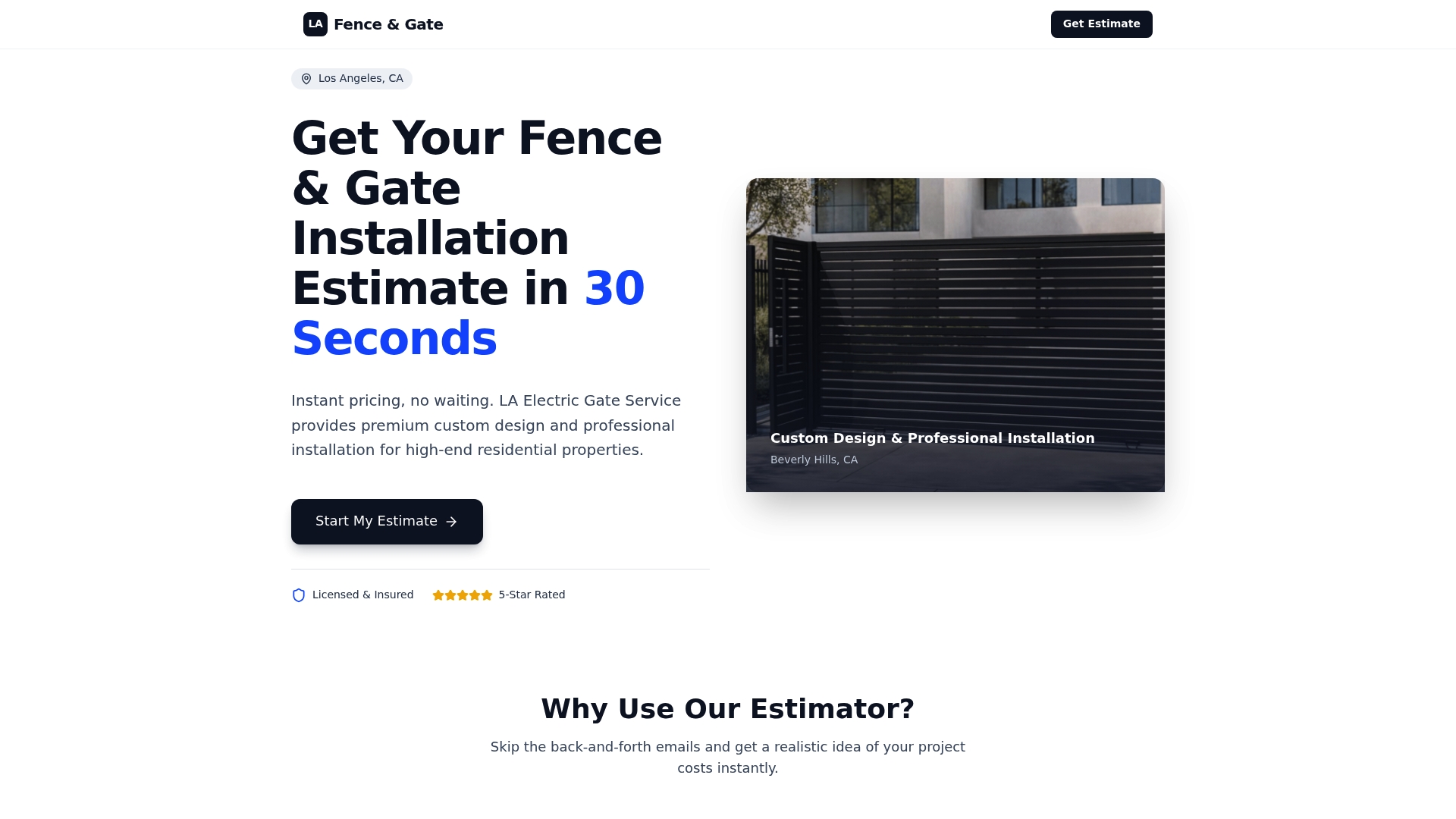
The estimator breaks down cost by material, so you can compare a marine-grade aluminum fence against Class-A vinyl or hot-dip galvanized steel with coastal-rated hardware before committing to either one. It also accounts for the coastal premiums that generic online calculators miss entirely, along with automation options if you’re pairing a fence upgrade with a new driveway gate. For Custom Fencing projects, Driveway Gates, or gate hardware that needs to survive salt air without constant babysitting, Fence-gate-estimator gives you a real number tied to your actual property, not a rough range pulled from somewhere else in the country.
Upload a few photos of your current fence, enter your property details, and get your estimate now. If the numbers make sense, the next step is scheduling an onsite visit to confirm specs and lock in a contract.
Sources
- Hot‑dip galvanizing technical resources — coastal environments
- Marine 316 stainless steel case study
- Guide to stainless and aluminum hardware in salt-air sites
FAQ
How Long Does Fence Hardware Last Near the Los Angeles Coast?
Zinc-plated hardware typically fails within 18 to 36 months in direct coastal exposure. Hot-dip galvanized steel usually lasts 8 to 15 years, while 316 stainless performs reliably well beyond that with routine rinsing.
Is 316 Stainless Steel Really Necessary, or Does 304 Work Fine?
304 stainless is prone to pitting under the chloride exposure common near the ocean, while 316 stainless resists that pitting thanks to its molybdenum content. For hinges, latches, and fasteners on a coastal Los Angeles fence or gate, 316 is the grade worth specifying.
How Often Should I Rinse My Fence If I Live Near the Ocean?
Rinse exposed surfaces every 2 to 3 months, and do a full rinse of sheltered or hidden areas once a year, since salt collects there without rain to wash it away. Sticking to this schedule is one of the cheapest ways to extend a coastal fence’s life.
Are Aluminum and Vinyl Fences Good Choices for Coastal Los Angeles Homes?
Yes. Powder-coated and marine-grade aluminum resist rust entirely, and Class-A vinyl resists rot and salt damage far better than budget-grade vinyl. Gates made from either material still need 316 stainless hardware at every hinge and latch point.
What Does Fence-gate-estimator Cost to Use?
Current pricing and service details are available directly on the Fence-gate-estimator site, where you can generate an installed-cost estimate for your specific property. Manual driveway gates typically run between 1500 and 4000 dollars, and automatic gate retrofits typically run between 1500 and 4500 dollars, both as one-time installed costs.