How to Compare Fence Material Lifespans by Durability
By BabyLoveGrowth AI
Powder-coated aluminum and properly maintained steel or wrought iron typically outlast every other common fencing option, often reaching 30 to 50 years or more. High-quality vinyl and composite fencing follow close behind, while wood and standard chain link tend to fall into shorter ranges once you factor in Los Angeles sun, seasonal rain, and normal wear. None of those numbers mean much as a single figure, though. The real skill in how to compare fence material lifespans is learning to read a range instead of a headline year, then adjusting that range for your climate, your installer’s post work, your maintenance habits, and the warranty backing the product. When you’re evaluating options, compare these five things side by side:
- Lifespan range when properly maintained versus left alone
- Maintenance level required to hit that upper range
- Common failure modes for that material in your climate
- Cost per year of service, not just the installed price
- Warranty terms, including whether coverage is prorated
Key Takeaways
Metal fencing generally delivers the longest service life, but installation quality and climate exposure can shrink or extend any material’s real-world lifespan by a decade or more.
| Point | Details |
|---|---|
| Metals lead on longevity | Powder-coated aluminum and maintained steel often reach 30 to 50+ years, well ahead of most other materials. |
| Compare ranges, not single numbers | Every material has a maintained and unmaintained range; installation quality decides which end you land on. |
| Post depth drives failure rates | Posts set at least one-third of their length below grade with proper drainage prevent most premature failures. |
| Warranty fine print matters | Check whether coverage is prorated and whether it includes labor before trusting a headline warranty year. |
| Use cost-per-year, not sticker price | A higher installed cost can still be the cheaper option once you divide by realistic lifespan. |
| Get a local number before deciding | The Fence & Gate Installation Cost Calculator turns your material shortlist into a Los Angeles-specific cost comparison. |
Table of Contents
- How Do Fence Material Lifespans Compare Side by Side?
- What Factors Change a Fence’s Expected Lifespan?
- How Do You Turn Fence Lifespan Into a Cost-Per-Year Comparison?
- What Maintenance Actually Extends Fence Lifespan?
- How Do You Choose the Right Fence Material for Your Property?
- How Does the Fence Cost Calculator Turn Lifespan Choices Into a Budget?
- Sources
- FAQ
How Do Fence Material Lifespans Compare Side by Side?
Every material category hides a wide spread between its best-case and worst-case outcomes, and that spread is usually driven by installation quality more than the material itself. Here’s how the six most common residential fencing options stack up.
A few nuances matter more than the numbers alone. Cedar and redwood gain years, sometimes a decade, when you stain or seal them on a regular cycle, but skip that step in a hot, dry climate like the San Fernando Valley and you’ll watch the wood gray and split years ahead of schedule. Aluminum earns its long lifespan mostly because it doesn’t rust the way steel does. Its powder coating resists chipping better than paint, which is why aluminum fencing shows up so often in coastal Santa Monica and Pacific Palisades projects where salt air eats through lesser coatings. Chain link’s biggest variable is gauge and coating thickness. A thin, bare galvanized fence in a canyon area with heavy UV exposure will corrode faster than a heavier-gauge, vinyl-coated version installed a few miles away.
Climate reshapes every one of these ranges. Coastal salt air accelerates corrosion on any exposed metal, which is why steel fencing near the water needs tighter maintenance intervals than the same fence inland in Glendale or Pasadena. Freeze-thaw cycles aren’t a major factor across most of the Los Angeles basin, but intense UV exposure is, and it’s the main reason vinyl and lower-grade composite panels can go brittle years before their advertised lifespan in full-sun yards.
What Factors Change a Fence’s Expected Lifespan?
Material choice sets the ceiling on how long a fence can last. Everything else determines whether you actually get there. Four variables consistently move the needle more than the sticker on the fence panel itself.
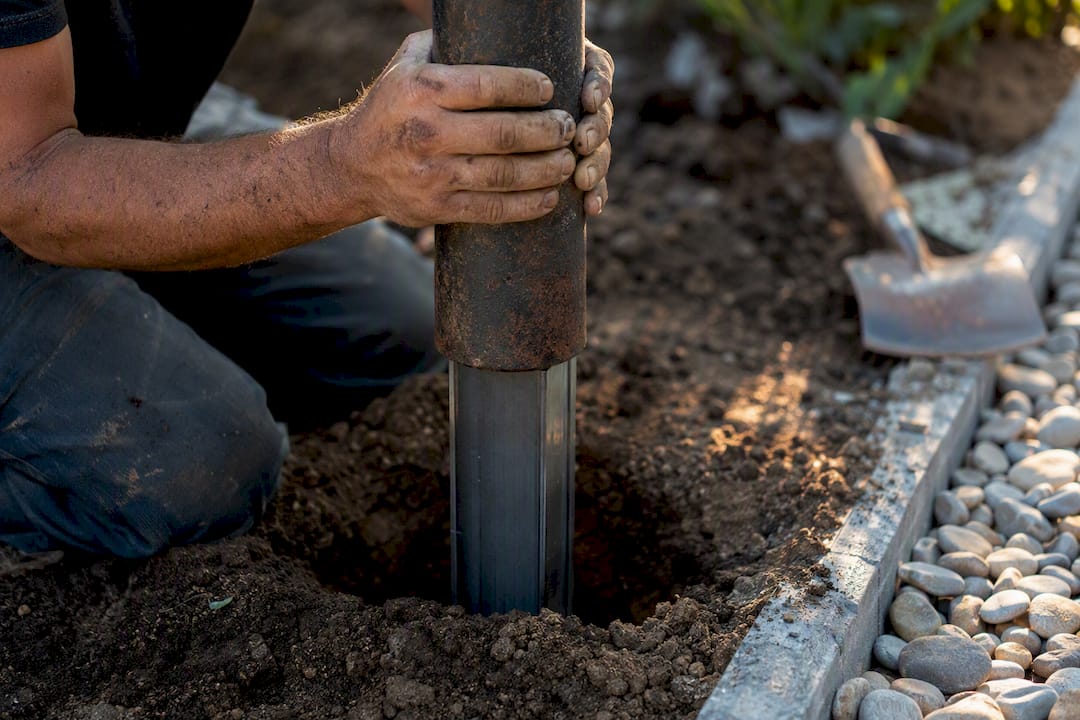
- Post depth and concrete quality. Industry guidance calls for setting posts at least one-third of their total length below grade, with the concrete crowned above ground so water sheds away from the post rather than pooling at its base. Shallow posts or flat-topped concrete are the single most frequent cause of premature failure, regardless of what material sits on top.
- Climate exposure. UV intensity, humidity, and salt air each attack different materials in different ways, so the same fence style can perform completely differently a few miles apart.
- Material grade signals. Vinyl wall thickness and UV stabilizer content, steel gauge and hot-dip galvanization specs, and heartwood content in lumber all separate a 15-year fence from a 30-year fence within the same category.
- Ongoing maintenance discipline. Skipping a scheduled staining or coating touch-up doesn’t just cost cosmetic appeal, it compounds structural decay.
Pro Tip: Ask any installer or product sheet for the specific gauge, coating spec, or ASTM reference (F2957 for vinyl, A653 for galvanized steel) before comparing prices. Two products in the same material category can differ by a decade in real-world lifespan.
How Do You Turn Fence Lifespan Into a Cost-Per-Year Comparison?
The upfront price tag is the wrong number to anchor on. What actually matters is cost divided by years of service, and that math frequently flips the “cheaper” option into the more expensive one over time. A basic wood fence installed for less than an aluminum equivalent can end up costing more per year once you factor in staining, repairs, and a full rebuild at year 12 instead of year 35.
Say a wood fence runs a lower installed cost but lasts roughly 15 years with regular upkeep, while an aluminum fence costs more upfront but lasts 35 years with minimal care. Divide each installed cost by its expected lifespan and the aluminum option often lands at a lower annual cost, even before you count the wood fence’s recurring staining bills. This is illustrative math, not a fixed formula. Your actual numbers depend on the specific products and labor rates in your area.
Before you trust any lifespan number, read the warranty behind it. Check for:
- Prorated versus non-prorated coverage. A prorated warranty pays out less the older the fence gets, so a “25-year warranty” might only cover a fraction of replacement cost by year 15.
- Labor coverage. Some warranties cover materials only, leaving you to pay full installation labor for a covered replacement panel.
- What voids the warranty. Missed maintenance, DIY installation, or using an unapproved contractor can all void coverage.
Warranty terms are one of the most reliable signals of how confident a manufacturer actually is in its product. A long headline number backed by a heavily prorated warranty tells you less than a shorter, fully non-prorated one.
What Maintenance Actually Extends Fence Lifespan?
Maintenance effort varies enormously by material, and the tasks that matter most aren’t always the obvious ones. Across every material, checking post stability and drainage delivers the biggest return for the least effort.
- Inspect posts and concrete annually. Look for wobble, cracking, or standing water at the base. This single check catches most failures before they become expensive.
- Wood: Restain or seal every 2 to 4 years, replace any post showing soft or dark wood immediately, and keep sprinklers and vegetation from soaking the base.
- Metal (steel, wrought iron, aluminum): Touch up chipped paint or coating as soon as you spot it, tighten loose fasteners, and rinse salt residue off coastal installations.
- Vinyl and composite: Clean panels annually with soap and water, inspect for hairline cracks after storms, and repair impact damage before it spreads.
- Chain link: Repair coating breaks quickly to stop rust from spreading, tighten tension bands and fittings, and keep the bottom rail from sitting directly in wet soil.
How Do You Choose the Right Fence Material for Your Property?
Run through this checklist before comparing quotes:
- Audit your site conditions. Note drainage patterns, sun exposure, soil type, and whether your HOA or the local jurisdiction restricts height or material.
- Define your priorities. Rank lifespan target, maintenance tolerance, appearance, and budget horizon so you’re not comparing materials against a moving target.
- Run the lifecycle math. Compare installed cost divided by realistic lifespan for each contender, then weigh that against warranty depth.
- Ask installers direct questions: What’s the post depth and concrete cure time? Is the warranty prorated? Does it cover labor? What voids it?
Pro Tip: A coastal Malibu or Santa Monica property and a landlocked San Fernando Valley property should never use the same material assumptions. Salt air and inland heat degrade materials differently, so weight your decision toward corrosion resistance near the coast and UV resistance inland.
How Does the Fence Cost Calculator Turn Lifespan Choices Into a Budget?
Once you’ve narrowed your material shortlist, the Fence & Gate Installation Cost Calculator turns those choices into a real Los Angeles number. Enter your material, gate type, fence length and height, and terrain, and it returns a cost breakdown you can compare across options side by side.
- See installed cost differences between aluminum, steel, vinyl, and composite for your exact footage
- Compare gate types, including automated options, against your fence material choice
- Use the output to run your own cost-per-year math against the ranges in this guide
- Bring the estimate to your installer along with questions about post depth and warranty terms
An Installer’s View on Why Fences Fail Early
Most early fence failures trace back to the same two mistakes: posts set too shallow and drainage that lets water sit against the base. Panels and fabric can be swapped out easily. Bad posts almost always mean tearing out the whole section. If you remember one thing from comparing materials, spend the extra money on correct post work before you spend it on upgraded panels.
Get a Local Estimate Before You Commit to a Material
Reading lifespan charts only gets you halfway there. The number that actually decides your project is what a 30-year aluminum fence costs installed on your property versus a 15-year wood fence you’ll likely replace twice in the same span. Fence-gate-estimator is built for exactly that comparison in the Los Angeles market, where terrain, permit requirements, and material costs shift block by block in places like Beverly Hills, Encino, and Culver City.
Run your property specs through the Fence & Gate Installation Cost Calculator to get a material-by-material cost breakdown in minutes instead of waiting on multiple contractor visits. If automation is on your radar for a driveway or side gate, the gate automation estimator folds that cost into the same comparison. Once you have your numbers, bring them to a licensed installer and ask directly about post depth, drainage detailing, and whether the warranty is prorated. Get your estimate started today and walk into that conversation with a real budget instead of a guess.
Sources
- Fence buying guide — Lowe’s
- How Long Does Each Type of Fence Last? Lifespan by Material — FenceAdvisors
- 7 ways to evaluate fence durability and longevity — JourneymanHQ
FAQ
Which Fence Material Lasts the Longest?
Powder-coated aluminum and properly maintained steel or wrought iron typically last the longest, often reaching 30 to 50 years or more, thanks to aluminum’s corrosion resistance and steel’s structural strength when its coating is kept intact.
What Is the Average Lifespan of a Fence?
It depends heavily on material and maintenance, but most residential fences fall into a range often between 15 and 30 years, with wood at the shorter end and metals and composite fencing closer to the upper part of that range.
Which Fence Lasts Longer, Wood or Vinyl?
Vinyl generally outlasts wood, commonly reaching 20 to 30 years or more compared to 20 to 25 years for well-maintained cedar and less for pressure-treated pine, largely because vinyl doesn’t rot or need staining.
Which Fence Panels Last the Longest?
Aluminum and steel panels with quality powder coating tend to outlast vinyl, composite, and wood panels, though panel-level lifespan still depends heavily on correct post installation supporting them.
How Do I Compare Fence Material Costs Fairly?
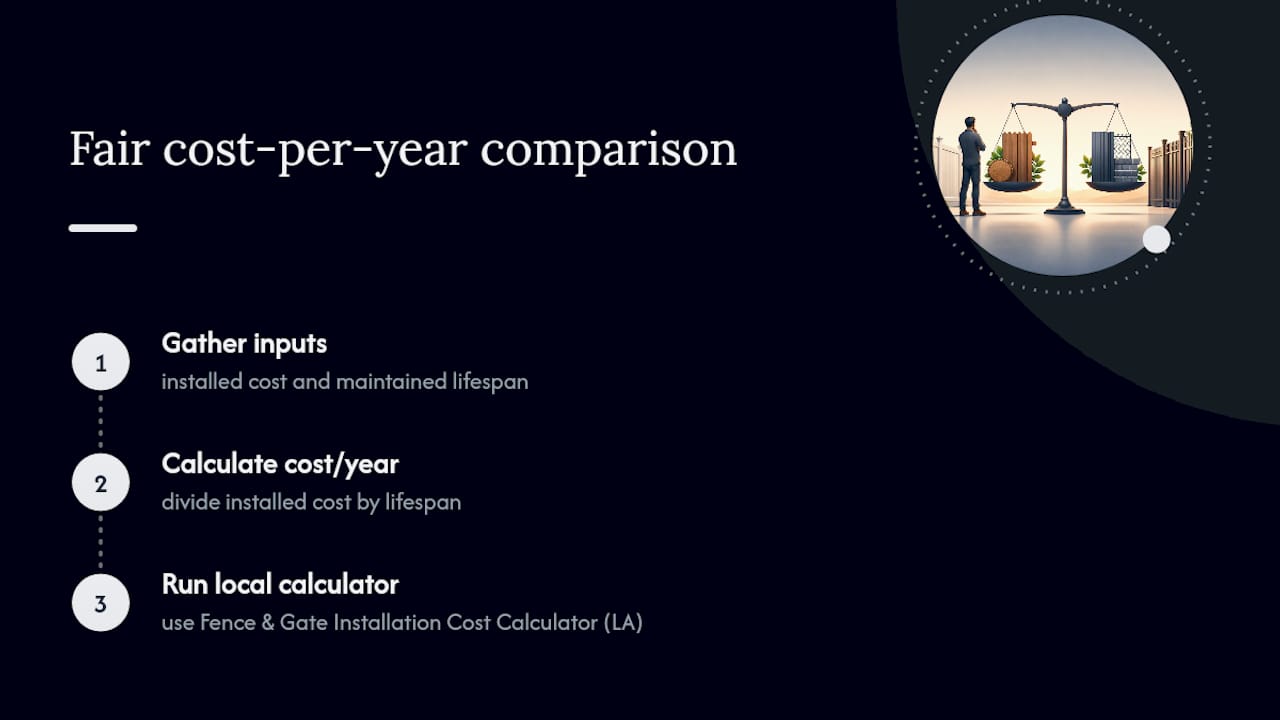
Divide the installed cost of each material by its realistic maintained lifespan to get a cost-per-year figure, then run your specific dimensions through a tool like the Fence & Gate Installation Cost Calculator for a Los Angeles-specific comparison.