Solar powered gates: a Los Angeles homeowner's guide
By BabyLoveGrowth
Solar powered gates: a Los Angeles homeowner’s guide
If you think a solar powered gate is complicated to install or unreliable on cloudy days, you’re not alone — and you’re also wrong on both counts. Thousands of Los Angeles homeowners are upgrading their driveways with solar gate systems that run quietly, consistently, and without adding a dollar to their electric bill. This guide breaks down exactly how a solar powered gate works, what components make it tick, how to size and install it correctly for an LA property, and what it actually costs so you can make a confident, informed decision.
Table of Contents
- How solar powered gates work: key components and energy flow
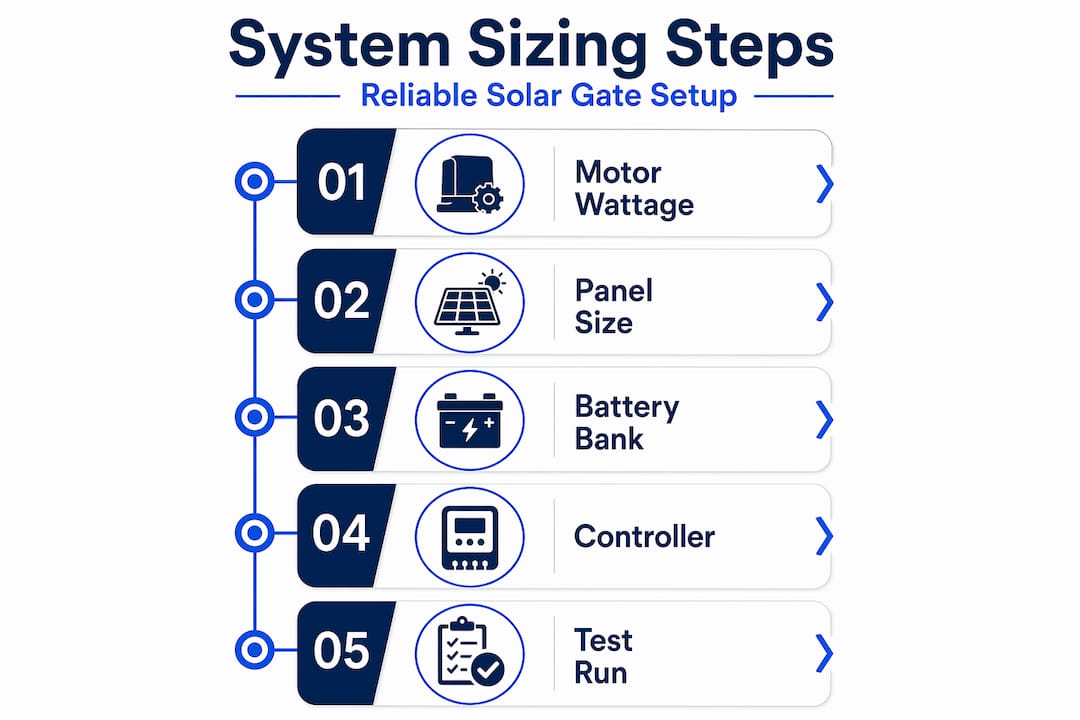
- Sizing your solar gate system for Los Angeles homes: power needs and battery capacity
- Installing solar powered gates in Los Angeles: process, time, and permitting basics
- Choosing and maintaining the best battery for your solar gate in Los Angeles
- Benefits of solar powered gates for upscale Los Angeles neighborhoods
- Why Los Angeles homeowners should rethink solar powered gates beyond green ideals
- Explore professional solar powered gate installation services in Los Angeles
- Frequently asked questions
Key Takeaways
| Point Details | |
| Solar-powered gate basics | Solar gates use panels, batteries, and controllers to convert sunlight into smooth gate operation year-round. |
| Proper system sizing | Choosing the right panel wattage and battery capacity ensures reliable performance in sunny Los Angeles conditions. |
| Installation essentials | Orientation, permits, and professional installation affect safety and compliance in upscale LA neighborhoods. |
| Battery choice matters | Premium batteries like LiFePO4 increase lifespan and reduce maintenance compared to lead-acid options. |
| Benefits for LA homes | Solar gates provide enhanced security, sustainability, and convenience optimized for power outages and style preferences. |
How solar powered gates work: key components and energy flow
To understand what a solar powered gate truly is, let’s break down its main parts and how they work together.
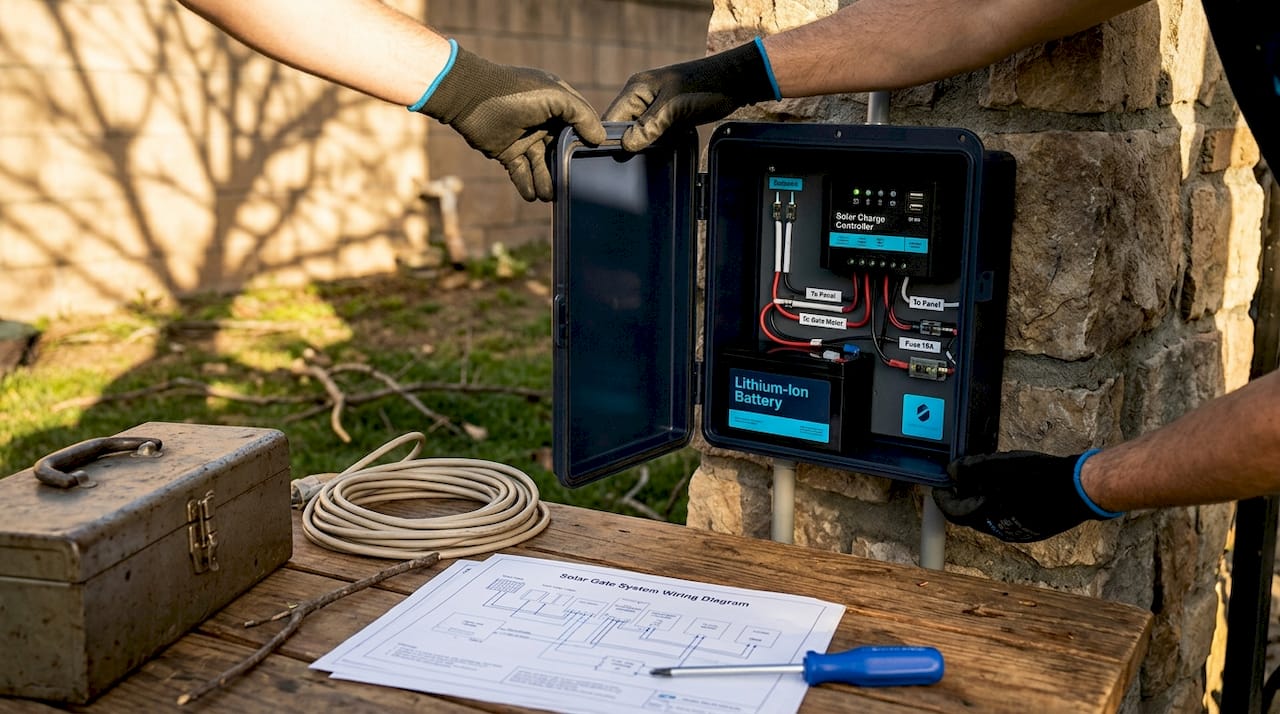
A solar powered gate is not some complex off-grid experiment. It is a well-engineered system built around four core components that convert sunlight into reliable gate movement, day or night. Each part has a specific job, and when they’re correctly matched, the system runs with very little intervention from you.
Here is how the energy flows through the system:
- Solar panel: Photovoltaic cells in the panel convert direct sunlight into DC electrical energy. A typical residential setup uses a 36V/40W panel that feeds the charge controller consistently throughout daylight hours.
- Charge controller: This component regulates the voltage and current flowing from the panel to the batteries. It prevents overcharging and over-discharging, which are the two fastest ways to kill a battery bank. Most quality systems regulate output to either 12V or 24V depending on your configuration.
- Battery bank: Two 12V 18AH batteries wired in series or parallel store the electrical energy. This storage means your gate operates reliably at midnight, during overcast afternoons, and through LA’s occasional marine layer mornings.
- Gate opener motor: The solar gate opener motor draws from the stored battery energy to move the gate mechanically. It converts electrical energy into physical force, pushing or sliding the gate on command via remote, keypad, or smart home signal.
The elegance of this system is its simplicity. There are no complex moving parts in the electronics, no connection to grid power, and no underground conduit required. For homeowners in Beverly Hills or Bel Air who want clean aesthetics and zero visible wiring at the driveway entrance, that last point matters a great deal.
Sizing your solar gate system for Los Angeles homes: power needs and battery capacity
Knowing the parts is one thing, but sizing your system right is essential for reliable operation in LA neighborhoods.
Los Angeles is one of the best cities in the country for solar-powered anything, and that extends directly to gate systems. The city averages 4 to 6 hours of direct sunlight daily, which means your solar panel recharges the battery bank efficiently even if you open and close the gate 20 or 30 times a day.
For a typical residential gate with a 260W motor, a 50W solar panel fully replenishes daily battery usage in under two hours of direct sun. That same system, running on a properly sized 24V 20 to 30Ah battery bank, provides five or more days of backup operation during low-sunlight periods.
| Gate motor wattage Recommended panel size Battery bank Days of backup | |||
| Up to 150W | 30W | 12V 18Ah | 3 to 4 days |
| 150W to 300W | 50W | 24V 20Ah | 5+ days |
| 300W to 500W | 80 to 100W | 24V 40Ah | 5+ days |
Here is what most homeowners overlook when sizing their system:
- Voltage matters as much as wattage. A 24V system halves the current flow compared to a 12V system running the same motor. Lower current means less heat buildup, which directly improves efficiency and extends battery life.
- Usage cycles add up. A gate opened 40 times a day uses significantly more power than one opened 10 times. Count your real daily cycles before selecting battery capacity.
- LA microclimates vary. Coastal areas like Santa Monica and Pacific Palisades experience more marine layer than inland neighborhoods like Studio City or Pasadena. Add 20 to 30 percent more battery capacity if your property sits close to the coast.
Understanding local solar gate installation costs early in your planning helps you budget for the right components from the start, rather than retrofitting an undersized system later.
Pro Tip: When in doubt, size up on batteries rather than the solar panel. A larger battery bank absorbs variation in sunlight far better than a bigger panel compensates for an undersized battery.
Installing solar powered gates in Los Angeles: process, time, and permitting basics
Once you select the right system size, installation and permits become the next important considerations for Los Angeles homeowners.
Installing a solar gate opener is a manageable DIY project for someone comfortable with basic tools and wiring. However, there are specific steps to follow in order, and skipping any of them creates problems down the line.
Here is the standard installation sequence:
- Check gate balance. Before mounting the motor, make sure the gate swings or slides freely with minimal friction. A motor fighting a misaligned gate drains your battery faster and fails sooner.
- Mount the motor and arm assembly. Follow manufacturer specifications for bracket height and gate clearance. Incorrect mounting causes mechanical binding.
- Position the solar panel. South-facing orientation at a tilt angle matching your latitude (roughly 34 degrees for Los Angeles) captures maximum daily sunlight. This is non-negotiable for performance.
- Install the charge controller and battery bank. Mount these in a weather-protected enclosure. Connect the solar panel to the controller first, then the batteries, then the motor.
- Wire the access control components. This includes keypads, remotes, intercoms, or smart home integration depending on your system.
- Run full test cycles. Open and close the gate 10 to 15 times, check for hesitation or grinding, and verify the controller display shows correct charging status.
A complete DIY install takes 4 to 8 hours. Professional installation, which is the route most LA homeowners in gated communities choose, runs between $1,200 and $2,200 and includes permit handling and UL325 safety compliance. UL325 is the safety standard governing automated gate openers in the U.S., covering entrapment protection and emergency release requirements.
One major cost advantage of solar gate systems is the elimination of trenching. Running a standard electrical line from your home to a gate often costs $50 to $100 per linear foot for underground conduit work. On a 100-foot driveway, that alone is $5,000 to $10,000 saved.
Before starting, check the LA gate installation guide for permit requirements specific to your neighborhood. Some HOA-governed communities in areas like Hancock Park or San Marino have additional design approval steps.
Pro Tip: Always confirm whether your gate post and foundation are rated to handle the torque of an automated motor before purchasing equipment. Weak posts are the number one cause of gate motor failures within the first year.
Choosing and maintaining the best battery for your solar gate in Los Angeles
A quality battery keeps your system running smoothly, so let’s explore which options and care tips best suit LA homes.
The battery is the most overlooked component in solar gate systems, and it is also the one that determines whether your gate works reliably for 2 years or 20. Budget kits almost always include sealed lead-acid batteries. They work, but they require periodic electrolyte checks, degrade faster in heat (which is relevant across LA’s inland valleys), and typically fail within 12 to 18 months under regular use.
Better options for Los Angeles properties include:
- Gel cell batteries: A step above lead-acid, these are sealed, spill-proof, and handle deeper discharge cycles without damage. They require no maintenance and last significantly longer.
- Lithium iron phosphate (LiFePO4) batteries: The premium choice. These batteries last 20 or more years without electrolyte checks, tolerate deeper discharges, and perform better in temperature fluctuations compared to lead-acid alternatives.
- Traditional sealed lead-acid (SLA): Acceptable as a short-term budget solution, but expect replacement within 1 to 1.5 years with regular use.
When replacing any battery, always disconnect the negative terminal first. This simple step prevents accidental sparking near the battery terminals, which is a genuine safety risk. Work with insulated tools and never lean over the battery during connection.
In LA’s coastal microclimates, batteries stored in unsealed enclosures are exposed to salt air and humidity fluctuations. Use a weatherproof battery box rated for outdoor installation. Inland areas like the San Fernando Valley experience extreme summer heat that accelerates battery degradation, making LiFePO4 an especially smart investment there.
For more on keeping your system in top shape, the guide on solar gate battery care covers maintenance schedules and warning signs that your battery bank needs attention.
Pro Tip: Check your charge controller’s display monthly. A battery that consistently reads below 80 percent charge despite adequate sunlight is failing and needs replacement before it causes gate failure at an inconvenient moment.
Benefits of solar powered gates for upscale Los Angeles neighborhoods
Understanding these practical and lifestyle benefits puts solar powered gates in perspective for your LA home upgrade.
The appeal of solar powered driveway gates in neighborhoods like Brentwood, Calabasas, or Los Feliz goes well beyond environmental values. These systems deliver real, daily advantages that you will notice from the first week of ownership.
- No utility cost. Solar powered access control runs entirely on free energy from the sun. Over 10 years, that adds up to a meaningful saving compared to hardwired gate systems with a metered power draw.
- Operates during power outages. Los Angeles experiences rolling outages during wildfire season and heat events. Your solar gate keeps working when your neighbors’ hardwired gates are stuck shut.
- Automated access and security. Integration with keypads, intercoms, and smart home platforms lets you control who enters your property remotely. That is a meaningful security upgrade for any gated home.
- No trenching required. Your driveway and landscaping stay intact during installation, which matters when you have invested in custom pavers or mature trees along the drive.
- Curb appeal. A well-designed automated entry gate with clean, concealed solar components projects exactly the right image for an upscale LA property.
“Solar powered gates are reliable, eco-friendly, maintain operation during power outages, and add convenience by automating gate access.”
The combination of security, aesthetics, and operational independence makes solar gate systems a particularly strong fit for Los Angeles homeowners who prioritize both lifestyle and long-term property value.
Why Los Angeles homeowners should rethink solar powered gates beyond green ideals
Most articles about solar gates lead with the environmental pitch. Save the planet, reduce your carbon footprint. That is all true, but it is also the least interesting reason to invest in one of these systems, and frankly it tells you nothing about whether your specific setup will perform well five years from now.
Here is what actually separates a well-performing solar gate from a frustrating one: system voltage and battery quality. A properly sized 24V system consistently outperforms a 12V setup running the same motor by halving the current and generating significantly less heat. Less heat means better efficiency, longer component life, and fewer service calls. Most homeowners buying a budget kit online never know this distinction exists until they’re replacing their charge controller after 18 months.
The battery choice compounds this. We’ve seen LA homeowners spend $3,000 on custom ironwork for a gate and then pair it with a $40 SLA battery that fails during a Santa Ana wind event, leaving the gate stuck during the one week of the year when security matters most. That is not a green-energy problem. That is a component selection problem.
Our honest perspective: treat the solar gate as a long-term infrastructure investment, not a gadget purchase. Spend the extra $150 to $300 on LiFePO4 batteries. Choose a 24V system with a quality power-saving controller. Get the panel installed by someone who understands solar orientation in your specific neighborhood. These decisions compound over time in your favor.
For homeowners in luxury neighborhoods where consistency and aesthetics are non-negotiable, the right system delivers years of hands-off operation. Read more about intelligent system design in our solar gate tech insights guide for LA properties.
Explore professional solar powered gate installation services in Los Angeles
Once you’re convinced about solar powered gates, here’s how to make the upgrade straightforward with local professionals.
At fence-gate-estimator.com, we connect Los Angeles homeowners with vetted installation professionals who specialize in automated gate systems designed for upscale properties. Every installation we facilitate is UL325 compliant, permit-ready, and backed by warranty-covered equipment.
You don’t have to figure out panel sizing, battery selection, or permit paperwork on your own. Our team handles system design, sources premium components, and manages the full installation from start to finish. Whether you’re looking for professional gate automation, custom fencing solutions, or complete driveway gates services tailored to your property, we offer transparent pricing and project timelines upfront. Get your instant estimate today and take the first step toward a smarter, more secure driveway entrance.
Frequently asked questions
How much sunlight do solar powered gates need in Los Angeles?
Los Angeles averages 4 to 6 hours of direct sunlight daily, which is enough for a 50W solar panel to fully recharge typical residential gate batteries even on cloudy days with marine layer.
Can I install a solar powered gate opener myself in Los Angeles?
Yes, DIY installation typically takes 4 to 8 hours and covers mounting, wiring, and testing, but professional installation is recommended if you need permit compliance and UL325 safety certification, which costs $1,200 to $2,200 in the LA area.
What type of battery is best for a solar powered gate in LA?
Gel cell or lithium iron phosphate (LiFePO4) batteries are the strongest choice because they last 20 or more years with minimal maintenance, outperforming standard lead-acid batteries that typically fail within 1 to 1.5 years in regular residential use.
Do solar powered gates still work during power outages?
Yes. Because solar gates run on battery-stored energy rather than grid power, they continue operating reliably during the rolling outages that affect Los Angeles neighborhoods during wildfire season and heat emergencies.