Are Security Spikes Legal in Los Angeles? 2026 Homeowner Guide
By BabyLoveGrowth AI

In most residential settings, security spikes are not banned outright in Los Angeles, but they are far from a free-for-all. Whether your spikes are legal depends on four things. The first is total fence height once the spikes are added. The second is where the fence sits, including wildlife-sensitive areas and the public right-of-way. The third is your city, because Beverly Hills and Santa Monica run their own rules. The fourth is how you manage the injury risk, since California law holds owners to a duty of ordinary care. This guide walks through each one for homeowners in Los Angeles, Beverly Hills, Santa Monica, Brentwood, Bel Air and nearby neighborhoods. It also covers what to do instead if spikes turn out to be a poor fit for your property.
This is general information, not legal advice. For a specific property, confirm with the city’s building department or a California attorney before you install anything.
TL;DR
- No single California statute bans every fence spike, but local ordinances, height limits, safety duties and liability exposure restrict them heavily.
- Spikes count toward total fence height. Adding them to a 6-foot fence can push the structure past the limit and trigger a permit or a violation.
- In wildlife-sensitive areas covered by the City’s draft wildlife-fencing ordinance, spikes, glass and razor wire are listed as prohibited materials.
- Under California Civil Code section 1714, you can be responsible for injuries caused by a lack of ordinary care in managing your property, including to trespassers in some circumstances.
- Taller well-designed fencing, a properly permitted gate and access control usually do more for security than spikes, with fewer legal headaches.
Table of Contents
- What the law actually says about spikes in Los Angeles
- Height limits: where spikes most often cause trouble
- Wildlife-friendly fencing rules
- Beverly Hills, Santa Monica and other cities have their own rules
- Permits: when spikes or a fence upgrade need one
- Liability: the bigger risk than a code citation
- Neighbor disputes and “spite fences”
- Lawful ways to stop climbers
- Our perspective
- Get a realistic budget for a compliant, secure perimeter
- A quick checklist before you install anything
- FAQ
- Sources
What the law actually says about spikes in Los Angeles
The honest answer is that the rules are a patchwork. California has no one law that bans every fence spike. Legal summaries note that their legality is restricted through a mix of local ordinances, safety requirements and premises liability risks. In practice, that means you are legal or illegal depending on the specifics of your fence, your lot and your neighbors.
Three layers matter most:
- Zoning and height rules. Spikes are part of the structure, so they count toward the height limit.
- Material and wildlife rules. Certain areas require wildlife-friendly fencing that excludes spikes.
- Liability law. Even a fully permitted fence can expose you to a claim if someone is hurt.
Homeowner discussions online often say spikes are simply “legal in the city.” That oversimplifies it. A spike can be allowed in one place and become a problem the moment it raises the fence above a cap or sits near a sidewalk.
Height limits: where spikes most often cause trouble
The most common way spikes create a code problem is height. The Los Angeles Department of Building and Safety bulletin on heights of fences in residential zones, effective January 1, 2023, sets limits by zone and yard. Front-yard limits vary by zone, including 3.5 feet in R and RW zones and 6 feet in A and RA zones. Side and rear limits can be 6 or 8 feet depending on lot width and hillside status.

Here is why that matters for spikes. A 6-foot fence topped with 6 inches of spikes is a 6.5-foot structure. Legal summaries point out that adding spikes can push total height above the standard limit and trigger violations or permit requirements for structures over six feet. If the limit on your lot is 6 feet, the spikes are what put you over.
A few related points from official sources:
- Open wrought iron in front yards. LAMC Section 13.10 permits open wrought iron fences in required front yards in Fence Height Districts up to six feet, subject to design and setback rules. Decorative finials are one thing. Sharpened, outward-facing spikes are another.
- Relief above the limit. A Zoning Administrator may approve fences and walls up to eight feet in required yards, but only after findings on neighborhood compatibility, public health, welfare and safety, and a review of materials, design and location. Spikes tend to weigh against you on the safety finding.
- Cost of relief. The City’s fee appendix lists $5,434 for relief from fence height limitations, in a schedule adopted for 2018 to 2020. Check the current schedule before budgeting.
- Historic homes. City Planning’s guidance for historic homes says front-yard fences must be under 42 inches unless you obtain a variance. Spikes on a front fence in a historic district are a very hard sell.
If you want the full front-yard picture, our guide to the 42-inch front yard fence rules in Los Angeles explains how the zones work and what permits cost.
Know your real property line
The same LADBS bulletin warns that the inside edge of the sidewalk is not necessarily your property line. Many Los Angeles lots, especially in hillside neighborhoods like Bel Air and Brentwood, extend differently than they look. Spikes placed on what you think is your boundary could sit in the public right-of-way or on a neighbor’s side. Before you add anything, confirm the line with your survey or a licensed surveyor.
Wildlife-friendly fencing rules
Los Angeles has moved toward wildlife-friendly fencing in sensitive areas. The Department of City Planning’s draft wildlife ordinance, released in May 2021, says that in the covered areas, perimeter fences and fences in specified open-space, easement and vacant-lot contexts must be wildlife-friendly. It lists spikes, glass and razor wire as prohibited materials.
Two cautions apply. First, this is a draft document, so check its adoption status and exact boundaries with City Planning before relying on it. Second, it targets specific wildlife-sensitive areas, which are most relevant to canyon and hillside properties. A flat lot in Culver City or Glendale is unlikely to be in the same situation as a property bordering open space in the Santa Monica Mountains.
Summaries of the rule add a practical point: open-topped metal posts should be capped to prevent injuring wildlife. Capping hollow posts is cheap, and it is good practice on any fence.

Beverly Hills, Santa Monica and other cities have their own rules
Do not assume Los Angeles City rules govern your property. Beverly Hills, Santa Monica, Culver City, Burbank, Glendale and Pasadena are separate municipalities with their own codes. West Hollywood is too. Neighborhoods such as Studio City, Sherman Oaks, Encino, Brentwood and Bel Air are inside the City of Los Angeles.
Beverly Hills
The Beverly Hills municipal code (section 10-3-2516, walls, fences and hedges) requires a building permit for any wall or fence in a front yard, regardless of height. So even a modest front fence needs approval before spikes enter the conversation. Our Beverly Hills fence permit checklist walks through the documents and costs.
Santa Monica
Santa Monica regulates fence heights closely, and the city has invited community input on fence, wall and hedge heights in multifamily zones, so rules may evolve. Our guides on Santa Monica fence regulations and the 42-inch front limit and Santa Monica fence permit rules cover current heights and filing steps.
Unincorporated areas and HOAs
In unincorporated Los Angeles County, the County Department of Public Works says building permits are required for fences or free-standing block walls over six feet. On top of city and county rules, many HOA covenants restrict fence design, and sharp toppers are a frequent target. Read your CC&Rs before you buy a single spike.
Permits: when spikes or a fence upgrade need one
Spikes alone are rarely the permit trigger. The fence they sit on, and its total height, usually are. Key points from the City:
- Front-yard fences, walls or gates in the public right-of-way may require a revocable permit and a City Planning variance. Gates on private property need a Building and Safety permit.
- The Bureau of Engineering requests a variance when a front-yard fence is outside allowable heights, in a Fence Height District or in an HPOZ, according to the same permit manual.
- LADBS says construction must comply with local codes and property laws, and it responds to complaints about possible code violations. A neighbor can trigger an inspection.
If your contractor says permits are not needed, ask which code section supports that. Our article on five questions that reveal permit risks when hiring a fence contractor gives you a script.
Liability: the bigger risk than a code citation
Even a fence that passes inspection can create legal exposure. California Civil Code section 1714(a) says a person is responsible for injury caused by a lack of ordinary care or skill in managing their property, except to the extent the injured person willfully or through lack of ordinary care caused the injury.
The American Bar Association lists conduct that can support a negligence claim, including creating an injurious condition, failing to eliminate hazards or erect barriers or warnings, and hazards that may attract children. For spikes, that translates into practical questions:
- Who can reach them? Spikes at a height only a determined climber reaches are different from spikes at hand level beside a public sidewalk.
- Are children or passersby at risk? A fence on a school route or near a park raises the stakes.
- Is there a warning? Clear signage where the risk exists is part of acting reasonably.
- Is it maintained? Bent, rusted or loose spikes are a hazard of their own.
- Does your insurer know? Ask your homeowner’s carrier whether sharp perimeter deterrents affect your coverage. Your insurance agent can answer this for your policy.
If you are weighing spikes against an injury claim, speak with a California attorney who handles premises liability. That conversation costs far less than a lawsuit.
Neighbor disputes and “spite fences”
Spikes facing a neighbor’s yard are where relationships break down. Beyond injury risk, damage to a neighbor’s property is another example of conduct the ABA lists as supporting negligence. Placing sharp toppers on a shared line is also the fastest way to invite a complaint to the city. As a rule, point security features inward and keep them on your own side of a surveyed boundary.
Lawful ways to stop climbers
Spikes are one of several tools, and often not the best one. City Planning’s guidance recommends hedges, shrubs and trees for screening, and securing rear and side yards first. That advice comes from a historic-home context, but the logic carries over: protect the places intruders actually use.
Options that tend to work in Los Angeles neighborhoods:
| Option | Best for | Permit considerations |
|---|---|---|
| Taller solid or semi-open fence within the height limit | Rear and side yards in Studio City, Sherman Oaks, Encino | Check side/rear height cap for your lot width and hillside status |
| Narrow-picket wrought iron, steel or aluminum with tight spacing | Front and street-facing boundaries | Front-yard limits and Fence Height District rules apply |
| Dense planting inside the fence line | Hedge-style barrier in Santa Monica, Brentwood | Confirm hedge height rules for your city |
| Automatic driveway gate with access control | Beverly Hills, Bel Air, West Hollywood estates | Gate permits and right-of-way rules apply |
| Lighting, cameras and entry logging | Whole perimeter | Generally outside fence permits |
Do not forget the glass. Ground-floor windows are often easier to attack than a fence. Professional security window film installation adds protection to residential windows without changing your fence height or creating spike liability.
Why design beats sharp points
A well-built perimeter makes climbing difficult through design rather than injury. Tight picket spacing leaves little to grip. Smooth surfaces and the right height give a climber less to work with. A secured gate with controlled entry closes the most common access point. For ideas, see our security fence features list for LA homeowners and our comparison of privacy versus security fences.
Our perspective
We talk with Los Angeles homeowners every week who ask about spikes after a break-in scare or a late-night scare on the driveway. Our view is simple: the strongest perimeter is one that is designed, permitted and installed correctly the first time.
Spikes are tempting because they look like a quick fix. In practice they add height that can collide with zoning caps, they invite neighbor complaints and they put the liability on you. A properly fabricated wrought iron, steel or aluminum fence with tight spacing, a gate on automation and access control, and the right permits gives you real deterrence without those risks.
That is why we built our estimator around the realities of Los Angeles: current local material and labor rates, terrain, size, permit requirements and HOA compliance. Design the barrier well, document the permits, and you protect both the property and your peace of mind.
Moin
Get a realistic budget for a compliant, secure perimeter
If you are comparing spikes with a better fence or gate, start with real numbers. Our instant fence and gate estimator gives Los Angeles homeowners and property managers a cost breakdown based on property size, design, materials and automation. Published ranges on our site include $1,500 to $4,000 for a manual driveway gate and $1,500 to $4,500 for an automatic gate retrofit, both one-off. Fence installation and full automatic gate installation are quoted after your inputs and a site visit.
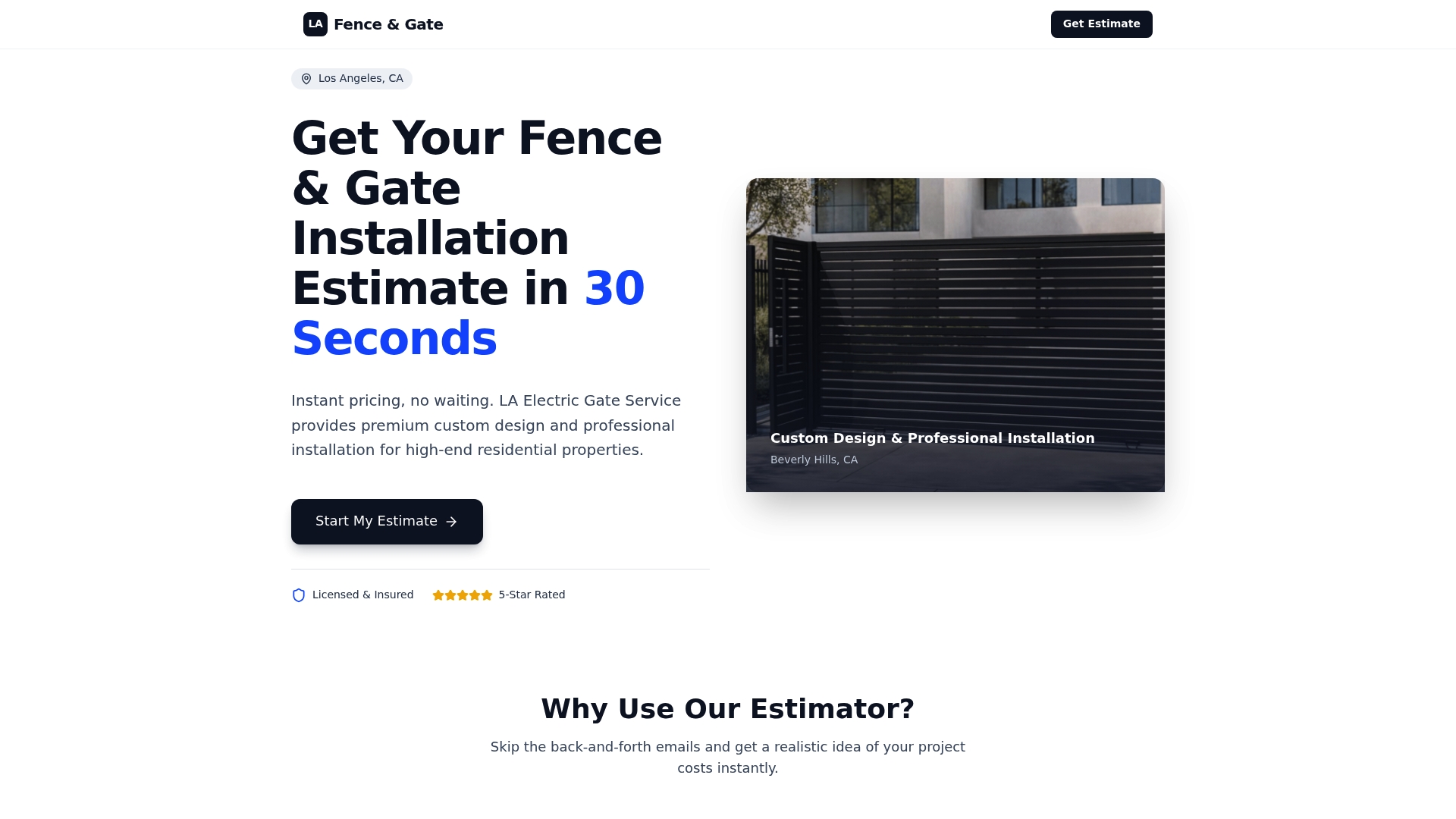
Ready for a design that deters climbers by construction? Explore our custom fencing, driveway gates and access control options, and we will help you with permit guidance and HOA requirements along the way.
A quick checklist before you install anything
- Confirm your property line with a survey, not the sidewalk edge.
- Find your zone and yard type, then check the height cap that applies.
- Add the spikes to the fence height and see whether the total passes the limit.
- Check whether your lot is in a wildlife-sensitive area, a Fence Height District, an HPOZ or an unincorporated county area.
- Read your HOA covenants.
- Call your insurance agent about sharp perimeter deterrents.
- Consider the injury scenarios: who can touch these spikes, and is there a warning?
- Pull the permit if one is required, and keep the paperwork.
FAQ
Are anti-climb spikes legal in Los Angeles?
There is no blanket ban for ordinary residential fences, but they are restricted in practice. Spikes count toward fence height, and they are listed as prohibited in the City’s draft wildlife-friendly fencing rules for covered areas. You also carry a duty of ordinary care under California Civil Code section 1714.
What is the maximum fence height allowed in Los Angeles?
It depends on zone, yard and lot. LADBS lists front-yard limits such as 3.5 feet in R and RW zones and 6 feet in A and RA zones, with side and rear limits of 6 or 8 feet depending on lot width and hillside status. A Zoning Administrator can approve up to 8 feet in required yards with findings.
Do I need a permit for a fence or gate in Beverly Hills?
Yes for a front yard. Beverly Hills requires a building permit for any wall or fence in a front yard, regardless of height. Beverly Hills is separate from Los Angeles City, so confirm other requirements with its building department.
Can I be sued if someone gets hurt on my fence spikes?
Possibly. California law can hold an owner responsible for injuries caused by a lack of ordinary care in managing property. Placement, warnings, maintenance and who can reach the spikes all matter, so talk with a California attorney and your insurer before installing.
What can I use instead of spikes to stop people climbing my fence?
Use design: tight picket spacing, the tallest fence your zone allows, dense planting, a secured gate with access control, lighting and cameras. Security film can protect ground-floor windows as well.
Sources
- City of Los Angeles Department of City Planning, draft wildlife ordinance (May 2021)
- Are Fence Spikes Legal in California? Laws and Liability
- LAMC Section 13.10, Fence Heights District
- Fences and walls up to 8 feet in height, City Planning
- Summary of case filing and building permitting fees, Appendix 2.4
- Caring for your historic home, City Planning
- Beverly Hills municipal code 10-3-2516
- City of Santa Monica, input on fence, wall and hedge heights
- Los Angeles County Public Works, block wall permit FAQ
- Front yard fences, walls and gates, LA permit manual
- California Civil Code section 1714
- American Bar Association, The Law and Your Home: liability risks