Los Angeles Homeowner Playbook to Get a Driveway Gate Permit Fast
By BabyLoveGrowth AI
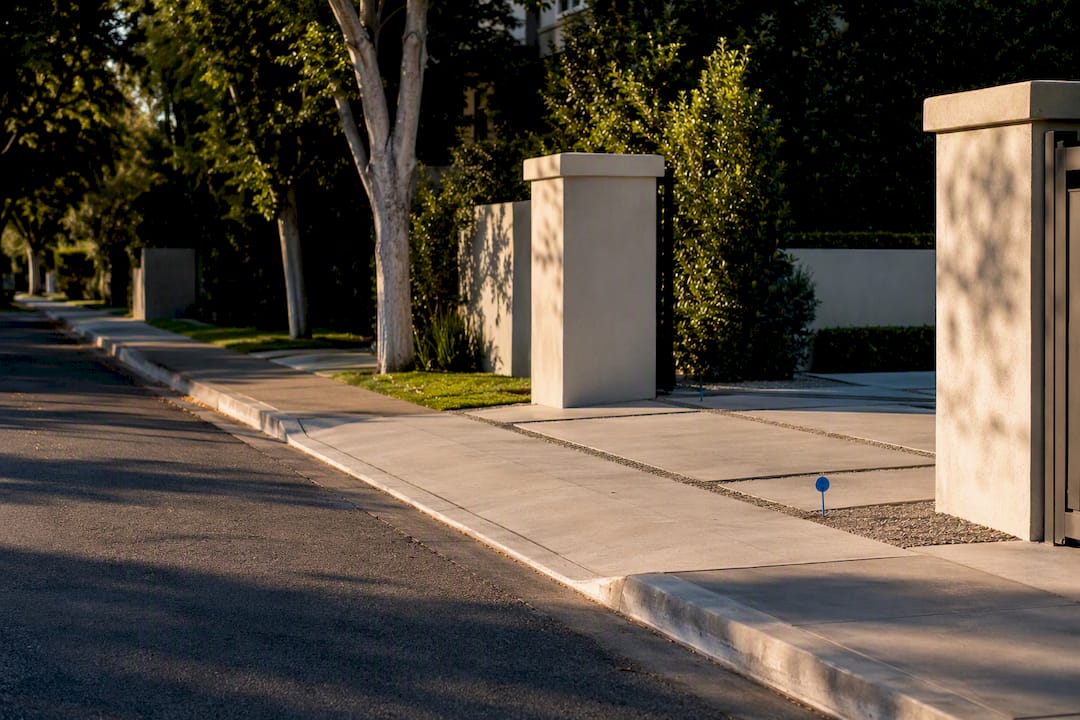
Most Los Angeles driveway gates require a permit, and the agency depends on where the work happens. LADBS handles gates and fences built entirely on private property, while the Bureau of Engineering issues Revocable permits or A-Permits for anything touching the sidewalk, curb, or driveway approach. LAFD reviews any gate that could block emergency vehicle access, and LADOT gets involved when a driveway approach sits on an avenue or boulevard. Height, materials, and location decide which of these apply to your project.
TL;DR:
- Most driveway gates on private property require LADBS permits, while gates touching the sidewalk or driveway approach need BOE Revocable or A-Permits, especially on arterial streets.
- Gates taller than 3.5 feet can be approved up to eight feet in certain zones, with extra review for historic districts or hillside properties based on grade and district rules.
- Fire safety rules mandate a minimum 20-foot clear roadway width and approved override devices for automatic gates obstructing emergency vehicle access.
- Planning driveway gate projects should include early verification of property lines, zoning, existing permits, and clear site photos to avoid delays.
- Cost estimates for gates typically range from $1,500 to over $4,500, depending on material, automation, and accessory permits, with a clear site plan helping streamline approval.
Table of Contents
- Which Agency Issues a Driveway Gate Permit in Los Angeles?
- How Tall Can Your Front-Yard Driveway Gate Be?
- What Fire Access Rules Apply to Automatic Driveway Gates?
- What Setback and Driveway Approach Rules Apply to Gates?
- How Do You Actually Get a Driveway Gate Permit Approved?
- What Design Choices Affect Whether Your Gate Permit Gets Approved?
- What Should You Budget for Timeline and Cost in Los Angeles?
- A Realistic Take on Balancing Design, Security, and Compliance
- Get a Local Estimate Before You Commit to a Design
- Official Pages Worth Bookmarking
- Sources
- FAQ
Which Agency Issues a Driveway Gate Permit in Los Angeles?
Homeowners usually assume one office handles the whole project. It rarely works that way. A gate installed a few feet inside the property line is a different animal, permit wise, than one that touches the sidewalk or reshapes the driveway apron, and Los Angeles splits jurisdiction accordingly.
The Los Angeles Department of Building and Safety issues permits for structures built on private property, including most residential gates and fences that stay behind the property line. LADBS routes these applications through PermitLA and ePlanLA, its online plan check and permitting portals. If your gate sits entirely on your own lot and doesn’t touch city infrastructure, LADBS is very likely your primary point of contact, and for straightforward residential gates, an over-the-counter or express plan check is common.
Work that spills into the public right of way is a different matter entirely. The Bureau of Engineering (BOE) issues Revocable permits, often called R-permits, for encroachments like gates or fences that extend into or sit adjacent to the sidewalk area. When the project involves constructing or modifying the driveway approach itself, the curb cut where your driveway meets the street, BOE typically requires an A-Permit instead. These permits cover the physical infrastructure of the public right of way, not the gate structure.
LADOT enters the picture specifically around driveway approaches on higher-traffic streets. When an A-Permit involves an avenue or boulevard, BOE frequently requires LADOT to review and formally accept the driveway approach design before work proceeds. This isn’t a formality you can skip by hoping nobody checks. Field inspectors compare submitted plans against what’s actually built, and a driveway approach that doesn’t match approved LADOT specifications can trigger a stop-work order.
A few practical signs tell you which route applies before you even file paperwork:
- Gate sits fully behind your property line with no work on curb, sidewalk, or driveway apron: LADBS is your agency.
- Gate or fence section extends into or touches the public sidewalk area: expect a BOE Revocable permit.
- You’re widening, relocating, or rebuilding the driveway approach where it meets the street: A-Permit territory, likely with LADOT review.
- Your street is classified as an avenue or boulevard: budget extra time for LADOT acceptance on any approach work.
- You’ve had prior permit activity on the property: pull those records first, since existing violations or open permits can complicate a new application.
Homeowners in Studio City, Sherman Oaks, and Encino often run into the LADOT trigger because so many properties there sit along wider secondary streets classified as avenues. If you’re unsure which category your street falls into, a quick call to BOE’s engineering counter before you finalize gate placement saves weeks later.
How Tall Can Your Front-Yard Driveway Gate Be?
The default front-yard height limit in most Los Angeles residential zones is 3.5 feet, or 42 inches. That number surprises a lot of homeowners who picture a stately eight-foot iron gate framing the entrance to a Brentwood or Bel Air estate. The good news: taller gates aren’t off the table, they just require an extra step.
LADBS zoning guidance allows fences and gates up to eight feet with Department of City Planning approval in certain zones, and some properties qualify through a Zoning Administrator determination rather than a full discretionary review. The path depends on your specific zone designation, lot configuration, and whether the taller section sits within the required front-yard setback or behind it. A gate positioned even a few feet back from the front-yard line sometimes qualifies for different height treatment than one right at the sidewalk.
Hillside lots add another wrinkle. Because grade changes dramatically across many hillside properties in areas like the hills above Sherman Oaks or parts of Pasadena, height is frequently measured differently, and Planning may apply modified standards based on average grade rather than a flat measurement from the sidewalk.
Historic Preservation Overlay Zones (HPOZs) and Fence Height Districts change the baseline entirely. These overlay designations exist specifically to preserve neighborhood character, and they can impose stricter height limits, material restrictions, or design review requirements that override the standard 3.5-foot rule in either direction. If your property sits inside an HPOZ, Planning will typically ask for:
- Photographs of the existing fence or gate condition, if one exists
- Elevation drawings showing proposed height, material, and design detail
- A statement addressing compatibility with the district’s certified guidelines
- In some cases, a formal Certificate of Appropriateness before LADBS will issue a building permit
If your street falls into a designated Fence Height District, the district’s specific limit controls, and it may be higher or lower than the citywide default depending on the neighborhood’s adopted standard. Beverly Hills, West Hollywood, and several Pasadena neighborhoods have historic districts with their own review layers, so it’s worth checking your parcel against the city’s zoning map before you commission ironwork.
One more practical trigger worth flagging early: masonry or concrete gate posts and pillars often draw closer building-permit scrutiny than a simple metal frame, since structural elements anchored in the ground carry different code requirements than a freestanding fence panel and local contractors from Los Angeles California | One Day Doors & Closets can help navigate these requirements. If your design calls for substantial stone or block columns flanking the gate, mention that upfront when you file, rather than letting an inspector discover it mid-project.
What Fire Access Rules Apply to Automatic Driveway Gates?
This is the section that trips up more Los Angeles homeowners than height limits or setback lines combined, and it’s the one with real safety consequences attached.
The Los Angeles Fire Department requires that any gate restricting emergency vehicle access preserve a minimum 20-foot clear roadway width, and that requirement isn’t negotiable based on how attractive your gate design is. If your driveway or private road serves as the only access route for fire apparatus, LAFD measures the functional clear width, not just the gate opening.
Statistic snapshot: LAFD’s published standard specifically identifies the Knox single-key switch, Model 3502, as the approved override device for gate-access applications. Not every residential gate needs one. The requirement kicks in specifically when the gate restricts LAFD vehicle access, meaning it sits across a route fire apparatus would need to use.
Power-operated gates that fall under this requirement need an LAFD-approved override switch so fire crews can open the gate without waiting on a homeowner’s key fob or app. This matters even for gates with backup battery power or manual override chains, because LAFD standardizes around one recognized access method across the city rather than leaving crews to guess which override system a given property uses.
Here’s what LAFD actually evaluates, and it goes well beyond gate width:
- Clear roadway width maintained at 20 feet minimum through the gated section
- Vehicle turning radii along the full access route, not just at the gate
- Roadway grade and slope, especially relevant on hillside properties in Encino, the Hollywood Hills, or Bel Air
- Overhead clearance for fire apparatus, which sit taller than most passenger vehicles
- Hydrant placement and whether the gate would block access to a hydrant location
- Whether the driveway or private road serves multiple properties, raising the access stakes further
A gate leaf that measures a technically compliant 20 feet wide can still fail LAFD review if the approach road narrows around a curve just past the gate, or if a steep grade change limits how a fire engine maneuvers through. LAFD’s access unit evaluates the entire route because a gate is only as good as the path leading to it.
Pro Tip: Loop LAFD into your design conversation before you finalize gate placement, not after your contractor has already poured footings. Bringing a rough site plan to LAFD early, even informally, catches turning-radius or clearance problems while they’re still cheap to fix on paper.
If your property shares a private driveway or road with neighbors, coordinate the override device conversation with them too. LAFD wants one consistent access method for a given route, and a patchwork of different gate systems along the same private road creates exactly the kind of confusion that slows emergency response.
What Setback and Driveway Approach Rules Apply to Gates?
Setback rules exist for one practical reason: nobody wants a car idling in traffic while waiting for a gate to swing open.
BOE guidance for gates near arterial streets recommends placing the gate at least 20 feet back from the curb face or roadway edge. That distance gives an arriving vehicle enough room to pull fully off the traveled roadway while waiting for the gate to open, rather than stopping in a traffic lane or blocking a bike lane. If your lot doesn’t have 20 feet of driveway depth to work with, and plenty of smaller Los Angeles lots don’t, you’ll need written LADOT approval before BOE will sign off on the design.
This is where queue capacity becomes the real design constraint, more so than gate speed or automation features. Even a fast, reliable automatic gate creates a hazard if the driveway can’t hold a waiting vehicle clear of the street. BOE and LADOT both look at this holistically: gate function matters less than whether the approach depth actually accommodates the wait.
Driveway approach work triggers its own separate permit path. If your project involves constructing a new curb cut, widening an existing approach, or relocating where the driveway meets the street, that’s A-Permit work through BOE, not a simple gate permit through LADBS. A-Permits cover the public infrastructure side of the project: curb, sidewalk, and the approach itself.
A few cost and process realities worth knowing before you budget:
- Revocable permits (R-permits) for conforming front-yard gates in the right-of-way are typically processed as Tier 1 applications, but a field investigation can bump the project into Tier 2, which carries additional fees and a longer review window.
- Field investigations happen when BOE staff need to verify conditions on site, particularly around encroachments, unusual grades, or existing structures near the property line.
- A Street Damage Restoration Fee may apply on approach work that disturbs the public right-of-way pavement, separate from the base permit fee.
- Submit R-permit and A-Permit applications through BOE’s Customer Service Request (CSR) Portal, which is a distinct system from LADBS’s PermitLA and ePlanLA.
- LADOT written acceptance becomes a hard requirement whenever the 20-foot setback can’t be met on an arterial, or when the approach touches an avenue or boulevard.
Homeowners in Santa Monica and Culver City, where many lots front on busier collector streets, run into the LADOT approval step more often than those on quiet residential side streets in Glendale or Burbank. Check your street classification before you finalize a design that assumes you’ll clear the setback easily.
How Do You Actually Get a Driveway Gate Permit Approved?
Treat this like a checklist you work through in order, not a form you fill out once and forget.
- Verify your property line and jurisdiction. Pull your plot plan or, if there’s any doubt about where the property line falls relative to the sidewalk, order a land survey. BOE may require one anyway if right-of-way encroachment is a possibility.
- Check zoning, HPOZ, and Fence Height District status. A quick look at the city’s zoning map tells you whether your parcel falls inside a historic overlay or a district with non-standard height rules, which changes your entire documentation list.
- Decide which permit types apply. Private-property-only work routes through LADBS. Right-of-way or driveway approach work routes through BOE, potentially alongside LADOT. Determine this before you commission final drawings, since it shapes what those drawings need to show.
- Identify additional reviews early. If the gate sits on any route fire apparatus might use, LAFD review is not optional. Confirm this before ordering hardware.
- Assemble your documents. At minimum, expect to need a plot or site plan, elevation drawings, a materials list, operator and access-control specifications if the gate is automated, and current photographs of the site.
- Submit through the correct portal. LADBS applications go through PermitLA or ePlanLA. BOE Revocable and A-Permit applications go through the BOE CSR Portal. Filing in the wrong system wastes real time.
- Expect a field investigation for right-of-way work. BOE staff frequently visit the site before finalizing an R-permit, particularly if plans show anything unusual near the curb or sidewalk.
- Schedule inspections once work begins. Both LADBS and BOE require inspection sign-off before a permit closes out, and skipping this step leaves you exposed if you ever sell the property.
- Never start work before approval lands. Unpermitted gate and fence work is enforceable, and a stop-work order after your contractor has already poured concrete footings costs far more than the delay would have.
Pro Tip: Keep a single folder, physical or digital, with every document version, agency correspondence, and photo from day one. When a project touches three or four agencies, the homeowners who stay organized are the ones who get through review in weeks instead of months.
The single most common reason applications stall isn’t a rejected design. It’s an incomplete submission that bounces back for missing elevations, an unclear property line, or a driveway approach detail that wasn’t flagged as A-Permit work until BOE caught it in review.
What Design Choices Affect Whether Your Gate Permit Gets Approved?
Several practical design decisions influence how smoothly your application moves, independent of the paperwork itself.
Gate placement relative to the street matters more than gate speed. A gate installed right at the property line, especially on a shallow lot, often creates the exact queue-capacity problem BOE and LADOT flag during review. Pulling the gate back even a modest distance, where the lot allows it, resolves setback concerns before they become a rejection.
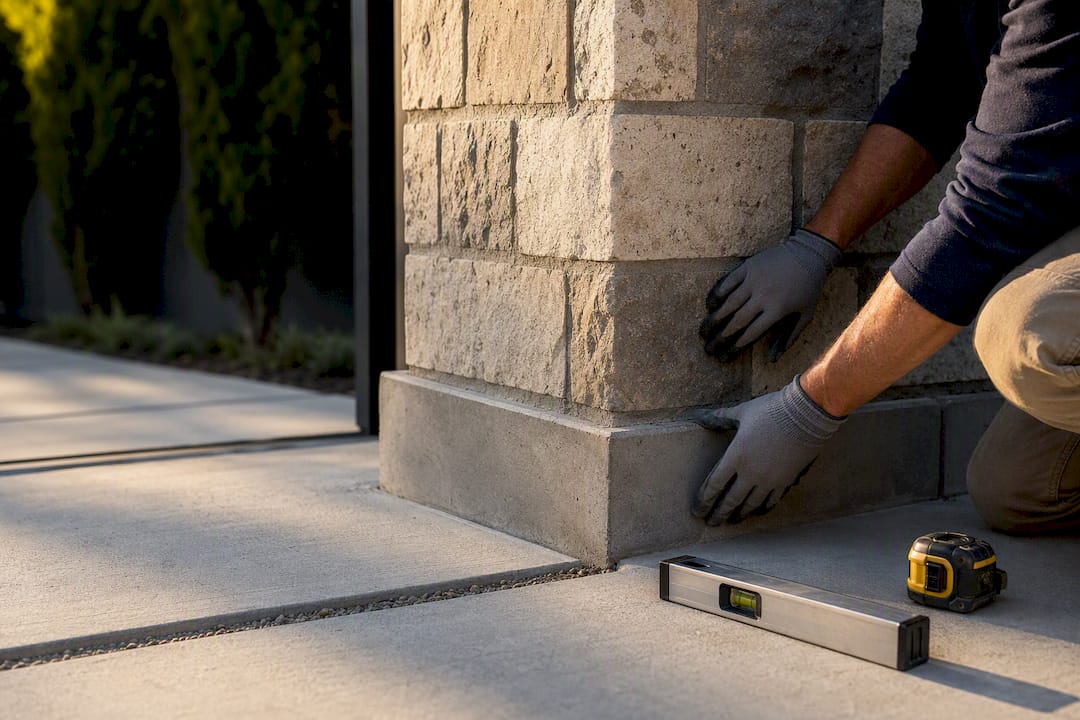
Masonry and concrete elements draw extra scrutiny. Substantial stone pillars, block walls flanking the gate opening, or poured concrete footings for heavy automated gates typically pull the project into fuller building-permit plan check, compared to a straightforward metal gate on simple posts. If your design includes these elements, flag them explicitly in your application rather than letting a field inspector discover them.
Automation adds its own permit layer. Electrical work for gate operators, access-control panels, and integrated intercom or camera systems generally needs separate electrical permitting alongside the structural gate permit. LAFD’s fail-safe requirement matters here too: an automated gate on a fire-access route needs to open, and stay open, when the approved override switch is activated, regardless of whether the property has power. Specify the override method before you select the gate operator, not after, since retrofitting an incompatible system later is expensive.
HOA and HPOZ rules layer on top of city requirements. If your neighborhood has an HOA architectural review committee or sits inside a Historic Preservation Overlay Zone, document your proposed materials, colors, and elevations early and get that sign-off before you submit to the city. A design the city approves but your HOA rejects still leaves you without a usable gate.
What Should You Budget for Timeline and Cost in Los Angeles?
Timelines for driveway gate permits in Los Angeles vary widely based on which agencies get involved, and that variation is the single biggest source of homeowner frustration. A straightforward LADBS-only gate permit on private property, with no zoning complications, typically moves through express or over-the-counter plan check the fastest. Add a BOE Revocable permit for right-of-way proximity, and you’re looking at a longer review window. Trigger a field investigation, LAFD review, or LADOT approach acceptance, and the timeline stretches further still, sometimes into a multi-month process when several reviews run in sequence rather than parallel.
Cost follows a similar pattern of layered variables rather than one flat number. The gate structure itself, wrought iron, steel, or aluminum, carries different material and fabrication costs before permitting even enters the picture. Swing gates and sliding gates have different foundation and clearance requirements. Automation and access-control integration add both hardware cost and a separate electrical permit. Driveway approach modification, when required, adds A-Permit fees and potential Street Damage Restoration Fee exposure on top of the base gate permit.
What genuinely speeds the process, and this is where a lot of homeowners waste time without realizing it, is arriving at the first conversation with a clear picture already assembled:
- Current photos of the driveway, curb, and approach area from multiple angles
- Accurate lot dimensions and driveway depth, particularly the distance from curb to proposed gate location
- Property survey or plot plan, if you have one on file already
- A clear sense of desired materials and whether automation is part of the plan
Estimator tools exist that generate cost ranges for Los Angeles material and labor rates based on user inputs, providing estimates before a design direction is finalized. Homeowners across Beverly Hills, Studio City, and Santa Monica who bring a complete picture to that first estimate consistently move faster into the permit conversation, because the design decisions that affect permitting, gate placement, materials, automation, are already settled rather than still being debated.
A Realistic Take on Balancing Design, Security, and Compliance
The gates that cause the most trouble in Los Angeles aren’t badly built. They’re designed backward, chosen for looks first, with compliance treated as a paperwork step to handle after the ironwork is ordered. That sequence almost guarantees a redesign, because height, setback, and fire-access rules constrain the design space before a single aesthetic decision should get locked in. Homeowners who check jurisdiction, zoning, and LAFD access requirements first end up with gates that actually get approved on the first pass, and often at lower cost, because nobody’s ripping out footings to meet a setback nobody checked. If your project touches more than one agency, which most real driveway gates in this city do, budget the extra time and lean on people who navigate LADBS, BOE, and LAFD reviews regularly rather than guessing your way through a first application.
— Moin
Get a Local Estimate Before You Commit to a Design
There are services offering instant, Los Angeles-specific cost ranges built from current local material and labor rates, provided before commitment to a single design detail that a permit reviewer might send back. Instead of guessing at wrought iron versus steel pricing or wondering what automation adds to the bottom line, you get a realistic breakdown in minutes, then a professional on-site consult to confirm it against your actual driveway, setback, and access conditions.
That matters most on projects touching more than one agency, exactly the kind this guide has walked through. Start with the instant estimator to see cost ranges for your material and gate type, then explore the driveway gates service page for details on swing, sliding, and automated options built with Los Angeles permit realities in mind. If your project needs integrated access control alongside the gate itself, the gate automation page covers how override compatibility and electrical permitting fit together. Bring your photos and dimensions, get your number, and book the on-site consult to move from estimate to approved permit without the back-and-forth.
Official Pages Worth Bookmarking
Keep these on hand before you start your application. Each one answers a different piece of the permit puzzle, and contacting the relevant agency early, before your design is finalized, saves real time.
- LADBS PermitLA and ePlanLA guidance: Confirms which permit type your private-property gate needs and walks through the online filing process.
- BOE front-yard fences and gates technical procedure: Covers Revocable permit tiers, setback recommendations, and when Planning or a variance enters the picture.
- LAFD security gate access requirements: Details the 20-foot clear roadway standard and override device requirements for automated gates.
- LAFD key access box standard: Specifies the approved Knox switch model for gates restricting emergency access.
- BOE driveway approach A-Permit guidance: Explains when curb cut or approach modification work needs LADOT review.
Sources
- LADBS — types of plan check and permits / PermitLA and ePlanLA guidance
- BOE — 04 - Front yard fences, walls (non-retaining), and gates (Revocable permits)
- LAFD — Security gate access requirements
- LAFD — Key access box standard
- BOE — Driveway construction, modification or replacement (A-Permit guidance)
FAQ
Do I Need a Permit to Put a Gate on My Driveway?
Yes, in almost every case. LADBS issues the permit if the gate stays fully on private property, while BOE issues a Revocable or A-Permit if any part of the work touches the sidewalk, curb, or driveway approach.
What Are the Front-Yard Fence and Gate Height Rules in Los Angeles?
The standard front-yard limit in most residential zones is 3.5 feet, or 42 inches. Taller gates up to eight feet can be permitted with Department of City Planning approval or a Zoning Administrator determination, and Fence Height Districts or HPOZs may set different limits entirely.
How Far Back From the Road Does a Driveway Gate Need to Be?
BOE recommends 20 feet back from the curb face on arterial streets so a waiting vehicle clears the roadway. If your driveway can’t meet that depth, you’ll need written LADOT approval before BOE finalizes the permit.
Do I Need a Permit to Build or Modify a Driveway in Los Angeles?
Yes. Constructing or modifying the driveway approach where it meets the street typically requires a BOE A-Permit, and LADOT review is often required if the street is classified as an avenue or boulevard.
How Much Does a Driveway Gate Installation Cost in Los Angeles?
Costs vary by material, gate type, and whether automation is included, and Fence-gate-estimator’s manual driveway gate service runs $1,500 to $4,000 as a one-time cost, with automatic gate retrofits ranging $1,500 to $4,500. Getting an instant, location-specific estimate before finalizing your design helps you budget for permit fees and any A-Permit or LAFD review requirements on top of installation.