High-security gates: Premium protection for LA homes
By BabyLoveGrowth AI
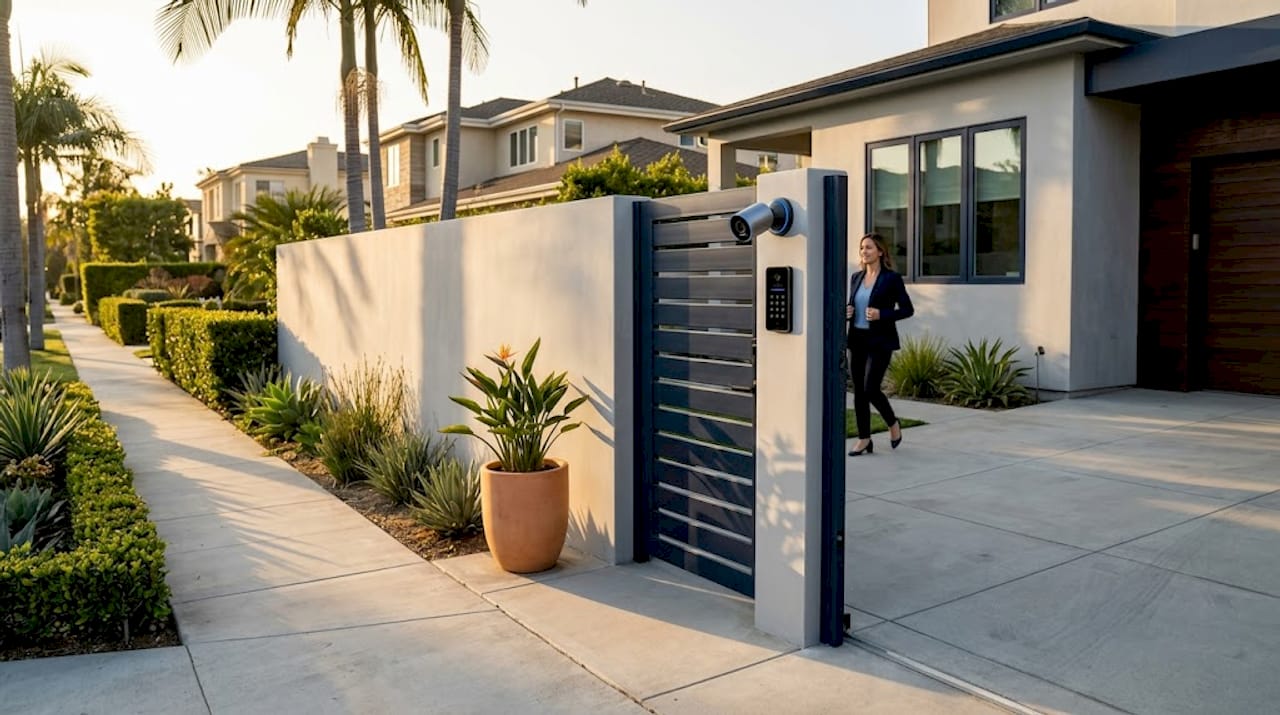
When most homeowners picture a high-security gate, they imagine something thick, heavy, and industrial-looking bolted to a post. That assumption is wrong, and it’s exactly the kind of thinking that leaves expensive properties exposed. A true high-security gate is a tested access-point system, combining the gate leaf, frame, locking hardware, automation controls, and installation configuration into one cohesive unit. For homeowners in Beverly Hills, Bel Air, or Santa Monica, understanding this distinction is the difference between genuine perimeter protection and expensive decorative metalwork.
Table of Contents
- What makes a gate high-security?
- Understanding ratings and certifications
- Crash-rated gates: Stopping vehicle threats
- Smart automation and integration features
- Balancing security, design, and neighborhood standards
- Why most people underestimate a high-security gate system
- Get expert help: Elevate your home’s security and style
- Frequently asked questions
Key Takeaways
| Point | Details |
|---|---|
| Gate security is system-based | True high-security gates combine tested hardware, controls, and installed configuration—not just strong materials. |
| Crash ratings matter | If vehicle threats are a concern, ensure your gate is crash-rated to the appropriate ASTM standard for maximum protection. |
| Smart integration enhances safety | Automation and integration with voice assistants boost both security and day-to-day convenience for LA homes. |
| Balance style and compliance | Choose gates that match local (HOA) rules and blend premium security with appealing designs. |
| Professional help ensures results | Consulting experts guarantees your high-security gate meets both security demands and aesthetic standards. |
What makes a gate high-security?
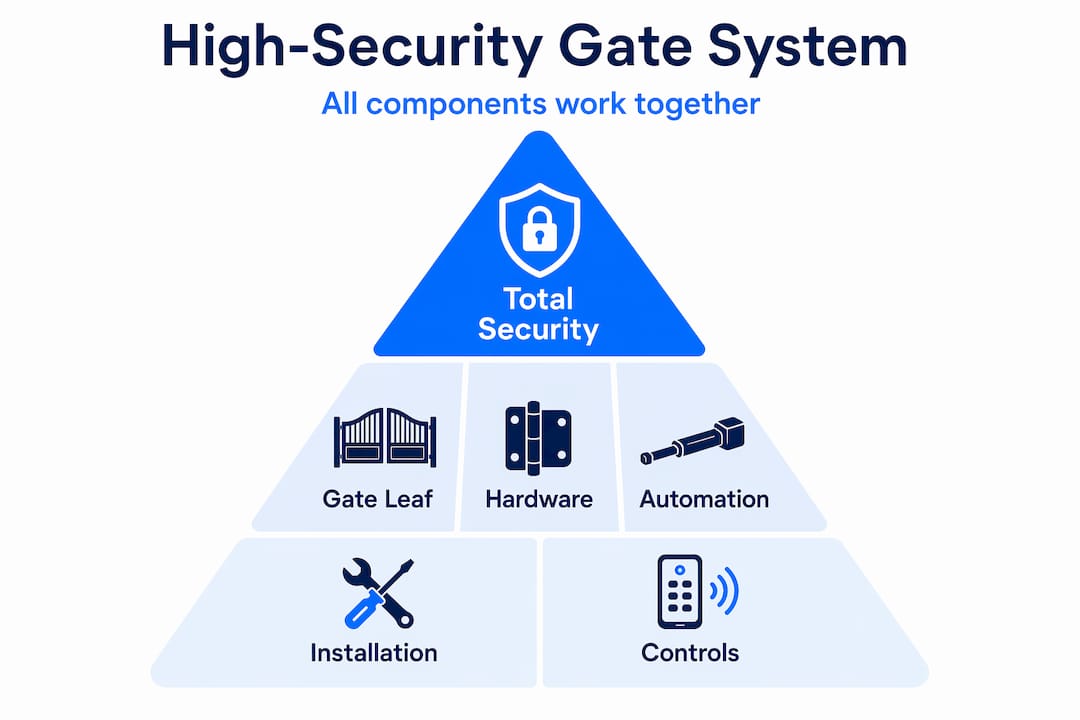
Security begins long before someone tries to force your gate open. It starts with how the entire system is designed, specified, and installed. Many homeowners make the costly mistake of focusing only on the gate leaf (the moving panel itself) while ignoring the frame connections, locking hardware, and control systems that hold everything together under pressure.
As security specialists explain, a “high-security gate” is best understood as a perimeter gate system designed to resist unauthorized entry attempts, including forced entry, tampering, and harsh outdoor conditions, often as a complete tested access-point system rather than just the gate leaf itself. This framing changes everything about how you shop, specify, and evaluate your options.
A high-security gate system typically delivers the following properties:
- Forced entry resistance: The gate, frame, and hardware withstand sustained physical attacks without yielding.
- Tamper-proof locking: Locks and hardware are specifically designed to resist picking, cutting, and bypassing.
- Weather and corrosion durability: Materials and finishes hold up in coastal LA conditions, including salt air and UV exposure.
- Tested configuration: The whole system, not just individual components, has been tested together for performance.
- Aesthetic flexibility: High-security gates can be crafted in wrought iron, steel, or aluminum with custom ornamental details.
“Security is not a feature you add to a gate—it’s the outcome of how every component in the system works together under stress.”
This perspective matters especially for upscale LA neighborhoods, where pedestrian gate security and vehicle gates must meet demanding standards without compromising curb appeal. Pairing your gate with appropriate access control options ensures that physical strength and electronic security reinforce each other. You can also reinforce your property’s identity at the entry point by investing in property entrance signs that signal both prestige and controlled access.
Understanding ratings and certifications
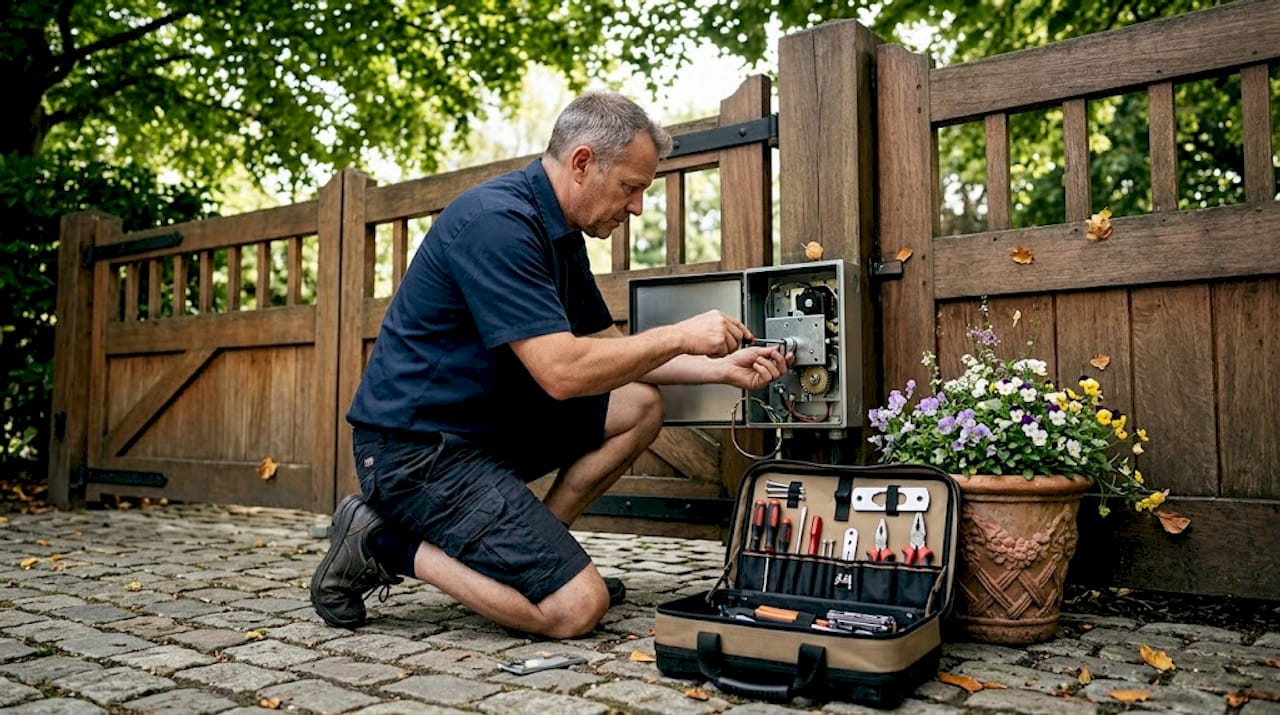
With the core definition in place, let’s look deeper into how gates are actually rated and certified for high-security use. Ratings are not just marketing labels. They represent a tested outcome for a specific installed configuration under controlled conditions.
The most important insight here is that security performance is system-based, covering the gate leaf, locking hardware, controls, and installed configuration. So certifications, when applicable, may cover the full tested system rather than a single component rating. Asking a manufacturer for a certificate on just the gate panel tells you very little about how that gate will actually perform when installed at your property.
Here is a practical breakdown of what to look for when evaluating certifications:
| Certification element | What it covers | What to ask |
|---|---|---|
| Gate leaf rating | Panel resistance to impact or forcing | Does it include frame and hinge performance? |
| Locking hardware rating | Lock resistance to picking, cutting, or bypass | Is it rated in the installed position? |
| Full system certificate | Leaf, frame, lock, controls tested together | Does my configuration match the tested spec? |
| Environmental rating | Weather, corrosion, and UV resistance | Relevant for coastal LA climates |
Common pitfalls include assuming that a thicker steel gate is automatically more secure, or that a lock rating applies regardless of how it is mounted. Neither assumption holds up under real-world testing. Ratings mean the most when they cover the exact configuration being installed at your property.
Pro Tip: Always request documentation that specifies the tested configuration, not just the gate leaf or lock in isolation. If the installed setup differs from what was tested, the rating may not apply to your situation.
For additional security rating guidance, our resource library covers what specific certifications mean for residential applications in Los Angeles.
Crash-rated gates: Stopping vehicle threats
After learning what tests and certifications mean, it is important to understand a specialized scenario: gates designed to withstand vehicle impacts. Crash-rated gates address a real and growing concern for high-value LA properties with vehicle access points.
Crash-rated barriers are specified for vehicle-threat scenarios using standardized impact testing and ratings, specifically ASTM M-ratings and related penetration distance concepts. Here is what those ratings actually mean in practice:
- M30: Tested against a 15,000-pound vehicle traveling at 30 mph
- M40: Same vehicle mass at 40 mph
- M50: Same vehicle mass at 50 mph
- Penetration distance (P1, P2, P3): How far the vehicle penetrates beyond the gate after impact
The lower the penetration distance rating, the less the vehicle gets through. A P1 rating means minimal penetration, making it the strongest classification for residential use.
“A crash-rated gate is not just a heavy gate. It is a barrier engineered to absorb and redirect kinetic energy from a moving vehicle, protecting people and structures beyond the perimeter.”
Most residential LA properties do not require M50 rated systems, but properties on wide driveways with direct street access or those in high-visibility locations may genuinely benefit from M30-level protection. The key questions to ask yourself are: Is my driveway a straight shot from a public road? Do I receive frequent deliveries or visitors in unfamiliar vehicles? Does my property hold valuable assets or high-profile residents?
| Gate type | Vehicle resistance | Typical residential use |
|---|---|---|
| Standard access control gate | None specified | General residential access |
| Reinforced security gate | Limited resistance | Upscale residential with some risk awareness |
| M30 crash-rated gate | 30 mph / 15,000 lbs | High-value estates, celebrity homes |
| M40 or M50 crash-rated gate | 40-50 mph / 15,000 lbs | Extreme security or commercial applications |
You can learn more about crash-rated driveway gate options for residential properties in the Los Angeles area, and explore premium safety gate options designed specifically for upscale LA homes. Before specifying any gate, it is also worth reviewing LA fence height regulations so your installation stays fully compliant.
Smart automation and integration features
Security isn’t just about the physical gate. Modern automation and smart features are essential for both convenience and genuine protection. An unmanned, fully automated gate can be significantly more secure than a manually operated one, but only when the automation hardware is properly specified.
Premium residential gate automation highlights several features that directly contribute to security and reliability, including rolling-code remote access and safety mechanisms that stop or reverse the gate if it detects an obstruction, plus integration with voice assistants for hands-free control. These are not luxury extras. They are practical security enhancements.
Rolling-code technology deserves specific attention. Unlike fixed-code remotes that transmit the same signal every time, rolling-code systems generate a new encrypted code for each use, making it nearly impossible for someone to capture and replay your signal to gain unauthorized access. This single feature eliminates one of the most common methods of defeating basic gate automation.
Here is a step-by-step approach to setting up a smart gate system at your LA home:
- Assess your access needs: Count entry points, identify who needs access (family, staff, deliveries), and map out your existing smart home ecosystem.
- Choose compatible automation hardware: Select a gate opener that supports your preferred platform, whether that is Apple HomeKit, Google Home, Amazon Alexa, or a dedicated security system.
- Install rolling-code access: Ensure your remote and receiver both support rolling-code encryption rather than fixed-code transmission.
- Configure app-based control: Set up mobile access so you can open, close, and monitor the gate remotely from anywhere.
- Enable safety stop and reverse: Program the gate to detect obstructions and reverse immediately, protecting both people and vehicles.
- Integrate with surveillance: Connect gate activity to your camera and alarm system so every open or close event is logged and viewable.
- Test the full configuration: Run through all scenarios, including remote access, manual override, and power outage behavior.
Pro Tip: Choose automation hardware that is rated for outdoor use in your specific climate. Los Angeles coastal areas experience salt air and temperature swings that can degrade inferior components over time. Invest in commercial-grade automation hardware from the start rather than replacing consumer-grade units every few years.
For a detailed look at gate automation features available for residential properties, or to understand how fence automation adds value in LA’s premium neighborhoods, our service pages walk you through every option. You can also review smart home security basics to better understand how gate automation fits into a broader home protection strategy.
Balancing security, design, and neighborhood standards
Security alone isn’t enough. The best gates seamlessly merge safety, aesthetics, and compliance with your neighborhood’s standards. In Los Angeles, this balance is particularly nuanced because HOA rules, municipal codes, and community design expectations all come into play simultaneously.
High-security perimeter gate applications commonly integrate electronic and automated entrance controls with fencing and other security measures, including electronic locks, motor-operated gates, and surveillance systems. Residential applications follow similar principles, just scaled and styled appropriately for the neighborhood.
When balancing these priorities, consider the following factors:
- Code compliance: Los Angeles has specific height limits and setback requirements for gates. Confirm your design falls within permitted dimensions before fabrication begins.
- HOA standards: Many upscale communities in Beverly Hills, Bel Air, and Pacific Palisades have strict design guidelines covering materials, colors, and allowable gate styles.
- Material and finish selection: Wrought iron delivers classic elegance and genuine strength. Powder-coated steel offers excellent durability. Aluminum is lightweight and corrosion-resistant, ideal for coastal properties.
- Security integration: Make sure your locking hardware, access control panels, and intercom systems are installed flush and cleanly, avoiding exposed conduit or visible wiring that detracts from the finished look.
- Proportional design: A gate should be proportionate to your home’s architecture. A heavy fortress-style gate on a Mediterranean villa looks mismatched and can actually signal anxiety rather than confidence.
Working with a fabricator and installer who understands both security requirements and design standards is essential. For custom fencing design that integrates security without sacrificing aesthetics, look for providers who bring both engineering expertise and design fluency to the project.
Why most people underestimate a high-security gate system
Here is the uncomfortable truth we see repeatedly: homeowners spend significant money on a premium gate and assume the job is done. They selected a strong material, paid for automation, and added a keypad. But they never asked whether the gate leaf, locking hardware, and installed configuration were all tested together as a complete system.
As the technical guidance on security performance makes clear, certifications and ratings, when applicable, cover the full tested system, not a single component. That nuance is exactly where most residential purchases fall short. A lock rated for forced entry resistance may perform completely differently depending on how it is mounted, what frame it sits in, and how the gate is anchored.
We have worked with LA homeowners who invested over $80,000 in ornamental ironwork and automation hardware, only to discover that the locking mechanism was mounted in a way that made it vulnerable to a simple lever attack. The gate looked extraordinary. The system had a critical gap.
The LA-specific complexity adds another layer. You are not just specifying security. You are specifying security that integrates with a Crestron home automation system, satisfies an HOA architectural committee, and matches the visual language of a $10 million property. That combination requires a provider who thinks in systems, not components.
Trusting manufacturer claims without verifying whether the installed configuration matches the tested configuration is the single most common and costly mistake we see. Before you commit to any gate installation, ask for the full system certificate and confirm that the specification your installer proposes matches the tested setup precisely. For inspiration and guidance on what a well-specified system looks like, explore premium gate advice from our editorial resources.
Get expert help: Elevate your home’s security and style
Ready to take action? Understanding the theory is valuable, but the real difference comes from working with professionals who know how to translate these principles into a beautifully installed, fully certified gate system at your specific property.
At fence-gate-estimator.com, we connect LA homeowners with expert installers who specialize in premium, system-tested gate solutions. Whether you want to explore gate automation options, see custom fencing options that satisfy both HOA requirements and your personal style, or simply want a clear starting point for your budget, our platform gives you immediate access to transparent, accurate pricing. Get a fence & gate estimate today and take the first step toward a gate system that delivers genuine security, smart integration, and design you’ll be proud to display.
Frequently asked questions
What features define a high-security gate for a luxury home?
A high-security gate offers resistance to forced entry, tampering, and harsh weather conditions, and typically includes integrated smart controls, crash ratings where needed, and a system-tested certification covering the gate leaf, hardware, and installed configuration together.
How do crash-rated gates protect homes in Los Angeles?
Crash-rated gates are tested using ASTM M-ratings to stop vehicles at specified speeds and masses, with penetration distance ratings that determine how far a vehicle can advance beyond the barrier after impact.
What smart automation features should I look for?
Look for rolling-code remote access, app-based control, safety stop and reverse mechanisms, and voice assistant compatibility to enhance both day-to-day convenience and active perimeter security.
Are ratings and certifications always for the gate’s material?
No. Certifications are system-based, covering the gate leaf, locking hardware, controls, and installed configuration together, so a rating on one component alone does not reflect the performance of the full installed system.
How can I ensure my gate fits both HOA rules and security needs?
Work with a provider who understands Los Angeles municipal codes and HOA design standards, and who can specify materials, finishes, and integrated security features that satisfy both regulatory requirements and your personal security objectives.