Innovative fence design ideas for luxurious LA homes
By BabyLoveGrowth
Every Los Angeles homeowner with a premium property faces the same challenge: you want a fence that commands attention, protects your family, and adds real value to your investment, but LA’s permitting landscape and coastal climate make the wrong choice an expensive mistake. This guide breaks down the most current, code-friendly fence design ideas specifically shaped for high-end LA neighborhoods, covering materials, smart tech, privacy features, and permitting essentials. Whether you own a hillside estate in Bel Air or a modern home in Santa Monica, you’ll find practical, expert-backed direction to make a confident decision.
Table of Contents
- How to choose an LA-appropriate fence design
- Top modern fence designs trending in Los Angeles
- Material matters: Comparing metal, aluminum, and alternative fences
- Permitting, privacy, and finishing touches
- Quick comparison: Which LA fence solution fits your needs?
- The LA fence formula: More than just good looks
- Bring your LA fence design vision to life
- Frequently asked questions
Key Takeaways
| Point Details | |
| Follow LA codes | Fence designs must conform to strict height and permit rules unique to Los Angeles. |
| Pick smart materials | Aluminum and steel offer long-term durability and style for luxury LA climates. |
| Prioritize privacy | Modern horizontal slats and laser-cut metal raise privacy and property value. |
| Add tech features | Smart locks, cameras, and intercoms make your fence a true security upgrade. |
| Invest in professional advice | Expert consultation prevents costly code violations and ensures a long-lasting, standout fence. |
How to choose an LA-appropriate fence design
With a firm understanding of the need for security and aesthetics, let’s break down the vital features that make up a luxury-worthy, regulation-compliant fence in LA.
Before you fall in love with a particular design, you need to do some groundwork. Start by measuring your exact property lines, because a fence installed even a few inches over can trigger costly disputes or forced removal. Then check your HOA’s covenants, conditions, and restrictions, which often go beyond city code in terms of allowed materials, colors, and heights.
Understanding fence height regulations is non-negotiable in Los Angeles. Front yard fences are limited to 3.5 feet in height, while side and rear yard fences can reach up to 6 feet without a permit, and up to 8 feet on lots wider than 40 feet with a permit. These numbers define your design envelope before you pick a single material or style.
A high-end LA fence needs to check five boxes:
- Code compliance: Height limits, setbacks, and permit triggers vary by zone and lot size
- Climate resilience: Coastal salt air, UV exposure, and occasional heavy rain demand materials that won’t corrode or warp
- Security: Gate hardware, frame strength, and visibility control all contribute to how well a fence deters intrusion
- Privacy: Strategic spacing, solid panels, or integrated landscaping can deliver seclusion without sacrificing style
- Modern curb appeal: Material finishes, geometric design, and gate proportions shape your home’s first impression
Understanding fence cost factors early in the process helps you set a realistic budget before committing to materials or fabrication timelines.
Pro Tip: Before finalizing any design, consult with a licensed fence professional who knows the LA Department of Building and Safety (LADBS) process. Pre-approval designs save you from expensive redo’s after installation.
Top modern fence designs trending in Los Angeles
Now that you know what to prioritize, here are the most exciting, code-friendly fence designs seen across Los Angeles’s high-end properties.
Luxury LA neighborhoods are seeing a clear design shift: clean lines, metal fabrication, and integrated technology are replacing traditional wood picket and wrought iron styles. These five designs are leading the trend in 2026.
- Horizontal slat fences: Aluminum or steel slats installed with 0.5 to 2 inch gaps create a sleek, contemporary look that balances privacy with airflow. This is especially valuable in coastal areas where ventilation reduces moisture buildup behind solid panels. The horizontal orientation also creates an optical illusion of wider frontage, a real advantage on compact lots.
- Laser-cut metal panels: Custom geometric or organic patterns are cut directly into steel or aluminum sheets, creating art-level visual impact. These panels work beautifully as accent sections between solid posts, or as full gate faces on estate driveways. Every design can be unique to your property.
- Glass panel inserts: Frameless or framed tempered glass panels set into metal frames deliver an open, modern aesthetic without sacrificing the sense of enclosure. Popular in hillside homes with view corridors, glass inserts let you protect your property without blocking natural light or sightlines.
- Mixed-material combinations: Pairing materials like concrete columns with aluminum infill panels, or steel frames with wood slats, creates textural contrast that feels custom and high-end. These combinations are particularly effective when designed to echo the architectural style of the main home.
- Integrated smart-access systems: Fences paired with app-controlled gate operators, video intercoms, license plate readers, and keypad entry are now standard in Beverly Hills and Bel Air. These systems add real resale value and daily convenience.
“Horizontal slat designs with 0.5 to 2 inch gaps allow natural ventilation while maintaining privacy, and their linear pattern visually stretches the perceived width of a property. This is a particularly strategic choice for compact luxury lots in West Hollywood or Silver Lake.” — Fabrication specialist, Elite LA Patios
According to popular designs in LA high-end neighborhoods, matte black and bronze finishes now account for 65% of new installs in premium LA zip codes. That stat alone tells you where the design market is heading.
When reviewing luxury fence components, you’ll find that the gate is often the most important single element, setting the tone for the entire fence line.
Pro Tip: Go for smart-access gates with built-in cameras and app controls. They raise your property’s perceived value and simplify daily management, especially for properties with household staff or frequent deliveries. For more on execution, the aluminum fence installation guide walks through the technical process for upscale properties.
Material matters: Comparing metal, aluminum, and alternative fences
With design concepts in mind, material choice is the next pivot point. Here’s how each stacks up for LA’s climate and codes.
Not all fencing materials perform equally under LA conditions. The coastal salt air that makes Santa Monica and Malibu so desirable also accelerates corrosion in lower-grade metals. UV intensity at this latitude degrades vinyl and wood faster than in cooler climates. Your material choice directly affects maintenance costs, lifespan, and long-term property value.
The clear leader for luxury LA installs right now is architectural-grade aluminum. Modern fences and gates for high-end LA estates use 4K Aluminum (6061-T6 alloy) for coastal corrosion resistance, offering strength comparable to steel but 300% lighter, which extends gate operator life by 40%. That weight difference matters enormously for automated gates: lighter gates put less strain on motors, reducing long-term maintenance costs.
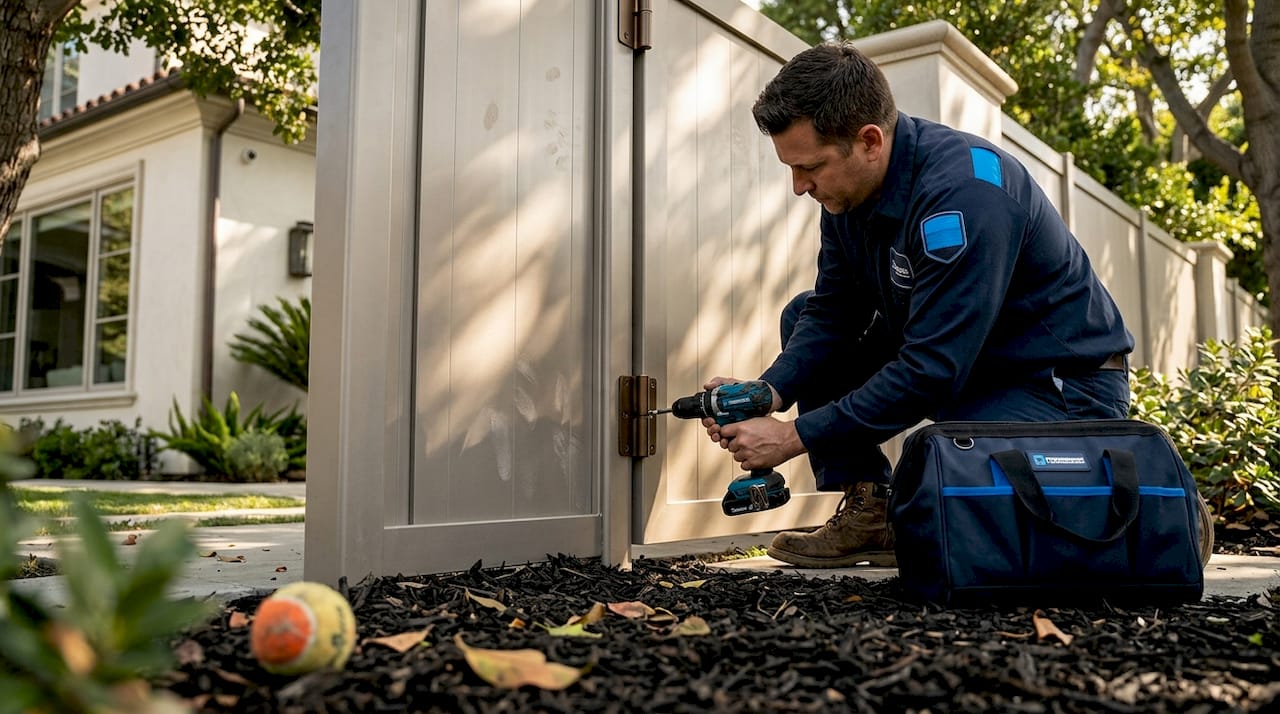
Steel remains the material of choice when security is the top priority. Its density and rigidity make it harder to cut or deform than aluminum, and modern powder coating protects it from rust for years. The tradeoff is weight, which increases installation labor costs and places greater demands on gate automation hardware.
Vinyl and composite options have improved significantly. They work well for side or rear yard fences where visibility from the street is minimal, offering a clean look with virtually zero maintenance. However, they rarely achieve the premium aesthetic of metal fabrication and may not satisfy HOA requirements in ultra-high-end neighborhoods.
Vinyl fencing alternatives cover several newer composite options worth reviewing if you’re weighing cost against longevity.
| Material Strength Maintenance Weather resistance Cost range Security Aesthetics | ||||||
| 6061-T6 Aluminum | High | Very low | Excellent | $$$ | High | Premium/Modern |
| Powder-coated steel | Very high | Low to moderate | Good | $$$$ | Very high | Industrial/Custom |
| Wrought iron | High | Moderate | Fair (prone to rust) | $$$$ | High | Traditional/Classic |
| Vinyl/Composite | Moderate | Very low | Good | $$ | Low | Modern/Clean |
| Wood | Moderate | High | Poor in coastal zones | $$ | Low | Natural/Traditional |
Here’s a quick guide on when to choose each:
- Aluminum: Best for coastal properties in Santa Monica, Malibu, or Marina del Rey where salt air exposure is constant
- Steel: Choose this for ultra-secure estates where gate cutting resistance is a priority, such as hillside or gated communities
- Vinyl or composite: Ideal for rear or side yard fencing where low maintenance matters more than heavy-duty security or high-end visual impact
Regarding height, privacy fences typically stand 6 to 8 feet tall nationally, though LA’s local regulations cap most residential fences at 6 feet without a permit, making your material and design choices within that envelope especially critical.
For a full breakdown of gate styles and security ratings, the security gate types guide covers sliding, swing, and bi-fold configurations in detail.
Permitting, privacy, and finishing touches
Material down, only the rules and finishing details remain. Here’s how to stay legal while getting the most privacy and style for your property.
LA’s permitting process trips up even experienced homeowners. The key threshold to remember: fences under 6 feet in side and rear yards and under 3.5 feet in front yards generally do not require a LADBS building permit. However, if your fence includes masonry elements like concrete block columns, or any electrical components for lighting or gate operators, a permit is required regardless of height.
Here’s a quick reference on what typically triggers a permit:
| Yard location Max height without permit Permit triggers Common additions | |||
| Front yard | 3.5 feet | Masonry, electrical, over height | Decorative columns, lighting |
| Side yard | 6 feet | Masonry, electrical, over 6 ft | Privacy slats, landscaping integration |
| Rear yard | 6 feet | Masonry, electrical, over 6 ft | Smart access, lighting, planters |
| Lots over 40 ft wide | Up to 8 feet with permit | Always requires permit over 6 ft | Gate automation, cameras |
Once you understand the permit landscape, you can focus on the details that elevate a good fence into a truly custom installation. Here are the most effective privacy and finishing upgrades:
- Integrated landscaping: Planting screening shrubs like ficus or clusia behind fence panels adds a living privacy layer that softens the look and increases visual density at eye level
- Architectural lighting: Low-voltage LED strip lighting along the top rail or at post bases creates dramatic evening curb appeal and deters intruders
- Custom powder-coat finishes: Going beyond standard black, you can match your fence color to your home’s exterior palette, whether that’s warm bronze, slate gray, or RAL custom colors
- Smart access control: Keypad entry, intercom video panels, license plate recognition cameras, and Bluetooth unlock via smartphone are all standard upgrades in luxury LA installs
Pro Tip: Always verify your plans with LADBS and your HOA before finalizing any design. CC&R’s (covenants, conditions, and restrictions) in gated communities can prohibit specific finishes, materials, or gate configurations that city code otherwise allows.
Understanding the cost factors for LA fences at this stage helps you plan realistically for permit fees, electrical work, and automation hardware.
Quick comparison: Which LA fence solution fits your needs?
Still unsure which path to take? This quick comparison ties all the options together so you can find your best LA fence match.
| Fence type Best for Max privacy Security level Permit likely? Curb appeal | |||||
| Aluminum horizontal slats | Modern coastal homes | High | High | No (under 6 ft) | Excellent |
| Laser-cut steel panels | Custom estate gates | Very high | Very high | If automated | Exceptional |
| Glass panel inserts | View properties | Low to moderate | Moderate | No (under 6 ft) | Modern/Premium |
| Mixed material (steel + wood) | Architectural homes | High | High | Depends on height | Very high |
| Vinyl/composite | Budget rear yard | Moderate | Low | No (under 6 ft) | Clean/Modern |
| Smart-access integrated system | All luxury homes | Varies | Very high | Yes (electrical) | Exceptional |
This table reflects the full arc of options, from permit-free privacy slats to high-security laser-cut estate gates with full automation. Your ideal solution often combines two or more elements, such as aluminum horizontal slats for the perimeter fence paired with a custom laser-cut steel gate at the main entry.
For exact pricing based on your property’s linear footage, materials, and gate type, the fencing cost comparison resource gives you a detailed breakdown of what LA installations realistically cost in 2026.
The LA fence formula: More than just good looks
Seeing all the options side by side, here’s our hard-won advice for LA homeowners:
Buying for looks alone is one of the most common and expensive mistakes we see in the luxury fence market. Homeowners invest heavily in a stunning laser-cut gate, then discover that their coastal lot’s salt air has started pitting the raw steel panels within 18 months. Or they install a 7-foot privacy fence along the front of a Bel Air property, only to receive a LADBS correction notice requiring demolition and rebuilding at code-compliant heights. Both scenarios are real, and both are entirely avoidable.
We’ve seen homeowners spend an extra $15,000 to $30,000 correcting a fence project that started with good intentions but skipped the permit verification step. The frustration isn’t just financial. It disrupts landscaping, delays smart home integrations, and sometimes creates neighbor disputes that outlast the fence itself.
The most successful luxury fence projects we see treat the installation as a permanent investment, not a cosmetic upgrade. That means choosing materials for the next 20 to 30 years, not just the first impression. It means budgeting for automation from the start, because retrofitting a gate operator after the fact always costs more. And it means consulting with professionals who know both the fabrication side and the LADBS permitting process before the first post is set.
Your fence is also a resale asset. Buyers in Beverly Hills and Pacific Palisades pay attention to perimeter security. A well-executed true custom fence design signals property stewardship and can meaningfully influence buyer perception during a sale.
The formula is straightforward: choose the right material for your specific microclimate, verify all permits before you build, integrate technology from day one, and work with professionals who specialize in LA’s regulatory environment. That approach consistently delivers fences that look exceptional and hold their value.
Bring your LA fence design vision to life
Ready to turn inspiration into action? Here’s how you can start your custom fence journey today.
You now have the design concepts, material comparisons, permitting knowledge, and decision framework to move forward with confidence. The next step is getting real numbers tied to your specific property.
At fence-gate-estimator.com, we specialize in LA’s luxury residential fence and gate market. Our instant estimator tool generates realistic cost breakdowns based on your property’s linear footage, terrain, material preferences, and automation features, using current LA labor and material rates. You can explore custom fencing services tailored to high-end neighborhoods, review gate automation packages designed for smart home integration, and browse driveway gate options that set the tone for your entire property. Use the estimator to build a smart budget before you commit to fabrication, so your investment is planned, not guessed.
Frequently asked questions
Do I need a permit to build a fence in Los Angeles?
Most side and rear yard fences up to 6 feet and front yard fences up to 3.5 feet don’t require a permit, unless they include masonry or electrical elements. Always confirm with LADBS and your HOA before finalizing plans.
What is the best material for fences in LA’s climate?
Aluminum is preferred for luxury homes due to its corrosion resistance and lighter weight. Specifically, 6061-T6 alloy aluminum offers strength comparable to steel but at 300% less weight, making it ideal for automated gates in coastal neighborhoods.
How can I maximize privacy without violating city rules?
Choose horizontal slat, laser-cut, or mixed-material fences and keep them within LA’s local height regulations to achieve strong visual privacy without triggering permit requirements. Adding integrated landscaping behind the fence line further enhances seclusion.
Do smart locks and intercoms add value to my fence design?
Yes. Integrated smart locks and intercoms increase security and property appeal, particularly in high-end LA neighborhoods where buyers expect modern access control as a standard feature rather than an upgrade.
Recommended
- Custom fence components: build luxury, security, and style in LA | LA Electric Gate Service
- Expert Gate & Fence Blog | LA Electric Gate Service
- Expert aluminum fence installation guide for upscale LA homes | LA Electric Gate Service
- Expert Gate & Fence Blog | LA Electric Gate Service
- 7 Luxury Pool Design Examples to Elevate Your Backyard