Pedestrian gates: Your guide to security and style
By BabyLoveGrowth
Not every gate serves the same purpose, and assuming otherwise can cost you both security and curb appeal. For homeowners in Los Angeles, especially in neighborhoods like Beverly Hills, Bel Air, and Santa Monica, a pedestrian gate is one of the most visible and functional elements of your property’s entrance. It controls who walks onto your grounds, reinforces your home’s design language, and signals the standard you hold for your property. This guide walks you through exactly what a pedestrian gate is, why it matters more than most homeowners realize, and how to choose the right one for your home.
Table of Contents
- Understanding pedestrian gates
- Security benefits of pedestrian gates for upscale homes
- Aesthetic and design considerations
- What to consider when selecting a pedestrian gate
- The truth most homeowners miss about pedestrian gates
- Upgrade your entry: Discover premium pedestrian gates
- Frequently asked questions
Key Takeaways
| Point Details | |
| Pedestrian gates explained | A pedestrian gate is a foot-traffic entry point, offering controlled access and security for homeowners. |
| Security and curb appeal | Quality pedestrian gates enhance both safety and visual appeal, especially in premium Los Angeles homes. |
| Smart features add value | Modern gates offer options like keyless entry and video intercoms for extra convenience and protection. |
| Design and compliance matter | Choose materials and styles that fit your home, and always check local rules before installation. |
| Professional installation pays off | Consulting experts ensures your investment looks great and performs reliably for years. |
Understanding pedestrian gates
A pedestrian gate is a gate designed specifically for foot traffic. It serves as a human-scale entry point in a fence, wall, or enclosure, and it is intentionally distinct from larger vehicle gates or driveway gates. Pedestrian gates are typically 36 to 48 inches wide, which is just enough to allow comfortable passage for one or two people at a time, sometimes with a stroller or shopping bags in hand.
Understanding this distinction matters because each gate type is engineered for a different load, frequency of use, and security requirement. You can learn more about the full range of options available through a pedestrian gates overview that highlights solutions and professionals providing pedestrian gate installations.
Here is a quick comparison of the most common residential gate types:
| Gate type Width range Primary use Security focus | |||
| Pedestrian gate | 36 to 48 inches | Foot traffic only | Access control, personal entry |
| Driveway gate | 10 to 20 feet | Vehicle entry | Perimeter control, vehicle security |
| Garden gate | 24 to 36 inches | Landscaped areas | Decorative and safety |
| Pool gate | 36 to 48 inches | Pool access | Safety compliance, child barriers |
The difference between driveway and pedestrian gates goes beyond size. Driveway gates must withstand the weight and force of vehicles, require heavier hardware, and are typically automated by necessity. Pedestrian gates, on the other hand, prioritize smooth, frequent operation for people and can be manual or automated depending on your preference.
Key roles a pedestrian gate plays in a residential setting:
- Access control: Determines who can walk onto your property without using the driveway
- Perimeter delineation: Creates a clear boundary between public and private space
- Child and pet safety: Prevents small children and animals from wandering outside unsupervised
- Aesthetic anchor: Frames your property’s entrance and reinforces your overall design
“A pedestrian gate is often the first physical interaction a visitor has with your home. Its design, materials, and hardware tell a story about everything inside.”
For upscale properties, the pedestrian gate is rarely an afterthought. It is a deliberate design and security decision that deserves the same level of attention you would give to your front door or landscaping.
Security benefits of pedestrian gates for upscale homes
With a clear definition established, let’s examine why homeowners in Los Angeles especially value the security advantages these gates provide. High-value properties attract more scrutiny, and a well-designed pedestrian gate is one of the most effective first lines of defense you can install.
Here is how a quality pedestrian gate strengthens your property’s security profile:
- Controlled access point: A gate forces anyone approaching on foot to engage with your entry system rather than walking directly to your front door. This alone reduces the likelihood of unwanted contact.
- Heavy-duty locking systems: Premium pedestrian gates include mortise locks, deadbolts, or magnetic locks rated for high-cycle use. These are not the latches you find on a basic chain-link gate.
- Video and audio intercoms: Intercom systems integrated into the gate post allow you to see and speak with visitors before granting access. Many systems now integrate directly with your smartphone.
- Keyless and smart entry: Keypad entry, Bluetooth fobs, and biometric readers remove the vulnerability of physical keys. You can grant temporary access codes for service workers and revoke them instantly.
- Motion-activated lighting and alarms: Gates equipped with motion sensors trigger lighting and alerts when someone approaches after hours, which is a powerful deterrent for any property.
Pro Tip: If you have household staff, delivery services, or frequent guests, consider installing a gate with a programmable keypad that allows you to assign individual access codes. This way, you can track entry without sharing your primary code.
The driveway gates security features available for vehicle gates often complement pedestrian gate systems. When both entry points operate under the same access control platform, you get a unified security layer across your entire property perimeter. For large estates, this kind of integration is not optional; it is essential.
It is worth noting that a pedestrian gate’s security design varies significantly based on material and construction quality. A hollow steel gate with a basic spring latch offers minimal protection. A solid wrought iron gate with reinforced posts, a heavy-duty strike plate, and a smart lock system is a genuinely secure barrier. The difference in cost is real, but so is the difference in protection.
Industry data consistently shows that visible security measures, including gated entries, reduce property crime rates in residential communities. For Los Angeles homeowners, where property values and privacy concerns are both elevated, this investment directly supports peace of mind and long-term asset protection.
Aesthetic and design considerations
Security is just the start. For many LA homeowners, aesthetic impact is equally important. In luxury neighborhoods, the visual impression your gate makes is part of your home’s identity. A poorly chosen gate can diminish curb appeal, while a thoughtfully selected one can elevate the entire streetscape of your property.
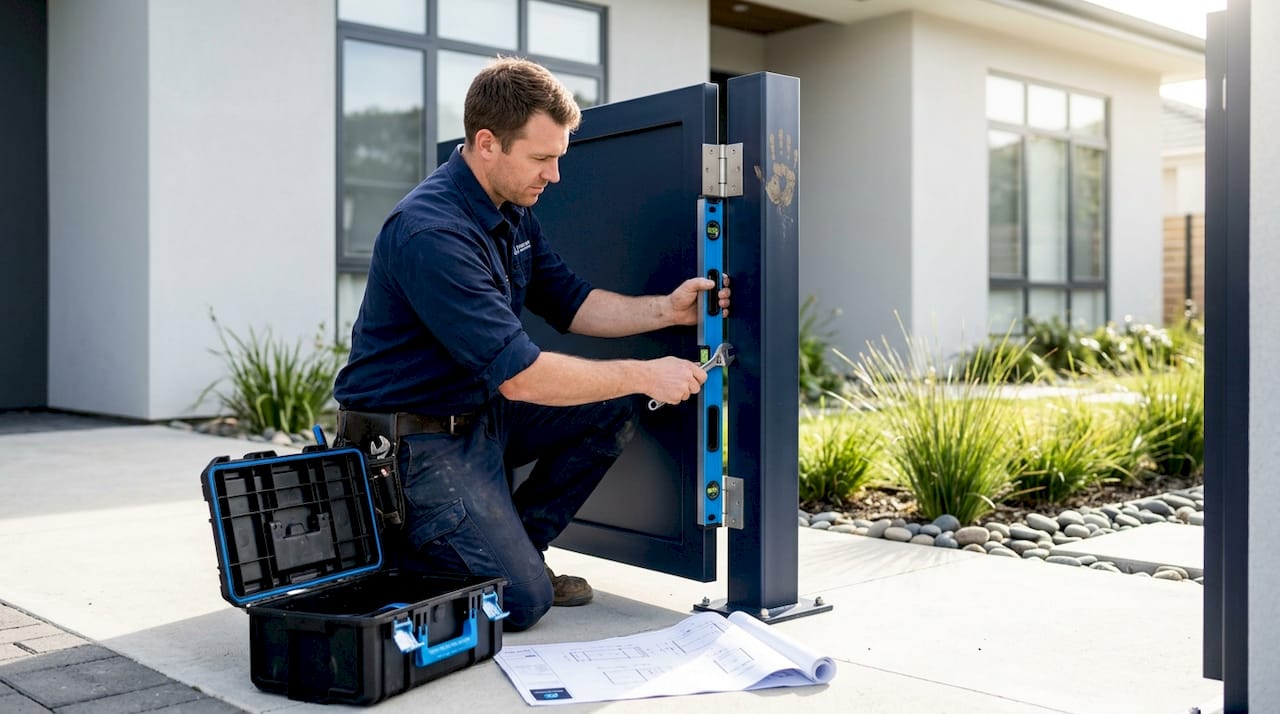
The custom pedestrian gate options available today span a wide range of materials, styles, and finishes, giving you the ability to match or complement virtually any architectural style.
Popular materials and their characteristics:
| Material Aesthetic style Durability Maintenance level Typical cost range | ||||
| Wrought iron | Traditional, ornate | Excellent | Moderate (rust prevention) | $1,500 to $5,000+ |
| Powder-coated steel | Modern, versatile | Excellent | Low | $1,200 to $4,000+ |
| Wood (cedar, redwood) | Warm, natural | Good | Higher (sealing, staining) | $800 to $2,500+ |
| Aluminum | Contemporary, lightweight | Very good | Very low | $900 to $3,000+ |
| Glass panels with steel frame | Minimalist, luxury | Very good | Low to moderate | $3,000 to $8,000+ |
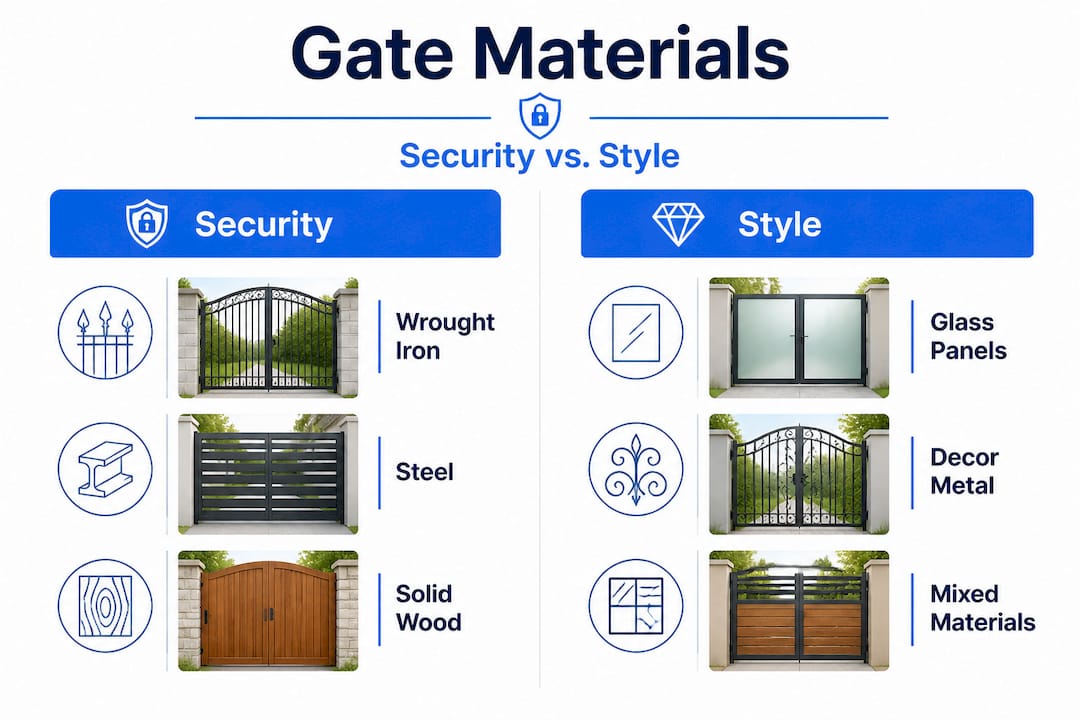
Beyond the core material, finishes and decorative hardware play a major role in the final result. Powder coating allows for virtually any color, from classic matte black to warm bronze or custom RAL colors that match your home’s trim or exterior paint. Decorative hinges, forged scrollwork, monogram plaques, and custom top rails all contribute to a gate that feels bespoke rather than off the shelf.
Pro Tip: When selecting your gate’s design, photograph your home’s exterior elements including window frames, lighting fixtures, and hardscape materials before meeting with a fabricator. Matching these details creates visual cohesion that elevates the entire entrance.
Lighting integration is another factor that many homeowners overlook at the design stage. Recessed gate post lighting, uplighting on the gate structure itself, or integrated LED strips along the bottom rail can make your gate a striking visual feature after dark. For homes in Bel Air or Pacific Palisades where evening curb appeal matters, this detail makes a real difference.
You can explore premium security gate styles that combine structural integrity with high-end design, covering everything from modern minimalist frames to classic wrought iron with custom finials.
Design elements worth considering during your planning:
- Gate swing direction: Inward or outward swing affects space requirements and ease of use
- Single vs. double panel: Double panel gates create a more grand, formal appearance
- Top rail style: Flat, arched, or spear-topped profiles each carry a distinct visual tone
- Hardware finish: Matching hardware to your home’s door handles and exterior fixtures creates a polished look
- Landscape integration: A gate flanked by mature hedges, stone columns, or climbing vines feels intentional and architectural
What to consider when selecting a pedestrian gate
Having seen what’s possible, you’ll want to know how to make the right choice for your property. The selection process involves more than picking a material you like. It requires balancing local regulations, long-term value, and practical daily use.
Start with compliance:
Los Angeles has specific rules governing fence and gate height, placement, and materials, especially near property lines and public rights of way. The LA fence height rules that apply to your street-facing perimeter may limit how tall your gate can be, which directly affects your design options. HOA communities add another layer, often requiring approval for gate style, color, and automation features before installation begins.
The smart gate installation process for luxury properties in Los Angeles typically includes a permitting phase that accounts for these local requirements. Working with a professional who knows the local codes saves you time, money, and the frustration of having to modify or remove non-compliant work.
Evaluate total cost vs. long-term value:
- Material quality: Higher-grade materials cost more upfront but require less maintenance and last decades longer. A well-built wrought iron gate, properly sealed and maintained, can last 50 years or more.
- Installation complexity: Sloped terrain, stone columns, and automation wiring all affect labor costs. Understanding the cost factors for LA fences helps you budget accurately from the start.
- Automation features: Adding an electric operator to a pedestrian gate runs between $500 and $2,000 depending on the motor type and access control system you choose.
- Warranty coverage: Reputable fabricators and installers offer warranties on both the gate itself and the installation. Confirm coverage terms before signing any contract.
Pro Tip: Request itemized quotes that separate material costs, fabrication, installation labor, and permits. This allows you to compare bids accurately and spot where one contractor may be cutting corners.
Key questions to ask before purchasing:
- What is the gate’s rated cycle life (how many open and close cycles before service is needed)?
- Is the material appropriate for Los Angeles’s coastal climate if your property is near the ocean?
- Does the gate design comply with your HOA’s aesthetic guidelines?
- What maintenance schedule does the manufacturer recommend?
- Is the automation system compatible with your existing smart home platform?
Regular maintenance keeps a premium gate performing at its best. This includes lubricating hinges and locking mechanisms twice per year, inspecting welds and coatings for early signs of corrosion, and testing automation systems and battery backups seasonally.
The truth most homeowners miss about pedestrian gates
Here is an observation we have made after working with hundreds of Los Angeles homeowners: most people approach a pedestrian gate as a security purchase and design it as an afterthought. They spend months selecting the perfect front door, landscaping, and exterior lighting, and then they pick a gate based on what looks “fine” in a catalog.
That is a costly mistake. Not because security is unimportant, but because the gate is the first physical statement your property makes. It is seen before your front door, your garden, and your windows. In neighborhoods where property values regularly exceed several million dollars, the quality and design of your entry gate contribute directly to perceived and actual value.
The luxury gate options available through specialists who focus on premium residential work are a fundamentally different product than what you would find at a big-box retailer. Custom fabrication means the gate is built to your exact dimensions, your chosen finish, and your specific hardware preferences. It integrates with your property rather than sitting in front of it.
Working with a local Los Angeles specialist also means your fabricator understands the climate, the permit process, and the design expectations of upscale neighborhoods. That expertise translates into a result that holds up structurally, complies legally, and looks intentional rather than generic.
Think of a well-chosen pedestrian gate not as a security measure with a design component, but as a design statement with strong security built in. That reframe changes how you approach the budget, the selection process, and the long-term care of the gate. Homeowners who invest with this mindset consistently report higher satisfaction with the outcome.
Upgrade your entry: Discover premium pedestrian gates
Ready to put this knowledge to use for your own property?
At fence-gate-estimator.com, we make it easy to go from curiosity to a clear plan. Our platform gives you instant, accurate cost estimates based on your property’s specific needs, whether you’re considering a classic wrought iron design or a fully automated modern entry. Explore premium pedestrian gates to see what is possible for your home, browse custom fencing options that complement your gate, and review our gate automation features to find the right access control solution. Getting a detailed estimate takes minutes, and it gives you a realistic budget baseline before you ever speak with a contractor. Premium access starts with the right information.
Frequently asked questions
How is a pedestrian gate different from a driveway gate?
A pedestrian gate is designed for people on foot and is typically 36 to 48 inches wide, while a driveway gate is built for vehicles and spans 10 to 20 feet or more. The two gate types also differ in hardware weight, automation systems, and structural requirements.
Are pedestrian gates secure enough for upscale homes in Los Angeles?
Yes, modern pedestrian gate security includes heavy-duty locking systems, smart keyless entry, intercom integration, and motion-activated alerts that meet the protection standards expected for high-value properties.
What materials are popular for luxury pedestrian gates?
Luxury pedestrian gates are commonly fabricated from wrought iron, powder-coated steel, aluminum, and glass panel frames, with the choice depending on the desired aesthetic and the custom features that best suit your property.
Do I need permission to install a new pedestrian gate in Los Angeles?
In most cases, yes. Local regulations, zoning rules, and HOA guidelines all apply, and the smart gate installation workflow for Los Angeles properties typically includes a permitting phase to ensure full compliance.
What maintenance do pedestrian gates require?
Regular upkeep includes lubricating hinges and hardware, inspecting coatings for rust or wear, and testing any automation components, with guidance available through resources on security gate care for Los Angeles homeowners.
Recommended
- Fence & Gate Installation Cost Calculator Los Angeles
- Expert Gate & Fence Blog | LA Electric Gate Service
- Expert Gate & Fence Blog | LA Electric Gate Service
- Expert Gate & Fence Blog | LA Electric Gate Service
- Security lighting tips for Calgary homes: Safety and curb appeal
- Access Control Readers with Integrated Cameras: Know Exactly Who’s Entering Your Property