Role of Fencing Contractors: What LA Homeowners Need to Know
By BabyLoveGrowth
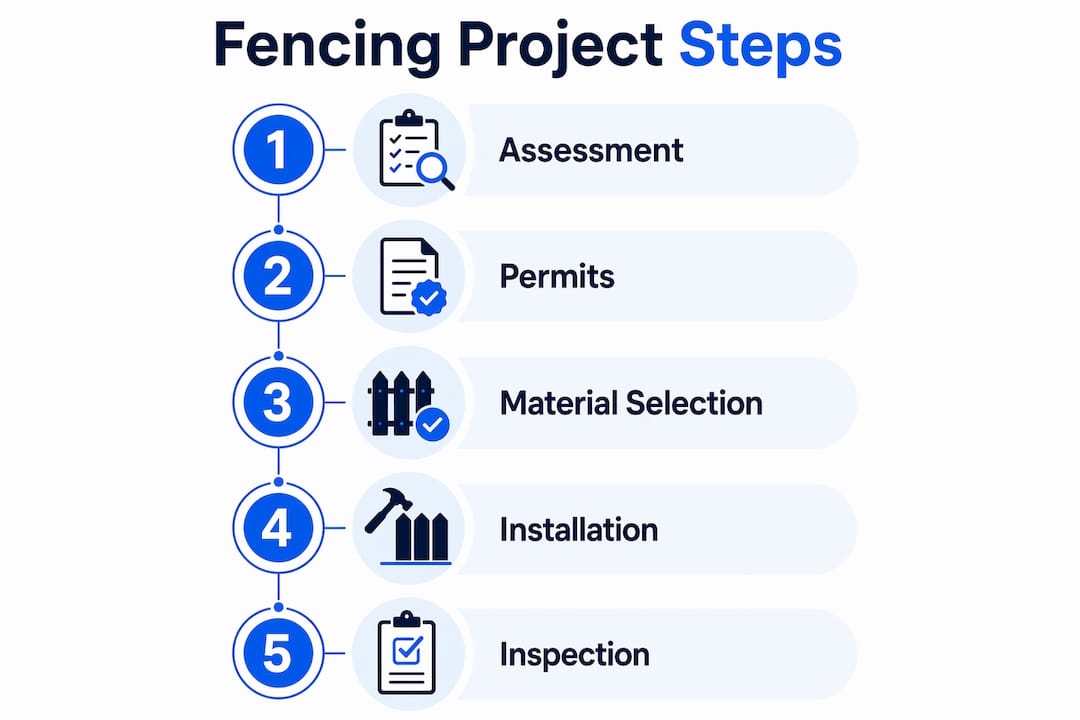
A fencing contractor is a licensed professional who manages the full lifecycle of a residential fencing project, from initial site assessment through permit coordination, material sourcing, installation, and final inspection. The role of fencing contractors extends well beyond simply building a fence. They function as project managers for your property, coordinating every moving part so you don’t have to. For homeowners in Los Angeles, Beverly Hills, and Santa Monica, where zoning rules and HOA requirements add layers of complexity, hiring the right contractor is the difference between a smooth project and a costly dispute.
What services do fencing contractors provide?
A fencing contractor’s responsibilities cover the entire project, not just the physical installation. Understanding the full scope helps you evaluate bids accurately and avoid surprises mid-project.
Here is what a qualified contractor typically handles:
- Property assessment: Walking the site to identify grade changes, soil conditions, underground utilities, and setback requirements before a single post goes in the ground.
- Material and style recommendations: Matching fence materials to your property’s conditions and goals. A Beverly Hills estate with a steep slope needs different solutions than a flat Pasadena lot.
- Fence removal and site preparation: Clearing old fencing, grading where needed, and marking utility lines through services like 811 Dig Alert in California.
- Permit acquisition: Filing applications, preparing site plans, and coordinating with local building departments. This is one of the most underestimated fencing contractor responsibilities.
- Installation: Setting posts at the correct depth and spacing, installing panels, attaching gate hardware, and completing all finish work to specification.
- Post-installation guidance: Advising you on maintenance schedules, coating touch-ups for wrought iron or aluminum, and warranty terms.
The distinction between a fence contractor and a fence builder matters here. Fence contractors coordinate planning, permits, materials, and subcontractors, while fence builders focus mainly on the physical construction. When your project involves permits, inspections, or custom gates, you need a contractor, not just a builder.
Pro Tip: Ask every contractor you interview to walk you through their permit process before you sign anything. A contractor who hesitates or says “permits aren’t usually necessary” is a red flag in Los Angeles, where code enforcement is active.

How do fencing contractors handle permits and compliance in LA?
Permit requirements are one of the most misunderstood parts of residential fencing. Many U.S. municipalities require building permits for fences that exceed a local height threshold, commonly around 6 feet for residential properties. That threshold matters because a standard privacy fence in Studio City or Sherman Oaks often sits right at that limit.
In Los Angeles County, permit triggers include:
- Fence height exceeding 6 feet in most residential zones
- Fences located within a specified distance of a public right-of-way or property line
- Retaining walls combined with fencing that add to the overall height
- Any fence requiring engineered drawings due to soil or slope conditions
Some jurisdictions set even stricter rules. The City of Bend, Oregon, for example, requires engineered plans for fences over 7 feet, with submittal packages that include site plans, dimensions, material specs, and framing details. LA-area cities like Santa Monica and West Hollywood follow similarly detailed submittal requirements.
Local permitting requirements vary widely across municipalities, which is exactly why local knowledge is one of the most practical benefits of hiring a licensed contractor. A contractor who works regularly in Brentwood or Bel Air knows which inspectors to call and how long approvals typically take.
One critical detail many homeowners overlook: your contract must clearly state whether the contractor or the homeowner is responsible for obtaining permits. Unclear permit assignments are a leading cause of project disputes, creating costly delays and corrections. Get this in writing before work begins.
What responsibilities do contractors have for scope and changes?
Project scope management is where many residential fencing projects go wrong. A well-written scope of work is the foundation of a dispute-free project.
Fence contractor scopes specify measurable terms such as linear footage, post spacing (often 8 feet on center), ground-contact treated wood grade, fence height, and gate hardware quantity. These details are not bureaucratic formalities. They are the benchmarks you use to verify the work was done correctly.
Real jobsite conditions frequently require adjustments. Common triggers for scope changes include:
- Terrain surprises: Rocky soil or unexpected grade changes that require longer posts or additional concrete
- Buried utilities: Irrigation lines, electrical conduit, or drainage pipes that shift post locations
- HOA or neighbor disputes: Property line clarifications that change the fence’s total linear footage
- Material substitutions: Supply delays that require switching to an equivalent material grade
When any of these arise, the contractor must issue a formal written change order before proceeding. Verbal instructions create disputes and unpaid extra work for both parties. A change order documents the new scope, the cost adjustment, and the schedule impact. This protects you and the contractor equally.
Pro Tip: Before signing your original contract, ask the contractor to show you a sample change order form. If they don’t have one, that tells you how they handle surprises on the job.
Formal change order protocols protect all parties and maintain project cash flow and schedule. For a $15,000 wrought iron fence project in Encino, even a single undocumented change can spiral into a $2,000 dispute.
Why does licensing and insurance matter when you hire?
Licensing and insurance are not optional credentials. They are the minimum standard for any contractor working on your property.
| Credential What It Covers Risk Without It | ||
| State contractor license (e.g., California C-13) | Confirms trade competency and legal authorization to contract | No legal recourse; work may not pass inspection |
| General liability insurance | Covers property damage caused during installation | You pay for damage to your home or neighbor’s property |
| Workers’ compensation insurance | Covers injuries to workers on your property | You may be liable for medical costs and lawsuits |
| Surety bond | Guarantees project completion or financial remedy | No financial protection if contractor abandons the job |
License requirements vary by state; California requires a C-13 specialty license for fence contractors, plus local registration and bonding in many cities. Licensing boards conduct background checks and maintain public verification portals where you can confirm a contractor’s status before signing anything.
Workers’ compensation is mandatory in 49 states for employers with at least one employee. Proof of coverage is often required before permits are issued. If a contractor cannot produce a current certificate of insurance, do not hire them.
Pro Tip: Verify your contractor’s California C-13 license directly through the California Contractors State License Board (CSLB) website at cslb.ca.gov. It takes 60 seconds and confirms license status, bond, and insurance in one search.
The importance of fencing contractors who carry proper credentials goes beyond legal compliance. Licensed contractors have access to manufacturer warranties, can pull permits in their own name, and give you a clear path to dispute resolution if something goes wrong.
How do contractors ensure pool fence safety and compliance?
Pool barrier fencing is a specialized category with strict safety codes and zero tolerance for shortcuts. A non-compliant pool fence is not just a code violation. It is a liability that can prevent you from opening your pool and expose you to serious legal risk.
Fencing contractors on pool barrier projects must ensure gate hardware and barrier continuity meet inspection requirements to avoid failed certificate-of-occupancy holds. Pool barrier inspections typically occur alongside the pool final inspection. An incomplete barrier delays pool use entirely.
Key compliance points your contractor must address:
- Self-closing, self-latching gates: Gate hardware must meet specific force and height requirements under IRC Section R326 and local amendments
- Barrier continuity: No gaps, openings, or climbable surfaces that would allow a child to pass through or over the barrier
- Gate swing direction: Gates must swing away from the pool, not toward it
- Latch placement: Latches must be on the pool side of the gate, at a height that prevents young children from reaching them
Gate hardware is the most frequent inspection failure point on pool barrier projects. Contractors with code knowledge prevent defects that lead to certificate holds and delayed pool openings.
For homeowners in Culver City, Glendale, or Pasadena planning a pool renovation, pool fence safety codes require a contractor who knows the specific gate hardware standards cold. Getting this wrong means a re-inspection, additional fees, and weeks of delay.
Key takeaways
A licensed fencing contractor manages every phase of your residential project, from permits and scope documentation to compliant installation and final inspection.
| Point Details | |
| Contractors manage the full project | Their role covers assessment, permits, installation, and inspections, not just fence building. |
| Permit responsibility must be in writing | Contracts must specify who obtains permits to avoid disputes and project delays. |
| Written change orders are non-negotiable | Any scope change requires a signed change order before work proceeds to protect your budget. |
| Verify licensing and insurance before hiring | Confirm the California C-13 license and current insurance certificates through the CSLB portal. |
| Pool barrier compliance requires specialist knowledge | Gate hardware and barrier continuity failures are the top cause of pool inspection holds. |
What i’ve learned after watching hundreds of fencing projects go right and wrong
The single most common mistake I see homeowners make is treating the permit question as an afterthought. They focus on material choices and price per linear foot, then get blindsided when the city flags an unpermitted fence six months after installation. In Los Angeles, code enforcement complaints from neighbors are common, and an unpermitted fence can mean forced removal at your expense.
The second pattern I’ve noticed is that homeowners underestimate the value of a detailed written scope. A contract that says “install 120 feet of wood fence” is not a scope of work. It is an invitation to a dispute. The scope should specify post depth, post spacing, wood grade, gate hardware model numbers, and who handles the permit. Every detail you nail down in writing is a conversation you won’t need to have after something goes wrong.
Licensing verification is faster than most people think. The CSLB portal returns results in under a minute. I’ve spoken with homeowners who skipped this step to save time and ended up with unlicensed contractors who disappeared after taking a deposit. The residential fencing upgrade process in LA is complex enough without adding that risk.
My honest recommendation: prioritize contractors who work regularly in your specific city or neighborhood. A contractor who pulls permits in Beverly Hills every month knows the local plan checkers, knows the typical turnaround times, and knows which details inspectors focus on. That local familiarity is worth more than a slightly lower bid from someone who has never worked in your zip code.
— Moin
Plan your LA fencing project with accurate cost estimates
Understanding what fencing contractors do is the first step. Knowing what your project will cost is the next one.

Fence-gate-estimator provides instant, itemized cost estimates for residential fence and gate installations across Los Angeles, including Beverly Hills, Santa Monica, Brentwood, and Pasadena. You can get a detailed breakdown for custom fencing projects covering materials, labor, and permit costs before you contact a single contractor. The platform also covers gate automation options and pedestrian gate installations, using current local labor and material rates. Use it to set a realistic budget, compare contractor bids with confidence, and walk into every conversation knowing your numbers.
Recommended
- Fence post installation in Los Angeles: 5 key essentials | LA Electric Gate Service
- Why Fence Installation Matters for Your Property | LA Electric Gate Service
- Expert aluminum fence installation guide for upscale LA homes | LA Electric Gate Service
- Custom fence components: build luxury, security, and style in LA | LA Electric Gate Service