Why Fence Installation Matters for Your Property
By BabyLoveGrowth
Most homeowners think about fences the way they think about gutters. Necessary, maybe, but not exactly exciting. That framing costs them real money. Understanding why fence installation matters changes how you see your property entirely. A well-planned, properly installed fence affects your home’s resale value, your family’s daily safety, your relationship with neighbors, and your legal standing on the property. In Los Angeles, where lot lines are tight, HOAs are active, and real estate values are serious, the stakes around getting this right are even higher than most people realize.
Table of Contents
- Key Takeaways
- Why fence installation matters for security and safety
- How fences affect property value and curb appeal
- Fence materials and styles suited for Los Angeles homes
- Legal and practical considerations before you install
- How fencing shapes neighborhood appeal and community harmony
- My honest take on why this is so undervalued
- Plan your fence project with the right tools
- FAQ
Key Takeaways
| Point Details | |
| Security is measurable | Visible fences deter crime and reduce opportunistic trespassing, giving families real protection beyond aesthetics. |
| Fences accelerate home sales | Fenced homes sell 18 days faster on average, and 58% of buyers consider a fenced yard essential. |
| Material choice drives ROI | Vinyl and wood consistently deliver the best balance of curb appeal and resale return in the Los Angeles market. |
| Professional installation pays off | Properly set posts extend fence lifespan to 15 to 20+ years versus roughly 3 years for DIY work. |
| Local rules matter | Permit requirements, height restrictions, and shared boundary laws in Los Angeles directly affect your installation timeline and legal standing. |
Why fence installation matters for security and safety
Security is where the conversation about fence installation should start, not finish. A fence is one of the most visible physical deterrents you can add to a residential property. Research confirms that visible perimeter fences significantly reduce opportunistic crime and trespassing incidents. Opportunistic criminals look for easy targets. A solid fence changes the risk calculation immediately.
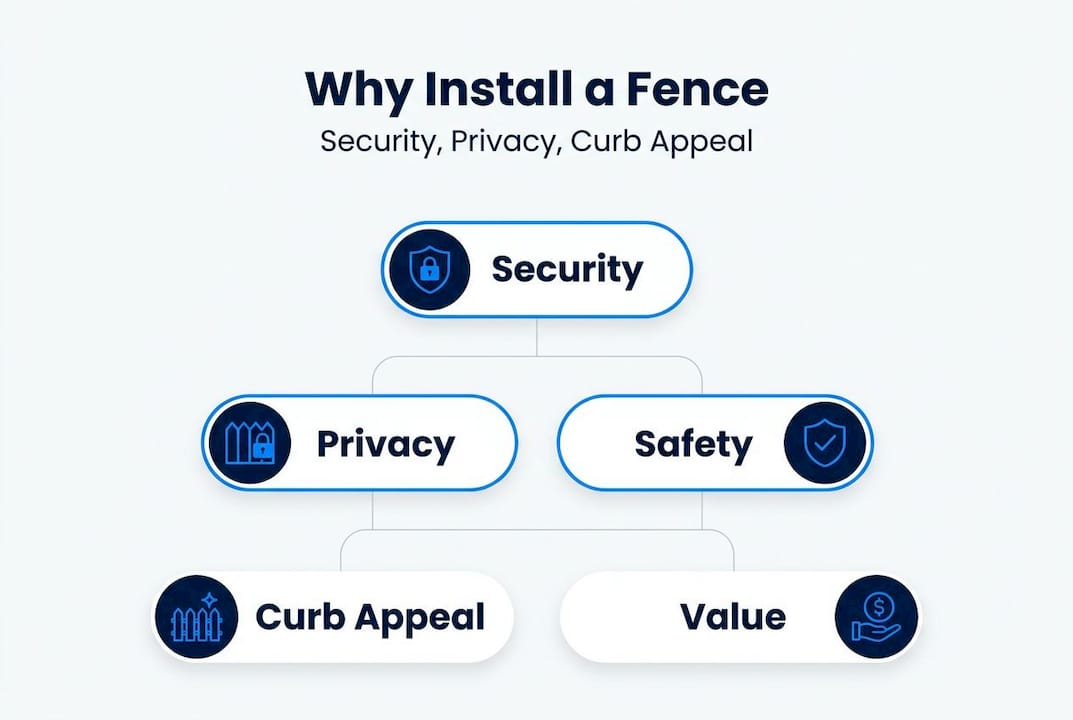
For families with children or pets, the safety argument is even more concrete. In dense Los Angeles neighborhoods like West Hollywood and Beverly Hills, where traffic moves fast and lots are close together, an unfenced yard creates real exposure. A properly installed fence keeps kids and dogs within defined boundaries without constant supervision. That peace of mind is not a soft benefit. It directly reduces risk.
Here is what the security advantages of a well-chosen fence break down to:
- Physical deterrence: A 6-foot privacy fence or an ornamental wrought iron fence signals that access is controlled.
- Visibility control: Solid panel fences limit what potential intruders can see inside your yard, reducing the appeal of the property as a target.
- Entry point management: When paired with a secure gate system, fences restrict access to one or two monitored points rather than an open perimeter.
- Pet and child containment: Fences give children and pets a defined, safe outdoor space without depending on constant adult supervision.
Pro Tip: If your primary goal is security, choose a fence style with minimal horizontal rails on the exterior side. Horizontal rails act as footholds and make scaling easier. Vertical-panel designs in wrought iron or aluminum are far more difficult to climb.
Security and privacy rank as the top priorities for families and pet owners, making a quality fence one of the most persuasive selling points in family-oriented Los Angeles neighborhoods.
How fences affect property value and curb appeal
The numbers on this are clearer than most homeowners expect. According to the 2026 Residential Perimeter Report, 58% of homebuyers consider a fenced backyard essential, and that figure rises to 63% among pet owners. Fenced properties sell 18 days faster on average. In a market like Los Angeles, where carrying costs on a listing add up quickly, shaving nearly three weeks off your time on market is a concrete financial benefit.
Appraisers look at fences differently than buyers do, but the conclusion is similar. Well-maintained, neighborhood-consistent fences improve perceived desirability and appraisal outcomes, particularly when condition and material quality are strong. A fence that looks like it belongs to the home, rather than one that was added as an afterthought, yields noticeably better results in formal appraisals.
“A fence perceived as ‘belonging’ to the home yields better appraisal results than one that feels mismatched or purely functional.” — Rocky Mountain Fence
One factor many homeowners overlook: fences also expand usable outdoor living space. That space does not show up in official square footage calculations, but it absolutely affects lifestyle value and buyer perception.
What reduces value rather than adds it:
- A fence style that clashes visually with the surrounding neighborhood
- Damaged, leaning, or unpainted fence panels at time of listing
- Heights or materials that violate local codes and require removal at buyer’s request
- Neighborhood inconsistency, where over- or under-investing in fencing reduces ROI
The takeaway is not simply “install a fence and your value goes up.” It is that the right fence, installed correctly, in the right material for your neighborhood, adds measurable value. A mismatched or neglected fence does the opposite.
Fence materials and styles suited for Los Angeles homes
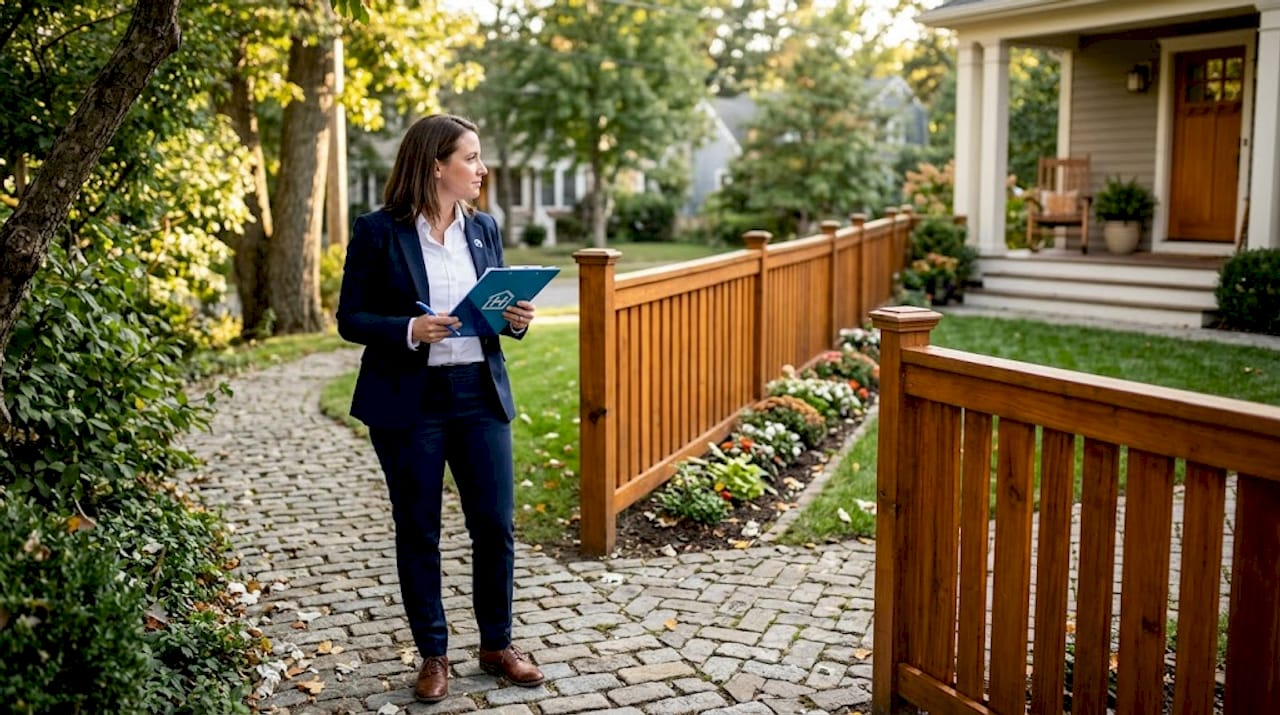
Choosing a fence material is not just a budget decision. It is an aesthetic and durability decision that affects how your property is perceived for years. Los Angeles presents a specific set of conditions: mild but occasionally wet winters, intense summer sun, coastal salt air in neighborhoods like Santa Monica, and a premium real estate market where visual standards are high.
Here is how the most common materials compare for LA-area properties:
| Material Avg. Cost per Linear Foot Lifespan Maintenance Level Best For | ||||
| Wood (cedar/redwood) | $15 to $30 | 10 to 20 years | Moderate | Privacy fences, traditional homes |
| Vinyl | $20 to $40 | 20 to 30 years | Low | Low-maintenance privacy, clean aesthetics |
| Wrought iron | $25 to $100+ | 50+ years | Low to moderate | Upscale neighborhoods, security |
| Aluminum | $20 to $50 | 30 to 40 years | Very low | Pool enclosures, decorative use |
| Chain link | $10 to $20 | 15 to 20 years | Very low | Utility areas, budget applications |
Wood and vinyl generally offer the best balance of curb appeal and resale value in Los Angeles markets. Wrought iron is the material of choice in higher-end areas like Brentwood, Bel Air, and Beverly Hills, where the visual weight and permanence of iron signals both quality and security. Chain link, while functional and cost-effective, tends to return the least value in residential resale scenarios.
For historically styled neighborhoods like Pasadena or Craftsman-heavy areas of Glendale and Burbank, wood fencing with period-appropriate detailing integrates far more naturally than vinyl or aluminum. Matching the fence to the architectural character of your home and street is not optional if you care about long-term property value.
Pro Tip: In coastal neighborhoods where salt air accelerates corrosion, powder-coated aluminum is a smarter long-term choice than untreated wrought iron, even if the upfront cost is comparable. Ask your installer specifically about the coating process and warranty coverage.
For ideas on combining materials and custom components, the guide on luxury fence components offers detailed options tailored to Los Angeles properties.
Legal and practical considerations before you install
The importance of fencing extends into legal territory that most homeowners do not think about until they are already in a dispute. In Los Angeles, getting this part right upfront saves you from expensive corrections and strained neighbor relationships.
- Verify your property lines first. Incorrect fence placement relative to property lines is one of the most common and costly fencing mistakes. A formal survey before installation is not optional in borderline cases. Precise surveying and clear neighbor communication before breaking ground are the two steps that prevent long-term legal disputes.
- Pull the required permits. Los Angeles has specific height restrictions by zone and fence type. Permits are typically required for fences exceeding 3.5 feet in front yards or 6 feet in rear and side yards, though local ordinances vary by city and HOA.
- Understand shared boundary rules. California law governs shared boundary fences carefully. Repairs to shared fences typically require 30-day written notice to your neighbor before work begins. Unilateral action creates legal exposure.
- Mark utilities before digging. Calling 811 before any post-digging work is both legally required and practically critical. Professional installation includes utility marking as standard protocol, which amateur installations frequently skip.
- Account for terrain. Slopes, drainage issues, and uneven soil affect post depth requirements and structural integrity. Professionals use stepping or racking techniques to handle grade changes cleanly. Ignoring terrain causes premature fence failure within a few seasons.
Pro Tip: Before you talk to any contractor, get a copy of your HOA’s CC&Rs and your local city’s fence ordinance. Showing up to the first consultation already knowing your height limits and approved materials saves time and prevents expensive redesigns.
Proper post setting is where the quality gap between professional and DIY installation becomes undeniable. Correct post depth and curing extends a fence’s functional lifespan from roughly 3 years with amateur installation to 15 to 20 years or more with professional work. That gap makes the labor cost argument for DIY essentially irrelevant over a 10-year window.
For more on how local terrain specifically affects installation costs and planning decisions in Los Angeles, the breakdown on terrain and fence costs is worth reviewing before you get quotes.
How fencing shapes neighborhood appeal and community harmony
A fence does not exist in isolation. It is one of the most visible elements of your property from the street, and it sends a signal about how you relate to your neighborhood. In residential communities across Sherman Oaks, Studio City, and Encino, consistent fencing styles along a block contribute directly to the overall feel and desirability of the area. Neighborhoods where properties look coordinated and well-maintained simply attract stronger buyers.
The benefits of well-executed fencing extend beyond your own lot:
- Noise reduction: Solid wood or masonry-style privacy fences can reduce ambient street noise meaningfully, which matters in denser urban neighborhoods near Culver City or West Hollywood.
- Visual order: Defined property boundaries prevent the visual clutter of undefined yards and give the street a more intentional, curated appearance.
- Privacy without isolation: A thoughtfully selected fence height and style creates personal space without the fortress effect that alienates neighbors and conflicts with HOA standards.
- Community property values: When multiple homes on a block maintain quality fencing, the cumulative effect on neighborhood property values is real and recognized by appraisers and buyers alike.
HOA rules in communities throughout Los Angeles set baseline standards for fence heights, materials, and colors for exactly this reason. Following those standards is not just about compliance. It reflects an investment in the collective value of your neighborhood, which comes back to you at resale.
My honest take on why this is so undervalued
I’ve worked closely with homeowners and property managers across Los Angeles for years, and the pattern I see most consistently is this: people spend enormous energy deciding on countertops, appliances, and interior finishes, then treat fencing as a last-minute line item. That is backwards.
In my experience, the fence is often the first thing a buyer sees and the last thing a seller thinks to address. I’ve seen properties in Pasadena and Brentwood where a beautifully remodeled interior was undercut by a sagging, weathered fence that signaled neglect before anyone walked through the door. The buyer’s impression forms at the curb. Always.
The other misconception I hear constantly is that professional installation is too expensive relative to DIY. When you factor in a 3-year versus 20-year lifespan, the math is not even close. DIY fencing also skips the steps that matter most: utility marking, proper post curing, terrain assessment. Those are not optional steps. They are the steps that determine whether your fence is still standing and structurally sound in 15 years.
What I’ve found is that homeowners who treat fence installation as a strategic property decision, rather than a grudging necessity, consistently see better outcomes. They get the right material for their neighborhood, pull proper permits, communicate with neighbors before they start, and end up with a fence that adds value rather than creating problems. That outcome is available to anyone willing to approach the process with the same seriousness they bring to any other major home improvement.
— Moin
Plan your fence project with the right tools
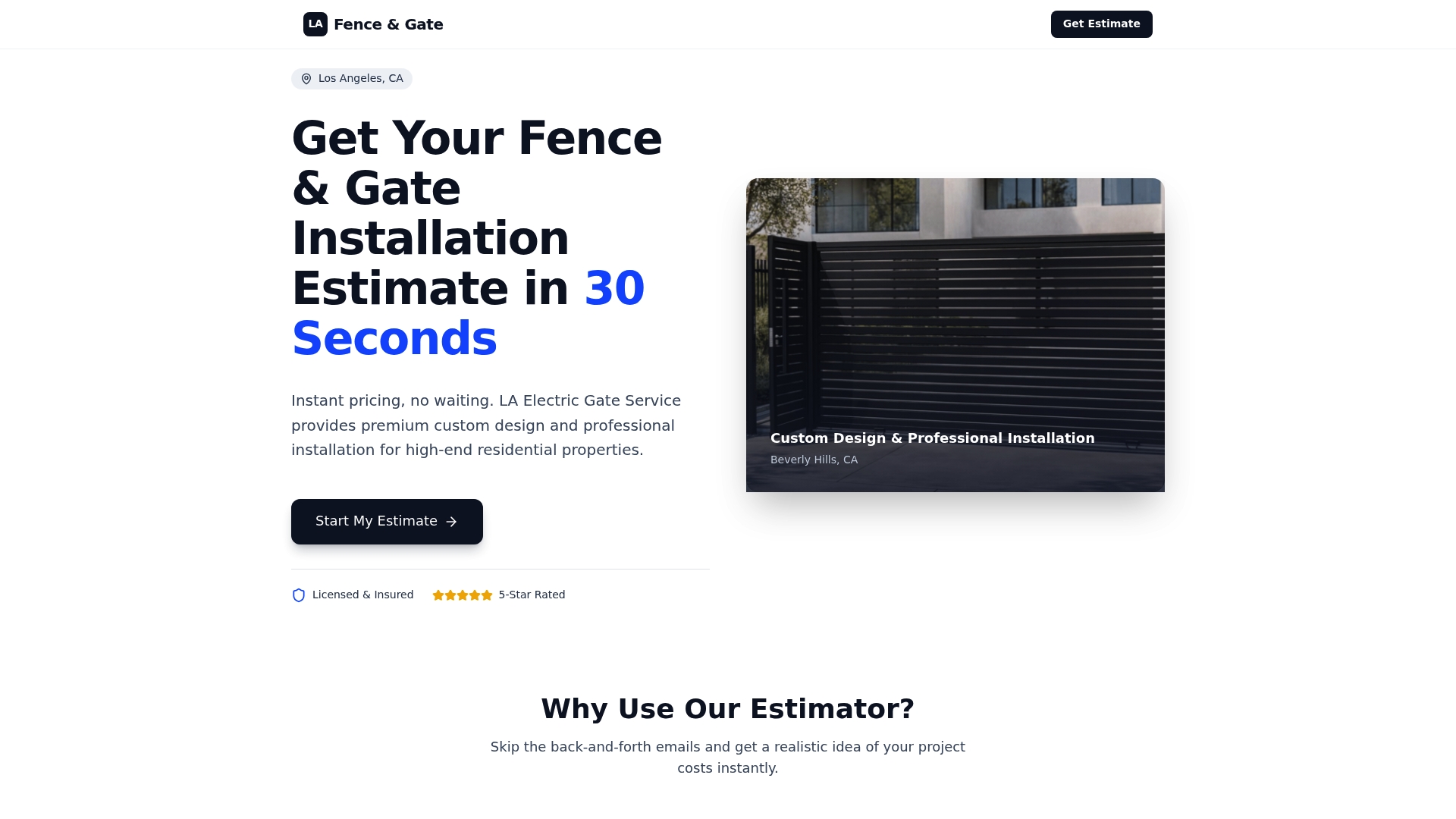
Knowing why fence installation matters is the first step. Knowing what it will actually cost in your specific Los Angeles neighborhood is where planning gets real. Fence-gate-estimator gives you an instant, accurate cost breakdown based on your property dimensions, material preferences, and feature choices including gate automation, at no obligation. The estimates use current local labor and material rates, so the numbers reflect what contractors in your area are actually charging.
Whether you’re looking at a custom fencing solution for a Beverly Hills property, a pedestrian gate for improved access control, or a full perimeter system with automated gate features, Fence-gate-estimator covers the full range of residential options across Los Angeles and surrounding cities. Start your estimate at fence-gate-estimator.com and get the budget clarity you need before the first post goes in the ground.
FAQ
Does a fence actually increase home value?
Yes. Fenced homes sell 18 days faster on average, and appraisers recognize well-maintained, neighborhood-consistent fences as desirable property features that improve perceived value.
What fence material is best for Los Angeles homes?
Wood and vinyl offer the best resale return for most LA properties, while wrought iron and powder-coated aluminum perform better in upscale or coastal neighborhoods where durability and visual appeal are priorities.
Do I need a permit to install a fence in Los Angeles?
Most fence installations in Los Angeles require a permit, particularly for structures exceeding 3.5 feet in front yards or 6 feet along rear and side property lines. Requirements vary by city and HOA, so confirm with your local building department before starting.
How long does a professionally installed fence last?
With correct post depth and proper curing, a professionally installed fence lasts 15 to 20 years or more, compared to roughly 3 years for a typical DIY installation.
What should I do before installing a fence near a property line?
Have a formal survey done to confirm exact property boundaries, notify your neighbor in writing at least 30 days in advance if the fence is on a shared boundary, and contact 811 to mark underground utilities before digging any post holes.
Recommended
- Fence post installation in Los Angeles: 5 key essentials | LA Electric Gate Service
- How terrain impacts fence costs in Los Angeles: smart choices | LA Electric Gate Service
- Fence & Gate Installation Cost Calculator Los Angeles
- Custom fence components: build luxury, security, and style in LA | LA Electric Gate Service