Avoid Costly Delays: LA HPOZ Fence Rules and 3.5 Foot Front Limit
By BabyLoveGrowth AI
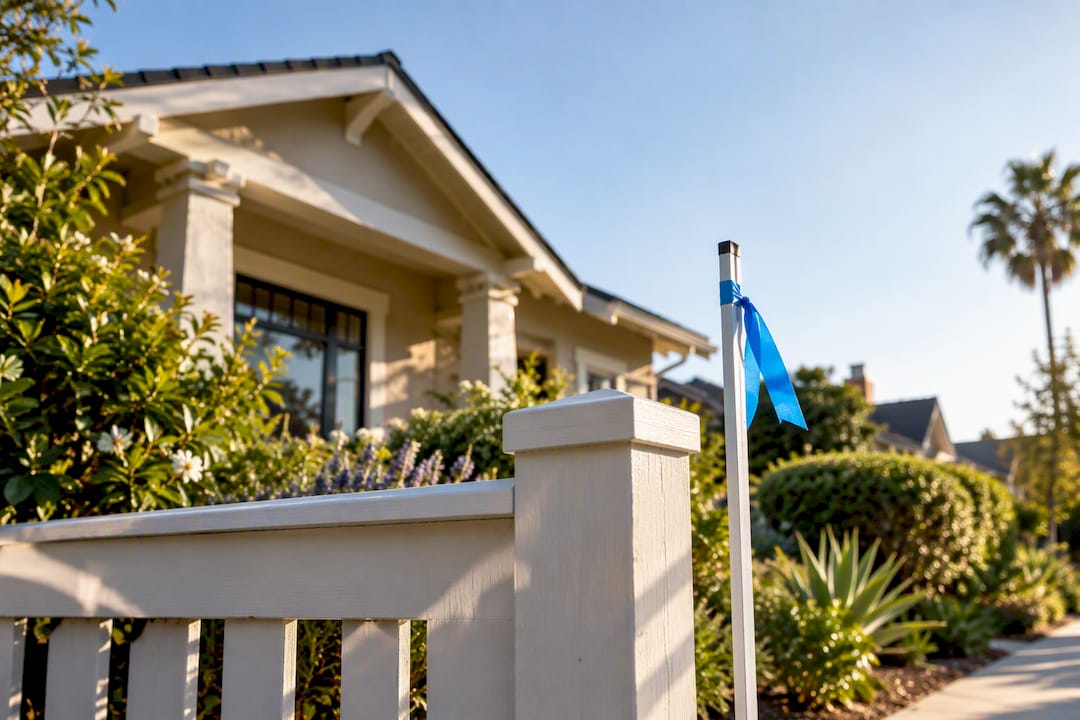
If your property sits inside a Historic Preservation Overlay Zone, that status changes what you can build and how fast you can build it. HPOZ membership and Contributing designation trigger an added planning review for any fence visible from the street, on top of standard zoning. Expect front-yard limits near 3.5 feet and side or rear limits around 6 feet, with hillside Special Grading Areas often capping heights further. Check ZIMAS and call your assigned HPOZ planner before you order materials.
TL;DR:
- Fences in Los Angeles HPOZs often require approval for style, height, and placement, with front-yard limits around 3.5 feet and side or rear fences up to 6 feet, depending on the district.
- A fence over 6 feet or in hillside zones usually needs a LADBS permit and possibly engineering sign-off, even if it complies with standard zoning height restrictions.
- Owners must identify their property’s HPOZ and Contributing status on ZIMAS before designing or purchasing materials to avoid costly redesigns.
- Minor repairs on Contributing properties may qualify for faster conforming work approval, while significant changes demand full Certificates of Appropriateness.
- Budget at least two to three months for approval processes and include planning and permit fees in the project budget.
Table of Contents
- What Historic District Fence Rules Los Angeles Owners Face in an HPOZ
- Fence Height Limits and When LADBS Permits Kick In
- Certificate of Appropriateness vs. Conforming Work: Which Applies to Your Fence
- How to Verify HPOZ and Contributing Status Before You Design Anything
- Building a Permit-Ready HPOZ Fence Application
- What HPOZ Fence Approval Actually Costs in Time and Money
- Fence Designs That Historic District Reviewers Actually Approve
- How Fence-Gate-Estimator Supports HPOZ Fence Planning
- Three Things To Confirm Before You Order a Historic District Fence
- Get a Permit-Aware Fence Estimate Before You Design Anything
- Where to Verify the Rules Yourself
- Sources
- FAQ
What Historic District Fence Rules Los Angeles Owners Face in an HPOZ
A Historic Preservation Overlay Zone (HPOZ) is a designated neighborhood where the city has adopted a Preservation Plan governing exterior changes, including fences, gates, and walls visible from the public right-of-way. Los Angeles has more than 35 designated HPOZs, each with its own Preservation Plan spelling out acceptable materials, heights, and styles for that specific streetscape. The Los Angeles Department of City Planning administers these zones, with an HPOZ Board and planning staff reviewing proposed work against the local plan.
Whether your fence gets a light touch or heavy scrutiny depends on your parcel’s Historic Resources Survey status. A Contributing property, meaning a structure the survey identifies as adding to the district’s historic character, faces the strictest review. A Non-Contributing property gets more latitude. Preservation Plans typically flag these fence-related concerns:
- Material authenticity (wrought iron, wood picket, low masonry versus chain link or vinyl)
- Sightlines from the sidewalk and whether a fence blocks views of a historic facade
- Precedent, meaning whether similar fences already exist on the block
- Height and placement relative to the original property line
Fence Height Limits and When LADBS Permits Kick In
Citywide zoning rules apply inside HPOZs too, layered underneath the historic review. Standard residential lots limit front-yard fences to 3.5 feet, while side- and rear-yard fences can typically reach 6 feet without triggering a building permit from the Los Angeles Department of Building and Safety (LADBS).
Here’s where it gets more complicated for historic properties:
- A fence over 6 feet, a retaining wall, or work in a Special Grading Area usually requires a LADBS building permit and possibly a soils engineer’s sign-off.
- Front-yard encroachments onto the public right-of-way, like a gate that swings over the sidewalk easement, may need a revocable “A” or “B” permit from city engineering, separate from LADBS.
- Hillside neighborhoods like parts of Los Feliz or Beachwood Canyon fall under Special Grading Area rules that can cap fence height regardless of what standard zoning allows.
Statistic Callout: A fence that stays under LADBS’s height and grading thresholds can still need HPOZ sign-off. Street visibility, not just height, is what pulls a fence into historic district review.
Certificate of Appropriateness vs. Conforming Work: Which Applies to Your Fence
LAMC Section 12.20.3 lays out four review paths for HPOZ projects, and picking the wrong one wastes time and money. Here’s how they break down for fence work:
- Certificate of Appropriateness (COA): Required for substantial changes to a Contributing property, such as a new front-yard fence style that departs from the district’s documented historic pattern. COAs typically go before HPOZ staff or the full Board.
- Certificate of Compatibility (CCMP): Applies to new construction or major additions on a Non-Contributing lot, judged against the surrounding streetscape rather than the property’s own history.
- Conforming Work on Contributing elements (CWC): A faster staff-level approval for minor, in-kind repairs, like replacing rotted picket fence sections with matching wood.
- Conforming Work on Non-Contributing elements (CWNC): The simplest path, often for fences on Non-Contributing lots that already match district guidelines.
Skip the required review and you risk a stop-work order, fines, and a forced teardown. Owners can appeal an HPOZ Board denial to the City Planning Commission within the posted appeal window.
How to Verify HPOZ and Contributing Status Before You Design Anything
Every fence plan should start on ZIMAS, the city’s free zoning and property lookup tool, not with a contractor sketch.
- Enter your address, then open the “Historic Preservation Overlay Zone” and “Historic Resources Survey” dropdowns on the parcel report.
- Note whether the result reads Contributing, Non-Contributing, or unsurveyed, since that status decides your review path.
- Write down the HPOZ name, the linked Preservation Plan document, and the case planner’s contact information listed for your district.
Confirming this before you buy materials or hire a fabricator avoids the common, expensive mistake of designing a fence for a district that requires a completely different style.
Building a Permit-Ready HPOZ Fence Application
A clean submission moves faster than one that arrives incomplete and gets bounced back for revisions.
- Prepare a site plan showing the fence’s location relative to the property line and street.
- Include elevation drawings with exact height, and photos of the existing condition plus comparable fences nearby.
- Attach material samples or spec sheets, especially for wrought iron or masonry.
- Write a short compatibility narrative explaining how the design matches the Preservation Plan’s stated guidelines.
- Add structural drawings or engineering calculations if the wall exceeds 6 feet or sits on a graded slope.
- Submit to the assigned planner and expect a public notice period before any Board hearing.
Pro Tip: Call your HPOZ planner before you finalize drawings. A five-minute conversation about your district’s documented fence precedent can save weeks of resubmittals later.
What HPOZ Fence Approval Actually Costs in Time and Money
Staff-level Conforming Work reviews often clear in a matter of weeks. A Certificate of Appropriateness that requires a full HPOZ Board hearing usually takes two to three months from submission to decision, factoring in public notice and meeting scheduling.
Statistic Callout: Application fees vary by review type and case complexity, and LADBS permit costs depend on project scope, so budget for both a planning fee and a separate building permit fee if your fence height triggers LADBS review.
- Enforcement for unpermitted work can include a stop-work order, fines, and mandatory removal or restoration at the owner’s expense.
- Rebuilding a wrongly installed fence, plus permit fees the second time around, routinely costs more than doing the paperwork correctly up front.
- HPOZ violations tied to Contributing properties tend to draw closer scrutiny during future sale or refinance inspections.
Fence Designs That Historic District Reviewers Actually Approve
HPOZ staff favor fences that look like they belong to the era of the surrounding homes, not a modern retrofit bolted onto a Craftsman bungalow.
- Reversible connections and lightweight hardware that could be removed without damaging original masonry or siding.
- Wrought iron or low masonry piers for Victorian and Craftsman streetscapes in districts like Angelino Heights.
- Simple wood picket fencing at bungalow-court and streetcar-suburb blocks, matched to documented historic photos where available.
- Preserving existing stone or brick gateposts even when replacing the fencing panels between them.
Pro Tip: If your district’s Preservation Plan documents a taller historic fence type, such as a masonry wall original to the block, HPOZ Boards can approve heights above the standard 3.5-foot front-yard limit as a documented exception.
How Fence-Gate-Estimator Supports HPOZ Fence Planning
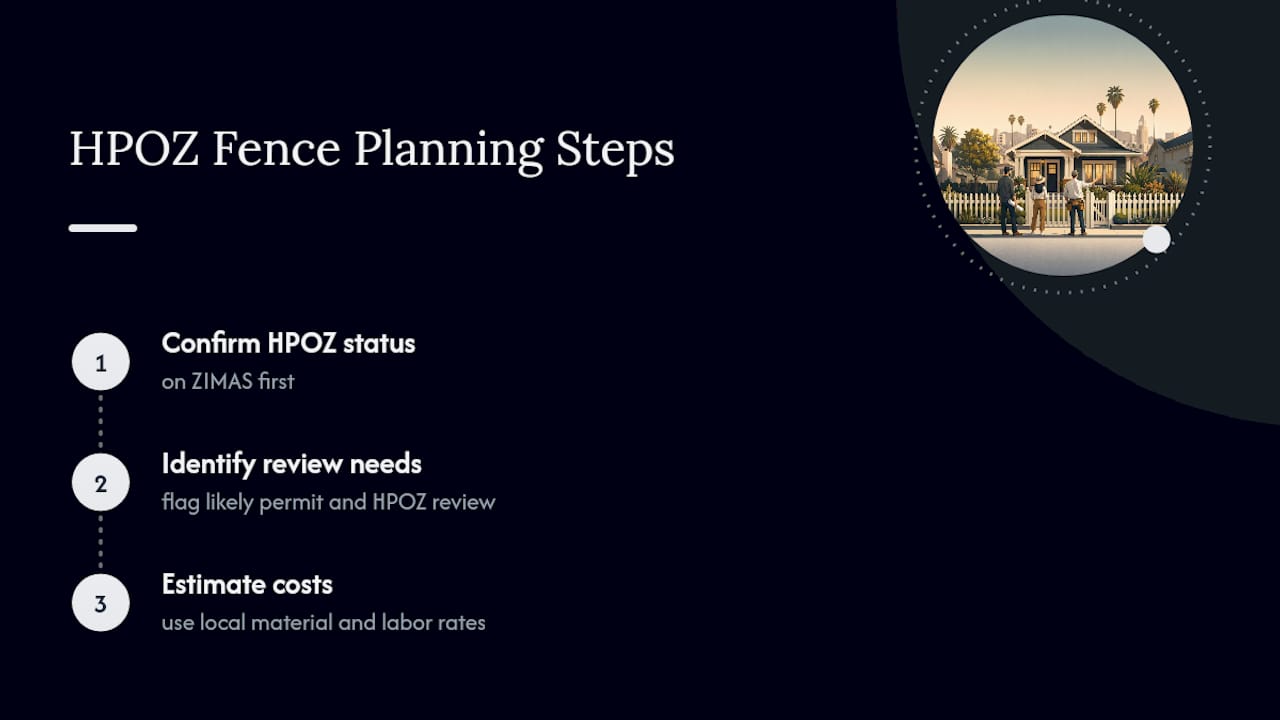
Author Moin covers Los Angeles fence and gate regulations for property owners navigating exactly this kind of overlapping review. An online fence and gate estimator tool can draw on local material and labor rates to flag likely permit and HPOZ review needs alongside realistic cost ranges for different design options. The practical sequence stays the same regardless of neighborhood: confirm HPOZ and Contributing status on ZIMAS first, then use a cost estimate to plan your budget around the design your district will actually approve.
Three Things To Confirm Before You Order a Historic District Fence
Skip the design conversation until you know your parcel’s HPOZ and Contributing status on ZIMAS. Then call the assigned planner, not a general planning hotline, and start assembling permit-ready drawings around whatever precedent that person cites. Finally, budget real calendar time for Board review. Two to three months isn’t a worst case; it’s typical for a Certificate of Appropriateness.
— Moin
Get a Permit-Aware Fence Estimate Before You Design Anything
A contractor quote that ignores HPOZ review timelines and Special Grading Area rules is a quote you’ll have to revise later. Fence-gate-estimator builds Los Angeles material and labor rates into every estimate and flags where a design is likely to need HPOZ or LADBS approval before you commit to materials.
Run your property details through the estimator to get a realistic cost breakdown for wrought iron, wood picket, or low masonry options suited to historic streetscapes from Angelino Heights to West Adams. If your design involves an automated driveway gate, the custom fencing and driveway gates service pages outline what professional installation looks like once your HPOZ paperwork clears. Request an on-site visit through the estimator landing page to turn a rough budget into a permit-ready plan your HPOZ planner and installer can both work from.
Where to Verify the Rules Yourself
- Historic District Project Review, Los Angeles City Planning
- LAMC Section 12.20.3, HPOZ ordinance text
- ZIMAS parcel and zoning lookup
- LADBS front-yard fence permit guidance
Sources
- Historic District Project Review | Los Angeles City Planning
- Complete Guide to Fence Permits in Los Angeles, CA (2026)
- ZIMAS (Zoning Information and Map Access System)
- 04 - Front Yard Fences, Walls (non-retaining), and Gates
FAQ
What Are the Fence Regulations in Los Angeles County?
Standard Los Angeles zoning limits front-yard fences to 3.5 feet and generally allow 6 feet in side and rear yards without a LADBS building permit. Properties inside an HPOZ face an added layer: any fence visible from the street needs HPOZ review regardless of whether it meets standard height limits.
What Are the New Fence Rules in California in 2026?
There’s no statewide fence height law overriding local zoning; Los Angeles’s front-yard and side-yard limits and HPOZ review requirements remain the operative rules for city properties. Always confirm current thresholds through LADBS and your district’s Preservation Plan rather than assuming a statewide standard applies.
Can I Put Up a 7-Foot Fence?
Not in a standard front yard, where the limit is 3.5 feet, but a 7-foot fence in a side or rear yard typically triggers a LADBS building permit since it exceeds the roughly 6-foot threshold. Inside an HPOZ, a fence that height also needs HPOZ approval if it’s visible from the street or a documented historic exception applies.
Can I Build an 8-Foot Fence in California?
A fence over 6 feet generally requires a LADBS building permit and, on many lots, additional engineering review for structural stability. In a Special Grading Area or hillside lot, height caps can apply regardless of the standard rule, so verify your parcel’s grading status before designing anything that tall.
Does Fence-Gate-Estimator Handle Historic District Projects?
Some online fence and gate estimators provide local material and labor cost breakdowns and flag likely permit or HPOZ review needs for your address. Current pricing for services like custom fencing and gate installation is available directly through the estimator tool.