4–12 Week LA Driveway Gate Timeline, Permits & Instant Estimate
By BabyLoveGrowth AI
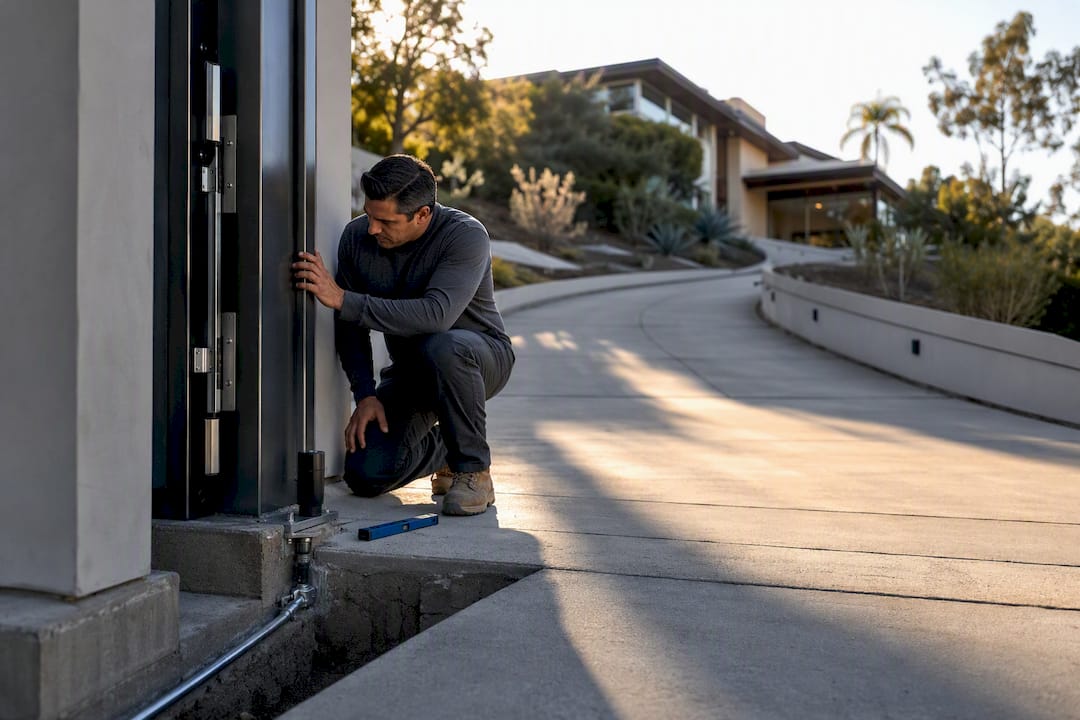
Most Los Angeles driveway gate projects run four to twelve weeks from signed contract to final commissioning, and permits plus fabrication lead time are almost always the two stages that decide where you land in that range. Site work and installation day itself rarely take more than a few days once materials arrive. If you’re planning a gate for a Beverly Hills, Encino, or Pasadena property, your fastest first move is scheduling a site survey or running the numbers through an instant estimator so you know your realistic window before you sign anything.
TL;DR:
- Custom ironwork fabrication can take three to six weeks or longer, while prefab aluminum gates typically ship within one to two weeks.
- Front-yard gates taller than six feet require both building and electrical permits, with potential setbacks of 20 feet or more from the roadway.
- Starting permit and HOA review processes early and requesting expedited plan checks can significantly reduce project delays.
- Having complete, code-ready drawings and locking in equipment lead times upfront helps avoid rework and extends timelines.
Table of Contents
- Driveway Gate Installation Timeline: A Quick Stage-by-Stage Snapshot
- What Actually Happens During Each Stage?
- How Do Los Angeles Permits and Setbacks Affect the Schedule?
- Custom Iron or Prefab Aluminum: Which Fits Your Timeline?
- What Happens on Installation Day, and What Could Slow It Down?
- How Can You Shorten Your Driveway Gate Timeline?
- Why Local Experience Actually Shortens Your Timeline
- Get a Realistic Timeline Before You Sign Anything
- Official Resources Worth Checking Before You Submit
- Sources
- FAQ
Driveway Gate Installation Timeline: A Quick Stage-by-Stage Snapshot
Every Los Angeles driveway gate project moves through the same six stages, but the calendar days spent in each one vary widely depending on your property, your HOA, and your gate design. Here’s the realistic breakdown homeowners in Sherman Oaks, Studio City, and Brentwood typically see:
- Site survey and quote: 1 to 5 days. You control the pace here by getting a contractor on-site quickly.
- Permits and approvals: 2 to 10 weeks. Largely out of your hands once submitted, though expedited plan-check helps.
- Fabrication and equipment lead time: 2 to 8 weeks. Custom ironwork runs longer than prefab aluminum.
- Site work, trenching, and concrete: 2 to 5 days, plus cure time. Weather and soil conditions can push this further.
- Installation and commissioning: 1 to 3 days once everything is on-site, matching what installers across the region report for typical residential jobs.
- Inspection and sign-off: Usually scheduled within a week of final commissioning, depending on your local building office’s calendar.
Permits and fabrication are the two stages worth watching closely. Everything else tends to move fast once these two clear.
What Actually Happens During Each Stage?
Understanding what installers and inspectors are doing behind the scenes helps you avoid the resubmittals and back-and-forth that quietly add weeks to a project.
1. Site survey. A qualified installer documents grade, slope, driveway width, and the exact property line before drawing anything. Skipping this step is the single most common reason plans bounce back during city review, since dimensions that don’t match the actual site force a resubmittal.
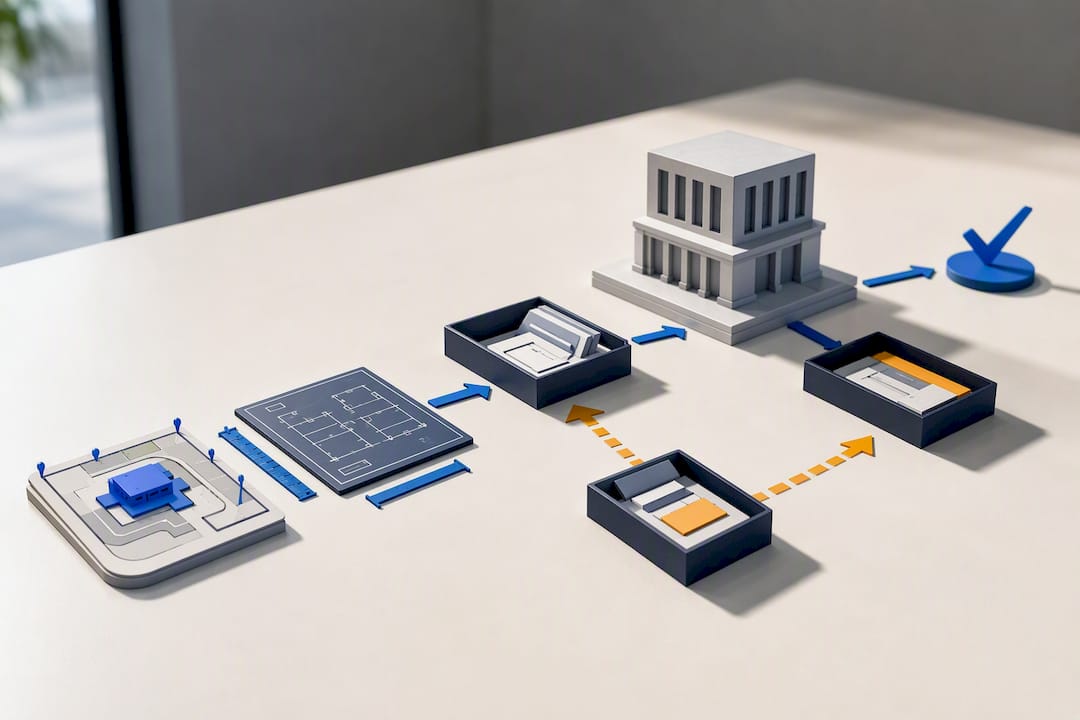
2. Permits and plan-check. Gates taller than six feet require a building permit, and any motorized gate needs an electrical permit to supply power to the operator. Your plans also need to satisfy UL 325 safety requirements before LADBS or BOE will sign off. Incomplete drawings, missing electrical scope, or a design that violates the Fence Height District rules are the most common causes of a rejected submission.
3. Fabrication. Custom wrought iron takes considerably longer to build than a prefabricated aluminum panel gate, and gate operators vary by model availability. Order early and specify a widely stocked operator model rather than a rare one.
4. Site work. Trenching depths for conduit, concrete footing placement, and utility locating (always call before you dig) happen here. Concrete needs real cure time before hardware gets mounted.
5. Installation and commissioning. Mounting, wiring, safety-device testing (photo eyes, edge sensors), programming the operator, and the final walkthrough all happen in this window.
Pro Tip: Ask your contractor for a copy of the stamped drawings before you sign the contract. A complete, code-ready submission on day one avoids the resubmittal loops that can silently add three to eight weeks to your schedule.
How Do Los Angeles Permits and Setbacks Affect the Schedule?
Los Angeles permit rules are where most homeowners underestimate their timeline, and the details matter more than most contractors explain up front.
- A building permit is required for any gate structure over six feet, and an electrical permit covers power run to a motorized operator.
- Front-yard gates typically fall under a Revocable ® Permit, and the Bureau of Engineering’s setback guidance can require a 20-foot driveway clearance from the roadway or, in some cases, a formal variance.
- Standard LADBS plan-check review commonly takes several weeks; an expedited plan-check option can compress that to just a few business days for an added fee.
- HOA or architectural review boards, common in gated communities across Bel Air and Pasadena, can add another two to eight weeks on top of city review, often running in parallel if you start early.
- Fee bands vary by permit type and gate scope, and starting site work before permits are actually issued risks stop-work orders and re-inspection delays that cost far more time than waiting would have.
Reading the driveway gate setback rules before you finalize a design saves a redesign cycle later.
Custom Iron or Prefab Aluminum: Which Fits Your Timeline?
Your material and equipment choices move your schedule more than almost anything else in the process.
- Custom ornamental iron typically takes three to six weeks or more to fabricate, since each panel is built to your exact opening.
- Prefab aluminum gates ship much faster, often in one to two weeks, because they’re built to standard dimensions.
- Operator and motor lead times depend heavily on the model. Common, widely stocked operators move faster than specialty units.
- Engineering stamps or structural upgrades (needed for unusually tall or heavy gates) can add real time if your design pushes past standard specifications outlined in local fence height rules.
What Happens on Installation Day, and What Could Slow It Down?
Installation day itself is usually the shortest part of the whole process, but a handful of site conditions routinely stretch it out.
- Rock, roots, or old irrigation lines hiding under the driveway can add a full day or more of unplanned excavation.
- Steep slopes or narrow driveways, common on hillside lots in Bel Air and the Hollywood Hills, sometimes require extra grading before trenching starts.
- Concrete footing cure time has to happen before hardware mounts, so installers build buffer days into the schedule rather than rushing it.
- Combined tasks like trenching, low-voltage wiring, and physical mounting typically all happen on the same one to three-day window once materials are staged.
Pro Tip: Clear the driveway and mark any known sprinkler lines or buried cable before your crew arrives. It’s a five-minute task that can save a half day of guesswork on-site.
How Can You Shorten Your Driveway Gate Timeline?
A few decisions early in the process consistently determine whether a project finishes in six weeks or stretches past three months.
- Hand over complete, code-ready drawings at the proposal stage and have your contractor submit the permit application directly.
- Request expedited plan-check when your timeline is tight, and get that fee built into your written quote up front.
- Lock in equipment lead times in writing. A contract with hard stage dates for fabrication and delivery protects you from open-ended waiting.
- Start HOA or architectural review immediately, ideally in parallel with your city permit submission rather than after it.
Why Local Experience Actually Shortens Your Timeline
Los Angeles gate timelines rarely fail because of installation. They fail because of permit surprises and HOA calendars nobody planned for. Watching enough of these projects across the city shows the same pattern: homeowners who get a realistic estimate before signing avoid the worst delays. That’s exactly why a local, LA-specific estimator matters more here than a generic national calculator, and why hiring a licensed contractor who pulls your permits directly is worth every dollar.
— Moin
Get a Realistic Timeline Before You Sign Anything
Fence-gate-estimator is the alternative to guessing at a contractor’s verbal quote. Its instant estimator gives you a realistic local cost figure along with timeline bands based on your material, size, and automation choices, before you commit to anything.
That means you walk into your first contractor conversation already knowing typical price ranges for manual and automatic gates, and you can compare that against your own property’s setback and HOA situation. The estimator connects you directly to permit-aware installers who handle the LADBS and BOE paperwork on your behalf, which is where most delays actually happen. If you’re weighing driveway gate options or considering custom ironwork for a Beverly Hills or Bel Air property, get your instant estimate now and schedule a consultation to lock in your realistic project calendar.
Official Resources Worth Checking Before You Submit
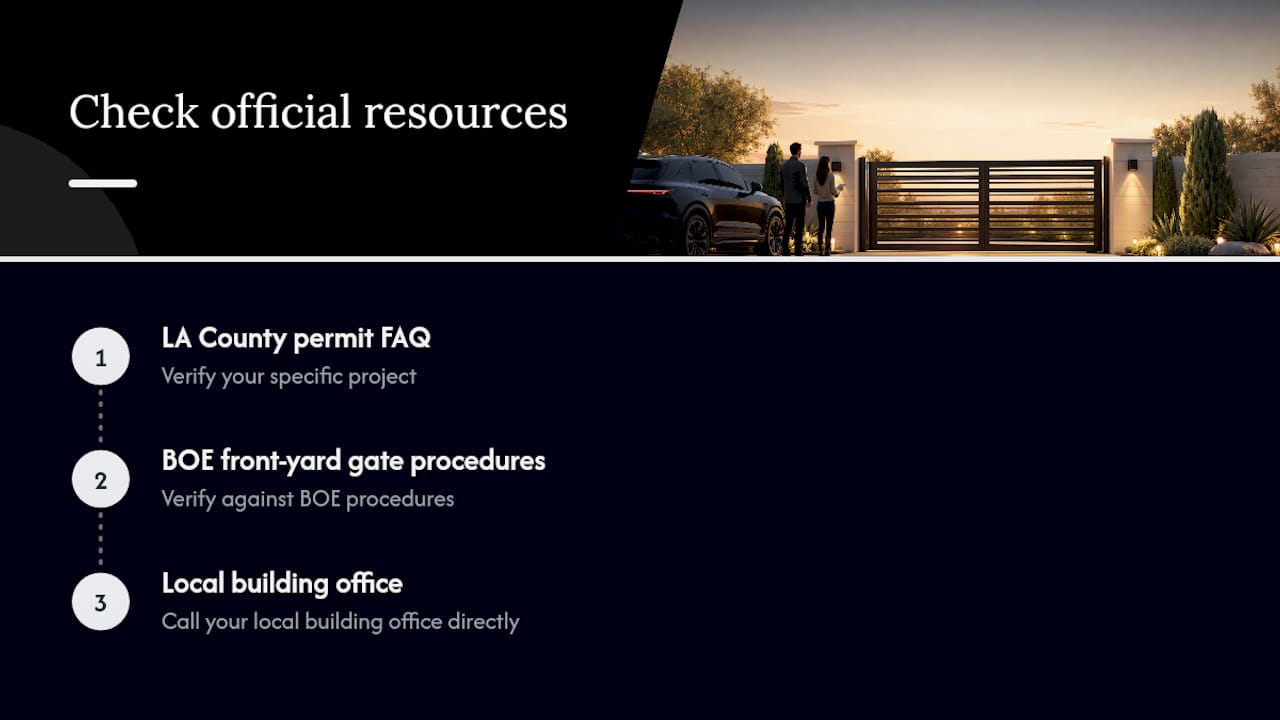
Verify your specific project against LA County’s permit FAQ and the BOE’s front-yard gate procedures, then call your local building office directly.
Sources
- Los Angeles County building and electrical permit FAQ
- 04 - Front Yard Fences, Walls (non-retaining), and Gates | Bureau of Engineering
- LA municipal code — Fence Height District (LAMC 13.10)
FAQ
How Long Does a Driveway Gate Installation Take in Los Angeles?
Most projects take four to twelve weeks from contract to commissioning, with permits and fabrication controlling most of that range. Physical installation itself usually takes just one to three days once materials arrive on-site.
Do I Need a Permit for a Driveway Gate in Los Angeles?
Yes, if your gate exceeds six feet in height, and you’ll always need an electrical permit if the gate is motorized. The Fence Height District rules also govern style and operator requirements for front-yard gates.
What Is the 20-Foot Setback Rule for LA Driveway Gates?
Front-yard gates processed under a Revocable Permit can require a 20-foot clearance from the roadway under Bureau of Engineering guidance, and some properties need a variance to build closer.
How Much Does a Driveway Gate Cost in Los Angeles?
A manual driveway gate typically costs between 1500 and 4000 dollars, while an automatic gate retrofit typically costs between 1500 and 4500 dollars. Custom ironwork and full automation with access control cost more; Fence-gate-estimator’s tool gives you a specific figure based on your property.
Can I Speed Up My Gate Permit Approval?
Yes, expedited plan-check can shorten standard LADBS review from weeks to just a few business days for an added fee. Submitting complete, stamped drawings on the first pass is the other biggest factor in avoiding delay.
Recommended
- Weekly, Monthly, Annual Sliding Gate Maintenance with LA Cost Estimate
- 4x4–8x8 Gate Post Sizes for Los Angeles Homeowners, DIY Rules & Estimator
- Driveway Gate Clearance: Widths, Bottom Gaps, and Slope Rules | LA Electric Gate Service
- 20 Foot Rule: LA Homeowners’ Map to Driveway Gate Setback Rules | LA Electric Gate Service