Why Select Steel Fencing for Your Home: A Clear Guide
By BabyLoveGrowth
Steel fencing is defined as a perimeter barrier system fabricated from carbon or galvanized steel, typically finished with powder coating or hot-dip galvanizing to resist corrosion. Homeowners and property managers who want to know why select steel fencing get a straightforward answer: steel delivers longer lifespan, stronger security, and lower lifetime maintenance costs than wood or aluminum. In Los Angeles neighborhoods from Beverly Hills to Pasadena, where property values are high and curb appeal matters, steel fencing earns its place as the top-tier choice for both protection and design.
Why select steel fencing over other materials?
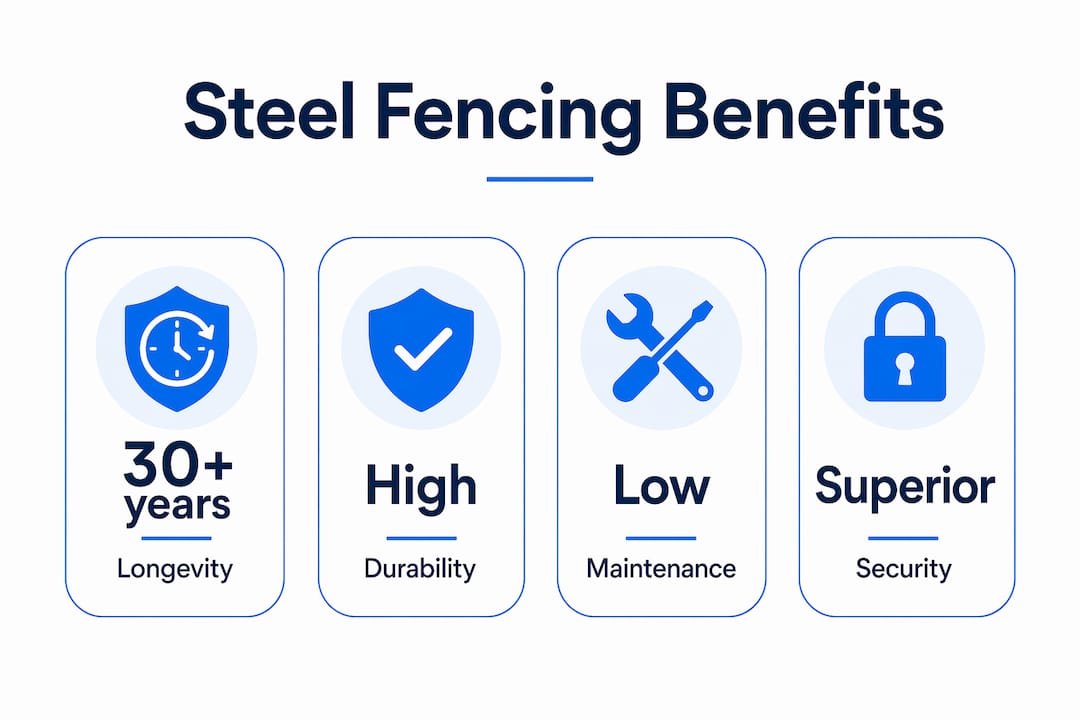
Steel fencing outperforms wood and aluminum on every durability metric that matters to a homeowner planning a long-term investment. Steel frame systems last 25–40+ years, while wood fences typically need full replacement within 10–20 years. That gap alone changes the financial math entirely.
Wood degrades at the soil line because fastener holes trap moisture and accelerate rot. Steel posts set in concrete footings do not share that weakness. Steel posts maintain structural integrity over decades when installed correctly, while wood posts rot at the point of soil contact. Concrete footings paired with steel posts also prevent moisture ingress, which is the leading cause of post failure in residential fencing.
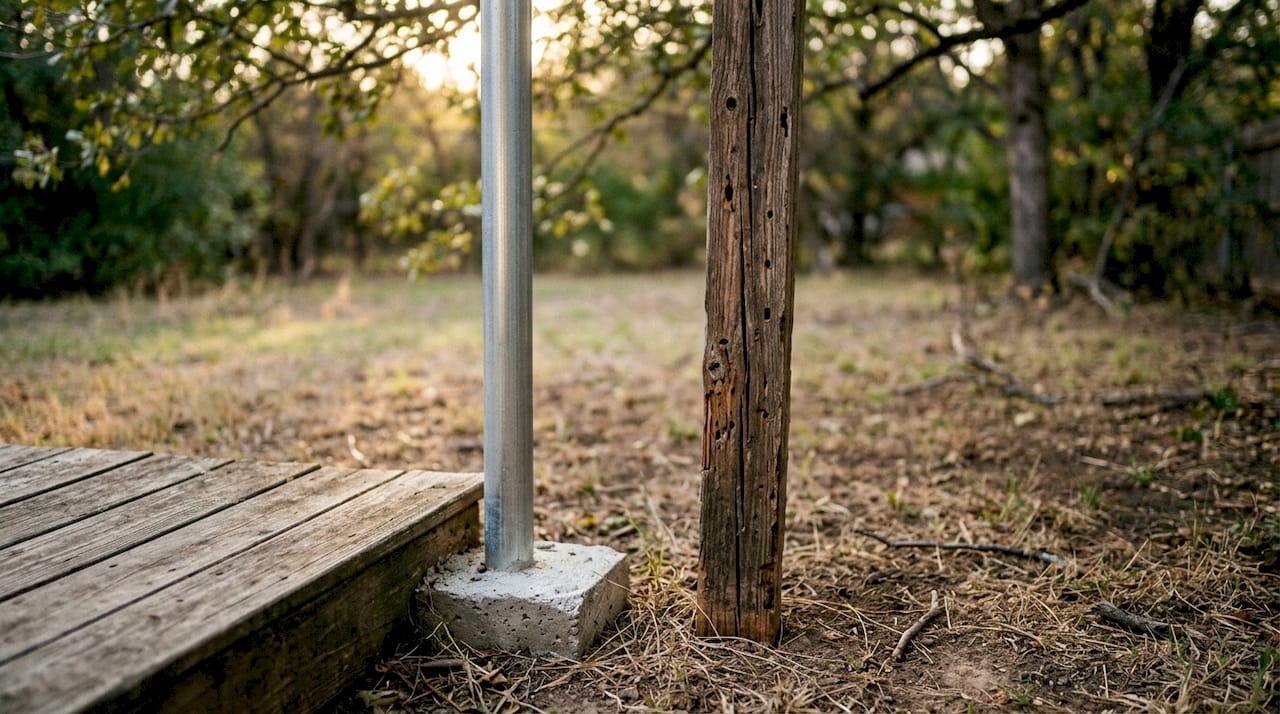
Modern galvanized and powder-coated finishes add another layer of protection. Premium steel systems can last 30+ years without retreatment when the coating is applied correctly. That figure reflects real-world performance, not just manufacturer claims.
Pro Tip: Ask your installer whether the steel is hot-dip galvanized or electro-galvanized. Hot-dip galvanizing provides a thicker zinc layer and performs significantly better in coastal climates like Santa Monica or Malibu.
| Material Lifespan Durability Maintenance demand | |||
| Steel | 25–40+ years | Resists rot, pests, and corrosion | Occasional cleaning only |
| Wood | 10–20 years | Susceptible to rot, pests, and moisture | Staining or sealing every 2–3 years |
| Aluminum | 20–30 years | Resists rust but dents easily | Low, but weaker structurally |
Aluminum fences resist rust but bend under impact. Wood fences look natural but demand constant attention. Steel sits in a category of its own when durability and structural strength are the priority.
How does steel fencing provide superior security?
Steel fencing is the preferred material for high-security residential and commercial properties because of its physical resistance to forced entry. Steel resists cutting, climbing, and forced entry more effectively than wood or aluminum. A determined intruder can kick through a rotted wood panel or bend an aluminum rail. A properly installed steel fence does not give way under that kind of pressure.
For homeowners in Brentwood, Encino, or West Hollywood managing high-value properties, that physical deterrence is not a minor detail. It is the core reason commercial property managers prefer steel fencing for asset protection. The same logic applies to residential properties where security and privacy are non-negotiable.
Steel fencing also supports add-on security features that wood and aluminum cannot accommodate as reliably:
- Anti-climb spikes or finials mounted on top rails to deter scaling
- Integrated sensor wiring threaded through hollow steel posts for perimeter alarm systems
- Automated gate integration with access control panels, keypads, or smart home systems
- Visibility through pickets that lets you see threats approaching without sacrificing containment
- Height customization from 4 feet for decorative use to 8 feet or taller for full security perimeters
Pro Tip: Pair your steel fence with a residential security fence design that includes anti-climb spacing between pickets. Standard spacing of 4 inches or less prevents most forced-entry attempts.
Steel fencing works as a passive security system around the clock. It does not require power, software updates, or monitoring fees. That reliability is a core advantage over electronic-only security solutions.
What maintenance and cost factors should homeowners evaluate?
Steel fencing carries a higher upfront cost per linear foot than wood, but that initial price gap closes quickly when you account for lifetime maintenance. Wood fences require staining, sealing, or painting every 2–3 years, while steel needs only occasional soap-and-water cleaning. Over a 15-to-20-year ownership period, those repeated wood maintenance cycles add up to thousands of dollars in labor and materials.
Steel fencing is financially advantageous over 15 years because repair and maintenance costs are nearly eliminated. A homeowner who plans to stay in their Glendale or Burbank property for the long term gets a better return from steel than from any cheaper alternative. The math is straightforward: pay more once, or pay repeatedly for wood.
Here is a practical maintenance comparison:
- Steel fencing: Rinse with a garden hose seasonally. Wipe down powder-coated surfaces with mild soap annually. Inspect welds and gate hardware once per year. Touch up any scratched coating with matching paint to prevent rust spots.
- Wood fencing: Sand and re-stain or re-seal every 2–3 years. Replace warped or cracked boards as they fail. Treat for termites and wood-boring insects in Southern California climates. Expect partial replacement within 10–15 years.
- Vinyl fencing: Clean regularly to prevent mold and discoloration. Replace cracked panels after UV exposure. Steel fencing requires minimal upkeep compared to vinyl, which becomes brittle in direct sun over time.
A higher upfront investment in steel fencing is justified for homeowners planning long-term occupancy. Warranty coverage from reputable installers typically covers fabrication defects and coating failures, adding another layer of financial protection. Always ask for a written warranty before signing any installation contract.
What design options make steel fencing appealing for Los Angeles homeowners?
Steel fencing is not a single look. It covers a wide range of styles that suit everything from a Spanish Colonial Revival in Pasadena to a modern glass-and-concrete home in Culver City. Steel fencing supports both security and curb appeal through powder-coated color options and fabricated designs that match any architectural style.
Los Angeles homeowners can choose from these primary steel fencing styles:
- Ornamental steel: Decorative pickets with finials, ideal for front yards in Bel Air or Santa Monica where visibility and elegance matter equally
- Palisade fencing: Vertical steel pales with pointed tops, offering strong deterrence without sacrificing an upscale appearance
- Privacy steel panels: Solid or louvered steel panels that block sightlines while maintaining a modern, clean profile
- Mesh and welded wire: Open-view options for pool enclosures or side yards where airflow and visibility are priorities
- Modern flat-bar designs: Horizontal or vertical flat steel bars with minimal ornamentation, suited to contemporary architecture in West Hollywood or Studio City
Powder coating delivers color durability that paint cannot match. You can specify matte black, bronze, forest green, or custom RAL colors to complement your home’s exterior palette. The coating bonds directly to the steel surface and resists chipping, fading, and UV degradation far better than standard exterior paint on wood.
Custom gate components complete the picture. A fabricated steel driveway gate with matching pedestrian gate creates a unified entry statement that adds measurable value to a property. Fence-gate-estimator.com offers custom fencing design options that let you specify style, height, color, and gate type before committing to a budget.
Key Takeaways
Steel fencing is the most cost-effective, durable, and secure fencing material for Los Angeles homeowners who plan to stay in their property long term.
| Point Details | |
| Lifespan advantage | Steel lasts 25–40+ years versus 10–20 years for wood, reducing replacement costs significantly. |
| Security strength | Steel resists cutting, climbing, and forced entry better than wood or aluminum fencing. |
| Low maintenance | Steel requires only occasional cleaning, while wood demands staining or sealing every 2–3 years. |
| Design flexibility | Powder-coated steel comes in ornamental, privacy, palisade, and modern styles to match any L.A. property. |
| Long-term value | Steel’s higher upfront cost is offset by eliminated maintenance and repair expenses over 15–20 years. |
Steel fencing in Los Angeles: what I’ve seen that most guides miss
After working with homeowners across Los Angeles, from Sherman Oaks to Brentwood, one pattern stands out clearly. Homeowners who choose wood fencing to save money upfront almost always call back within seven to ten years asking about replacement. The rot, the warped boards, the termite damage. It follows a predictable timeline.
What surprises most people is how coastal proximity accelerates that timeline. Properties within a few miles of the Pacific in Santa Monica or Malibu face salt-laden air that corrodes untreated metal and destroys wood even faster than inland properties. Galvanized and powder-coated finishes are not optional extras in those zones. They are the baseline requirement for any steel fence that will actually last.
The other thing I tell every homeowner: installation quality matters as much as material quality. A premium steel fence installed with shallow posts and no concrete footings will fail prematurely. A mid-grade steel fence installed correctly with proper footings and sealed welds will outlast an expensive fence with poor workmanship. Vet your installer as carefully as you vet your material choice.
Budget for the full project, not just the fence panels. Gates, automation hardware, permits, and concrete all add to the total. Homeowners who plan for those costs upfront avoid the frustration of a half-finished project. Steel fencing is a long-term investment in your property’s security, value, and appearance. Treat it like one.
— Moin
Get an accurate steel fence estimate for your Los Angeles property
Knowing the benefits of steel fencing is the first step. Knowing what it will actually cost for your specific property is what makes the decision real.
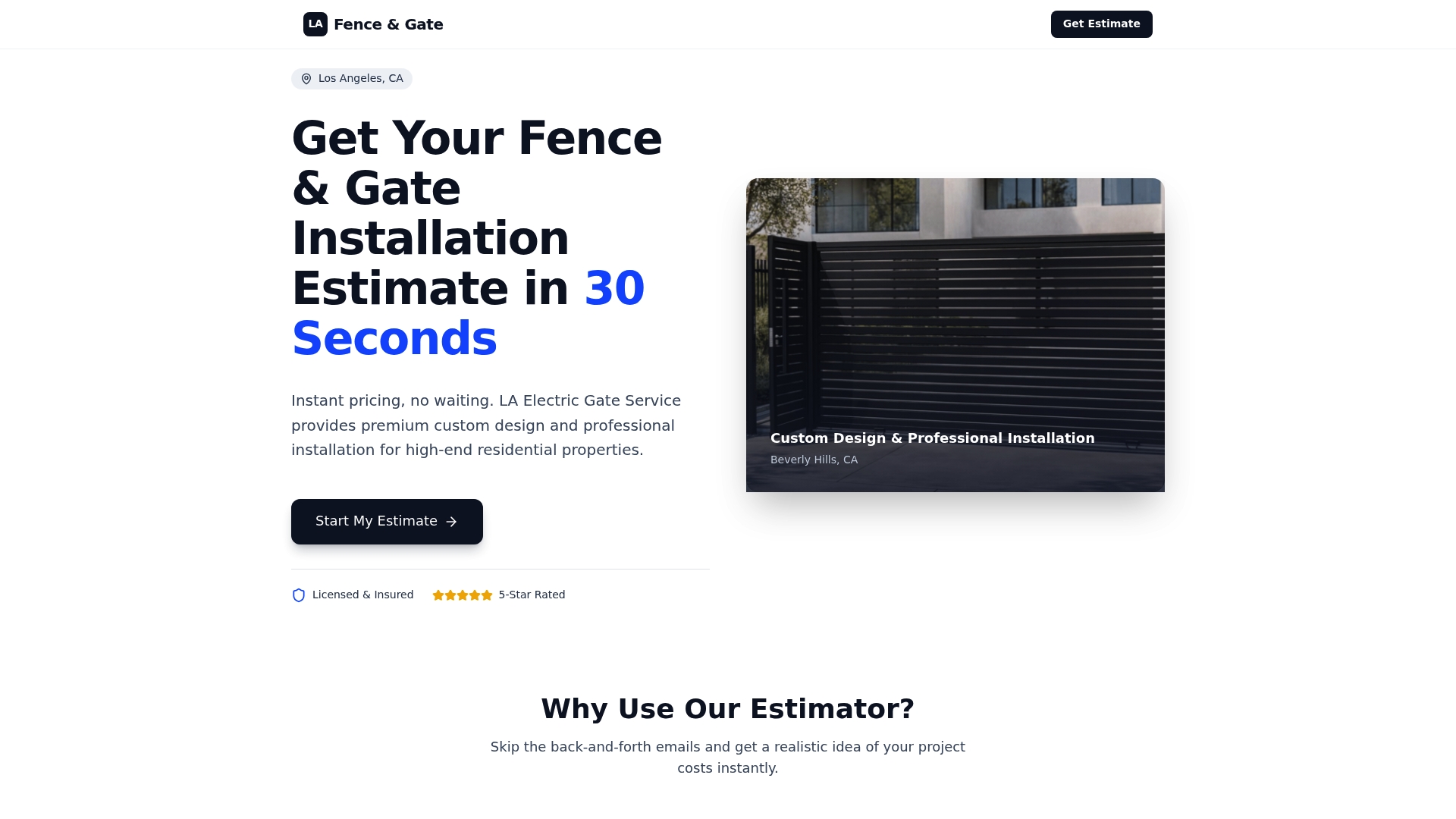
Fence-gate-estimator.com provides instant, itemized cost estimates for steel fence and gate installations across Los Angeles, including Beverly Hills, Encino, Pasadena, and Culver City. You enter your property dimensions, preferred style, and gate requirements. The calculator returns a detailed breakdown using current local labor and material rates. No phone call required to get a realistic number. For homeowners ready to move from research to planning, the fence cost calculator at Fence-gate-estimator.com is the fastest way to understand your full project budget before speaking with an installer.