What Is Fence Footing? A Homeowner's Depth Guide
By BabyLoveGrowth
What Is Fence Footing? A Homeowner’s Depth Guide
A fence footing is a cast-in-place concrete foundation poured underground to anchor fence posts against wind loads, soil movement, and frost heave. Without a proper fence post foundation, even a well-built fence will lean, rot, or collapse within a few years. Footing quality is the primary factor separating fences that last over 25 years from those that fail within a few seasons. Understanding what fence footings require, from depth and diameter to concrete strength and drainage, gives you the foundation to plan a fence that holds up in Los Angeles’s variable soils and occasional high winds.
What is fence footing, and why does it matter?
A fence footing is the structural base that transfers the load of your fence posts into stable ground below. The industry term for this element is a “cast-in-place concrete footing,” and it serves two jobs: resisting lateral pressure from wind and resisting vertical movement from soil expansion.
Footing depth must extend at least 6 inches below the local frost line, and the hole diameter must be at least three times the largest post dimension. For a standard 4x4 post, that means a 12-inch diameter hole. These numbers come from established practice and are referenced in building codes across the country, including guidelines aligned with the International Code Council (ICC).
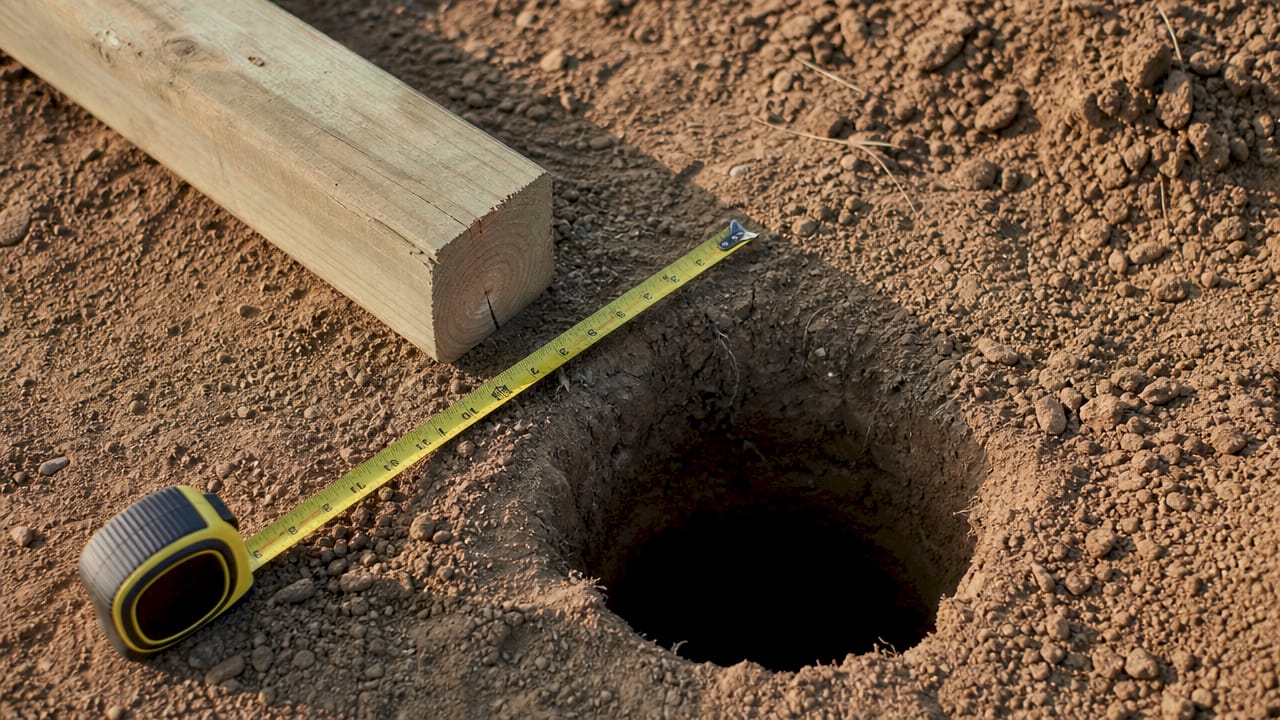
In Los Angeles, the frost line is shallow compared to northern states, where it can reach 42–48 inches. That means LA homeowners get a break on depth, but they still need to address drainage and soil variability. Sandy soils in areas like Santa Monica behave differently from the clay-heavy ground common in parts of Pasadena or Burbank. The local soil conditions directly affect how you prepare and size your footing.
What are the types of fence footings?
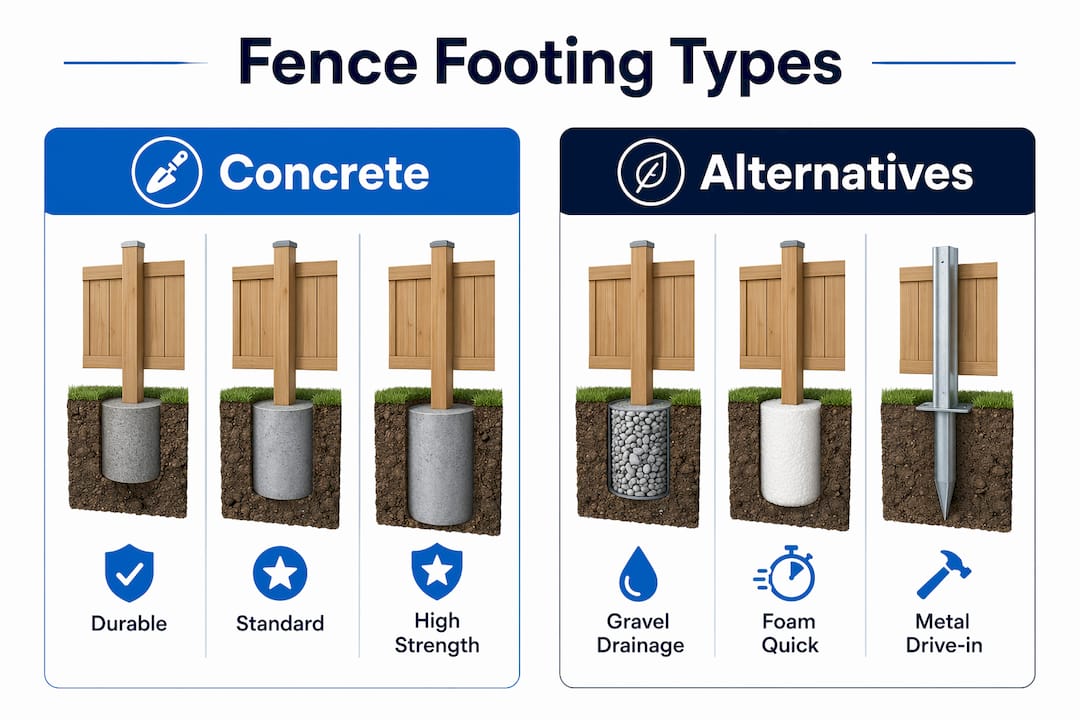
Four main footing methods are used in residential fence installations. Each has a specific use case, and choosing the wrong one is one of the most common and costly mistakes homeowners make.
Concrete footings
Concrete is the industry standard for most residential fences. ASTM F567-07 requires concrete for all chain link fence posts, including terminal and line posts. A minimum concrete strength of 3,000 psi is standard for structural footings. Concrete provides the compressive strength needed to resist lateral loads from wind and tensile forces from chain link fabric.
Gravel-set posts
Gravel footings offer superior drainage and resist frost heave better than concrete in wet climates. Gravel backfill allows water to drain away from the post base, reducing rot risk. The trade-off is lower lateral load resistance, which makes gravel unsuitable for chain link terminal posts or tall privacy fences in windy areas.
Polyurethane foam footings
Foam products cure fast, often within minutes, and work well for lightweight decorative fencing or mailbox posts. They are not suitable for gate posts, corner posts, or any application with high wind exposure. Fast-setting foam and fast-setting concrete mixes share the same limitation: insufficient strength for high-load applications like gates or corner posts.
Drive-in metal posts
Drive-in posts require no concrete or digging. They work for temporary fencing, light garden borders, or short-term applications. They offer minimal lateral resistance and are not appropriate for privacy fences, security fences, or any fence over 4 feet tall in a wind-exposed yard.
| Footing type Best use Key limitation | ||
| Concrete (3,000+ psi) | Chain link, tall wood, security fences | Slower cure, permanent |
| Gravel backfill | Wood privacy fences in wet climates | Low lateral resistance |
| Polyurethane foam | Lightweight decorative fencing | Not for high-load posts |
| Drive-in metal post | Temporary or garden fencing | Minimal wind resistance |
Pro Tip: Never use fast-setting concrete mix for gate posts or corner posts. Standard high-strength concrete at 3,000–4,000 psi, properly mixed and cured, is the only reliable choice for high-load positions.
How deep and wide should fence footings be in Los Angeles?
The standard rule for fence post burial depth is one-third of the total post length. A 9-foot post set for a 6-foot fence needs at least 3 feet in the ground. For a fence requiring 8-foot posts, the buried portion should reach 36–48 inches.
Hole diameter follows a simple formula: three times the post width. A 4x4 post needs a 12-inch diameter hole. A 6x6 post needs an 18-inch hole. These dimensions give the concrete enough mass to distribute the load and prevent the post from rocking.
Los Angeles sits in a region where frost line depth is minimal compared to northern states. The southern US frost line runs around 12 inches, while states like Minnesota require 42–48 inches. In LA, the frost concern is low, but drainage is not. Clay soils in Glendale, Encino, and parts of Bel Air can trap water around post bases, accelerating rot and undermining concrete integrity over time.
| Post length Burial depth Hole diameter (4x4 post) | ||
| 8 ft | 30–36 in | 12 in |
| 10 ft | 36–40 in | 12 in |
| 12 ft | 40–48 in | 12–18 in |
Fence height, soil type, and wind exposure all affect the final depth. A 6-foot privacy fence in a wind-exposed yard in West Hollywood needs deeper footings than the same fence in a sheltered backyard in Culver City. Local building departments in Los Angeles County often require permits for fences over 6 feet, and permit applications typically specify minimum footing depth. Check with your local agency before digging.
Pro Tip: Adding just 6 extra inches of burial depth beyond the minimum significantly improves stability by anchoring the post below the active soil layer that shifts with seasonal moisture changes.
How to install a concrete fence footing step by step
Proper installation separates a footing that lasts 25 years from one that fails in five. Follow these steps for a residential concrete footing in Los Angeles conditions.
- Call 811 at least 3 business days before digging. Marking underground utilities is legally required. Power lines, gas pipes, and irrigation lines run through most LA residential lots. A power auger rented for approximately $80–$150 per day produces consistent hole geometry and saves hours of labor.
- Dig the hole to the correct depth and diameter. Use the one-third rule for depth and the three-times-post-width rule for diameter. Keep the hole walls straight and the bottom flat.
- Add 4–6 inches of clean gravel at the hole bottom. This gravel base provides drainage and prevents water from pooling directly under the post. Skipping this step is the single largest cause of wood post failure in concrete footings.
- Set the post plumb on both axes. Use a level on two perpendicular faces of the post. Plumb alignment on both the X and Y axes is non-negotiable. A post that is even slightly off at this stage will look visibly crooked once the fence panels go up.
- Pour 3,000 psi concrete continuously without stopping. Mix thoroughly and pour in one continuous operation to avoid cold joints, which are weak planes where concrete layers fail to bond. Fill to about 2 inches above grade.
- Crown the concrete top to slope away from the post. Improper drainage is the leading cause of wood post rot in concrete footings. A crowned top sheds water away from the post base and prevents pooling.
- Brace the post on two axes for 24–48 hours. Bracing prevents post lean during the initial cure period. Attaching fence panels before the concrete reaches initial set risks cracking the footing and causing long-term instability.
Pro Tip: In warm LA weather, concrete cures faster, but do not rush panel attachment. Wait the full 24–48 hours minimum. Heat accelerates surface hardening but the core needs time to reach structural strength.
Common mistakes that cause fence footing failures
Most fence failures trace back to errors made during footing installation, not fence panel quality. Knowing what to avoid saves you from expensive repairs.
- Too-shallow footings. Burying a post only 12–18 inches in a 6-foot fence is a recipe for leaning. The one-third rule exists for a reason. Shallow footings cannot resist wind loads or soil movement.
- Undersized hole diameter. A hole barely wider than the post leaves too little concrete around it. The concrete envelope is what distributes the load. Thin concrete walls crack and fail under lateral pressure.
- Skipping the gravel base. Water that pools at the bottom of a concrete footing has nowhere to go. It saturates the wood post end, accelerates rot, and eventually undermines the concrete bond.
- Using soil-packed backfill instead of concrete. Soil backfill is a common DIY shortcut for wood fences, but it fails under tension and lateral load. ASTM F567-07 prohibits it for chain link fences, and it is a poor choice for any fence over 4 feet tall.
- Not bracing posts during cure. A post that shifts even slightly during the first 24 hours sets permanently in the wrong position. Bracing on two axes costs almost nothing and prevents a problem that is nearly impossible to fix without starting over.
- Ignoring concrete curing conditions. Pouring concrete in extreme heat without shading or in cold weather without insulation compromises strength. In LA, summer heat can cause rapid surface drying that weakens the mix.
The most overlooked detail in DIY fence installation is the concrete crown. Most tutorials show you how to pour concrete but skip the step of sloping the top surface away from the post. Water that sits against a wood post at grade level will rot it from the outside in, even when the post is set in concrete. A simple slope of about 1 inch over 6 inches of surface makes a measurable difference in post lifespan.
Pro Tip: Check the concrete surface for cracks at 48 hours. Hairline cracks from shrinkage are normal. Wide cracks or separation from the post indicate a mix problem or premature loading.
Key takeaways
A properly installed concrete fence footing, sized and set to code, is the single most important factor in how long your fence will last.
| Point Details | |
| Footing depth rule | Bury at least one-third of total post length, plus 6 inches below frost line. |
| Hole diameter standard | Dig three times the post width; a 4x4 post needs a 12-inch hole. |
| Concrete strength | Use 3,000 psi minimum for structural posts; avoid fast-setting mixes for gate or corner posts. |
| Drainage is critical | Add 4–6 inches of gravel at the base and crown the concrete top to shed water. |
| Bracing timeline | Brace posts on two axes for 24–48 hours before attaching fence panels. |
Why I always say the footing is where the fence is won or lost
After working with hundreds of fence installations across Los Angeles, from Beverly Hills estates to Sherman Oaks backyards, I have seen the same pattern repeat. Homeowners spend real money on premium wrought iron or custom wood panels, then cut corners on the footing because it is underground and invisible. Three years later, the posts lean and the whole fence needs to come out.
The fence post installation process is not glamorous, but it is where durability is decided. In LA, the mild frost conditions tempt people to go shallow. The soil in areas like Studio City or Encino can feel firm and stable, but seasonal moisture changes shift it more than most homeowners expect. I have pulled posts that were set only 18 inches deep and watched them come out with almost no resistance.
Spending an extra hour on hole depth, adding a gravel base, and waiting the full cure time costs almost nothing compared to a fence replacement. The homeowners who get 20-plus years from their fences are not the ones who bought the most expensive panels. They are the ones who took the footing seriously from the start.
— Moin
Plan your fence footing budget with Fence-gate-estimator
Knowing the right footing depth and materials is only half the equation. Understanding what a proper installation costs in Los Angeles helps you budget realistically before the first shovel hits the ground.
Fence-gate-estimator gives Los Angeles homeowners an instant, accurate cost estimate for fence and gate installations, including footing labor and materials. The platform uses current local rates for Beverly Hills, Santa Monica, Pasadena, and surrounding areas to generate transparent cost breakdowns. Whether you are planning a wrought iron security fence or a custom wood privacy fence, you can get a detailed fence estimate in minutes. No guessing, no waiting for a contractor callback. Start with a clear number and plan your project with confidence.
Recommended
- How terrain impacts fence costs in Los Angeles: smart choices | LA Electric Gate Service
- Why Upgrade Residential Fences: A Homeowner’s Guide | LA Electric Gate Service
- Fence post installation in Los Angeles: 5 key essentials | LA Electric Gate Service
- Why Fence Installation Matters for Your Property | LA Electric Gate Service