What Is a Living Fence? A Guide for LA Homeowners
By BabyLoveGrowth AI
What is a living fence and why does it matter?
A living fence is a densely planted row of trees, shrubs, or woody plants spaced closely enough to form a continuous natural barrier. Unlike wood, vinyl, or steel fencing, it grows, self-repairs, and improves with age.
Key characteristics at a glance:
- Privacy and screening: Provides visual coverage that deepens as plants mature
- Noise absorption: Plants absorb and diffuse sound waves rather than reflecting them, a real advantage on busy LA streets
- Wind and dust protection: Filters particulates and reduces wind load across your property
- Wildlife habitat: Supports birds, pollinators, and beneficial insects
- Self-renewing: No rotting posts, no rust, no paint — the fence repairs itself over time
Plan for a grow-in period of several years before reaching full density. During that window, consistent irrigation, pruning, and pest management keep growth even and gaps minimal.
Table of Contents
- How living fences compare to traditional fencing options
- How to plant and establish a living fence step by step
- Common challenges and how to manage pests and disease
- Key Takeaways
- FAQ
How living fences compare to traditional fencing options
Manufactured fences deliver instant results. A living fence delivers compounding value. That trade-off is worth understanding before you commit.
- Aesthetics: A mature hedge in Brentwood or Bel Air reads as luxury in a way that a vinyl panel simply cannot replicate. Veteran landscapers consider hedges a constant in LA’s high-end residential neighborhoods precisely because they balance seclusion with style.
- Noise reduction: Hard surfaces reflect sound; plants absorb it. For properties near Sunset Boulevard or Ventura Boulevard, that acoustic difference is noticeable.
- Ecology: Living fences filter dust and pollutants, stabilize soil, and prevent erosion while supporting local wildlife — none of which a steel fence does.
- Water management: A well-placed hedge absorbs excess groundwater, useful on sloped lots common in the Hollywood Hills or Pasadena foothills.
- Longevity: Traditional fences deteriorate and require material replacement. A living fence, properly maintained, can last indefinitely.
- Cost and permits: Initial planting costs vary by species and linear footage. Los Angeles also has municipal codes governing hedge heights — check with your local planning department before planting above 3.5 feet in front yards. For a detailed cost comparison across fencing types, the premium fencing guide from Fence-gate-estimator covers current LA-area pricing.
For homeowners who want privacy now, pairing a living fence with a custom physical fence during the grow-in phase is a practical solution many Beverly Hills and Santa Monica properties use.
How to plant and establish a living fence step by step
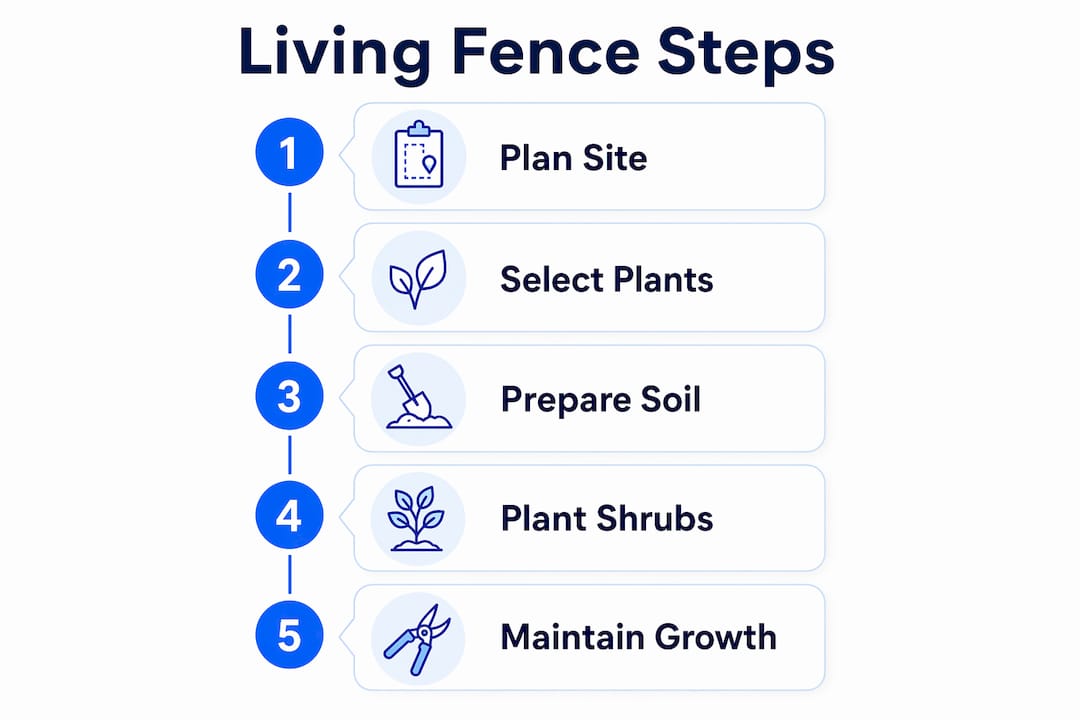
- Define your boundary line. Mark the full run with stakes and string. Measure total linear footage to calculate plant quantities.
- Choose your species. For Los Angeles, California natives like Toyon (Heteromeles arbutifolia), Lemonade Berry (Rhus integrifolia), and Catalina Cherry (Prunus ilicifolia ssp. lyonii) thrive in local soils with minimal irrigation once established. For faster coverage, consider Podocarpus or Clusia.
- Prepare the soil. Amend with compost, especially in sandy coastal soils near Santa Monica or clay-heavy lots in the San Fernando Valley.
- Space plants correctly. Spacing depends on species — typically close together for dense hedging shrubs and farther apart for larger columnar trees.
- Maintain clearance from structures. Keep large shrubs at least 10 feet from pools, footings, and hardscape to prevent root damage.
- Install drip irrigation. Consistent moisture during the first two growing seasons is critical. A drip system reduces water waste and supports even growth.
- Mulch the base. A 3-inch mulch layer retains moisture, suppresses weeds, and moderates soil temperature through LA’s dry summers.
- Prune for density. Light tip pruning in the first year encourages lateral branching and fills gaps faster than letting plants grow unchecked. For ongoing upkeep, the maintenance guide from Fence-gate-estimator covers pruning schedules and irrigation tips.
Pro Tip: For pool areas in Encino or Sherman Oaks, explore pool privacy landscaping options that combine living fences with hardscape for immediate coverage while the hedge matures.
Common challenges and how to manage pests and disease
The grow-in phase is when living fences are most vulnerable. Knowing what to watch for saves you from losing plants and starting over.
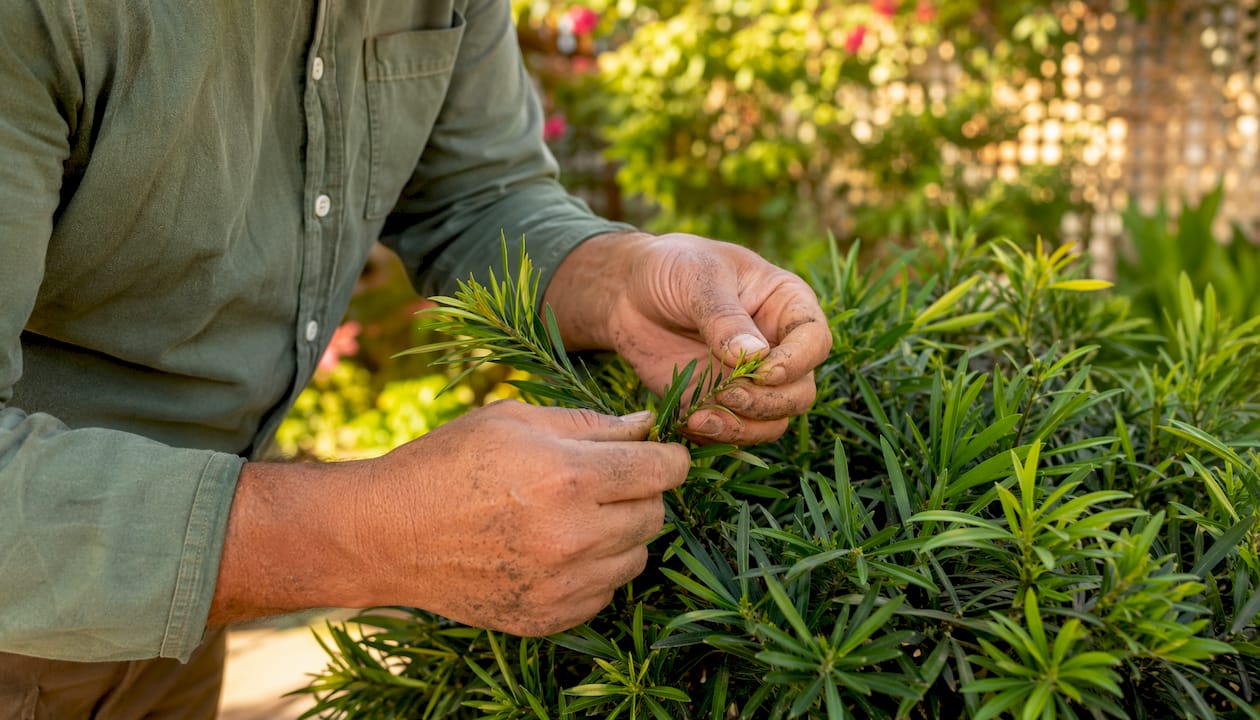
Uneven growth and gaps are the most common frustration. Inconsistent watering or poor soil preparation causes some plants to lag. Address it early by adjusting irrigation zones and replacing weak specimens in the first fall planting season.
Aphids and scale insects target new growth on Podocarpus and ornamental shrubs. Inspect monthly and treat with neem oil or insecticidal soap before infestations spread across the full run.
Root rot occurs in poorly drained soils, particularly on flat lots in Culver City or Burbank where water pools after rain. Raised planting beds and amended soil solve most drainage problems before they start.
Powdery mildew affects dense plantings with limited airflow. Spacing plants correctly and pruning interior branches improves circulation and reduces fungal pressure significantly.
For backyard landscaping ideas that integrate living fences with hardscape and turf, a professional landscape consultation helps you avoid placement mistakes that are costly to correct later.
Key Takeaways
A living fence is a long-term, self-renewing boundary that outperforms traditional fencing in privacy, ecology, and aesthetics for Los Angeles residential properties.
| Point | Details |
|---|---|
| Definition | Densely planted trees or shrubs forming a natural, self-repairing boundary |
| Grow-in timeline | Expect 2–5 years before full density and functional privacy |
| LA plant choices | California natives like Toyon and Catalina Cherry thrive with low water needs |
| Structural clearance | Maintain at least 10 feet between large shrubs and pools or hardscape |
| Best paired with | A physical fence during the grow-in phase for immediate privacy and security |
FAQ
How long does a living fence take to provide full privacy?
Most living fences take multiple years to reach full density. Some fast-growing species can provide meaningful screening sooner with consistent irrigation.
What plants work best for a living privacy fence in Los Angeles?
California natives such as Toyon, Lemonade Berry, and Catalina Cherry perform well in LA’s climate with low water needs. Podocarpus and Clusia are popular non-native options for faster coverage.
Do I need a permit for a living fence in Los Angeles?
Los Angeles municipal code regulates hedge heights, particularly in front yards where growth above 3.5 feet may require approval. Check with your local planning department before planting.
How much does a living fence cost compared to a traditional fence?
Initial planting costs vary by species, spacing, and linear footage. While upfront costs can be comparable to mid-range manufactured fencing, a living fence eliminates long-term replacement costs. Use the cost estimator at Fence-gate-estimator for current LA-area pricing.
Can a living fence replace a physical security fence entirely?
For security-focused properties in Beverly Hills or Bel Air, a living fence alone rarely meets the access control standards that a physical gate and fence system provides. Most homeowners use both in combination.
Planning your property’s boundary in Los Angeles? Fence-gate-estimator provides instant, accurate cost estimates for custom fencing and gate installations across LA, from Beverly Hills to Pasadena. Get your estimate in minutes.
Recommended
- Security Fence Features List for LA Homeowners | LA Electric Gate Service
- Why Upgrade Residential Fences: A Homeowner’s Guide | LA Electric Gate Service
- Why Fence Installation Matters for Your Property | LA Electric Gate Service
- Fence post installation in Los Angeles: 5 key essentials | LA Electric Gate Service