How to Prep Your Yard for the Fence Crew's Arrival
By BabyLoveGrowth AI
A properly prepped yard lets the fence crew start work the moment they arrive, which means no delays, no safety surprises, and no unexpected labor charges tacked onto your final invoice. Get this right, and a standard residential fence install in the Los Angeles area moves from quote to finished project without a single wasted trip.
The core work breaks into three windows. Two to three weeks out, confirm your property lines, check HOA and permit requirements, and call 811 since locate requests commonly take 2 to 3 business days to process. Forty-eight to seventy-two hours out, clear the fence line of furniture, planters, and overgrowth, and confirm your utility markings are still fresh and visible. The day before, walk the entire fence line one last time.
Two to three weeks before installation:
- Verify property lines with stakes, a plat map, or a licensed surveyor
- Call 811 for public utility locates
- Check HOA covenants and pull any required permits
- Schedule a private locator if you have sprinklers or invisible pet fencing
48 to 72 hours before installation:
- Clear furniture, planters, toys, and old fence panels from the work zone
- Mow and trim vegetation along the line
- Confirm utility flags are still visible and undamaged
The day before:
- Walk the fence line with your contact list and permit paperwork in hand
- Secure pets and plan for kids to be elsewhere during work hours
- Clear parking and access paths for trucks and equipment
Pro Tip: Take photos of your yard, utility flags, and staked property lines the day before installation. If a dispute comes up about where a post landed or what was disturbed, dated photos settle it fast.
Key Takeaways
A yard that’s cleared, marked, and permitted before the crew arrives is the single biggest factor in whether your fence installation finishes on time and on budget.
| Point | Details |
|---|---|
| Call 811 early | Request utility locates at least 2 to 3 business days before installation and keep your ticket number. |
| Clear the full work zone | Remove furniture, old fencing, and vegetation 2 to 3 feet beyond the fence line on both sides. |
| Mark private utilities separately | Flag sprinkler lines and pet-containment wiring, since 811 does not cover private systems. |
| Confirm permits before scheduling | Skipping a required permit can trigger stop-work orders or forced removal at your expense. |
| Estimate costs before committing | Use the Fence-Gate-Estimator to set a realistic budget baseline before site conditions are confirmed onsite. |
Table of Contents
- How to Prep Yard for Fence Crew: Confirming Layout and Property Lines
- Do You Need to Call 811 Before a Fence Installation?
- What Should You Clear From the Fence Line Before Installation?
- How Much Vegetation Should You Clear Before the Crew Arrives?
- Setting Up Easy Access for Trucks, Materials, and Equipment
- Keeping Pets and Kids Safe on Installation Day
- Do You Need a Permit to Install a Fence?
- What Should You Tell Your Installer About Slopes and Drainage?
- What to Expect on Fence Installation Day
- Why Last-Minute Changes Cost You Time and Money
- How Yard Prep Affects Your Fence Installation Cost
- Your Day-Before Checklist, All in One Place
- Should You Set Up Temporary Markers if the Fence Line Isn’t Obvious?
- How Do You Protect Sprinkler Lines Running Under the Fence?
- Telling the Crew About Underground Pet Containment and Sprinklers
- When Should You Reschedule Fence Installation for Weather?
- What Homeowners Get Wrong About Fence Prep
- Get an Instant Estimate Before You Book the Crew
- Sources
- FAQ
How to Prep Yard for Fence Crew: Confirming Layout and Property Lines
Start with the boundary itself. Most residential lots still have survey pins buried at the corners, often a few inches under turf or mulch. A metal detector or a probe can locate them in minutes, and matching them against your property plat confirms the fence line the crew will actually follow.
If you can’t find the pins, or your lot has been re-landscaped since the original survey, hire a licensed surveyor. This matters more than people assume in older Los Angeles neighborhoods like Pasadena and Glendale, where lot lines were platted decades before modern GPS surveying and fences have shifted an inch or two at a time over generations. Schedule a surveyor two to three weeks ahead, since demand often backs up during peak building season.
Before the crew shows up, pull your HOA covenants if you’re in a governed community, or check your city’s setback and height rules if you’re not. Beverly Hills, Santa Monica, and West Hollywood all enforce specific fence height limits depending on whether the fence sits in a front, side, or rear yard, and violations can mean a rebuild at your expense. Hand a copy of any approved HOA plan or permit to the crew lead before work starts so there’s no ambiguity about where the fence is supposed to sit.
Pro Tip: If your property line runs along a shared driveway or a sloped hillside lot, common in Bel Air and Brentwood, ask your surveyor to flag exact corner points with paint or pin flags rather than just marking a line on paper. Crews work faster off physical markers than off a survey document alone.
Do You Need to Call 811 Before a Fence Installation?
Yes, and it’s not optional in any practical sense. Call 811 before you dig at least two to three business days before your installation date, and keep the locate ticket number for your records. Utility strikes cause real injuries every year, and skipping this step can leave you liable for repair costs even if the fence company did the digging.
Once the locate crew comes through, you’ll see spray paint or flags in specific colors. These follow the APWA uniform color code, and every homeowner prepping a yard should recognize them on sight:
| Color | Utility Type |
|---|---|
| Red | Electric power lines and cables |
| Yellow | Gas, oil, or steam lines |
| Orange | Communication, cable TV, fiber optic |
| Blue | Potable water |
| Green | Sewer and drain lines |
| Purple | Reclaimed water or irrigation |
| Pink | Temporary survey markings |
Those marks are approximate, not exact. Most jurisdictions require hand digging rather than mechanical augering within an 18 to 24 inch tolerance zone on either side of a marked line, which can slow a crew down considerably if several post holes fall in that zone.
811 only covers public utilities. Anything on your side of the meter, including sprinkler lines, invisible pet fencing, or a private gas line to a pool heater, falls outside that service. Private locating services use ground-penetrating radar and other tools to map those lines, and they’re worth the cost if you have an irrigation system or underground pet containment anywhere near the planned fence footprint. If your fence layout changes after the initial locate, request a fresh ticket. Marks fade, and an outdated mark is functionally the same as no mark.
What Should You Clear From the Fence Line Before Installation?
Remove anything portable within roughly three to four feet of the planned fence line: patio furniture, potted plants, kids’ toys, grills, decorative rocks, garden hoses, and anything else that could get run over by a truck or knocked over by an auger. Contractors expect an installation-ready line, not a storage clearance job, and time spent moving your belongings is time not spent digging.
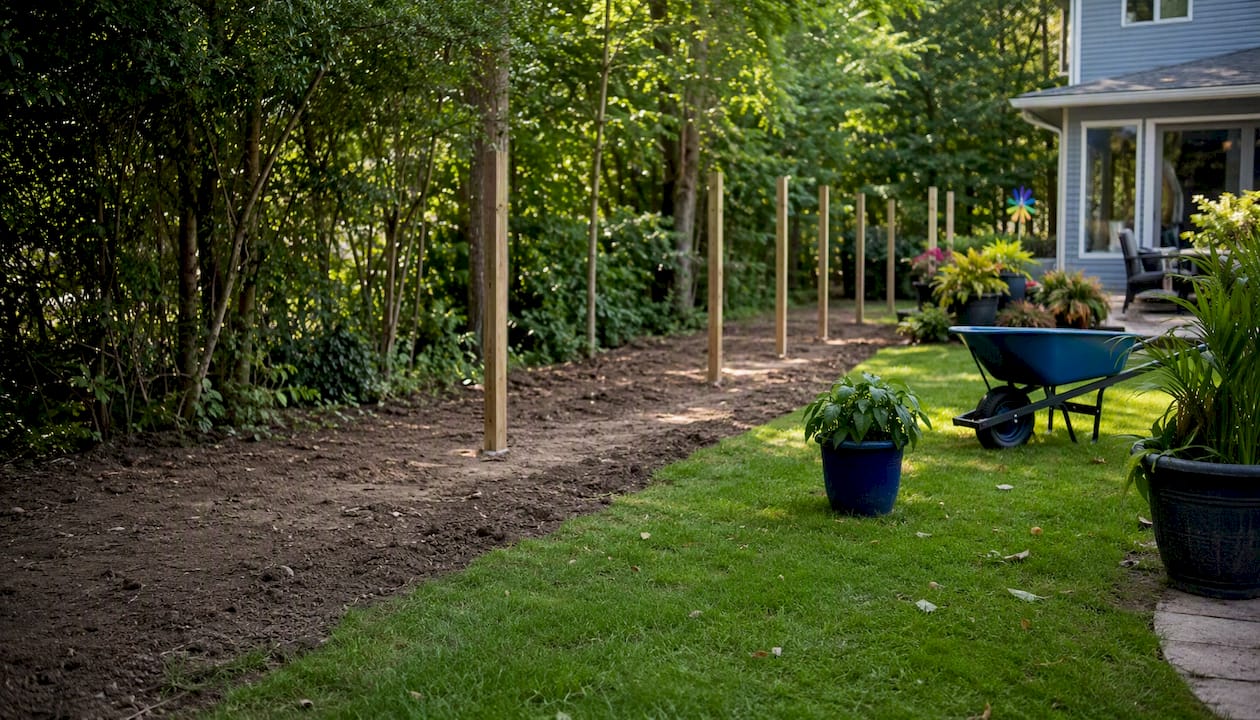
Old fence removal is where things get contractually murky. Some installers include demolition and haul-away in their quote; others treat it as a separate line item, and if you assumed it was bundled in, you’ll find out the hard way when the invoice arrives. Confirm this in writing before install day, and if you’re removing an old fence yourself, budget more time than you think you need.
Buried concrete footings are the biggest hidden cost driver in this category. Old fence posts are often set in concrete that extends well below what’s visible above ground, and breaking that concrete out frequently requires a demolition hammer or jackhammer rather than a shovel. Homeowners who assume “the old posts are gone, so the ground is clear” are often wrong, and that surprise translates directly into extra labor hours billed at whatever rate your contractor charges for unplanned demolition.
Pro Tip: Walk your fence line with a metal probe before install day and tap every few feet. A dull thud usually means buried concrete or a rock ledge, and knowing about it in advance lets you negotiate removal costs instead of absorbing them as a surprise charge.
How Much Vegetation Should You Clear Before the Crew Arrives?
Cut back branches, remove shrubs sitting directly in the fence footprint, and mow tall grass so the crew has clear sightlines and stable footing. Most contractors want two to three feet of open working space on each side of the line, enough room to swing tools, run an auger, and stack materials without fighting through brush.
Leave the big stuff alone. Mature tree roots and large established shrubs shouldn’t be cut back aggressively on your own, since severing a major root can destabilize or eventually kill a tree that took decades to grow. If a large root system genuinely sits in the fence path, that’s a conversation for your installer, who may recommend shifting the post location slightly or using a different footing approach rather than cutting through structural roots.
- Trim branches and hedges encroaching on the fence line
- Remove small shrubs and weeds directly in the footprint
- Mow grass short along the entire run
- Mark sprinkler heads and valve boxes with flags so they’re visible under grass
- Tarp or fence off any plants you want to protect from foot traffic and material staging
Pro Tip: Spray-paint a small “X” on the ground next to any sprinkler head near the fence line before mowing. Mowed grass hides heads completely, and a crew member stepping on one adds an unplanned repair to your project.
Setting Up Easy Access for Trucks, Materials, and Equipment
Measure your gate openings and side yard pathways before install day. Crews arrive with trucks carrying panels, post material, and bags of concrete, and a gate that’s two inches too narrow for their hand truck means everything gets carried in by armload instead, which slows the whole job down.
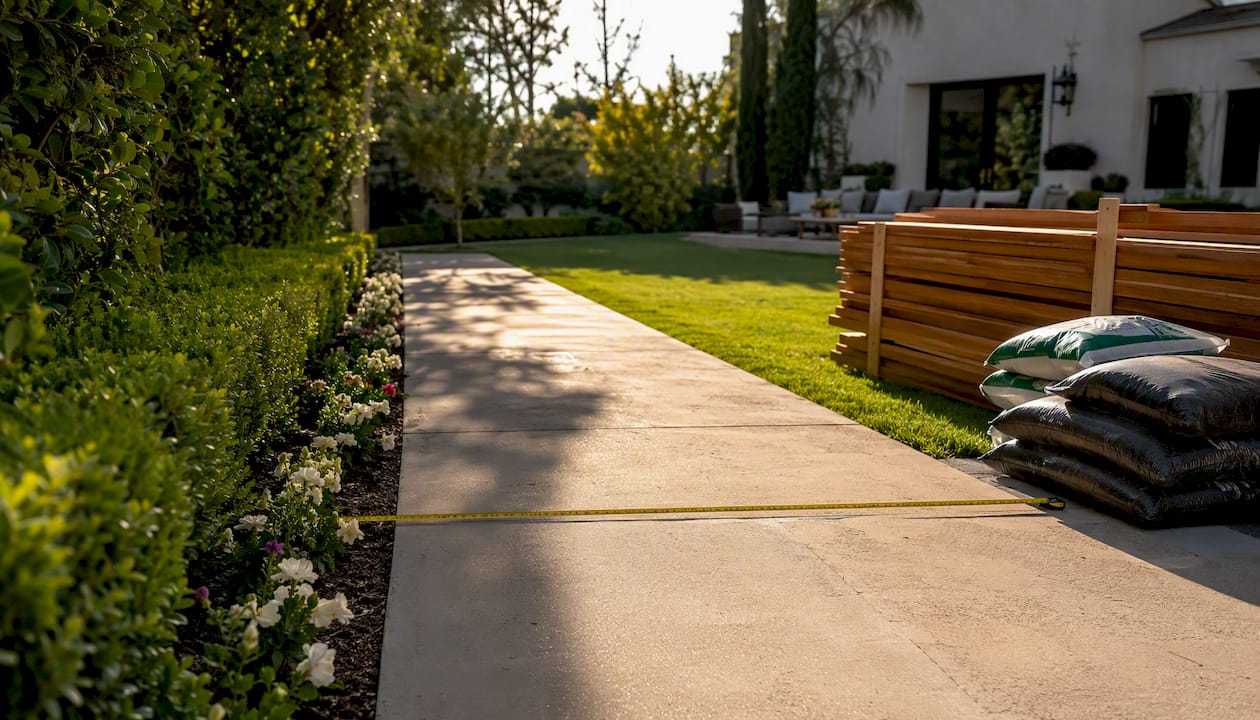
Reserve driveway or curb space for the crew’s vehicles, and pick a dry, level spot for material staging, ideally close to the work zone but out of the way of foot traffic. If your property backs onto a narrow side yard, common in denser Culver City and Burbank lots, flag any tight turns or low-hanging branches that might catch a truck mirror or a ladder rack.
Move any vehicle that could sit inside the crew’s working envelope for the day, including cars parked in a shared driveway or a side gate used for equipment access. A blocked path on install day often means a call to reschedule, and rescheduling a crew usually pushes your project back by days, not hours.
Pro Tip: If your side gate is the only equipment access point and it’s narrower than 36 inches, mention it when you book the job, not the morning the crew arrives. Some installers bring narrower equipment or plan a different sequence when they know in advance.
Keeping Pets and Kids Safe on Installation Day
Open gates, running power tools, and post holes scattered across the yard are a bad combination for pets and small children. Plan around this rather than hoping for the best. Options include temporary indoor containment, a day of pet boarding, or a secure run well away from the active work zone.
If you have an underground pet-containment system anywhere near the fence line, tell the crew before they start digging. Private utilities like invisible fencing wires aren’t covered by an 811 locate, and a crew that doesn’t know the wire is there has no reason to avoid it.
For kids, the ground itself is the hazard. Open post holes, stacked panels, and running equipment are not places for unsupervised children, and most installers strongly recommend having a plan in place before the crew arrives rather than improvising on the spot.
- Board pets off-site or contain them indoors away from windows facing the work zone
- Flag or disable underground pet fencing near the dig zone and tell the crew where it runs
- Keep children out of the yard entirely during active work hours
- Assign one adult specifically to supervise kids and pets, separate from anyone dealing with the crew
Pro Tip: If boarding isn’t an option, set up pets in a room on the opposite side of the house from the work zone with a fan or white noise running. Drilling and hammering carry, and a dog barking at every noise adds stress for everyone involved.
Do You Need a Permit to Install a Fence?
Most cities require a permit once a fence exceeds a certain height, typically six feet in rear yards and three to four feet in front yards, though exact limits vary by jurisdiction. Los Angeles and its surrounding cities, including Santa Monica, Culver City, and Pasadena, each maintain their own fence height and setback rules, so check with your local building department rather than assuming your neighbor’s fence height is the legal standard.
Skipping a required permit carries real consequences.
A stop-work order can halt your project mid-installation, and the city can require you to remove a completed fence that was never permitted, at your cost, on top of any fines assessed. Many contractors now ask for proof of an approved permit before they’ll schedule the crew, precisely because they’ve been burned by jobs that got flagged after installation.
Neighbor notification isn’t always legally required, but it’s good practice, especially for a boundary fence where the cost or the exact line might be shared. A simple written note describing the planned height, material, and timeline heads off disputes before they start, and if you’re splitting the cost of a shared fence, get that agreement in writing too.
What Should You Tell Your Installer About Slopes and Drainage?
Slope changes how deep posts need to go and how footings get poured. On a graded or hillside lot, a level fence often requires stepped panels or racked sections that follow the ground contour, and each step can shift the post spacing your installer originally planned.
Drainage matters just as much. Clay-heavy soil, common across parts of the San Fernando Valley including Sherman Oaks and Encino, holds water around a footing longer than sandy soil does, which can affect concrete cure time and long-term post stability. Solutions range from a gravel-backfilled trench to a French drain routed along the fence line if standing water is a known issue on your property.
Ask your installer directly about:
- Local frost depth requirements, though this matters less in most of coastal Southern California than in colder climates
- Footing shape, since bell-shaped footings resist uplift better in loose or sandy soil
- Whether your soil type calls for a different concrete mix or additional cure time
- Whether a hillside or heavily compacted lot needs a soil evaluation before digging begins
If your property includes a retaining wall, exposed bedrock, or a steep grade change along the fence line, flag it during your initial quote conversation, not after the crew has already unloaded equipment.
What to Expect on Fence Installation Day
A standard residential fence run, say 100 to 150 linear feet with no major obstructions, typically wraps up in one to two days for most crews. Rocky soil, buried debris, tight gate hardware, or a lot with multiple grade changes can stretch that timeline considerably, which is part of why clearing obstructions ahead of time pays off in hours saved.
Most jobs run with a crew of two to four people, plus a mix of hand tools, a gas or hydraulic auger, and a truck loaded with panels, posts, and concrete. Site cleanup, including hauling excess dirt and packaging debris, is typically included in a standard installation contract, but it’s worth confirming that up front rather than assuming.
Homeowners consistently ask the same handful of questions on install day, and the answers are more straightforward than most people expect. Post depth typically runs 24 to 36 inches for standard residential fencing, though frost-prone regions and local building codes can push that deeper. Two feet is often too shallow for a fence expected to hold up against wind load and soil movement over time.
For the strip between the finished fence and your lawn, options include mulch, gravel, or a simple grass line trimmed close to the fence base; the choice mostly comes down to how much edging maintenance you want to take on afterward.
Why Last-Minute Changes Cost You Time and Money
Deciding to move a gate location, add a section, or swap materials on install day almost always triggers a change order, and change orders mean the crew stops, recalculates, and often waits on new materials before continuing. What feels like a small adjustment on your end can mean an entirely different post spacing plan on theirs.
Lock in your design, materials, and layout before the crew’s scheduled date, and save any changes for a conversation with your installer well in advance rather than a discussion held over a half-dug post hole.
Run through this the day before:
- Confirm the 811 ticket is still active and markings are visible
- Verify the fence line is fully cleared of furniture, plants, and old fencing
- Make sure pets are contained or boarded and kids have a plan for the day
- Have permit paperwork and any HOA approval printed and ready to show
- Post your cell number somewhere the crew lead can see it, and confirm gate and parking access one more time
Minor on-site adjustments, like shifting a post a few inches around an unexpected root, are normal and usually don’t need a formal change order. Anything bigger, like relocating a gate or adding footage, should get documented in writing before work continues.
How Yard Prep Affects Your Fence Installation Cost
Every hour a crew spends dealing with an unprepped yard is an hour billed somewhere, whether as a flat surcharge or as added labor time. A hidden concrete footing that needs jackhammering out, a private locate you didn’t schedule in advance, or rocky soil that slows auger progress can each add real cost to a project that looked straightforward on paper.
| Prep Gap | Likely Cost Impact |
|---|---|
| Old concrete footings left in place | Added demolition labor, sometimes billed hourly |
| Skipped private locate near sprinklers | Repair costs if a line is struck, plus schedule delay |
| Dense vegetation left uncleared | Added clearing time before digging can start |
| Rocky or clay-heavy soil not disclosed upfront | Possible need for different equipment or footing method |
| Undefined property line | Risk of a rebuild if the fence lands in the wrong spot |
Running your project through the Fence-Gate-Estimator before the crew ever shows up gives you a realistic budget baseline built on current Los Angeles-area material and labor rates, so you know roughly where you stand before site conditions get factored in. It won’t replace a physical site visit for unusual terrain, but it gives you a number to negotiate against rather than walking into a quote blind.
An on-site quote becomes essential once slope, soil, or old materials are involved, since no online estimator can see what’s actually buried in your yard.*
Your Day-Before Checklist, All in One Place
Print this or save it to your phone the night before installation:
- Property line confirmed with stakes or survey pins visible
- 811 ticket active and utility flags still visible and undisturbed
- Private locate completed if you have sprinklers or invisible pet fencing
- Fence line cleared of furniture, planters, toys, and debris
- Grass mowed and vegetation trimmed back 2 to 3 feet from the line
- Old fence and footings removed, or removal confirmed in the contract
- Access paths and parking cleared for trucks and equipment
- Pets boarded or contained away from the work zone
- Kids have a supervised plan for the day, away from post holes and tools
- Permit paperwork and HOA approval printed and accessible
- Your phone number posted or shared directly with the crew lead
Should You Set Up Temporary Markers if the Fence Line Isn’t Obvious?
Yes, especially on irregular lots or properties without visible survey pins. If your property line runs through overgrown brush, along a slope, or through an area where old landscaping has blurred the original boundary, set temporary stakes or brightly colored flags along the intended run before the crew arrives.
This matters most on corner lots and properties bordering shared driveways, where a few feet in either direction can mean the difference between a fence that matches your survey and one that ends up in a neighbor’s yard. Cheap wooden stakes and marking paint cost almost nothing compared to the cost of resetting posts after a layout dispute. If you worked with a surveyor, ask them to leave physical pin flags rather than just handing you a paper plat, since a crew on a tight schedule reads a flag in the ground far faster than a document.
How Do You Protect Sprinkler Lines Running Under the Fence?
Irrigation lines crossing a planned fence line are one of the most common sources of accidental damage on installation day, mostly because they’re invisible once the grass grows in. Mark every sprinkler head, valve box, and known pipe run with flags or spray paint before the crew’s first visit, and sketch a rough map if the layout isn’t obvious from the surface.
If a main irrigation line has to cross directly under a post location, tell your installer during the initial walkthrough rather than the morning of. In many cases the post can shift a few inches to avoid the line entirely, which is a far cheaper fix than repairing a severed pipe mid-installation. For older properties where the irrigation layout isn’t documented anywhere, a private locator can trace the lines electronically before digging starts, the same service worth using for underground pet-containment wiring.
Telling the Crew About Underground Pet Containment and Sprinklers
This deserves its own moment of attention because it’s the detail homeowners forget most often. Invisible pet fencing and irrigation lines are private utilities, which means they fall outside your 811 locate entirely and the crew has no way of knowing they exist unless you tell them.
Before work begins, walk the crew lead along the fence line and point out anything you know is buried there, even if you’re not sure of the exact depth or path. If you’ve disabled the pet containment system for the day, mention that too, since a system that’s still transmitting can shock a dog wandering near disturbed wiring even if the fence is temporarily gone. A five-minute conversation here prevents a repair bill and a confused, possibly injured pet.
When Should You Reschedule Fence Installation for Weather?
Rain and mud are the two biggest weather-related reasons to push an installation date. Digging post holes in saturated soil produces unstable holes that collapse before concrete can be poured, and a muddy yard turns straightforward foot traffic into a slip hazard for the crew.
Most installers will flag a likely reschedule 24 to 48 hours ahead if a significant rain system is moving through, but it’s worth asking your contractor directly what their weather policy is before signing a contract. Light, brief rain earlier in the week usually isn’t a dealbreaker if the ground has had a day or two to drain, but back-to-back storm days typically mean a delay. If your yard tends to pool water in certain spots, mention that during scheduling so your installer can plan around it rather than discovering a swamp on arrival.
What Homeowners Get Wrong About Fence Prep
Most guides treat yard prep like a checklist you complete once and forget. That undersells how much the small stuff compounds. I’ve seen more projects delayed by an unmarked sprinkler head or an unnoticed slab of old concrete than by anything dramatic, and the pattern holds across property types and price points.
The bigger misconception is that permits and HOA approval are paperwork hurdles to clear before the “real work” of prep starts. In practice, they’re the single biggest source of costly do-overs I’ve come across, because a fence built without approval can be forced down entirely, and that’s a homeowner absorbing full demolition and rebuild costs for a mistake that a five-minute call to the building department would have prevented.
Los Angeles adds its own wrinkles here. Terrain-driven cost differences show up constantly across hillside communities like Bel Air and Brentwood, where a fence quote can shift meaningfully once an installer sees the actual grade in person versus what a flat-lot estimate assumed. Homeowners who treat the Fence-Gate-Estimator as a starting number, not a final one, and who use the two to three weeks before installation to genuinely nail down utilities, permits, and site access, consistently end up with smoother, faster, cheaper installs than those who wing it.
Get an Instant Estimate Before You Book the Crew
Fence-Gate-Estimator gives you a real number before a contractor ever sets foot on your property, built on current Los Angeles material and labor rates rather than a generic national average. That matters because the biggest cost surprises in fencing come from site conditions, not the fence itself, and knowing your baseline number in advance means you’re negotiating from information instead of guesswork.

The estimator walks you through property size, material choice (wrought iron, steel, aluminum, or composite), and gate features including automation, and returns a cost breakdown you can use to plan your budget before your first onsite visit. It also flags typical Los Angeles permit requirements so you’re not caught off guard by the approval process this article just covered. If your gate needs feel more involved, the gate automation estimator breaks out those costs separately since automated hardware changes both the price and the site prep involved.
Once you have your estimate, the natural next step is scheduling an onsite evaluation, where an installer can confirm soil conditions, slope, and any complications this article flagged, like buried footings or irrigation crossings, before committing to a final quote. Start your custom fence estimate and get a realistic number in minutes.
Sources
Save or screenshot your locate ticket and keep your permit paperwork on-site during installation, since some crews will ask to see both before starting work. The following sources cover the safety and locating fundamentals every homeowner prepping a yard should understand.
- Before you dig, call 811 — it’s free
- Fence Installation Near Underground Utilities: Call 811 and Safety | Fence Installation Authority
- Locating for fence installs | Mason Private Locating LLC
FAQ
Is 2 Feet Deep Enough for Fence Posts?
Two feet is often too shallow for standard residential fencing. Most posts are set 24 to 36 inches deep, with exact depth depending on fence height, soil type, and local building code.
What Should You Put Between a Fence and the Grass?
Mulch, gravel, or a trimmed grass edge all work along a fence base. The right choice depends mostly on how much edging maintenance you’re willing to keep up over time.
What Happens if You Don’t Pull a Permit for a Fence?
Building departments can issue a stop-work order mid-installation or require full removal of an unpermitted fence at your expense, on top of possible fines. Many installers now require proof of an approved permit before scheduling a crew.
Should You Install a Fence Before or After Landscaping?
Fence installation generally comes before major landscaping, since post holes, equipment, and material staging can damage new plantings or turf. Save final grading, planting, and edging for after the fence crew finishes.
How Can Fence-Gate-Estimator Help Before Installation Day?
The Fence-Gate-Estimator gives you a cost breakdown based on current Los Angeles material and labor rates before a contractor visits your property, helping you budget for site conditions like terrain or old footing removal ahead of time.
Recommended
- How terrain impacts fence costs in Los Angeles: smart choices | LA Electric Gate Service
- Why Upgrade Residential Fences: A Homeowner’s Guide | LA Electric Gate Service
- Why Fence Installation Matters for Your Property | LA Electric Gate Service
- Fence post installation in Los Angeles: 5 key essentials | LA Electric Gate Service