How to Add a Water Feature Near Your Gate in LA
By BabyLoveGrowth AI
Adding a decorative water feature adjacent to a residential gate is feasible for most Los Angeles single-family homes, provided you address permits, drainage, and electrical routing before breaking ground. The California Building Code (CBC) and LADBS Express Permit system both have clear pathways for qualifying installs, and the Fence & Gate Installation Cost Calculator gives you an instant local budget estimate before you commit to a contractor.
Three risks can stop a project early:
- Permits: A permanent basin with fixed plumbing or wiring triggers building, plumbing, and electrical permits through LADBS, not just a simple over-the-counter approval.
- Utilities: Underground gas, electrical, and sewer lines run close to gate footings on many LA lots. Striking one adds weeks and thousands of dollars to your schedule.
- Drainage: Water that tracks toward a gate threshold causes long-term corrosion, slip hazards, and potential code violations.
Key Takeaways
Adding a water feature near a gate in Los Angeles requires permit coordination, proper drainage design, and a contractor who manages gate, plumbing, and electrical scopes together.
Table of Contents
- Is your site ready to add a water feature near the gate?
- What permits does a gate-adjacent water feature require in Los Angeles?
- How do you integrate a water feature with your gate design?
- What does a gate-adjacent water feature cost in Los Angeles?
- What does the project timeline look like from start to finish?
- How do you choose the right contractor for this type of project?
- What construction pitfalls should you watch for on LA lots?
- What does ongoing maintenance cost for a gate-adjacent water feature?
- What most homeowners get wrong about gate-adjacent water features
- Your Los Angeles estimate for a gate and water feature project
- Sources
- FAQ
Is your site ready to add a water feature near the gate?
Work through this checklist before calling a contractor. A “no” on any item means you need a design solution, not just a permit.
- Gate swing clearance: The feature must sit outside the full arc of a swinging gate, including any automated arm or hinge hardware.
- Barrier height: If your basin will exceed 18 inches in depth, LA County code requires a minimum 60-inch barrier with a self-closing, self-latching gate.
- Setback from property line: Most LA residential zones require a minimum setback from the sidewalk or property line; confirm with LADBS before finalizing placement.
- Slope and drainage direction: The grade must direct water away from the gate threshold and toward a drain or permeable surface, not toward the house foundation.
- Utility proximity: Locate all underground utilities before any excavation. Sewer cleanouts and electrical conduits often run directly under driveway aprons.
- Historic district or HOA rules: Properties in West Hollywood, Pasadena, or Bel Air historic overlay zones may face additional design review requirements.
Pro Tip: Call 811 at least three business days before any digging. It’s free, it’s required by California law, and it prevents utility strikes that can shut down a project entirely.
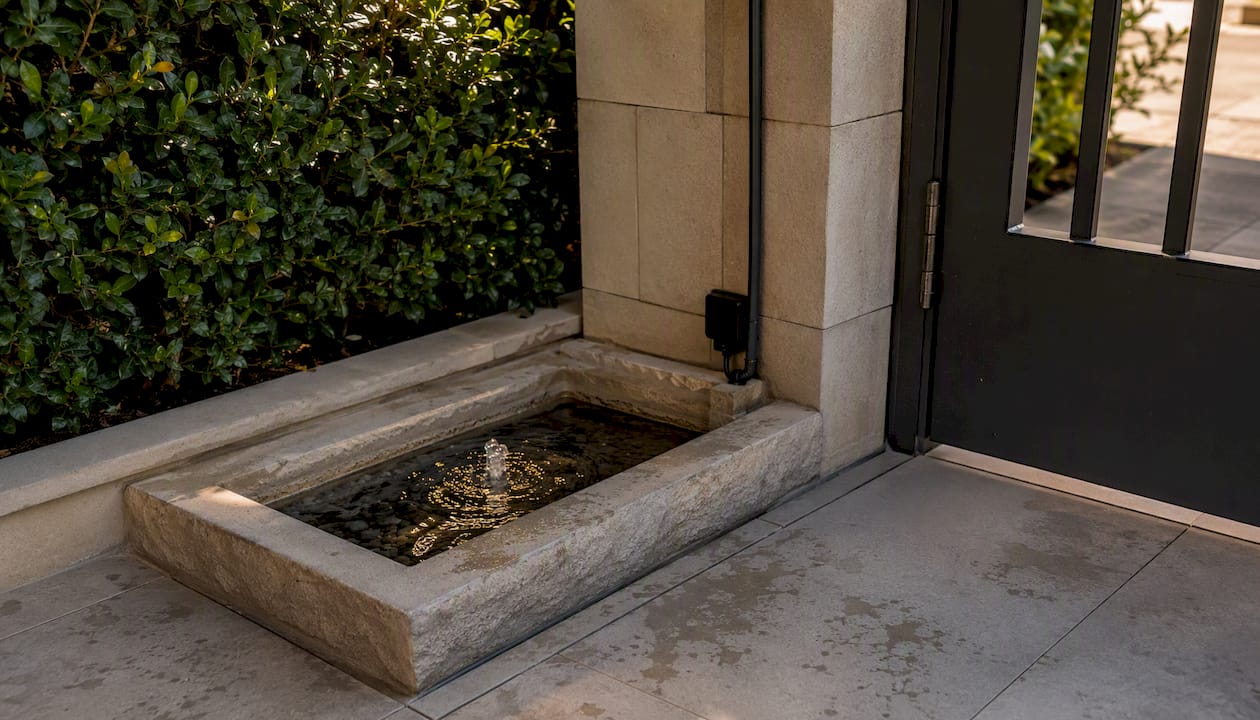
A shallow basin under 18 inches deep with a recirculating pump generally avoids the pool-barrier trigger. Once you exceed that depth or a certain surface area, LADBS treats the feature as a pool for code purposes, which changes your permit scope significantly.
What permits does a gate-adjacent water feature require in Los Angeles?
Permanent installations almost always need more than one permit. Here is what typically applies:
- Building permit: Required for any in-ground or permanent above-ground basin, structural walls, or footings adjacent to a gate.
- Plumbing permit: Required when water supply is hard-plumbed to the feature rather than filled manually.
- Electrical permit: Required for any fixed pump wiring, GFCI circuits, or conduit embedded in concrete.
The LADBS Express Permit system allows homeowners to apply online for qualifying single-family dwelling work, which can speed approvals for small, code-compliant installs. Larger features that alter drainage, exceed depth thresholds, or require structural plan review still go through a full plan check with longer lead times.
| Work Type | Permit Required | Typical Trigger |
|---|---|---|
| Permanent basin or footing | Building permit | Any in-ground or fixed above-ground structure |
| Hard-plumbed water supply | Plumbing permit | Fixed pipe connection to water line |
| Pump wiring or conduit | Electrical permit | Any fixed wiring or conduit in concrete |
| Depth >18 in. or pool-size footprint | Pool/barrier compliance | CBC Section 3109 barrier and gate rules |
After-hours inspections through LADBS incur additional hourly and travel fees, so scheduling inspections during standard hours is cost-effective.
How do you integrate a water feature with your gate design?
The four most practical options for a gate-adjacent installation are a shallow basin/fountain, a pondless waterfall, a scupper wall, and a recessed basin set into a low masonry wall. Pondless systems are particularly well-suited to Los Angeles because they reduce evaporation, lower the drowning risk near high-traffic entries, and pair efficiently with variable-speed pumps.
Placement matters as much as style. Keep the feature at least 24 inches clear of the gate hinge and swing path, and position the equipment access panel on the side away from foot traffic. Route electrical conduit before gate footings are poured so conduit can be embedded cleanly rather than surface-mounted after the fact.
Material choices near a gate need to handle constant moisture and foot traffic. Sealed natural stone, stainless steel, and properly waterproofed masonry all hold up well. Avoid unsealed concrete block or untreated wood within splash range. Finish transitions between the water feature surround and the gate threshold paving should use non-slip stone or brushed concrete to prevent slip hazards.
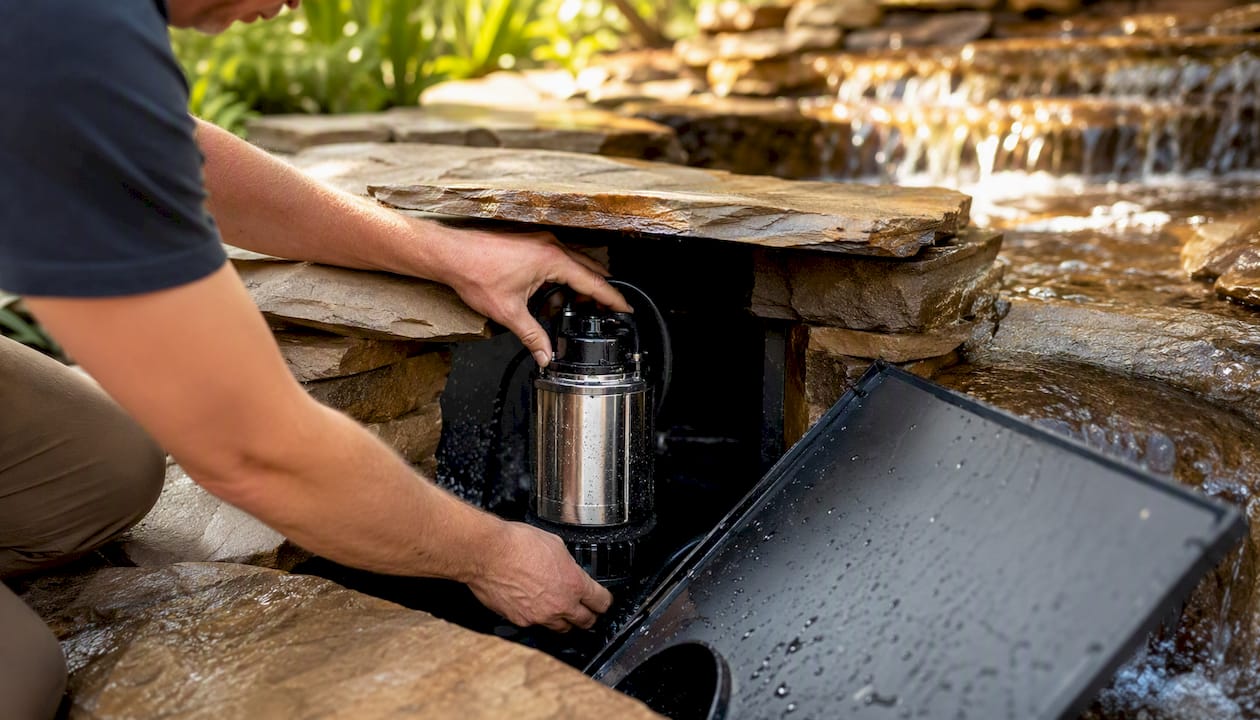
Pro Tip: Design removable access panels into the basin wall from the start. Replacing a pump without dismantling finished stonework saves a service call fee every time.
Electrical safety is non-negotiable: all circuits serving the pump must be GFCI-protected, controls must be located where they cannot interfere with gate automation hardware, and the disconnect must sit in a lockable weatherproof box.
What does a gate-adjacent water feature cost in Los Angeles?
Cost depends heavily on scale, materials, and how much electrical and plumbing work the site requires. A 10-foot pondless waterfall with a variable-speed pump runs approximately $13,000 in the LA market, or roughly $1,300 per linear foot. At the high end, a large-scale waterscape with a 50-foot stream and 13-foot pond has reached $85,000, including 24 tons of stone, 70 sacks of concrete reinforcement, and $15,000 in planting and irrigation.
| Feature Scale | Typical LA Range | What’s Usually Included |
|---|---|---|
| Small basin or fountain | $4,000 | Basin, pump, basic electrical, minimal stonework |
| Mid-size pondless waterfall | $13,000 | Excavation, liner, variable-speed pump, stonework, GFCI wiring |
| Large waterscape | $85,000 | Full structural work, heavy stone, planting, irrigation, permits |
Use the Fence & Gate Installation Cost Calculator to convert these ranges into a site-specific estimate before your first contractor call.
What does the project timeline look like from start to finish?
A typical integrated gate and water feature project in Los Angeles moves through these stages:
- Design and permitting (2–6 weeks): Drawings, permit applications, and LADBS plan check or Express Permit approval.
- Demolition and excavation (1–3 days): Remove existing paving, excavate basin and conduit trenches after 811 utility locate.
- Structural and waterproofing rough-in (3–7 days): Pour footings, set liner or concrete basin, install conduit.
- Rough-in inspection (1–2 days): LADBS plumbing and electrical rough-in inspection before covering work.
- Finish work and hardscape (3–10 days): Stonework, paving, pump installation, planting.
- Final inspection and commissioning (1–2 days): LADBS final sign-off, pump startup, gate function check.
Express Permit approval can shorten the permitting phase to a few days for qualifying small installs. Full plan checks for larger features typically add two to four weeks.
Pro Tip: Schedule electrical conduit installation before gate footings are poured. Retrofitting conduit through finished concrete costs significantly more and often requires saw-cutting finished paving.
How do you choose the right contractor for this type of project?
An integrated gate and water feature install requires coordination across masonry, plumbing, electrical, and gate fabrication. Not every landscaper or gate contractor handles all four.
Credentials to verify:
- California contractor’s license (C-27 for landscaping/water features, C-36 for plumbing, C-10 for electrical, or a general B license with documented subcontractors)
- General liability insurance and workers’ compensation certificate
- Documented LADBS permit history for similar LA projects
- Photos and references from past integrated installs in neighborhoods like Beverly Hills, Brentwood, or Studio City
Questions to ask during quotes:
- Who pulls the permits, and is the permit fee included in your bid?
- How do you coordinate the plumbing and electrical subcontractors with gate footing work?
- What pump and filtration warranty do you provide, and who handles warranty service calls?
- Can you provide a site plan showing gate swing clearance, equipment access, and drainage direction?
- What maintenance plan do you offer after commissioning?
Red flags include bids that omit permit line items, vague warranty language, no proof of prior LADBS inspections, and pricing that skips electrical or plumbing scope entirely.
What construction pitfalls should you watch for on LA lots?
Narrow lots in Sherman Oaks, Encino, or Culver City leave little staging room. Plan material deliveries carefully and confirm that heavy stone pallets can reach the site without crossing finished paving.
Common problems and how to prevent them:
- Water tracking under the gate: Require positive drainage away from the gate threshold in the design drawings before work starts.
- Pump access blocked by finished stone: Specify removable panels in the contract, not just in conversation.
- Electrical installed after final paving: Lock in conduit routing before any concrete is poured.
- Slippery surfaces at the gate threshold: Specify non-slip finishes on all paving within 36 inches of the water feature edge.
- Footing conflicts with underground utilities: Confirm 811 locate results are reviewed by the contractor before footing layout.
Pro Tip: Keep the existing gate operational throughout construction by staging basin work on one side at a time. A temporary pedestrian path prevents complaints from neighbors and keeps your property accessible.
Grading and drainage problems are consistently the most expensive surprises in front yard renovation projects. Require a grading plan as part of the written proposal.
What does ongoing maintenance cost for a gate-adjacent water feature?
Maintenance is predictable when the system is designed for access. Plan for these recurring tasks:
- Pump service: Inspect and clean every 3–6 months; variable-speed pumps typically last 5–10 years with regular service.
- Filter changes: Every 1–3 months depending on debris load (leaf fall is heavy in Brentwood and Pasadena).
- Algae control: Monthly treatment with approved biological or chemical products.
- Water top-up: Weekly in summer; evaporation rates in LA’s dry season are significant.
- Annual leak check: Inspect liner, fittings, and basin walls before the dry season.
LADWP water restrictions limit outdoor irrigation to specific days and prohibit watering between 9 AM and 4 PM, with fines ranging from $100 to $600 for violations. A recirculating water feature does not count as irrigation, but any plants surrounding the feature must comply with LADWP watering schedules. Choosing drought-tolerant species such as native sedges, dwarf agapanthus, or ornamental grasses minimizes supplemental water needs and reduces maintenance.
Enclosed or pondless systems reduce evaporation meaningfully compared to open ponds, which matters in a drought-prone climate. Pair one with a variable-speed pump and your operating electricity costs stay low year-round.
What most homeowners get wrong about gate-adjacent water features
The biggest mistake is treating the water feature as a landscaping add-on rather than a structural element of the gate project. In Beverly Hills and West Hollywood, I’ve seen projects where the basin was designed and installed after the gate footings were poured, which forced the electrical conduit to run surface-mounted along the gate post. It looks improvised, it’s harder to waterproof, and it creates a maintenance headache every time the pump needs service.
The second mistake is underestimating permit scope. A decorative basin sounds simple until you add a fixed pump, hard-plumbed water, and a depth over 18 inches. At that point you’re looking at three separate permits and a barrier compliance review. Homeowners who skip the permit step face stop-work orders and costly rework.
Before you call a single contractor, run your project through the Fence & Gate Installation Cost Calculator to establish a realistic budget. It takes two minutes and prevents the most common scope surprise: discovering mid-project that the electrical and plumbing work alone costs more than the original estimate.
Your Los Angeles estimate for a gate and water feature project
Budgeting a gate-adjacent water feature in Los Angeles is faster and more accurate when you start with real local data rather than national averages. Fence-gate-estimator gives you an instant cost breakdown based on your property’s specifics, including gate type, material, and site conditions, using current LA labor and material rates.
The process is straightforward: use the custom fencing and gate cost calculator to get your baseline estimate, then schedule an on-site visit where a specialist confirms site fit, reviews permit requirements, and prepares a written proposal with a full project timeline. The estimate covers gate fabrication, water feature integration, electrical and plumbing coordination, and permit guidance in one package. No guesswork, no hidden scope gaps.
Sources
Confirm code and permit details with these official and authoritative resources early in your design phase, and bring printed copies to contractor meetings.
- Homeowner step-by-step
- Swimming Pool Permit Rules in Los Angeles, CA (2026) | CityRuleLookup
- Custom Water Feature Design (Pondless Waterfalls, Fountains, Scupper Walls)
- Large Scale Waterscape Naturalizes Front Yard - POND Trade Magazine
This article is general information, not a substitute for advice from a qualified lawyer. Consult a qualified legal professional about your own circumstances before acting on anything here.
FAQ
Do I need a permit to add a small fountain near my gate in Los Angeles?
Yes, in most cases. A permanent basin with fixed pump wiring or hard-plumbed water requires at least an electrical or plumbing permit through LADBS, even for small installations.
What triggers pool-barrier rules for a water feature near a gate?
In Los Angeles, a water feature that exceeds 18 inches in depth or meets certain surface-area thresholds is treated as a pool under the CBC, requiring a 60-inch barrier and a self-closing, self-latching gate.
How much does a gate-adjacent water feature cost in Los Angeles?
Small basin installations start around $4,000, a mid-size pondless waterfall runs approximately $13,000, and large waterscapes can reach $85,000 or more depending on stone, structural work, and planting scope.
Can I use the LADBS Express Permit for a water feature project?
Qualifying small, code-compliant installs may use the LADBS Express Permit for online approval, but features requiring structural plan review or pool-barrier compliance typically go through a full plan check.
What type of contractor should I hire for a gate and water feature integration?
Look for a contractor holding a C-27 (landscaping), C-36 (plumbing), or C-10 (electrical) license, or a general B contractor with documented subcontractors, plus verified LADBS permit history and references from similar LA projects.