Fence Warranty Explained: What Homeowners Need to Know
By BabyLoveGrowth
A fence warranty is a written guarantee that defects in your fence’s materials or installation will be repaired or replaced within a defined time frame at no additional cost to you. Understanding what is fence warranty coverage means knowing exactly who is responsible when something goes wrong, whether that is the manufacturer who made the materials or the contractor who installed them. Most fencing investments in Los Angeles range from several thousand to tens of thousands of dollars for premium wrought iron or custom steel designs. A warranty is the document that protects that investment. This guide breaks down the types of fence warranties, what they cover, how to evaluate them, and how to file a successful claim.
What are the different types of fence warranties?
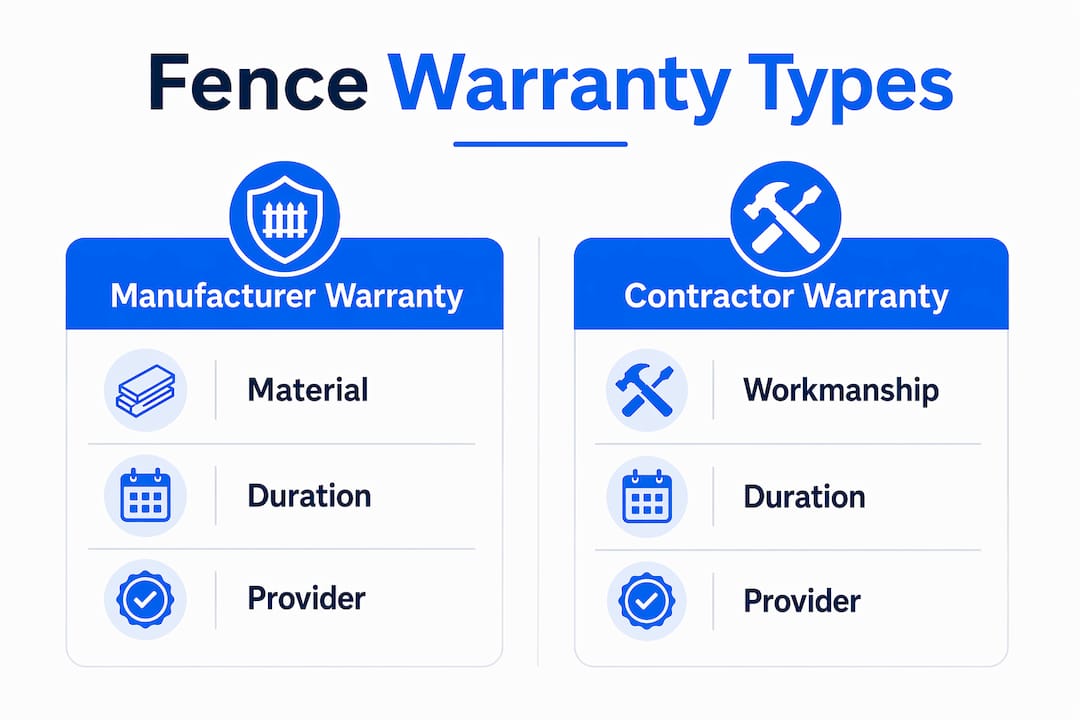
Fence warranties separate into two distinct categories: manufacturer material warranties and contractor workmanship warranties. Each covers a different part of your fence and comes from a different source. Knowing the difference is the first thing you should do before signing any fencing contract.
Manufacturer warranties cover defects in the raw materials themselves. These include problems like cracking in vinyl panels, corrosion on steel or aluminum, and premature fading on powder-coated finishes. Manufacturer warranties range from 1 year on basic wood products to lifetime coverage on premium vinyl fencing from brands like Bufftech or Certainteed. The length depends on the material and the brand’s confidence in its product.
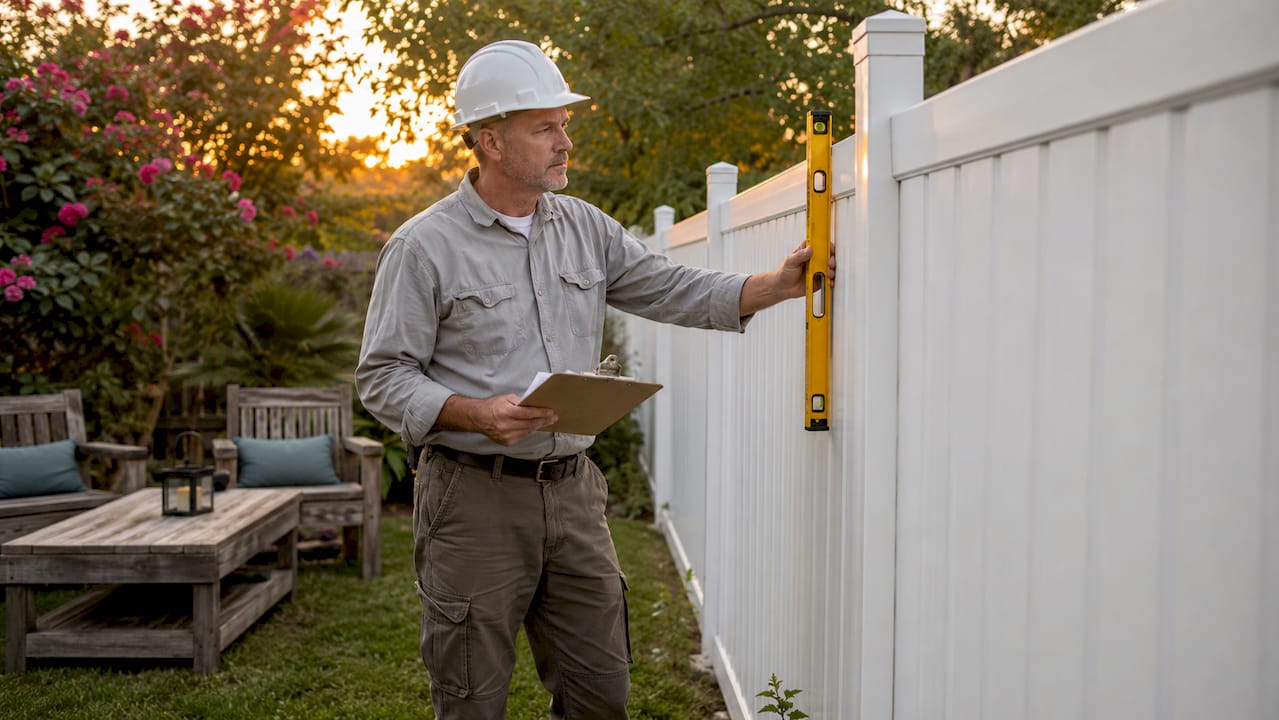
Contractor workmanship warranties cover the quality of the installation. If your gate posts are misaligned, your fence leans within the first year, or hardware fails because of poor installation technique, this is the warranty that applies. Workmanship warranties typically run 1–5 years, and commercial projects in Los Angeles often require a minimum 2-year workmanship guarantee before a contractor can bid.
| Warranty type What it covers Typical duration Who provides it | |||
| Manufacturer material | Material defects: cracking, corrosion, fading | 1 year to lifetime | Fence manufacturer |
| Contractor workmanship | Installation defects: alignment, hardware, post depth | 1–5 years | Installing contractor |
| UCC implied warranty | Baseline fitness and merchantability | Varies by state law | Legally mandated |
Beyond these two, the Uniform Commercial Code provides baseline implied warranties on fencing products in all 50 U.S. states. These implied warranties of merchantability and fitness for a particular purpose exist even when no written warranty is provided. They are a legal floor, not a ceiling.
Pro Tip: Ask your contractor to provide both the manufacturer warranty document and their own workmanship warranty in writing before installation begins. Verbal promises are not enforceable.
What does a fence warranty typically cover and exclude?
Fence warranty coverage is defined by what the warranty document explicitly includes and, just as critically, what it excludes. Most homeowners focus on the coverage and miss the exclusions. That is where disputes happen.
Standard coverage includes:
- Defects in manufacturing, such as warped vinyl panels or corroded aluminum extrusions
- Installation errors, such as posts set at incorrect depth or gates that fail to latch due to poor alignment
- Premature failure of materials under normal use conditions
- Hardware defects on gates, including hinges and locking mechanisms installed by the contractor
Common exclusions you must know:
- Damage from severe weather, accidents, and vandalism is excluded across the industry. These events are covered by your homeowner’s insurance, not your fence warranty.
- Natural weathering, fading from UV exposure, and surface oxidation over time are not covered. In Los Angeles, intense sun and Santa Ana wind conditions accelerate surface wear, and no warranty covers that.
- Unauthorized modifications void coverage immediately. Painting, adding hardware, or attaching heavy objects to a warranted fence can void the manufacturer warranty on the spot.
- Damage caused by tree roots, soil movement, or ground settling is typically excluded from both warranty types.
The coverage gap between manufacturer and contractor warranties is the most frequent source of unresolved claims. Manufacturers exclude installation faults, and contractors exclude material defects. If your fence fails and both parties point at each other, you are left without a clear remedy unless your contract addresses this gap directly.
Pro Tip: Before signing your fencing contract, ask the contractor to specify in writing who handles a claim when the cause of failure is unclear. This one sentence can save you months of back-and-forth.
How to evaluate the strength of a fence warranty
A fence warranty evaluation guide starts with the document itself, but it does not end there. The warranty is only as strong as the company standing behind it.
- Read the warranty document for plain language. A clearly written warranty signals higher workmanship standards and better customer protection. If the document requires a lawyer to interpret, that complexity often works against you when you file a claim. Prefer contractors who hand you a one or two-page warranty with defined terms.
- Check the contractor’s operational history. A warranty is worthless if the company closes. A contractor who has operated in the Los Angeles area for 10 or more years is far more likely to honor a 5-year workmanship warranty than a new company offering a 10-year promise. Look for a physical local address, not just a website.
- Verify licensing and insurance. In California, all fencing contractors must hold a valid C-13 (fencing) or B (general building) contractor license issued by the Contractors State License Board. An unlicensed contractor’s warranty has no legal standing.
- Ask about warranty transferability. Some contractor workmanship warranties transfer to a new owner if you sell the property. Others terminate at the point of sale. For Beverly Hills or Brentwood homeowners selling premium properties, a transferable warranty adds measurable value to the transaction.
- Confirm manufacturer registration requirements. Many manufacturers require you to register the product within a set timeframe after installation to activate the warranty. Missing that window can void lifetime coverage entirely.
- Identify the claims process before you need it. A warranty that requires you to submit a notarized claim form within 48 hours of discovering a defect is practically unusable. Understand the process before you sign.
The local contractor reputation and longevity matter more than the number of years printed on the warranty document. A 1-year warranty from a contractor with 20 years of local presence in Pasadena or Glendale is more reliable than a 10-year warranty from a company that opened last year.
How to track and make claims on your fence warranty
Tracking fence warranty coverage is a practical habit, not a one-time task. The documentation you keep from day one determines whether your claim succeeds or gets denied.
Step 1: Collect and store your documents at installation. Keep the signed contract, the manufacturer warranty certificate, any permits pulled for the installation, and the final inspection sign-off from the City of Los Angeles or your local municipality. Take dated photos of the completed fence from multiple angles.
Step 2: Register the manufacturer warranty immediately. Many manufacturers require registration within 30 days of installation. Set a calendar reminder the day your fence is completed.
Step 3: Photograph any defect as soon as you notice it. Written notice within the coverage period is mandatory for most warranty claims. A timestamped photo taken the day you discover a problem is your strongest piece of evidence.
Step 4: Submit written notice to the correct party. Manufacturer defects go to the manufacturer. Installation defects go to the contractor. Sending a claim to the wrong party wastes time and may cause you to miss the notice deadline.
Step 5: Follow up in writing. Claims stalled by late notices or unclear communication are frequently denied. Every conversation with a warranty provider should be followed by a written summary sent by email. This creates a paper trail that protects you.
Step 6: Escalate if needed. If a contractor denies a valid workmanship claim, you can file a complaint with the California Contractors State License Board. For manufacturer disputes, the Better Business Bureau and small claims court are both accessible options for Los Angeles homeowners.
Pro Tip: Create a dedicated folder, physical or digital, labeled with your fence installation date and contractor name. Store every document related to the fence in that folder from day one. Most denied claims fail because homeowners cannot produce the original contract or permit.
Key takeaways
A fence warranty protects your investment only when you understand its terms, keep your documentation, and choose a contractor with a proven local track record.
| Point Details | |
| Two warranty types exist | Manufacturer warranties cover materials; contractor warranties cover installation quality. |
| Exclusions are standard | Weather damage, vandalism, and unauthorized modifications are not covered by any fence warranty. |
| Contractor reputation matters most | A warranty from a long-established local contractor is more reliable than a longer warranty from an unknown company. |
| Documentation drives claims | Keep your contract, permits, photos, and written notices to support any future warranty claim. |
| Registration deadlines are real | Missing a manufacturer’s registration window can void lifetime coverage permanently. |
What I have learned about fence warranties after years in this industry
The single biggest mistake I see homeowners make is treating the warranty as an afterthought. They focus on the design, the material, the price per linear foot, and then sign whatever warranty document the contractor hands them without reading it. That approach costs people real money.
The coverage gap between manufacturer and contractor warranties is not a technicality. It is the most common reason claims get denied. I have seen situations where a fence post failed within two years, the manufacturer said it was an installation problem, and the contractor said the post was defective from the factory. Neither party paid. The homeowner paid out of pocket because the contract did not assign responsibility for ambiguous failures.
My honest advice: before you approve any fencing project, ask the contractor two direct questions. First, what happens if the fence fails and we cannot determine whether it is a material or installation defect? Second, are you still operating locally and insured for the full warranty period? If the contractor cannot answer both questions clearly, that tells you everything you need to know about how they will handle a claim two years from now.
For Los Angeles homeowners specifically, the local permit and inspection process is your friend. A fence that passed a City of Los Angeles inspection has a documented baseline of compliance. That inspection record strengthens any workmanship claim you file later. Do not skip the permit to save a few hundred dollars. You are trading a legal protection for a minor short-term saving.
Warranty length is a marketing number. Contractor integrity is the actual product. Choose accordingly.
— Moin
Plan your fence project with confidence using Fence-gate-estimator
Understanding your fence warranty starts before installation, and so does protecting your budget. Fence-gate-estimator provides instant, transparent cost estimates for custom fencing and gate installation across Los Angeles, including Beverly Hills, Santa Monica, and Brentwood. Every estimate reflects current local material and labor rates, so you know exactly what you are committing to before a contractor arrives.

Working with reputable local contractors through trusted services directly supports the quality of your workmanship warranty. Fence-gate-estimator connects you with licensed, insured professionals whose work meets Los Angeles permit standards. Whether you are planning a wrought iron perimeter fence, a sliding driveway gate, or a fully automated entry system, start with an accurate estimate and build your project on a solid foundation.
Recommended
- Why Upgrade Residential Fences: A Homeowner’s Guide | LA Electric Gate Service
- Security Fence Features List for LA Homeowners | LA Electric Gate Service
- Why Fence Installation Matters for Your Property | LA Electric Gate Service
- Fence post installation in Los Angeles: 5 key essentials | LA Electric Gate Service