Stop a $6,000 Quote Becoming $9,000: Los Angeles Fence Site Survey
By BabyLoveGrowth AI
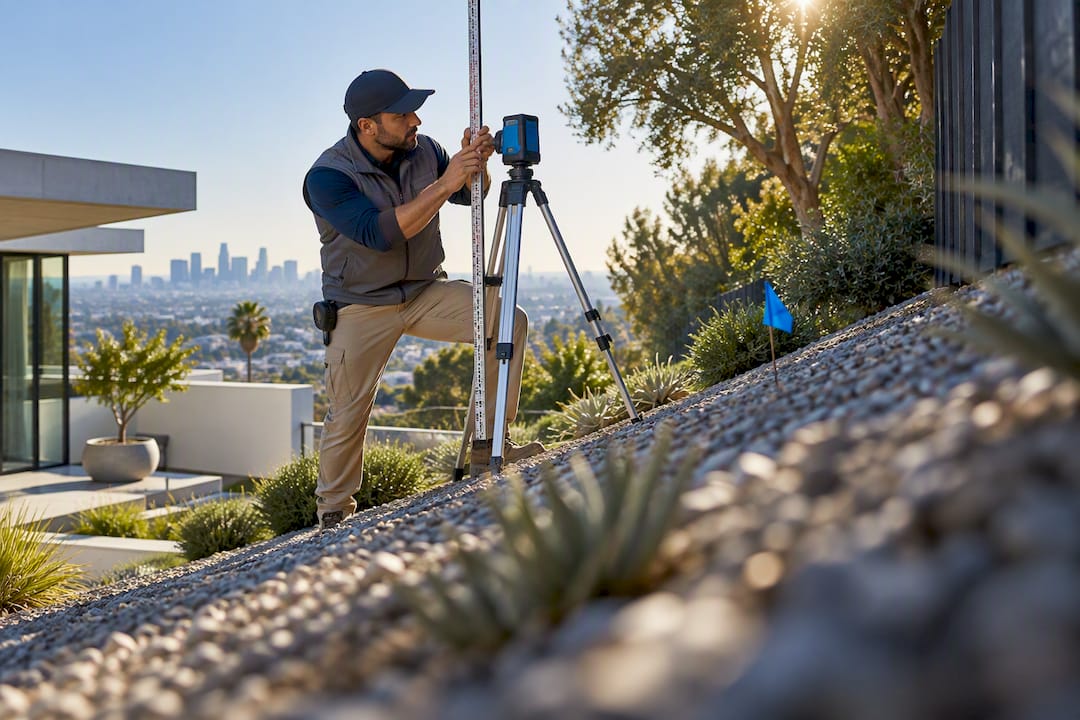
A fence site survey is the estimator’s on-site visit to measure your property, flag obstacles, and photograph existing conditions before pricing your project. You should walk away with an itemized estimate, a scope attachment listing assumptions and exclusions, and labeled photos tied to a sketch of your yard. Done right, this visit is what separates a firm, defensible quote from a number that changes the moment digging starts.
TL;DR:
- Site conditions like rocky soil, slope changes, and difficult access can significantly increase fencing costs beyond simple footage calculations.
- Measuring each fence segment individually and capturing detailed labeled data reduces estimation errors and clarifies scope before installation.
- Preparing property sketches, material preferences, and clearing access in advance helps ensure a more accurate and efficient on-site survey.
- Hidden features such as buried utilities, old footings, or steep slopes are documented as assumptions or change orders once discovered during installation.
- An online estimate provides a starting point, but an on-site survey refines this into a detailed, itemized proposal with scope, photos, and conditions documented.
Table of Contents
- What Does a Fence Site Survey Actually Cover?
- Which Site Conditions Change Your Fence Price?
- How Does the Estimator Turn Measurements Into a Price?
- How Should You Prepare for the Estimator’s Visit?
- What Happens After the Site Visit?
- Fence-Gate-Estimator: Turning an Online Estimate Into a Site-Ready Scope
- A Contractor’s Take on Why the Checklist Matters
- Get an Instant Estimate, Then Book Your On-Site Survey
- Sources
- FAQ
What Does a Fence Site Survey Actually Cover?
An estimator visiting a property in Sherman Oaks or Culver City isn’t eyeballing your yard and guessing. The visit follows a repeatable pattern that turns your property into a set of measurable, labeled data points the office can price without calling the estimator back for clarification.
Here’s what typically gets recorded during the walk:
- Fence runs labeled by ID (Run A, Run B, Gate 1) with linear footage measured per segment, not estimated in one lump sum
- Corners, transitions, and gate openings, including swing direction and clearance for driveway gates
- Height and panel configuration, noting whether the terrain requires racked or stepped panels
- Photos tied to each labeled run, so the office can reference “Run A, post 3” instead of a vague description
- Access notes, including staging areas, carry distance from the truck, and whether an existing fence needs removal
This labeling system matters more than it sounds. A field-ready site-visit checklist captures scope, measurements, photos, access, and exclusions in one pass, which means the office builds your quote from real numbers instead of the estimator’s memory. Measuring each segment individually, rather than pacing off the whole yard, is also where most estimating errors get caught before they become expensive.
Which Site Conditions Change Your Fence Price?
Two properties with identical footage can price hundreds or thousands of dollars apart because of what’s under and around the fence line. The estimator’s job during the visit is to document those variables so the price reflects your actual lot, not a generic average.
The biggest cost swings usually come from:
- Soil and rock: Hardpan or rocky soil common in parts of Glendale and the hillside neighborhoods around Bel Air and Pasadena can require power augers or hand-digging, and soil composition alone can dramatically increase post-hole labor time
- Slope and grade changes: A sloped lot in Studio City or Encino often needs racked or stepped panels and longer posts, which changes both material count and labor time
- Access and carry distance: If the crew can’t park close to the work area, carry distance from the truck to the farthest post becomes a real labor factor, sometimes requiring specialized equipment
- Existing concrete, roots, or old footings: Demo work for a prior fence or a tree root system near the line adds time that has to be priced separately
- Utility locates: Anything the estimator can’t confirm on-site (gas lines, sprinkler systems, buried electrical for gate automation) gets flagged as an assumption pending a utility locate, not baked into the base price
Terrain-driven adders are common enough in hillside LA neighborhoods that it’s worth reading how terrain impacts fence costs before your visit, so the numbers on your estimate make sense.
Pro Tip: Walk your own property line before the estimator arrives and flag anything unusual, an old sprinkler valve, a slope you know is steeper than it looks, a patch of concrete under the grass. It won’t change the measurements, but it saves the estimator from discovering a surprise mid-visit and having to note it as an “unconfirmed condition” in your scope.
How Does the Estimator Turn Measurements Into a Price?
Once the site visit wraps, the numbers on your clipboard or tablet turn into a structured bid. The process is fairly mechanical, and knowing the steps helps you read your quote instead of just trusting the bottom line.
- Material takeoff. Every measured run gets converted into a parts list: panels, posts, concrete bags, hardware, and gate hardware, based on the actual linear footage recorded on-site.
- Labor calculation. The estimator applies production rates (how many linear feet a crew installs per hour) and adjusts them for your site’s specific conditions, rocky soil, long carry distances, or tight access all slow the clock down.
- Equipment and subcontractor allowances. Jobs needing a power auger, demo work, concrete delivery, or an electrician for gate automation get a line item or allowance rather than a guess folded into labor.
- Overhead, profit, and contingency. A responsible bid includes overhead and a margin for the unexpected, plus alternates for optional upgrades and a stated expiration date on the pricing.
- Scope attachment. The final document spells out assumptions, exclusions, and anything that wasn’t fully inspected, so both sides agree on what’s included before a contract gets signed.
This mirrors how experienced fence contractors structure a bid lifecycle: site walk, takeoff, pricing, and a proposal that documents scope in writing rather than leaving it to memory.
How Should You Prepare for the Estimator’s Visit?
A little prep work before the truck pulls up produces a tighter, more accurate quote and saves you a follow-up visit.
- Pull out any plat, HOA design guidelines, or old lot sketch you already have, even a rough one helps
- Decide your material preference, target height, and gate needs ahead of time so you’re not deciding on the spot
- Clear access routes to the fence line and note where pets, cars, or landscaping crews might get in the way
- Confirm the on-site contact and your timeline, and clarify who’s authorized to accept the final quote
- Understand that anything the estimator can’t fully inspect (a locked side yard, a shared property line) may get listed as an assumption rather than guessed at
A short pre-visit conversation about the basics, fence type, rough footage, removal needs, and your timeline, also helps the estimator arrive ready instead of starting from zero.
What Happens After the Site Visit?
Expect three things within a few days of the walk: an itemized estimate, labeled photos referenced to your sketch, and a written scope basis explaining what’s included and what’s assumed.
- Turnaround on the written estimate is typically measured in days, not weeks, once the site data is in hand
- Permit and HOA steps, where required for properties in Beverly Hills, West Hollywood, or Brentwood, get flagged as a next step with a recommended packet list
- Material lead times (especially for wrought iron or custom automation gear) get communicated so you can plan a realistic start date
- Concealed conditions found once digging starts, an unmarked utility line, buried footings, get documented as a change order rather than absorbed silently
If your property involves a disputed property line or a formal boundary question, the contractor should point you toward a licensed surveyor or engineer as a referral. That’s a separate profession from the fence estimate itself. For permit-heavy properties, reviewing Los Angeles fence setback rules or HOA packet requirements before your visit can shave real time off the approval process.
Fence-Gate-Estimator: Turning an Online Estimate Into a Site-Ready Scope
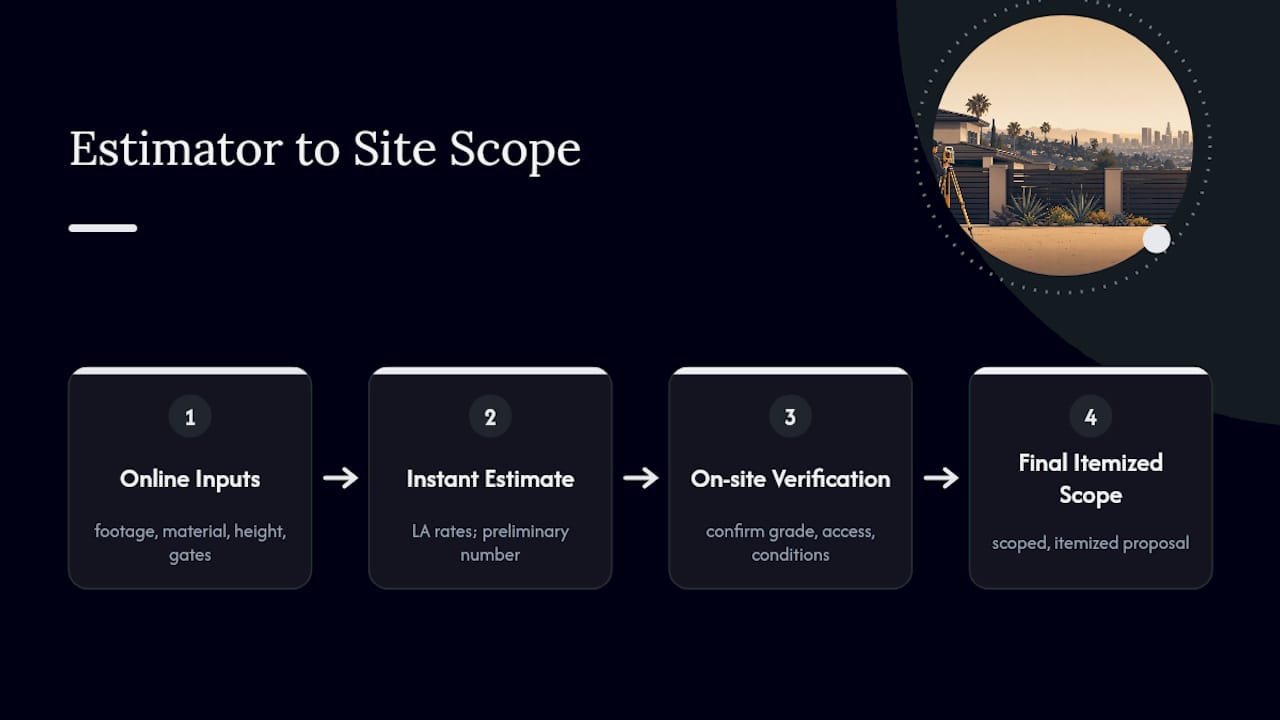
An instant estimator uses current Los Angeles material and labor rates to give you a realistic starting number based on your property size, material choice, and features like gate automation, all before a contractor sets foot on your property. The more specific your inputs, footage, material, height, gate count, the tighter that first number lands.
That online estimate isn’t the finish line. It’s the baseline the on-site visit refines into a scoped, itemized proposal once an estimator confirms your actual grade, access, and existing conditions. To get the most accurate instant estimate, have your rough footage and material preference ready before you start. From there, the on-site survey fills in the details a screen simply can’t see.
A Contractor’s Take on Why the Checklist Matters
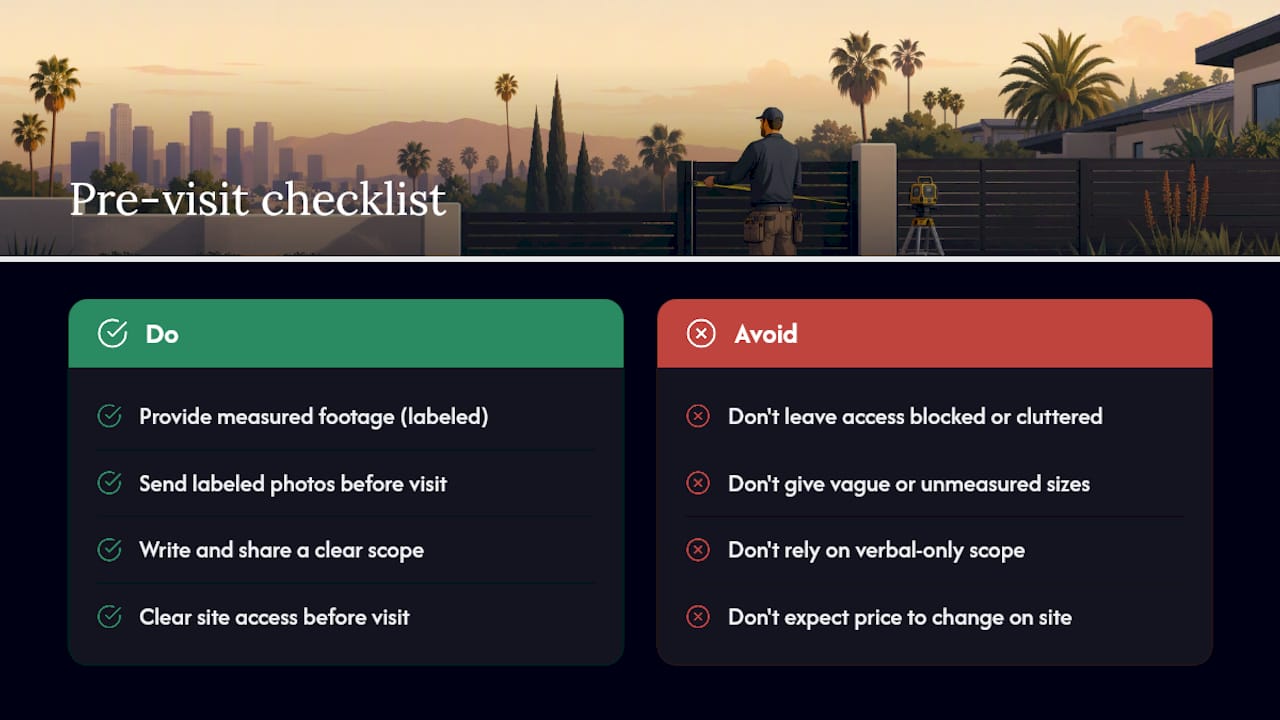
The estimators who give homeowners the fewest surprises are the ones who treat every visit the same way, labeled runs, repeatable photo counts, measurements you could hand to a stranger and have them arrive at the same number. That discipline isn’t bureaucracy. It’s what keeps a $6,000 quote from becoming a $9,000 invoice.
Homeowners help themselves most by being ready to answer basic questions and by clearing access before the visit. A short pre-visit checklist works both ways: measured footage, labeled photos, a written scope, and a price that doesn’t move once the crew shows up.
— Moin
Get an Instant Estimate, Then Book Your On-Site Survey
An online estimator can provide a realistic number before you schedule a visit, allowing you to walk into your on-site survey already knowing a rough budget range, so the conversation starts at scope and specs instead of sticker shock.

Start with the online estimator using your property’s footage, material preference, and any automation features you’re considering, wrought iron, steel, or aluminum, swing or sliding gates. From there, request an on-site survey to convert that number into an itemized proposal with labeled photos and a written scope attachment. If your project centers on a driveway entrance, the Driveway Gates page walks through swing and sliding options, and the Custom Fencing page covers premium material choices for larger residential lots. Once you approve the scope, scheduling and permit steps follow directly from what the estimator documented on-site. Get your instant estimate today and book your on-site visit.
Sources
- Site-Visit Estimate Checklist for Contractors
- How to bid a fence job
- How to estimate a fence job accurately | Visual Fence Pro
FAQ
How Long Does a Fence Site Survey Take?
Most residential visits vary in length depending on lot size and how many fence runs or gates are involved. Larger or hillside properties with grade changes can take longer since the estimator needs to note stepped or racked panel requirements.
Is There a Fee for the On-Site Estimator Visit?
Fence-gate-estimator’s online tool gives you an instant estimate at no cost, and the current pricing for services like a manual driveway gate is listed directly on the site. Specific figures for custom fencing and automated gates are available on the site once you enter your property details.
What If the Estimator Can’t Inspect Part of My Property?
Any area that can’t be fully inspected, a locked side yard or an unmarked utility line, gets recorded as an assumption in the scope attachment rather than left blank. This keeps the estimate honest about what’s confirmed versus what’s pending, and it’s flagged clearly before you sign anything.
What Happens If Hidden Conditions Are Found During Installation?
Concealed conditions like buried footings or an unexpected utility line get documented as a change order with photos, not absorbed silently into the original price. A clear scope attachment from the site visit makes these situations easier to resolve because both sides already agreed on what was and wasn’t inspected upfront.
Do I Need a Land Surveyor Before My Fence Estimate?
Not for a standard fence or gate estimate. If your project involves a disputed property line, the contractor will typically refer you to a licensed surveyor or engineer as a separate step, since that’s a different service from the fence site survey itself.