Expert residential gate installation tips for LA homeowners
By BabyLoveGrowth
Installing a residential gate in Los Angeles means navigating a demanding mix of security requirements, curb appeal expectations, and a regulatory landscape that can trip up even experienced homeowners. In Beverly Hills, Bel Air, or Santa Monica, the wrong gate choice, or a missed permit, can result in costly fines, forced removal, and months of delay. Getting it right the first time requires a clear checklist, the right materials, smart automation choices, and an understanding of how city codes and HOA rules shape every decision. This guide gives you exactly that.
Table of Contents
- Core factors to consider before you start
- Best materials for Los Angeles gates: Security, durability, and style
- Automation and custom features: Getting it right the first time
- Comparison table: Best gate choices for LA homeowner scenarios
- What most LA homeowners get wrong (and how to avoid it)
- Ready to upgrade? Get an expert LA gate quote now
- Frequently asked questions
Key Takeaways
| Point Details | |
| Check Los Angeles codes | Permit, setback, and HOA requirements can make or break your project—get approval before starting. |
| Choose resilient materials | Aluminum is often best for coastal LA, while powder-coated steel suits those needing extra strength. |
| Automate for security | Prioritize safety, code compliance, and professional installation when adding automation or smart features. |
| Match gate to your site | Different LA neighborhoods demand different solutions—consider environment, slope, and HOA rules. |
| Professional help pays off | Pros streamline permits, avoid costly mistakes, and deliver secure, stunning results in LA’s complex market. |
Core factors to consider before you start
With high stakes on every side, the most important thing you can do before selecting any gate is address your legal and site requirements. Skipping this step is the single biggest mistake we see LA homeowners make. You can fall in love with a design, place a material order, and then discover that your HOA prohibits it or your setback does not accommodate it.
Here are the critical checklist items to verify upfront:
- Permits: Gates over 6 feet tall require a permit through the Los Angeles Department of Building and Safety (LADBS). Any automated or electrical gate work also requires a separate electrical permit. Front gates are limited to 42 inches in height without an over-height permit, and a 20-foot setback from the property line applies in many zones.
- HOA approval: In luxury neighborhoods like Beverly Hills and Bel Air, your homeowners association almost certainly has design standards. Materials, colors, finishes, and even automation types may need written approval before fabrication begins.
- Site assessment: Measure your driveway opening carefully. Note whether the surface slopes, whether there is enough run for a swing gate to open fully, and whether a sliding gate has adequate lateral space.
- Traffic type: Will pedestrians use a separate entry, or will they share the vehicle gate? Dual-purpose gates need dedicated pedestrian pass-through designs to avoid safety issues.
- Soil and terrain: Hillside properties require deeper footings for gate posts. Rocky or unstable ground affects how automation hardware is anchored.
Understanding the cost factors for LA fences early gives you a realistic budget framework before you commit to any design direction.
Pro Tip: Pull your LADBS permit history and your HOA’s CC&Rs (Covenants, Conditions, and Restrictions) documents before you even talk to a fabricator. Rules change frequently, and assumptions based on what your neighbor installed two years ago may no longer apply.
One important statistic worth keeping in mind: in high-end LA neighborhoods, permit-related delays account for a significant share of gate installation project overruns. Confirming requirements in advance keeps your project on schedule and prevents expensive rework.
Best materials for Los Angeles gates: Security, durability, and style
Once you have cleared your legal and site hurdles, the next major decision is choosing the right material. In Los Angeles, climate plays a bigger role in this choice than most homeowners initially expect. Coastal humidity, intense UV exposure, and periodic wildfire smoke all affect how gate materials perform over time.
Here is a side-by-side look at the most common gate materials:
| Material Durability Maintenance Corrosion resistance Style flexibility Typical lifespan | |||||
| Aluminum | High | Low | Excellent | High | 30+ years |
| Wrought iron | Very high | Medium | Moderate (with powder coat) | Very high | 40+ years |
| Steel | High | Medium | Moderate (with powder coat) | High | 25-35 years |
| Wood | Medium | High | Low (needs regular sealing) | Very high | 10-20 years |
Aluminum is the preferred material for coastal Los Angeles properties because it resists rust and UV degradation without requiring constant upkeep. Wrought iron and steel offer exceptional strength and are well-suited to security-focused applications, but they must be powder-coated and periodically inspected for rust, especially within a few miles of the Pacific Ocean. Wood carries a timeless warmth that fits certain architectural styles beautifully, but it demands the most maintenance and has the shortest functional lifespan in LA’s climate without aggressive sealing and refinishing schedules.
Key material considerations for LA homeowners:
- Aluminum gates can be fabricated into virtually any design, from sleek contemporary panels to ornate traditional styles, making them a versatile choice for properties in design-forward neighborhoods.
- Steel and wrought iron deliver the weight and presence that many luxury homeowners want for a commanding first impression at the entrance.
- Wood gates, while stunning when new, can warp or crack in extreme heat. If you choose wood, opt for a hardwood like teak or cedar with a professional-grade sealant applied every one to two years.
- Powder coating on steel or iron adds a protective barrier against corrosion, but the coating itself can chip over time if not maintained, allowing rust to form underneath.
“For most Los Angeles properties, especially those near the coast, aluminum offers the best balance of aesthetics, security, and long-term value. You get the look of a high-end custom gate without the ongoing maintenance burden of iron or wood.” — Installation specialist, Beverly Hills gate fabrication firm
If you are exploring how materials interact with other design elements along your property boundary, reviewing luxury fence component options gives you a complete picture of coordinated design. For those already leaning toward aluminum, our aluminum gate installation guide walks through the specifics of fabrication and installation for upscale LA homes.
Automation and custom features: Getting it right the first time
Choosing the right material is only half the equation. Automation is what transforms a beautiful gate into a fully functional security and convenience system. In high-end LA properties, automated gates are the standard, not the upgrade.
Here are the top steps to selecting and implementing gate automation correctly:
- Choose the right operating mechanism. Swing gates work best on flat driveways with adequate clearance. Sliding gates are ideal for narrower setbacks or properties with limited swing room. Cantilevered sliding gates, which ride above the ground on a track-free system, are the best option for hillside or debris-prone driveways.
- Hire a licensed professional for electrical work. LA codes require that all gate automation involving electrical components be installed by a licensed contractor. Attempting DIY installation on automated systems is not only a code violation, it can void your equipment warranty and create serious safety hazards.
- Prioritize safety features. A properly installed automated gate must include obstruction sensors (also called loop detectors or safety edges) that stop or reverse the gate if a person or vehicle is in its path. Battery backup ensures the gate functions during a power outage, which is essential for emergency access.
- Plan for fire department access. Many LA municipalities, including those in the Wildland Urban Interface zones, require gates to be compatible with the Knox Box system or a fire department access code so emergency vehicles can enter without delay.
- Add smart home integration. Modern gate openers can connect to your home automation system, allowing you to open, close, and monitor your gate remotely from a smartphone. Video intercoms with two-way audio and camera feeds are popular in luxury installations.
- Consider aesthetic customization. Custom powder-coat colors, laser-cut decorative panels, integrated lighting, and address plaques all allow you to align the gate’s appearance with your home’s architectural character.
Pro Tip: If your driveway has a slope or sits on a hillside property, a cantilevered gate is almost always the better investment. Track-based sliding gates collect debris, leaves, and sediment in the channel, leading to jamming and costly motor burnout over time. Cantilevered systems eliminate that vulnerability entirely.
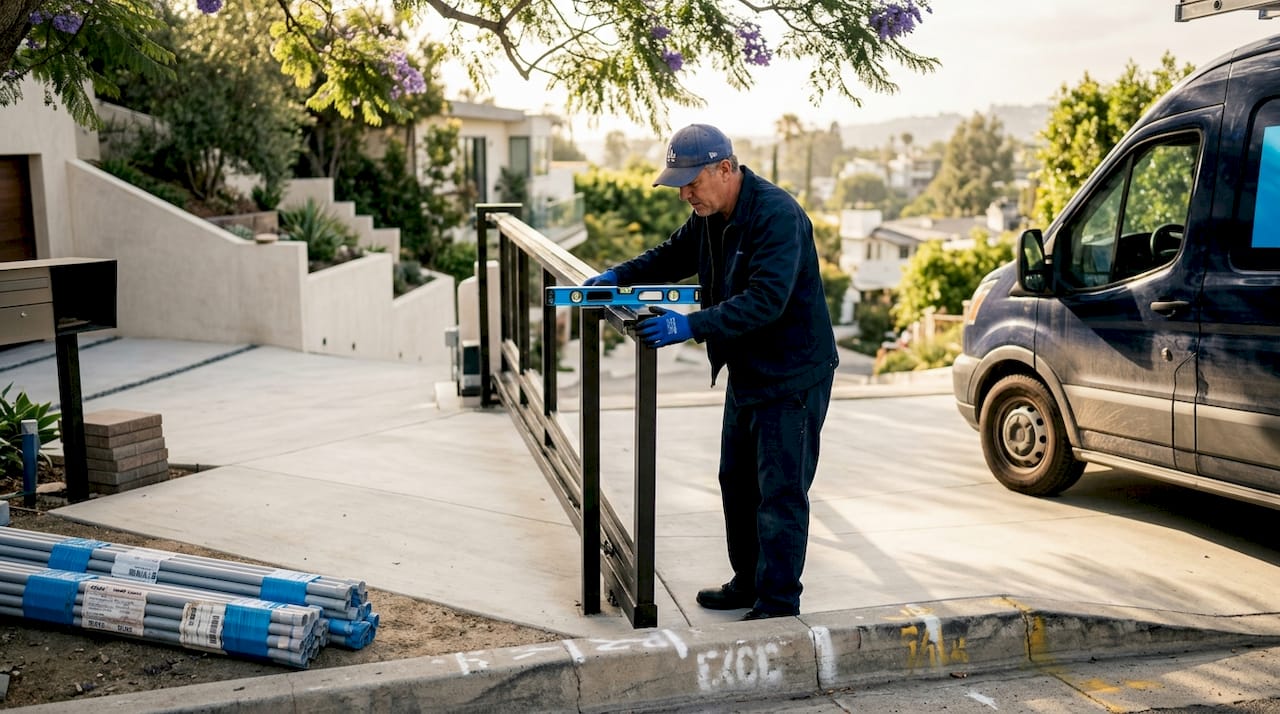
Professional installation is essential in high-end LA neighborhoods where strict code compliance and HOA standards leave zero room for shortcuts. A licensed installer also provides documentation and permits that protect your property’s resale value. To understand how the full process comes together, the smart gate installation workflow for luxury Los Angeles properties is worth reviewing before you request quotes.
Comparison table: Best gate choices for LA homeowner scenarios
Still not sure which material or feature set matches your unique property? This scenario-based comparison does the thinking for you.
| Homeowner scenario Best material Recommended mechanism Key installation note | |||
| Coastal property (Santa Monica, Malibu) | Aluminum | Swing or cantilevered sliding | Powder-coated stainless hardware; avoid bare steel fasteners |
| Hillside or debris-prone driveway | Aluminum or steel | Cantilevered sliding | Deep-set posts; concrete footings for slope stability |
| HOA-restricted luxury neighborhood | Aluminum or wrought iron | Swing (single or bi-parting) | Submit design renderings to HOA before fabrication |
| Family security focus | Steel or wrought iron | Automated swing with sensors | Include pedestrian pass-through and video intercom |
| Modern/contemporary architecture | Aluminum | Sliding or cantilevered | Custom panel design; smart home integration |
| Traditional estate aesthetic | Wrought iron | Swing with ornamental detail | Powder coat plus annual inspection for coastal areas |
Quick takeaways:
- Aluminum excels for coastal properties due to its rust and UV resistance, making it a low-maintenance investment that holds up without frequent intervention.
- HOA and permit approval are non-negotiable in upscale LA neighborhoods. Factor this timeline, often two to six weeks, into your project schedule before scheduling any fabrication.
- Hillside properties benefit most from cantilevered mechanisms that eliminate debris-related malfunctions.
- If your design needs fall outside these categories, vinyl fencing alternatives and hybrid approaches can offer creative solutions worth considering.
Every one of these scenarios has nuances. The best installations account for the terrain, the HOA rules, the architectural style, and the family’s day-to-day use patterns before a single piece of material is ordered.
What most LA homeowners get wrong (and how to avoid it)
We have worked with hundreds of homeowners across Los Angeles, and certain costly patterns come up repeatedly. The most dangerous assumption is that the permitting process is straightforward and fast. In reality, LA’s building department and HOA review cycles can each take weeks, and any incomplete application resets the clock. Homeowners who order materials before receiving approval often face storage fees, change-order costs, or outright rejection of their chosen design.
The second common mistake is treating aluminum as a budget option. It is not. Aluminum commands premium pricing when properly fabricated and finished, but it earns that cost back through dramatically lower maintenance and a longer functional lifespan in LA’s environment. We see homeowners pass on aluminum for steel because steel “looks more substantial,” only to pay for repainting and rust remediation within five years in a coastal zip code.
The third mistake is underestimating what happens when automation is done wrong. A gate that fails to meet safety code, has undersized wiring, or uses residential-grade operators on a heavy commercial-weight gate will malfunction. Worse, it may injure someone. That liability is not theoretical. There are genuine consequences, both legally and financially, when an automated gate malfunctions due to improper installation.
The real meaning of a luxury gate installation is not just beautiful design. It is a system that works flawlessly, complies with every applicable code, requires minimal maintenance, and adds genuine value when you sell the property. Reviewing LA luxury fence pitfalls in detail before you proceed can save you from decisions that look good on a brochure but cause real headaches in practice. The best investments are the ones you never have to think about again after installation day.
Ready to upgrade? Get an expert LA gate quote now
If you’ve found this guide useful, the next step is getting real numbers tailored to your specific property. Navigating material choices, permit requirements, HOA submissions, and automation specifications is much easier with experts who do this every day in your area.
Our team specializes in custom, code-compliant gate installations across Los Angeles, from contemporary aluminum sliding gates in Santa Monica to ornate wrought iron estate entrances in Bel Air. Whether you need gate automation professionals to handle your smart system installation, experienced crews for driveway gate installation, or custom fencing experts to design a cohesive perimeter, we bring the local knowledge and craftsmanship your property deserves. Get your instant estimate now and skip the guesswork entirely.
Frequently asked questions
Do I need a permit for a new residential gate in Los Angeles?
Yes. Permits are required for gates over 6 feet tall, front yard gates exceeding 42 inches, or any installation that includes automation or electrical components through the LADBS.
Which gate material is best near the LA coast?
Aluminum is the top choice for coastal Los Angeles because it resists rust and UV damage without requiring heavy maintenance, unlike steel or wood which degrade faster in salt-air environments.
Can I install an automated gate myself?
It is strongly advised against it. Professional installation is required in LA for code compliance, safety sensor integration, and electrical permitting, and DIY work can void warranties and create liability.
What’s the maximum height for a front yard gate without a special permit in LA?
The maximum is 42 inches for front yard gates. Anything taller requires an over-height permit filed through the LADBS before construction begins.
How do HOAs impact residential gate installation in upscale LA neighborhoods?
HOA approval is required for most gate installations in luxury neighborhoods, covering material choices, design aesthetics, and sometimes automation types. Always secure written approval before ordering materials to avoid costly changes later.
Recommended
- Expert Gate & Fence Blog | LA Electric Gate Service
- Expert aluminum fence installation guide for upscale LA homes | LA Electric Gate Service
- Fence & Gate Installation Cost Calculator Los Angeles
- Fence post installation in Los Angeles: 5 key essentials | LA Electric Gate Service
- Keep your fences strong: Dublin homeowner’s guide