Automated Gate Weatherproofing Options for LA Homes
By BabyLoveGrowth AI
The most reliable protection for a premium residential automated gate combines a NEMA 3R-rated weatherproof enclosure, sealed waterproof connectors, outdoor-rated conduit, corrosion-resistant hardware (316 stainless steel or marine-grade aluminum), and proper drainage around the operator base. That bundle covers the four main failure paths: moisture ingress, corrosion, electrical shorts, and motor flooding. For a Los Angeles-specific cost breakdown tailored to your property, gate type, and neighborhood, run an instant estimate at Fence-gate-estimator.com.
Key measures at a glance:
- Weatherproof enclosure: NEMA 3R minimum; NEMA 4X for coastal properties
- Sealed wiring: waterproof connectors, heat-shrink tubing, and conduit on every outdoor run
- Corrosion-resistant hardware: 316 stainless fasteners, powder-coated or galvanized steel
- Drainage: raised mounting (3–4 feet) and graded ground around the operator
- Surge protection: at the main gate panel and any solar or AC input
Table of Contents
- What does weather actually do to your automated gate system?
- What are the best automated gate weatherproofing options to install?
- What electrical safeguards protect your gate from moisture damage?
- How often should you inspect your gate’s weatherproofing?
- What does weatherproofing an automated gate cost in Los Angeles?
- What LA-specific factors affect your weatherproofing choices?
- How do you choose the right contractor for this work?
- Key Takeaways
- What most guides miss about weatherproofing automated gates in LA
- Get a tailored Los Angeles weatherproofing estimate today
- Useful sources
- FAQ
What does weather actually do to your automated gate system?
Moisture, salt air, UV exposure, wind-driven rain, and surface runoff each attack a different part of your gate. Moisture reaches control boards through unsealed conduit entries and causes shorts. Salt spray accelerates oxidation on hinges, tracks, and fasteners. UV degrades plastic housings and rubber gaskets over two to three seasons. Runoff pools around the operator base and wicks into enclosures from below.
The failure pattern differs sharply between coastal and inland LA neighborhoods. Near Santa Monica, Venice, or Brentwood, salt and moisture attack low-voltage wiring and control boards, producing symptoms like gates that won’t close fully, sensors triggering without cause, and remotes that work inconsistently. Inland, in Studio City, Pasadena, or Encino, the bigger threat is thermal cycling: summer heat above 100°F causes metal components to expand and contract, loosening fasteners and cracking sealant over time.
Coastal gate systems face a compounding problem: salt deposits on terminals lower electrical resistance, which accelerates corrosion on control boards and can cause phantom sensor triggers long before visible rust appears on the gate itself.
Catching these failure modes early is the entire argument for a structured weatherproofing plan rather than reactive repairs.
What are the best automated gate weatherproofing options to install?
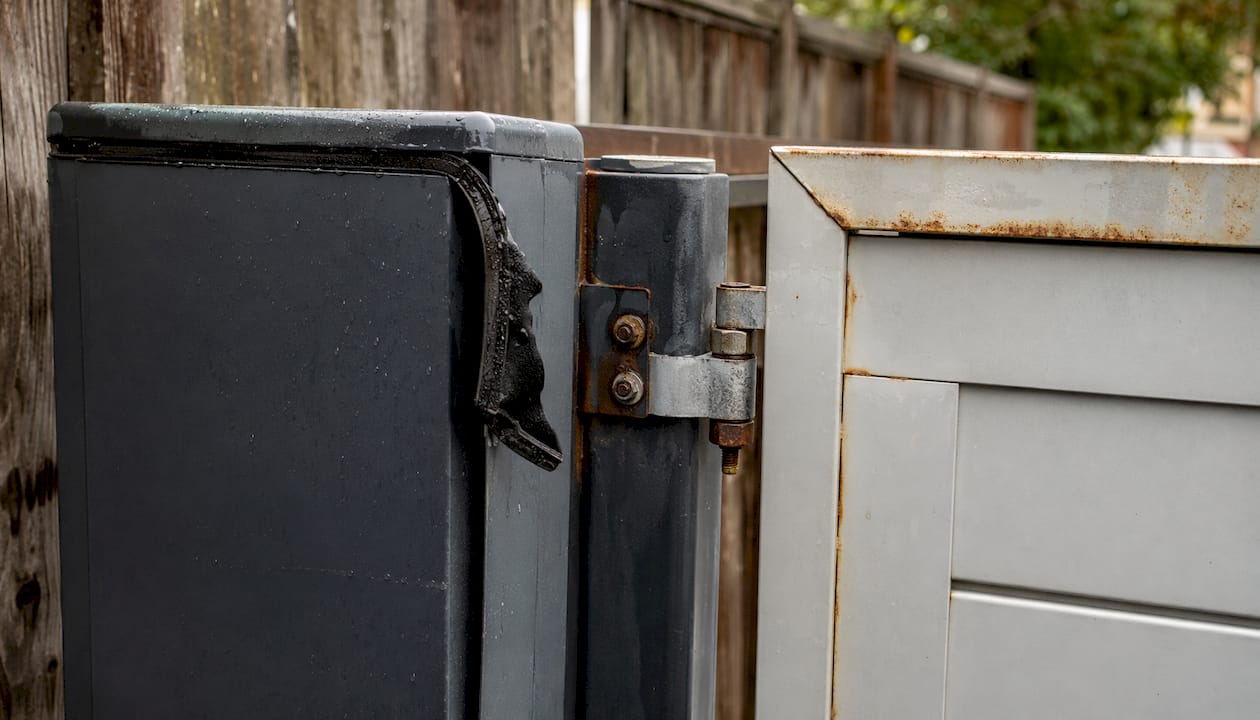
Start with the enclosure. A NEMA 3R-rated housing protects against rain, sleet, and ice; NEMA 4X adds resistance to corrosive environments and is the right call for any property within a mile of the coast. Mount the control box at chest height to keep it above typical pooling levels and reduce direct rain splash.
Beyond the enclosure, these measures make up a complete weatherproofing package:
- Silicone and polyurethane sealants on all conduit entries, junction box knockouts, and mounting penetrations
- Waterproof connectors and heat-shrink tubing on every terminal and splice
- Outdoor-rated conduit (Schedule 40 PVC or liquid-tight flexible) for all wire runs
- Sealed battery enclosures with venting positioned away from prevailing rain direction
- Surge protection at the gate panel and any AC or solar input
- Protective overhangs or rain hoods above the operator where a fixed structure is feasible
For hardware, 316 stainless steel outperforms standard 304 stainless in chloride environments. Powder coating adds a second barrier on steel gates; hot-dip galvanizing is the more durable (and more expensive) option for structural components. Marine-grade aluminum is lighter and naturally corrosion-resistant, making it a strong choice for sliding gates in coastal neighborhoods like Santa Monica or Bel Air.
| Method | Durability | Relative Cost | Typical Lifespan |
|---|---|---|---|
| NEMA 3R enclosure | High | Moderate | typical long service life |
| NEMA 4X enclosure | Very high | Higher | typical long service life, enhanced for coastal conditions |
| Powder coat finish | Moderate–high | Moderate | moderate durability with periodic maintenance |
| Hot-dip galvanizing | Very high | Higher | extended service life with proper care |
| 316 stainless hardware | Very high | Higher | excellent corrosion resistance for long service |
| Silicone/polyurethane sealant | Moderate | Low | requires periodic re-application |
| Rubber gaskets | Moderate | Low | limited lifespan requiring replacement every few years |
| Brush seals | Moderate | Low–moderate | typical replacement interval within several years |
Rubber gaskets compress and seal gaps around doors and panels; brush seals handle irregular surfaces and moving parts better. For a premium driveway gate, combining both is common practice.
Pro Tip: Slope the top of any enclosure or rain hood at least 15 degrees and place a small silica gel desiccant pack inside. Venting is necessary to prevent condensation, but a flat-topped enclosure collects standing water that eventually seeps through seams. The slope sheds it; the desiccant handles residual humidity.
For guidance on how gate type affects weatherproofing needs, the gate types overview covers swing vs. sliding configurations and their different exposure profiles.
What electrical safeguards protect your gate from moisture damage?
Every outdoor electrical connection on an automated gate is a potential entry point for water. Seal all connections with silicone sealant at conduit entries, use waterproof connectors on all terminals, and cover every splice with heat-shrink tubing rather than standard electrical tape, which degrades outdoors within one season.
The National Electrical Code (NEC) requires outdoor wiring to be run in weatherproof conduit and all boxes to be rated for wet locations. For automated gate systems, this means liquid-tight flexible conduit at the motor connection point and Schedule 40 PVC for buried runs, with proper sealing at every transition.
Surge protection at the main gate panel is non-negotiable in LA, where late-season thunderstorms and Santa Ana wind events can produce voltage spikes that destroy control boards instantly. Install a dedicated surge protector at the panel and a secondary one at any solar input.
Battery backup enclosures need sealed housings with venting directed away from rain. Never mount a battery box at grade level where runoff can pool against it. Low-voltage control wiring (12V or 24V DC) is less hazardous than line voltage but still corrodes and fails without proper sealing.
How often should you inspect your gate’s weatherproofing?
Inspect quarterly as a baseline, and after every significant storm. Coastal properties near Santa Monica, Venice, or Brentwood warrant more frequent checks given constant salt exposure; inland properties in Burbank, Glendale, or Pasadena can extend inspection intervals.
Quarterly inspection checklist:
- Check all gaskets and door seals on enclosures for cracking or compression loss
- Inspect conduit entries for sealant shrinkage or gaps
- Clear drain holes around the operator base
- Look for surface rust on hinges, tracks, and fasteners
- Test sensor alignment and auto-reverse function
- Listen for unusual motor noise (grinding or hesitation signals moisture in the motor housing)
After a storm:
- Check for standing water inside or around the enclosure
- Inspect all conduit entries for water intrusion
- Test the gate through a full open/close cycle
- Look for debris lodged in tracks or against sensors
Annual professional service should include a full electrical integrity check, lubrication of all moving parts with marine-grade products, re-torquing of fasteners, and replacement of any gaskets showing wear. Homeowners can handle cleaning, basic lubrication, and visual checks; anything involving wiring, control boards, or motor components belongs with a licensed technician. The homeowner maintenance guide covers the full annual schedule for LA properties.
What does weatherproofing an automated gate cost in Los Angeles?
A weatherproofing retrofit on an existing automated gate in Los Angeles typically costs a few hundred to a few thousand dollars for a standard residential installation. Integrating weatherproofing into a new premium gate installation adds additional costs depending on materials and coastal requirements. Projects are usually completed within a few days, with retrofits generally faster than new installations.
| Measure | Material Cost | Labor (LA rates) | Notes |
|---|---|---|---|
| NEMA 3R/4X enclosure | moderate material and labor cost; 4X recommended for coastal properties | ||
| Sealed wiring and conduit | moderate material and labor cost; applied per gate operator | ||
| Corrosion-resistant hardware | moderate material and labor cost; includes 316 stainless or marine aluminum | ||
| Drainage and raised mounting | moderate material and labor cost; involves concrete pads or mounting adjustments | ||
| Surge protection | moderate material and labor cost; installed at panel level | ||
| Sealed battery enclosure | moderate material and labor cost; includes ventilation features |
A sample premium driveway gate weatherproofing budget for a Beverly Hills or Brentwood property with NEMA 4X enclosure, 316 stainless hardware, full conduit re-run, surge protection, and sealed battery box runs into several thousand dollars installed, before any permit fees. For a detailed estimate based on your specific gate and address, the driveway gate estimator generates a local cost breakdown in minutes.
What LA-specific factors affect your weatherproofing choices?
Coastal microclimates, permit requirements, and HOA rules all shape what you can install and how much it costs. The short answer: if your property is within a mile of the ocean (Santa Monica, Venice, Malibu-adjacent Brentwood), specify marine-grade materials across the board. Inland properties in Sherman Oaks, Studio City, or Culver City can use standard premium materials with appropriate coatings.
Permit triggers in Los Angeles:
- Any new electrical work connected to the main panel requires an electrical permit
- Fixed concrete pads or structural post footings require a building permit
- Gate automation on a new or replacement gate may require a separate mechanical permit depending on the project scope
HOA rules in communities across Bel Air, Encino, and West Hollywood often restrict visible enclosure colors and mounting hardware aesthetics. Address this upfront by specifying powder-coated enclosures that match the gate finish. The LA fence and gate permit guide covers local code considerations in detail.
For properties near the coast, marine-grade materials are a long-term cost saving, not an upsell. The higher upfront cost of 316 stainless and NEMA 4X enclosures pays back within three to five years compared to replacing corroded standard hardware.
How do you choose the right contractor for this work?
Hire a licensed C-10 (electrical) or C-61/D28 (gate) contractor with documented experience in outdoor automation in coastal Southern California. Ask these questions on the first call:
- What NEMA ingress rating do you recommend for my location, and why?
- What grade of stainless steel do you use for fasteners and hardware?
- How do you seal conduit entries and terminal connections?
- Do you install surge protection as standard, or is it an add-on?
- What warranty do you offer on weatherproofing materials and labor?
- Will you pull the required permits, and is that included in your quote?
Red flags to watch for:
- Vague specs (“weatherproof enclosure” with no NEMA rating stated)
- No written warranty on materials or workmanship
- Mixing stainless and galvanized hardware (galvanic corrosion accelerates at the junction)
- No surge protection in the proposal
- Reluctance to pull permits
Request a written scope of work, material spec sheet, and proof of C-10 or C-61/D28 license before signing. The gate automation process guide walks through what a complete installation scope should include.
For guidance on access control integration alongside weatherproofing, the access control systems guide covers how electronics and weatherproofing interact for outdoor gate setups.
Key Takeaways
The most durable weatherproofing for an automated residential gate in Los Angeles requires a NEMA 3R or 4X enclosure, sealed wiring in outdoor-rated conduit, 316 stainless or marine-grade hardware, proper drainage, and surge protection at the panel.
| Point | Details |
|---|---|
| Enclosure rating matters most | Specify NEMA 4X for coastal LA properties; NEMA 3R is the minimum for any outdoor installation. |
| Coastal maintenance is more frequent | Inspect every 4–6 weeks near the coast; every 8–12 weeks for inland neighborhoods like Pasadena or Burbank. |
| Material grade drives long-term cost | 316 stainless and marine-grade aluminum cost more upfront but avoid repeated hardware replacement in salt-air environments. |
| Permits are required for electrical work | Any panel-connected electrical work or new concrete footings in LA requires a permit; confirm before installation begins. |
| Fence-gate-estimator provides LA-specific pricing | Run an instant estimate at Fence-gate-estimator.com to get material, labor, and permit costs tailored to your gate type and neighborhood. |
What most guides miss about weatherproofing automated gates in LA
The standard advice, spec a NEMA 3R box and call it done, misses the real failure point for premium LA installations: condensation from the inside. Coastal air is humid enough that even a sealed enclosure accumulates moisture through thermal cycling. The enclosure keeps rain out, but the temperature swings between a cool Pacific night and a warm afternoon pull humid air through any imperfection in the seal, then condense it on the control board. That is why venting, desiccants, and sloped tops are not optional extras on a premium installation. They are the difference between a system that lasts 15 years and one that needs a board replacement in three.
The second thing most guides understate is galvanic corrosion. Mixing 304 stainless fasteners with galvanized structural components, or aluminum hardware with steel posts, creates a battery effect at the junction point. In a dry inland climate, this takes years to matter. In Santa Monica or Bel Air, it can destroy fasteners in a single wet season. Specifying 316 stainless throughout, or at minimum ensuring all metals in contact are compatible, is a detail that separates a contractor who knows coastal Southern California from one who does not.
Get a tailored Los Angeles weatherproofing estimate today
Knowing which materials and measures your gate needs is one thing. Knowing what they cost at current LA labor and material rates, for your specific gate type and neighborhood, is what actually lets you compare bids and make a confident decision.
Fence-gate-estimator.com generates instant, itemized cost estimates for automated gate installations across Los Angeles, including Beverly Hills, Santa Monica, Brentwood, Encino, and beyond. The estimator factors in gate type (swing or sliding), material grade, automation features, coastal upgrade requirements, and local permit costs, so the number you see reflects your actual project, not a national average. Premium driveway gate projects include upgrade paths for NEMA 4X enclosures, 316 stainless hardware, and full conduit weatherproofing packages.
Run your gate automation estimate now and get a detailed cost breakdown in minutes. An onsite verification visit confirms final specs before any work begins.
Useful sources
- NEMA enclosure and storm protection guidance: Covers enclosure ratings, surge protection, and elevation recommendations for outdoor gate operators.
- Coastal corrosion and material selection: Detailed guidance on 316 stainless, powder coating, galvanizing, and maintenance frequency for California coastal properties.
- Sealing wiring and connections: Practical steps for silicone sealant, waterproof connectors, conduit, and heat-shrink on gate motor installations.
- Enclosure design and condensation prevention: Explains venting, sloped tops, and desiccant placement to prevent internal moisture buildup.
- Gasket and drainage maintenance: Maintenance actions for seals, drain holes, and enclosure integrity checks.
- LA homeowner maintenance schedule: Local maintenance cadence and permit notes specific to Los Angeles properties.
- Coastal gate failure patterns: Documents how salt and moisture affect low-voltage wiring, control boards, and sensor behavior in coastal California environments.
- Custom driveway gate durability guide: Partner resource on material choices and long-term maintenance for premium driveway gates.
FAQ
What NEMA rating does an automated gate enclosure need in Los Angeles?
NEMA 3R is the minimum for any outdoor installation; specify NEMA 4X for properties within approximately one mile of the coast, such as Santa Monica or Venice, where salt air and humidity demand a higher ingress rating.
How often should you service a weatherproofed gate near the LA coast?
Inspect every 4–6 weeks for coastal properties and every 8–12 weeks for inland locations; schedule a full professional service annually to check electrical integrity, lubricate moving parts, and replace worn gaskets.
Does weatherproofing an automated gate require a permit in Los Angeles?
Any electrical work connected to the main panel and any new concrete footings require permits in LA; confirm the specific permit requirements with your contractor before work begins, as scope and location affect what is triggered.
What is the typical cost to weatherproof an existing automated gate in LA?
A weatherproofing retrofit on an existing automated gate in Los Angeles typically costs a few hundred to a few thousand dollars; a premium coastal installation with NEMA 4X enclosure, 316 stainless hardware, and full conduit work runs into several thousand dollars installed before permit fees.
Can Fence-gate-estimator provide a cost estimate for weatherproofing upgrades?
Yes. Fence-gate-estimator.com generates LA-specific estimates that factor in gate type, material grade, coastal upgrade requirements, and local permit costs, giving you an itemized breakdown before you speak with a contractor.
Recommended
- Smart home gates for luxury LA homes: Features & comparisons | LA Electric Gate Service
- Maintenance Tips for Gates: A Homeowner’s 2026 Guide | LA Electric Gate Service
- Gate Automation Process: A Homeowner’s Practical Guide | LA Electric Gate Service
- Expert Gate & Fence Blog | LA Electric Gate Service