Avoid CDP Delays on Santa Monica Coastal Fences: Get a Written Determination
By LA Electric Gate Service
Yes, you can build a fence in Santa Monica — but if your parcel sits in the Coastal Zone, there's a second permit layer that trips up more projects than height limits ever do: the Coastal Development Permit (CDP). And here's what most guides get wrong about it: Santa Monica doesn't have a certified Local Coastal Program yet, so CDP decisions currently sit with the California Coastal Commission, not the city. That's exactly why your first move — before materials, before drawings — is getting a written determination of your property's coastal status.
TL;DR
- Height limits: front-yard fences, walls, and hedges cap at 42 inches; side and rear fences and walls can reach 8 feet; hedges up to 12 feet (SMMC Chapter 9.21).
- Coastal Zone parcels can trigger a Coastal Development Permit on top of the city building permit — especially where a fence could affect public beach access, protected view corridors, or sensitive habitat.
- No certified LCP: Santa Monica is still working toward its first certified Local Coastal Program (targeted end of 2027). Until then, the Coastal Commission decides CDPs.
- Get it in writing. A verbal "you're probably fine" won't protect you if a stop-work order shows up later.
Estimate Your Santa Monica Fence Budget
Get a realistic estimate for fence and gate options using local Los Angeles material and labor rates before contacting a contractor.
Santa Monica Fence Height Limits: The Short Version
Santa Monica Municipal Code Chapter 9.21 sets the baseline every fence, wall, or hedge project has to clear:
| Location | Maximum height |
|---|---|
| Front setback | 42 inches (fences, walls, and hedges) |
| Side and rear yards | 8 feet (fences and walls) |
| Side and rear setbacks | 12 feet (hedges) |
Ornamental attachments like post caps get about 12 inches above the base limit, and the Downtown Community Plan Area adds its own transparency overlay for street-facing fences. For the full code breakdown — visibility rules at driveways and corners, pool fencing, historic-district review, and what counts as a "fence" — see our Santa Monica fence regulations guide.
Is Your Property Actually in the Coastal Zone?
Not every Santa Monica address near the water falls inside the mapped Coastal Zone, and the boundary isn't always where people assume. Look up your Assessor's Parcel Number (APN) against the city's GIS mapping or the draft Local Coastal Program maps, or call the Planning Division directly.
But a map lookup is only step one. The answer that actually protects your project is a written jurisdictional determination — because until Santa Monica's LCP is certified, the city doesn't make the final call on coastal jurisdiction. Which brings us to the part most guides get wrong.
The Part Most Guides Get Wrong: Who Decides Your CDP
You'll read in plenty of places that "Santa Monica's Local Coastal Program governs development within the Coastal Zone and takes precedence over citywide rules." That framing is premature: Santa Monica has no certified Local Coastal Program. In June 2026 the City Council authorized an MOU with the California Coastal Commission to begin certifying the city's first LCP, with certification targeted for the end of 2027.
What that means for your fence project right now:
- CDP jurisdiction sits with the California Coastal Commission (South Central Coast District), which applies the Coastal Act directly — not the city.
- A fence design that would sail through standard city review can still require Commission-level review if it implicates coastal resources.
- After certification, CDPs in most areas will shift to city issuance — but that's a future process, not today's.
This is precisely why the written determination matters more here than anywhere else in the permit process: you're confirming jurisdiction with the body that actually holds it.
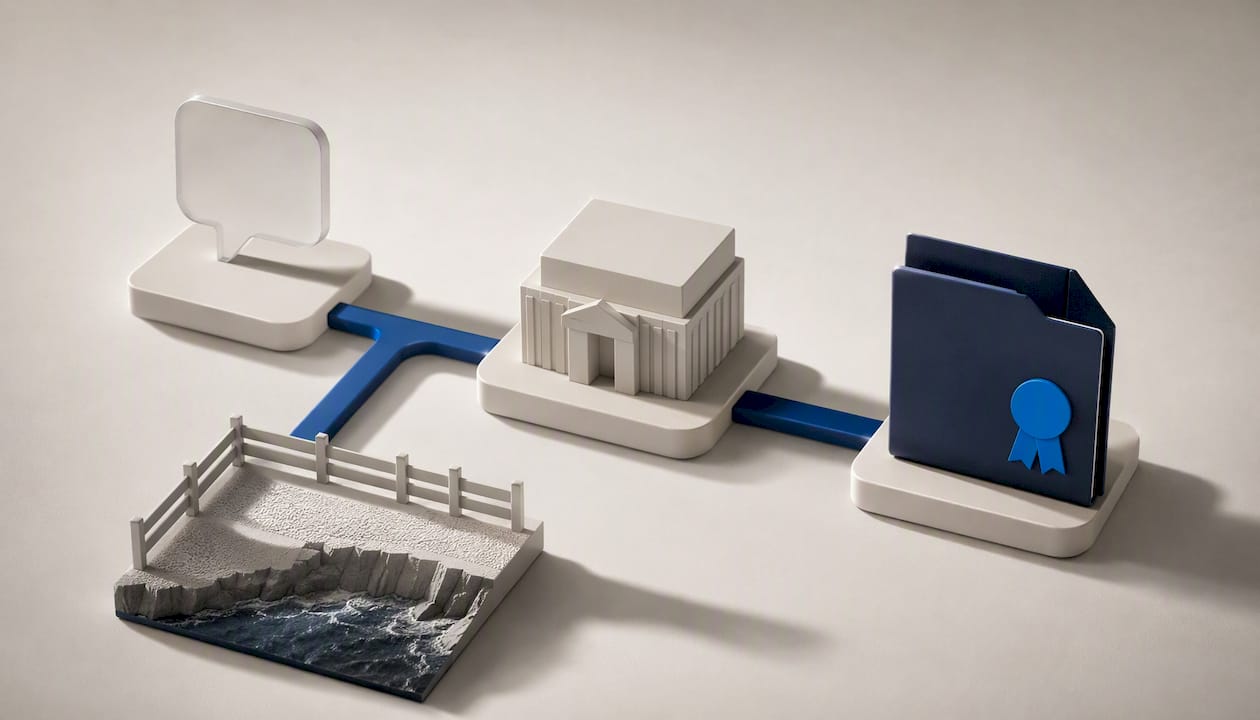
When Does a Fence Need a Coastal Development Permit?
There's no single height number that triggers a CDP the way 42 inches triggers city review. Coastal reviewers weigh whether the fence:
- affects public access to the beach or coastal bluffs;
- blocks or narrows a protected coastal view corridor; or
- sits near environmentally sensitive habitat areas.
A CDP can come with conditions — reduced height, added transparency, landscaping setbacks — that force a redesign if you've already built or ordered materials. And it runs on a separate, longer track than a standard building permit: plan for months, not weeks. Fees vary by project scope rather than following a fixed schedule, so confirm current numbers with the Commission or the city before budgeting.
How to Get a Written Determination (the Step That Saves Months)
Before you spend a dollar on materials or drawings:
- Gather your parcel info — address, APN, and a basic site plan showing the proposed fence line, height, and materials.
- Request a written jurisdictional determination from the Coastal Commission's South Central Coast District office for your fence project. The Santa Monica Planning Division can point you to the right contact and confirm what the city needs alongside it.
- Submit photos and scope — existing conditions, the proposed design, and anything showing the fence's relationship to access points, view corridors, or habitat.
- Keep the written response on file. A verbal "you're probably fine" from a call center isn't something you can point to if a stop-work order shows up later.
Pro tip: make this request before you order materials or schedule a contractor. A determination that arrives after you've committed to a design is just an expensive second opinion.
The City Permit Layer, Briefly
Separate from coastal review, the standard city rules still apply. Under the city's plan-review thresholds, exterior freestanding fences seven feet or less are commonly exempt from a building permit — but that exemption never waives height, setback, or visibility rules. Taller or structural fences typically go through a Single-Trade Building Permit; ask Building & Safety whether your specific project qualifies rather than assuming a fast track.
For the full filing walkthrough — permit paths, what to submit, inspections — see our Santa Monica fence permit guide.
Need More Height? Modifications in Brief
Chapter 9.43 offers two paths above the standard limits: administrative approval for smaller increases (up to 4 feet above the side/rear limit, with notarized neighbor consent) and a discretionary hearing for larger increases or any change to the 42-inch front cap. Neighbor consent up front routinely saves months versus waiting on a hearing calendar. The detailed playbook — findings, notice requirements, appeals — is in our fence regulations guide.
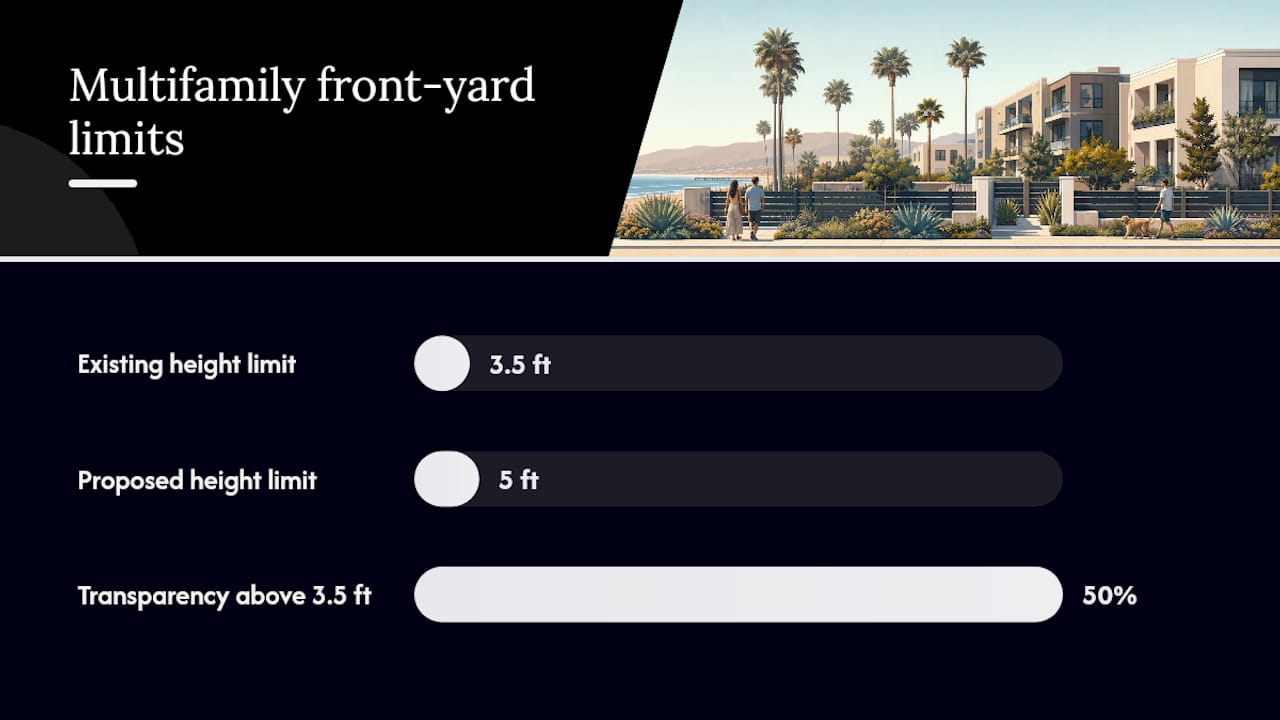
One thing worth tracking: in December 2024 the city proposed raising the multifamily (R2/R3/R4) front-yard limit from 3.5 feet to 5 feet, with 50% transparency required above 3.5 feet. As of this writing it remains a proposal, not adopted code — confirm current status with Planning before designing around it.
What Actually Slows Homeowners Down
The order most homeowners get wrong is design first, permits last. Flip it: confirm your Coastal Zone status and your exact setback measurements before you fall in love with a wrought iron pattern or a gate automation feature. A CDP condition can force a redesign that a quick budget check would have caught early — and redesigning after materials are ordered is where coastal projects bleed money.
Get a Real Budget Before You Call a Contractor
An online fence cost estimation tool gives you an immediate cost picture before committing to drawings, applications, or a contractor site visit. Because Coastal Zone conditions can change your material choices — transparency requirements, height reductions, setback landscaping — having a cost range up front keeps you from designing something that looks great on paper and breaks the budget once conditions land.
Start with the custom fencing cost calculator for your baseline, then gather your site plan and elevation drawings before contacting Building & Safety. If your project includes a driveway or pedestrian gate with automation, check the gate automation estimator too, since automated systems can affect your permit scope and total budget together.
Where to Verify These Rules Yourself
- Height limits and definitions: SMMC Chapter 9.21
- Permit process and eligibility: City Building & Safety permit pages
- Coastal jurisdiction and CDPs: California Coastal Commission
- LCP background: Santa Monica draft Land Use Plan
Sources
- Chapter 9.21: General Site Regulations — City of Santa Monica
- How to get a building permit — City of Santa Monica
- City seeks input on fence, wall and hedge heights in multifamily zones — City of Santa Monica
- Building permit application types — City of Santa Monica
- Santa Monica Local Coastal Program: City Signs MOU with Coastal Commission — Santa Monica Daily Press
FAQ
What is the maximum fence height in Santa Monica?
Front-yard fences, walls, and hedges are capped at 42 inches. Side and rear fences and walls can reach 8 feet, and hedges in side or rear setbacks up to 12 feet, under SMMC Chapter 9.21. Visibility rules near driveways and intersections can lower the effective limit.
Do I need a Coastal Development Permit for a fence in Santa Monica's Coastal Zone?
Often yes — on top of the standard city building permit. A CDP is most likely when the fence could affect public coastal access, protected view corridors, or nearby sensitive habitat. Confirm with a written jurisdictional determination before you build.
Who issues the CDP — the city or the Coastal Commission?
Currently the California Coastal Commission. Santa Monica has no certified Local Coastal Program yet; the city began the certification process in June 2026 with a target of end of 2027. Until certification, the Commission applies the Coastal Act directly.
How do I confirm whether my property is in the Coastal Zone?
Look up your APN against the city's GIS mapping or draft LCP maps, or call the Planning Division — then request the determination in writing from the Coastal Commission's South Central Coast District office and keep it on file.
What is the status of the proposed 5-foot multifamily front-yard rule?
Still a proposal. The December 2024 city announcement would raise the R2/R3/R4 front-yard limit from 3.5 to 5 feet with 50% transparency above 3.5 feet, but it has not been adopted. Confirm current status with Building & Safety before designing around it.
Can I get a taller fence than the code allows?
Chapter 9.43 provides two paths: administrative approval for up to 4 feet above the side/rear limit (with notarized neighbor consent), or a discretionary hearing for larger increases and any front-yard change. Details are in our fence regulations guide.