Residential gate terms every luxury homeowner should know
By BabyLoveGrowth
When you invest in a custom gate for your Beverly Hills or Santa Monica property, the words you use with your installer matter far more than most homeowners realize. Misunderstanding the difference between a cantilever gate and a sliding gate, or confusing powder coating with galvanization, can lead to costly revisions, project delays, and installations that simply do not match your vision. This guide cuts through the confusion and gives you the precise vocabulary needed to communicate clearly with fabricators, designers, and contractors from the very first conversation.
Table of Contents
- Key residential gate types and their definitions
- Mechanisms and movement: How gates operate
- Building materials and finish terminology for custom gates
- Common misconceptions and pitfalls in gate terminology
- Why mastering gate terminology changes your custom installation outcome
- Get a custom gate estimate and expert guidance
- Frequently asked questions
Key Takeaways
| Point Details | |
| Understand gate types | Knowing basic gate types prevents costly confusion and helps you select the best fit for your property. |
| Clarify mechanism terms | Precise mechanism terminology ensures your gate’s design and automation meet luxury standards. |
| Master material & finish | Familiarity with material and finish terms lets you control costs and optimize gate durability. |
| Avoid common pitfalls | Avoiding terminology mistakes helps your installer deliver exactly what you expect. |
| Put knowledge into action | Apply key terminology when consulting gate experts for custom installations in Los Angeles. |
Key residential gate types and their definitions
Having introduced why terminology matters, we can now clarify the foundational gate types every homeowner needs to know. Not all gates are created equal, and the category of gate you choose determines everything from how much driveway space you need to whether your automation system will work smoothly.
According to the A-Z of Gate Terms, residential gate types include swing gates (single or double leaf, pivoting on hinges), sliding gates (horizontal along track), cantilever gates (suspended without ground track, counterbalanced), bi-folding and telescopic gates (fold in sections), and vertical pivot and lift gates (rotate or lift upward). Understanding each of these categories before your first contractor meeting will save you significant time and money.
Here is a breakdown of the primary gate types:
- Swing gates (single leaf): A single panel that pivots on one side using hinges or a pivot post. Best for properties with open space in front of the gate for the arc of movement.
- Swing gates (double leaf): Two panels that open from the center, either inward or outward. A classic choice for wide driveways in upscale neighborhoods and one of the most popular driveway gate types in Los Angeles.
- Sliding gates: A single panel that travels horizontally along a ground track. They require a wall or fence run beside the driveway to receive the panel when open.
- Cantilever gates: Similar to sliding gates in appearance, but suspended above the ground using counterbalanced rear supports rather than a ground track. They perform reliably in areas with uneven surfaces or drainage concerns.
- Bi-folding and telescopic gates: Panels that fold or compress into sections, requiring minimal side space. These are excellent solutions for tight urban lots.
- Vertical pivot and lift gates: The panel rotates or lifts vertically rather than swinging or sliding. These are less common in residential use but increasingly popular for contemporary architectural projects.
“Understanding the exact category of your gate before fabrication begins ensures that your automation system, structural supports, and clearances are all engineered correctly from day one.”
If you are also considering a side entry or garden access point, reviewing pedestrian gate types will give you an equally important foundation for those installations, which come with their own terminology and design considerations.
Mechanisms and movement: How gates operate
With the gate types defined, it is important to understand how each operates and why mechanism terminology can affect your project outcomes. Knowing the name of a gate type is step one. Understanding how that gate moves, and what that movement requires from your property layout and automation infrastructure, is step two.
The table below compares the most common gate mechanisms across four key performance factors:
| Gate mechanism Space requirement Automation compatibility Best use case | |||
| Swing (single leaf) | Wide arc clearance needed | High, swing arm or underground operators | Single-car driveways, pedestrian entries |
| Swing (double leaf) | Clearance on both sides | High, paired swing operators | Wide driveways, grand estate entries |
| Sliding (track) | Side run equal to gate width | High, rack and pinion motor | Long driveways with parallel wall or fence |
| Cantilever | Side run plus counterbalance | High, similar to sliding | Sloped or paved driveways, premium installs |
| Bi-folding | Minimal, folds flat | Moderate, folding-specific actuators | Narrow lots, tight urban spaces |
| Vertical pivot/lift | Overhead clearance needed | Moderate to high | Modern architecture, high-traffic entries |
Swing gates are the most traditionally popular choice in neighborhoods like Bel Air and Pacific Palisades, where long setbacks give plenty of room for the gate’s arc. Cantilever gates are gaining ground quickly in hillside properties where a ground track would be impractical due to drainage or the grade of the driveway. Bi-folding gates, once associated mostly with commercial settings, are now appearing in modern residential architecture across West Hollywood and the Hollywood Hills.
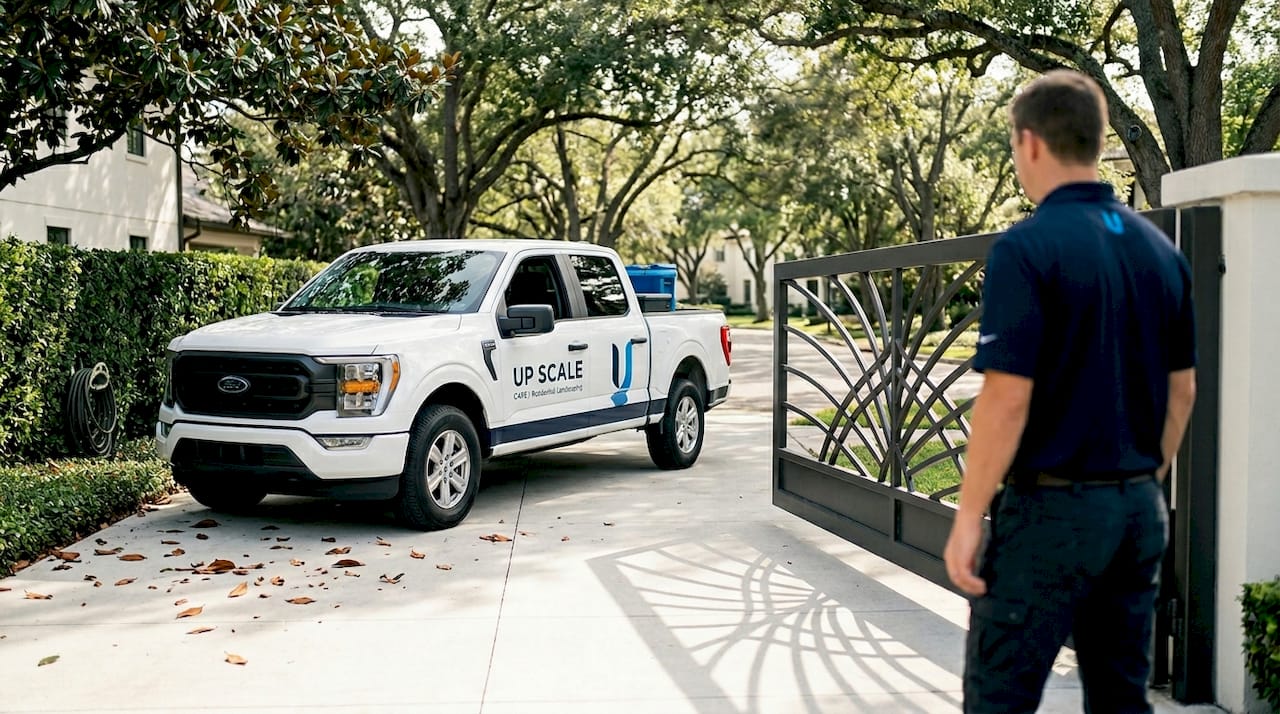
Mechanism terminology also directly affects your gate automation options. A swing arm operator functions differently from an underground hydraulic operator, and a rack and pinion motor for a sliding gate requires a specific track system. Specifying the wrong mechanism type to your fabricator could result in a motor that physically cannot work with your gate’s movement style.
Pro Tip: Always ask your installer to specify the exact operator model and mechanism type in your written contract. A vague term like “automatic opener” is not sufficient for a custom luxury installation where the gate’s weight, width, and movement pattern all determine which motor is rated for the job.
For a deeper look at how automation integrates with mechanism choice, the smart installation workflow article walks through exactly how Los Angeles professionals sequence these decisions for high-end projects.
Building materials and finish terminology for custom gates
Once you understand the mechanism, the next critical step is choosing materials and finishes, often a major source of confusion among homeowners. The material determines the gate’s structural character, its weight (which affects mechanism selection), its longevity in the Los Angeles climate, and, significantly, its cost per linear foot.
Here are the core material terms you need to know:
- Wrought iron: A historically traditional material that is hand-forged and welded. True wrought iron is now rare; most “wrought iron” gates today are mild steel fabricated to look like wrought iron. Clarify this distinction with your fabricator.
- Mild steel: The most widely used metal for custom residential gates. Strong, weldable, and cost-effective. Requires surface protection to prevent rust in coastal environments like Santa Monica or Malibu.
- Aluminum: Lightweight, naturally corrosion-resistant, and available in extruded profiles. Lower structural weight makes it ideal for bi-folding and cantilever gates, and it is a popular choice when gate material cost factors are a priority.
- Stainless steel: Premium grade material offering excellent corrosion resistance and a contemporary aesthetic. More expensive than mild steel but preferred for ultra-modern gate designs.
- Hardwood: Cedar, teak, or ipe (a dense tropical hardwood) are common for residential wood gates. Requires regular sealing or oiling but delivers warmth and natural beauty unmatched by metal.
- Composite materials: Engineered wood or polymer-based panels. A growing alternative for homeowners who want a low-maintenance appearance similar to wood. Explore vinyl alternatives for gates for a detailed comparison of these options.
Finish terminology is equally important. The finish applied to your gate’s surface determines its long-term appearance and how it weathers over time. The most common finish terms include:
- Powder coating: An electrostatically applied dry powder, cured under heat to form a hard, uniform surface. It is the most durable paint-like finish available for metal gates and comes in virtually any color or texture.
- Liquid paint: Traditional spray or brush-applied paint. Less durable than powder coating but easier to touch up and sometimes more cost-effective for complex fabrications.
- Hot-dip galvanization: The gate is submerged in molten zinc to create a protective metallurgical bond. This is the gold standard for corrosion protection, especially relevant in coastal Los Angeles properties exposed to salt air.
- Electro-galvanization: A thinner zinc coating applied electrochemically. Less protective than hot-dip but smoother and better suited for visible architectural details.
- Natural aging or patina: Some homeowners intentionally allow corten (weathering) steel or certain hardwoods to develop a natural surface over time. This requires precise material specification upfront to achieve the intended result.
A key statistic worth knowing: Powder-coated finishes on aluminum and steel gates can last 15 to 25 years with minimal maintenance under typical Southern California conditions, compared to liquid paint, which may require recoating every 5 to 7 years. Specifying the right finish term ensures your contractor quotes for the right product and your warranty covers the correct application method.
Common misconceptions and pitfalls in gate terminology
Even with the right knowledge, avoidable terminology mistakes can still derail projects. Let’s address the most common pitfalls and how to sidestep them. Many of these errors are subtle, and some are so common that even experienced homeowners make them repeatedly.
Here are the top misconceptions and mistakes to avoid:
- Calling every metal gate “wrought iron.” This is the single most common error. Most custom gates fabricated today are mild steel or aluminum. Using “wrought iron” loosely can lead to mismatched expectations around weight, welding technique, and price.
- Confusing cantilever gates with sliding gates. Both move horizontally, but the structural requirements are completely different. A cantilever gate needs engineered counterbalance supports; a sliding gate needs a clean, level ground track. Specifying one when you mean the other leads to incorrect site preparation.
- Using “automatic gate” without specifying the operator type. This term is too vague for a luxury installation. Different operators (hydraulic, electromechanical, rack and pinion) have different power requirements, noise levels, speeds, and maintenance needs.
- Mixing up “powder coating” and “paint.” These are not interchangeable. A quote for powder coating will involve different equipment, curing processes, and pricing than liquid paint. Asking for one and receiving the other is a common source of disputes.
- Assuming “galvanized” means the same thing as “stainless.” Galvanization applies a zinc coating to protect steel; stainless steel is an entirely different alloy. They perform differently and cost very differently.
- Not specifying leaf configuration for swing gates. “A swing gate” tells your installer almost nothing. Specifying “a double-leaf swing gate, opening inward, with an 18-foot total opening width” gives them exactly what they need to design and quote accurately.
Pro Tip: Before any contractor meeting, write down your requirements using the specific terms from this guide. Bring photos of gates you like and annotate them with the terminology: “cantilever, steel, powder-coated in matte black, with underground hydraulic operator.” You will immediately signal to your installer that you are an informed buyer, which typically results in more accurate quotes and better service.
Staying current on industry language is also worthwhile. Our gate terminology blog regularly covers new materials, automation developments, and evolving standards in luxury residential gate design specific to the Los Angeles market.
Why mastering gate terminology changes your custom installation outcome
Let’s step back and consider what industry experts see time and again with projects that succeed or fail due to terminology misunderstandings. After working with hundreds of luxury residential projects across Los Angeles, we have noticed a consistent pattern: the homeowners who arrive informed get better results. Not because contractors work harder for them, but because clear language produces accurate designs, accurate quotes, and fewer change orders.
Here is the uncomfortable truth about high-end gate projects: vague language costs money. When a homeowner asks for “a nice sliding gate with a modern finish,” a fabricator has to make a dozen assumptions. Those assumptions get baked into the quote. When the homeowner later clarifies that they meant a cantilever gate with a corten steel patina, the project scope changes entirely and so does the price.
Terminology is not just vocabulary. It is the operating agreement between you and every professional you hire. The luxury installation workflow makes this especially clear: the most seamless projects are those where the homeowner could describe their gate in precise technical terms before the first site visit.
We also see a second pattern: homeowners who focus only on aesthetics often underspecify mechanisms and finishes, and then feel blindsided by maintenance costs or operational failures later. A matte black liquid paint finish looks identical to powder coating on day one. Three years later, in a coastal environment, the difference is obvious and the recoating cost is real.
Our perspective is simple. You should know the name of what you are buying, why that specific thing was chosen for your site, and what it will look like and perform like in five years. That level of informed ownership is what separates a successful luxury installation from an expensive disappointment.
Get a custom gate estimate and expert guidance
You now have a solid foundation in residential gate terminology. Putting that knowledge to work is the natural next step, and that means getting a professional estimate that reflects your specific material choices, mechanism preferences, and design goals.
At fence-gate-estimator.com, we make that process straightforward and transparent. Whether you are exploring custom fencing solutions for your entire property perimeter or focusing specifically on automation upgrades for an existing entry gate, our platform gives you instant, accurate cost estimates using current Los Angeles labor and material rates. You can specify your gate type, material, finish, and automation preferences directly in the estimator. Ready to see real numbers? Get a gate estimate in minutes and take the first step toward a custom installation that matches your vision precisely.
Frequently asked questions
What is the difference between swing and sliding gates?
Swing gates pivot on hinges, while sliding gates travel horizontally along a ground track. Your available driveway space and site layout are usually the deciding factors when choosing between them.
Which gate type is best for a narrow driveway?
Sliding and bi-folding gates are preferred for narrow driveways because they require minimal clearance in front of the gate opening, unlike swing gates that need a wide arc.
How important is gate finish terminology for custom designs?
Knowing precise terms like powder coating versus galvanization ensures your fabricator applies the right protective system, which directly affects both your gate’s appearance and its long-term durability in Southern California’s coastal climate.
What are the main mistakes homeowners make with gate terminology?
The most costly mistakes include confusing mechanism types, using “wrought iron” generically for mild steel, and specifying vague finish terms like “paint” when the project requires a technically different coating system such as powder coating or hot-dip galvanization.