Pet-Safe Fencing Upgrade Steps: LA Contractor Checklist
By BabyLoveGrowth AI
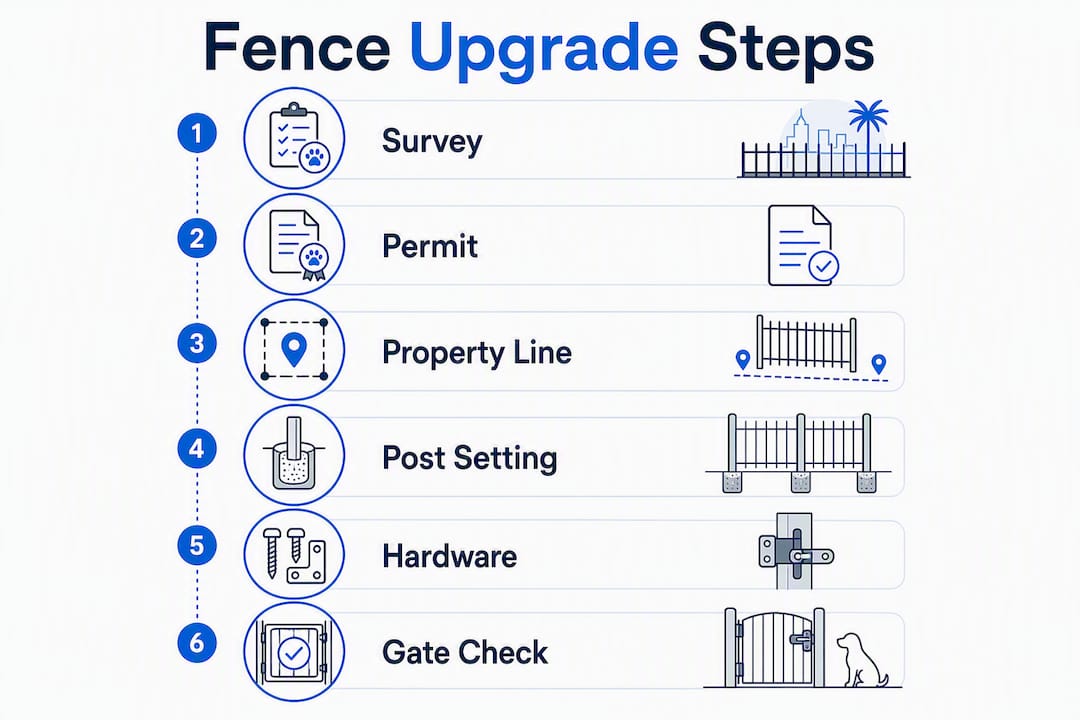
Hire a licensed fence contractor to perform a site survey, verify your property line, pull any required LADBS permits, and install pet-safe upgrades — solid lower panels, flush kickboards, and self-closing gates. Your immediate next step: get an instant LA-calibrated estimate from Fence-gate-estimator and schedule an on-site survey before any digging begins.
Before your contractor arrives, confirm these critical first actions are on their checklist:
- Property-line marking: Require string-line marking before excavation. Existing fences on older LA lots often do not follow true property lines, particularly in neighborhoods like Brentwood or Silver Lake, and relying on them causes boundary disputes and costly rework.
- LADBS permit check: Under LAMC Section 12.22-C, front-yard fences are capped at 42 inches without a permit; side and rear fences are allowed up to 8 feet on many lots, with permits required above these thresholds—lot width and hillside status may affect the limit.
- DigAlert/811 call: California law requires calling 811 at least two working days before any digging. Your contractor handles this, but confirm it is on their schedule.
- On-site soil and topography review: Clay-heavy or sloped lots in the Hollywood Hills or Pasadena foothills change post-setting depth, footing size, and material selection.
Pro Tip: Corner-lot owners in Santa Monica or Culver City face a strict sight-distance triangle rule: within 15 feet of any curb intersection, nothing may exceed 42 inches. Confirm this with your contractor before finalizing fence height.
Table of Contents
- Key takeaways for your pet-safe fence upgrade
- Why the workflow order matters more than the materials
- Get your LA-calibrated fence estimate from Fence-gate-estimator
- Useful resources for LA homeowners
- Key Takeaways
- What most guides get wrong about pet-safe fencing
- FAQ
Key takeaways for your pet-safe fence upgrade
A professionally installed pet-safe fence in Los Angeles requires the right contractor deliverables, permit awareness, and hardware specifications from day one.
Contractor deliverables to require in writing:
- Proof of California contractor license and general liability insurance
- Line-item estimate separating materials, labor, permit fees and hardware specs
- Written commitment to mark property lines before post-setting
- Permit pull documentation and inspection schedule from LADBS
- Warranty terms covering both materials and workmanship
LA permit thresholds at a glance:
- Front yard fences are limited to a maximum height without a permit (LADBS residential zones guidance)
- Side and rear yard fences have height limits that vary by lot width and hillside status
- Masonry or concrete fences over a certain height require a permit and engineering review
- Simple fence permits via PermitLA typically process quickly; fees vary depending on the project
Three red flags when vetting contractors:
- No written, line-item estimate
- Unwillingness to mark the property line before digging
- Vague or verbal-only warranty language
Why the workflow order matters more than the materials
Most homeowners focus on choosing between wrought iron, steel, aluminum, or composite and treat the installation process as an afterthought. That order is backwards.
On a hillside lot in Sherman Oaks or Encino, the soil and slope determine everything. Clay-heavy or steep lots commonly require posts set 36 inches deep rather than the standard 24 inches, with concrete footings sized for both seismic load and drainage. That single variable can add meaningful cost to a project, and it only surfaces during an on-site survey, not a phone quote.
Property-line verification deserves equal attention. Older neighborhoods across Glendale, Pasadena, and West Hollywood have fences that drifted inches or feet off the true boundary over decades. A contractor who marks the line with string before excavation eliminates the most common source of neighbor disputes and mid-project change orders. The California Good Neighbor Fence Act governs shared-fence cost disputes, but the cleanest outcome is avoiding the dispute entirely.
Hardware is where pet safety is won or lost at the detail level. Specify stainless steel or hot-dipped galvanized latches and self-closing hinges in your written estimate, particularly for properties near the coast in Santa Monica or Brentwood. Standard hardware corrodes within a season in coastal microclimates, and a sagging gate or a rusted latch is all a determined dog needs. Beyond hardware, a durable pet-safe installation requires flush thresholds, a maximum 2–3 inch under-fence gap, and a kickboard or gravel apron at the base for diggers.
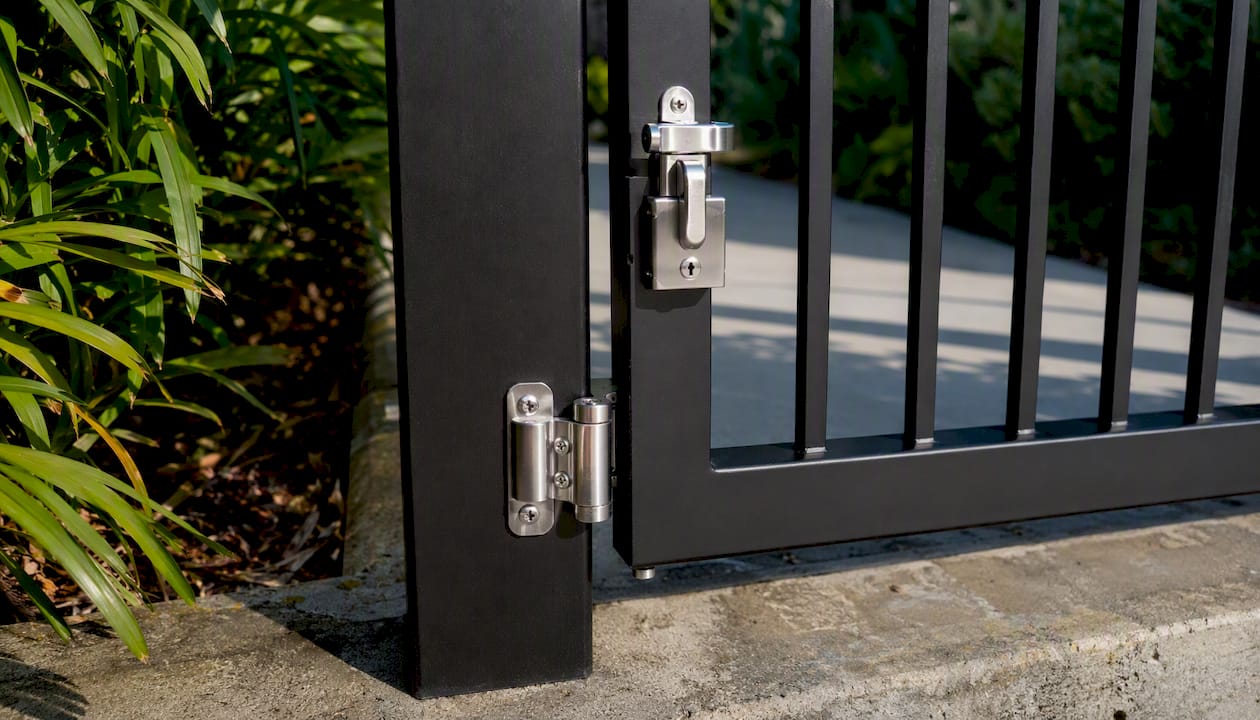
The first thing a good installer checks on day one is not the fence line. It is the gate swing clearance and latch height, because those two details determine whether a pet can push through, jump over, or wait for a gap to appear.
Get your LA-calibrated fence estimate from Fence-gate-estimator
Knowing the right steps is one thing. Getting a price that actually reflects your property’s soil, slope, and permit requirements is another.
Fence-gate-estimator delivers instant, LA-calibrated cost estimates for custom fencing across wrought iron, steel, aluminum, and composite, with material filters, gate automation options, and permit-inclusive pricing when your project triggers LADBS review. The estimate output includes line-item materials and labor, recommended post-setting depth for your local soil conditions, hardware specifications for coastal or hillside exposure, and a clear start-to-finish timeline.
After receiving your estimate, the next steps are straightforward: schedule your on-site survey, confirm property-line marking is on the contractor’s day-one checklist, and request a written permit plan if your fence height or material triggers LADBS review. For homeowners who want self-closing automated gates as part of their pet containment plan, the estimator covers that upgrade path as well.
Get your instant estimate at Fence-gate-estimator and book a vetted local pro for the on-site survey that turns a budget number into a signed contract.
Useful resources for LA homeowners
These sources help you verify permit rules, check contractor credentials, and read deeper on materials and installation.
| Resource | What it covers |
|---|---|
| LADBS Fence Height Bulletin | Official height limits by zone and lot width for residential fences |
| LA City Planning — Fences and Walls Up to 8 Feet | Zoning Administrator approval process for fences above standard limits |
| LA County Building and Safety FAQ | Unincorporated county permit rules and Regional Planning referral guidance |
| CityRuleLookup — LA Permit Requirements | Quick-reference permit thresholds for side, rear, and front yard fences |
| CityRuleLookup — Height Limits | Lot-width-dependent height allowances and corner-lot sight-triangle rules |
Contractor vetting and license verification:
- Verify your contractor’s California license at the CSLB License Check (Contractors State License Board)
- For permit status and inspection scheduling, use the LADBS permit portal
Fence-gate-estimator internal resources:
- How terrain impacts fence costs in Los Angeles — slope, soil, and access explained
- Fence post installation essentials — footing depths by soil type
- Custom fence components for LA homes — kickboards, hardware, and anti-climb specs
- Types of premium fencing for upscale LA homes — wrought iron, steel, aluminum, and composite compared
Key Takeaways
A licensed contractor-led workflow, starting with property-line marking and an LADBS permit check, is the single most reliable path to a pet-safe fence that holds up in Los Angeles conditions.
| Point | Details |
|---|---|
| Permit thresholds | Front yard: 42 in max without permit; side/rear: up to 8 ft on many lots, with permits required above these limits (lot width and hillside status may affect the threshold). |
| Post-setting depth | Clay-heavy or sloped lots often require 36-inch-deep posts; confirm this in your written estimate. |
| Hardware specification | Require stainless or hot-dipped galvanized self-closing latches and hinges; standard hardware corrodes in coastal LA microclimates. |
| Red flags | Walk away from any contractor who won’t provide a line-item estimate or refuses to mark property lines before digging. |
| Fence-gate-estimator | Use the instant LA-calibrated estimator to get material, labor, and permit-inclusive pricing before your on-site survey. |
What most guides get wrong about pet-safe fencing
The conventional advice focuses almost entirely on fence height and material choice. Pick a tall aluminum fence, add a self-closing latch, and your dog is contained. That framing misses the real failure points.
In Los Angeles, the variables that actually determine whether a fence holds are below grade and at the hardware level. A six-foot aluminum fence set in 24-inch footings on a clay hillside lot in the Hollywood Hills will shift after the first heavy rain. The gap that opens at the base is not a design flaw in the material. It is a post-setting failure that a proper on-site survey would have caught. The same logic applies to coastal properties in Santa Monica or Bel Air, where hardware corrosion is not a long-term concern. It is a first-year concern.
The other underestimated factor is the gate. Most pet escapes happen at the gate, not through the fence panels. A keyed, self-closing latch with a flush threshold and a properly tensioned hinge costs a fraction of the total project. Specifying it in the estimate phase, rather than accepting whatever the contractor’s standard hardware package includes, is the single highest-value decision a homeowner can make.
Hire for the survey and the specification, not just the installation.
FAQ
When does a fence in Los Angeles require an LADBS permit?
Front-yard fences over 42 inches and side or rear fences above 8 feet (with lot width and hillside status potentially lowering the threshold) require an LADBS permit; masonry fences over 42 inches and any fence with electrical components also trigger review.
How deep should fence posts be set on LA hillside or clay lots?
On clay-heavy or sloped lots, professional installers commonly set posts to 36 inches or deeper with concrete footings sized for seismic and drainage conditions, compared to the standard 24 inches on flat, well-draining lots.
What hardware should I specify for a pet-safe gate in Los Angeles?
Require stainless steel or hot-dipped galvanized self-closing hinges and keyed latches; standard hardware corrodes quickly in coastal microclimates, creating gaps that allow pets to escape.
What is the sight-distance triangle rule for corner lots?
Within 15 feet of any curb intersection, no fence, wall, or vegetation may exceed 42 inches; inspectors enforce this strictly and non-compliant sections may require removal after installation.
How do I get an accurate cost estimate for a pet-safe fence upgrade in LA?
Use Fence-gate-estimator’s instant online tool to get LA-calibrated pricing across wrought iron, steel, aluminum, and composite materials, then schedule an on-site survey to confirm post depth, permit requirements, and final line-item costs.
Recommended
- Why Upgrade Residential Fences: A Homeowner’s Guide | LA Electric Gate Service
- Fence post installation in Los Angeles: 5 key essentials | LA Electric Gate Service
- Custom fence components: build luxury, security, and style in LA | LA Electric Gate Service
- Security Fence Features List for LA Homeowners | LA Electric Gate Service