Make Modern Driveway Gate Designs Last With AAMA 2605, UL 325 Checks
By BabyLoveGrowth AI

For most Los Angeles homes, horizontal-slat aluminum or powder-coated galvanized steel delivers the cleanest modern look with the least upkeep, and both pair easily with automation. Before you commit to a design, insist on a spec sheet showing the coating grade (AAMA 2604 or 2605) and a wind-load or safety certification. Style sells the gate. Specs decide whether it still looks sharp in ten years.
TL;DR:
- Aluminum and duplex-finished steel gates are recommended for coastal areas due to their corrosion resistance and durability over 25 to 30 years.
- The most popular modern gate styles include horizontal slats, geometric panels, hybrid metal-and-wood designs, and frosted glass or acrylic inserts, matching current trends.
- For accurate cost estimates, material choice, gate engineering, automation, and site prep must be considered, with custom design adding up to 35 percent more.
- Confirm that gate specifications include coating grades (AAMA 2604 or 2605) and wind-load certifications, especially for coastal or exposed sites.
- Automation systems should comply with safety standards like UL 325, with sensor placement and manual releases verified before installation.
Table of Contents
- Modern Driveway Gate Design Ideas Worth Considering
- Materials and Finishes That Actually Last
- Gate Mechanisms, Automation, and the Safety Rules That Matter
- How to Pick the Right Gate for Your Driveway
- What Modern Driveway Gates Cost and How to Budget
- Maintenance That Keeps a Modern Gate Looking New
- Why an Estimate Beats a Guess on Gate Design
- Get an Instant Estimate for Your Modern Driveway Gate
- Standards Worth Bookmarking
- Sources
- FAQ
Modern Driveway Gate Design Ideas Worth Considering
Modern driveway gate designs tend to fall into a handful of recognizable categories, and knowing which one fits your property saves you from an expensive redo.
- Horizontal slat gates. Aluminum or steel slats spaced for partial privacy read as contemporary from Sherman Oaks to Bel Air. Wider gaps favor airflow and visibility; tighter spacing adds privacy but blocks more wind, which matters on exposed sites.
- Minimalist metal panels with negative space. Solid-look panels with cut-out geometric patterns give a sculptural feel without going heavy. These work especially well on contemporary and mid-century homes around Studio City and Silver Lake-adjacent neighborhoods.
- Wood-and-metal hybrids. A steel frame with wood or composite infill adds warmth against an otherwise cool material palette. Composite infill keeps maintenance low while still giving that natural-wood look.
- Glass or acrylic inserts. Frosted panels set into a metal frame create a high-end, almost architectural entrance, common on newer builds in Beverly Hills and Brentwood.
- Geometric panel gates. Asymmetrical or repeating patterns in laser-cut steel or aluminum give a custom, gallery-like presence for owners who want their gate to double as a design statement.
Whatever style you pick, the posts, lighting, and surrounding landscaping do as much visual work as the gate itself. Low-voltage post lighting and matching pillar cladding tie the whole entrance together, and that pairing is one reason stylish gate ideas for upscale Los Angeles homes so often lean on strong post design rather than the gate panel alone.
Materials and Finishes That Actually Last
The material you choose determines how much maintenance you’re signing up for, and the finish determines how long that material stays good-looking.
- Aluminum resists rust, is light enough to reduce strain on gate operators, and takes powder coating well, which is why it’s often recommended as the best all-around choice for modern driveway gates.
- Duplex-finished steel (hot-dip galvanized, then powder coated) gives you steel’s strength with a coating system that can last 25 to 30 years before refinishing, versus 5 to 10 years for powder coat applied straight to bare steel.
- 316 stainless steel earns its premium price near the coast, in Santa Monica, Malibu-adjacent, or Pacific Palisades properties where salt air accelerates corrosion on lesser metals.
- Wood and wood-look composites bring warmth but need more attention; composite framing over a steel core is a common compromise.
Ask any fabricator for the coating report before you sign anything. AAMA 2604 is the standard-grade powder coat; AAMA 2605 is the architectural grade, validated to survive at least 2,000 hours of salt-spray testing, and it’s the one worth specifying for coastal or high-UV sites.
Gate Mechanisms, Automation, and the Safety Rules That Matter
How your gate moves depends largely on your driveway’s shape, not just your taste.
- Swing gates need clearance for the full arc and solid post anchoring; they suit wider, flatter driveways.
- Sliding gates solve narrow-frontage problems but need a straight run along the fence line.
- Cantilever gates slide without a ground track, useful where drainage or slope makes a track impractical.
- Telescopic gates stack two panels to cut the required side-run nearly in half.
- Folding gates work on very tight frontages where even a slide isn’t possible.
Once you’re automating any of these, motor sizing, duty cycle, and battery backup matter more than brand names, and running conduit during construction avoids costly trenching later. Every automated gate should also meet current entrapment-protection rules under UL 325, which the CPSC helps enforce through sensor and endurance testing. Confirm photoeye placement, edge sensors on the leading edge, and a working manual release before final sign-off, details covered in more depth in this guide to gate safety sensors.
How to Pick the Right Gate for Your Driveway
Turning a Pinterest board into a buildable gate takes a short, honest audit of your property first.
- Measure your opening width, swing arc or side-run, and slope. A driveway with even a mild grade changes which mechanism will actually clear the ground; the details in this driveway gate clearance guide are worth reviewing before you finalize a design.
- Weigh climate and exposure. Coastal air, heavy sun, or hillside drainage all push you toward different material and finish choices.
- Set budget checkpoints early. Decide whether you want stock sizing or a fully custom design, since custom engineering typically adds 20 to 35 percent over an equivalent stock gate.
- Request the paperwork. A real spec sheet, a wind-load certificate, the coating grade, and a start-to-finish install timeline separate a serious fabricator from a rendering-only sales pitch.
- Check permits and HOA rules before ordering. Los Angeles jurisdictions and many HOAs have setback and height rules that affect design, so confirm early rather than after fabrication starts.
Sloped lots, common across Pasadena and Glendale foothill neighborhoods, deserve their own look at hillside gate design before you lock in a mechanism.
What Modern Driveway Gates Cost and How to Budget
Cost swings on a handful of variables you can control before you ever request a quote.
- Material is the biggest line item: aluminum tends to run less than heavy custom steel or stainless.
- Custom engineering adds that 20 to 35 percent premium noted above, mostly in design and tooling time.
- Automation, electrical runs, and masonry or column work for pillars can rival the cost of the gate panel itself.
- Site prep, including grading or removing an old structure, adds variability that a photo-based quote can’t capture.
The fastest way to get real numbers for your address is to run an instant estimate through the driveway gate calculator, then schedule a site survey to confirm slope, anchoring, and automation needs before finalizing a design. Build in contingency for conduit and electrical work, since retrofitting power to a gate after installation costs far more than wiring it in from the start.
Maintenance That Keeps a Modern Gate Looking New
The finish you specify up front decides how much work your gate needs later. AAMA 2604 holds up fine for most inland properties, but AAMA 2605 is worth the upgrade anywhere near salt air or intense sun, given its stronger resistance to fading and chalking over time.
A simple seasonal routine covers most of it: rinse the gate to clear dust and grime, lubricate hinges and rollers, and test safety sensors every few months. Coastal or heavy-exposure sites should lean toward duplex-finished steel or 316 stainless rather than standard coatings.

Pro Tip: Ask your fabricator for written warranty terms on both the coating and the automation hardware separately. Finish warranties and motor warranties often run on different timelines, and knowing both upfront avoids surprise costs down the road.
Why an Estimate Beats a Guess on Gate Design
Homeowners lose money most often by picking a look before checking whether it’s structurally or financially realistic for their site. A gorgeous rendering means nothing without a wind-load certificate and a coating spec behind it, and that gap between the picture and the buildable version is where budgets blow up.
A good estimator closes that gap early. It translates your style choice, slats versus panels, aluminum versus duplex steel, manual versus automated, into the material, finish, and labor inputs that actually set the price, so you’re comparing real numbers instead of guesses.
— Moin
Get an Instant Estimate for Your Modern Driveway Gate
This service provides an instant, Los Angeles-specific budget range for your gate style, material, and automation needs before a site visit occurs.
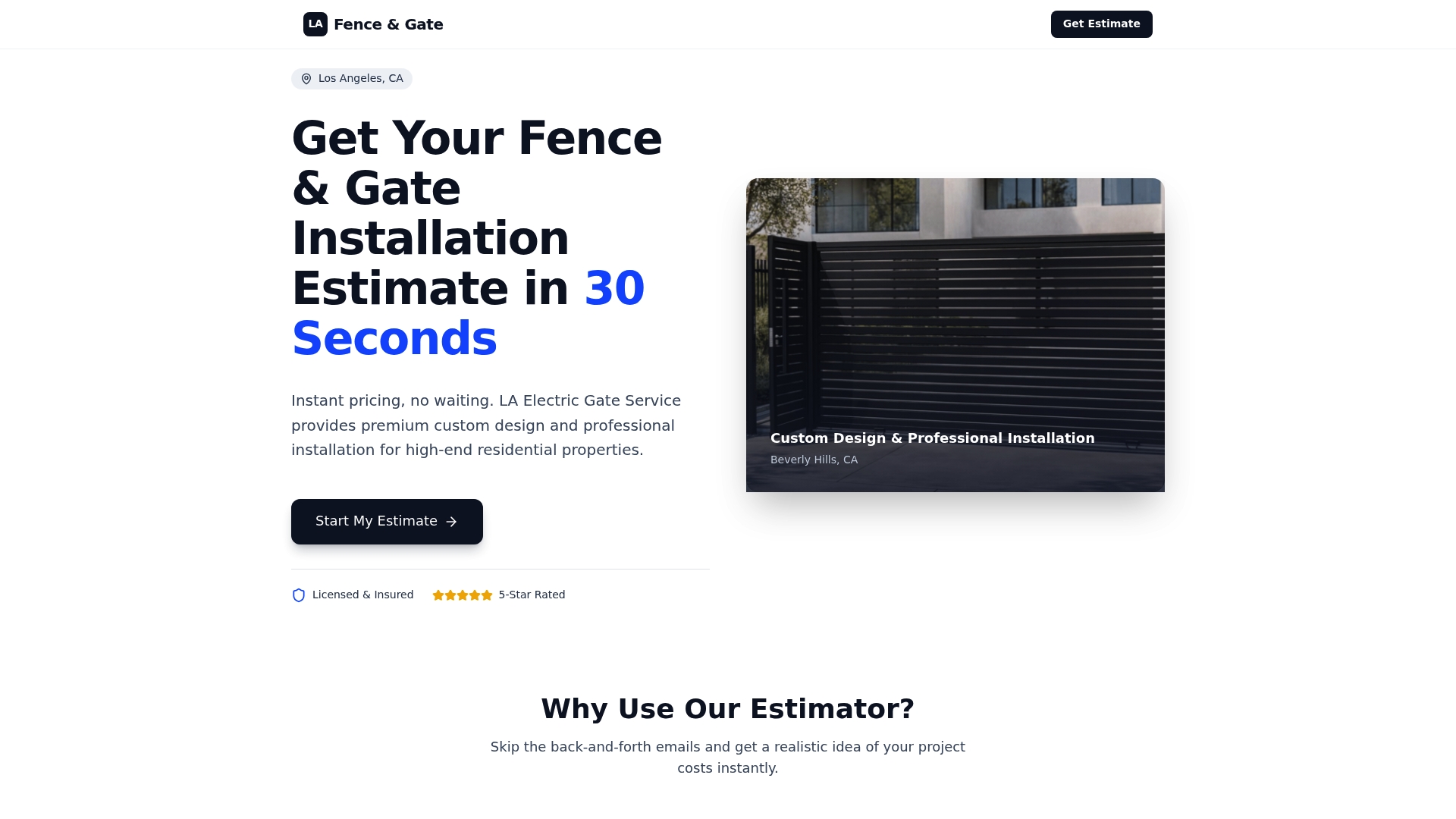
The estimator factors in current local material and labor rates and breaks the number down by gate type and automation package, so you know where your money is going before you commit to anything. From there, Fence-gate-estimator connects you with custom design, gate automation, permit guidance, and full installation, whether you’re in Encino, Culver City, West Hollywood, or anywhere else across the Los Angeles area. If your property has tighter security needs, the access control options extend well beyond a basic automated opener. A manual driveway gate installation typically runs $1,500 to $4,000, while retrofitting automation onto an existing gate runs $1,500 to $4,500.
Run your numbers now on the driveway gates estimator and book a site survey to turn your design into a firm plan.

Standards Worth Bookmarking
For safety and finish questions, check UL 325 entrapment rules, CPSC gate operator guidance, and AAMA 2604/2605 coating specs before signing a contract.
Sources
- Safety standard for automatic residential garage door operators (Federal Register)
- CPSC: Garage Door Operators/Gate Operators
- Driveway gate materials and finishes (recommendations)
- Top Driveway Gate Ideas: Materials, Design, and Tips - Redfin
FAQ
What Are Some Modern Ideas for a Driveway Gate Post?
Square aluminum or steel columns with matching horizontal slat cladding keep the post visually consistent with the gate panel. Integrated low-voltage lighting strips down the post and stone or stucco cladding on masonry pillars are both common choices in upscale Los Angeles neighborhoods like Brentwood and Bel Air.
What Is the Average Cost of Installing a Driveway Gate?
Costs vary widely by material, size, and automation, but a manual driveway gate installation generally runs $1,500 to $4,000. Adding automation to an existing gate typically costs $1,500 to $4,500, and fully custom engineered designs can add 20 to 35 percent over a stock gate.
What Are the Latest Trends for Driveways?
Horizontal slat gates, minimalist metal panels with negative-space cutouts, and hybrid metal-and-wood framing are the dominant directions in modern driveway design right now. Pairing the gate with matching post cladding and integrated lighting has become just as important as the gate style itself.
What Are Some Modern Driveway Gate Designs?
The leading modern styles are horizontal-slat aluminum or steel, minimalist geometric panel gates, wood-and-metal hybrids, and frosted glass or acrylic insert gates. Aluminum with a quality powder coat is often the best overall choice for modern homes because it balances weight, corrosion resistance, and automation compatibility.
How Do I Know if My Gate Meets Current Safety Standards?
Ask your installer to confirm the automated operator complies with UL 325 entrapment protection rules, which cover sensor and endurance testing. A compliant installation includes photoeye sensors, an edge sensor on the leading edge, and a manual release for power outages.