How Underground Gate Motors Work: A Property Owner's Guide
By BabyLoveGrowth
How Underground Gate Motors Work: A Property Owner’s Guide
An underground gate motor is a concealed mechanism installed beneath the ground that powers swing gates by converting electrical or hydraulic energy into mechanical torque through a hidden drive arm connected to the gate hinge. Understanding how underground gate motors work helps you make a confident, informed decision before committing to a gate automation system for your Los Angeles home or commercial property. These systems are the preferred choice for properties where aesthetics, security, and long-term durability matter most, from Beverly Hills estates to Brentwood commercial entrances.
How does the underground gate motor mechanism work?
Underground gate motors convert electrical or hydraulic energy into mechanical torque through a drive arm connected directly to the gate hinge. That torque is what physically pushes or pulls the gate leaf through its full swing arc. The motor sits inside a sealed foundation box buried beneath the gate post, completely out of sight.
The control system is the brain of the operation. When you press a remote, enter a code, or trigger a sensor, a signal travels to the control panel. The panel authenticates the signal, then activates the motor to generate the required torque. Virtual encoders and limit switches track the gate’s exact position throughout the movement cycle, so the system always knows when to stop.
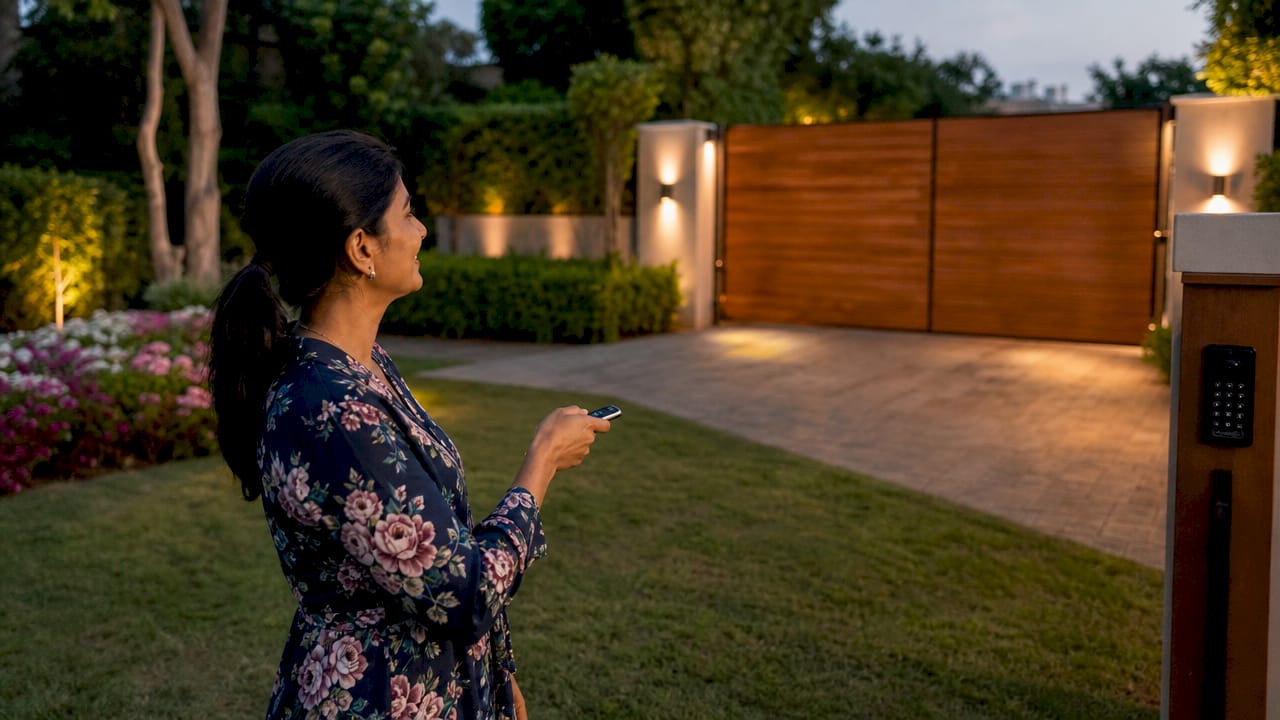
Safety is built into every step of the cycle. Obstacle detection sensors monitor the gate’s path continuously. If the system detects resistance, it stops or reverses immediately, preventing injury or damage. This anti-crush feature is not optional on quality installations. It is a standard engineering requirement.
Key components in a typical underground gate motor system:
- Foundation box: A sealed housing buried beneath the gate post that contains the motor unit
- Drive arm: The mechanical link between the motor and the gate hinge that transfers torque into movement
- Control panel: Processes incoming signals from remotes, keypads, and access control systems
- Limit switches and encoders: Define the open and closed positions and prevent over-travel
- Obstacle sensors: Detect obstructions and trigger an automatic stop or reversal
- Power supply: Either 230V AC mains or a battery backup system for operation during outages
Pro Tip: Always confirm your installer programs both the open and close limit switches before the first full test cycle. Skipping this step is the most common cause of gate over-travel damage on new installations.
What are the installation requirements for underground motors?
Underground gate motor installation is significantly more complex than surface-mounted alternatives. Professional installation is mandatory because the process involves precise excavation, foundation box placement, and advanced drainage engineering. Getting any one of these wrong creates long-term performance problems that are expensive to fix.
The installation process follows a clear sequence:
- Site assessment: A technician evaluates soil type, gate weight, usage frequency, and drainage conditions before any digging begins.
- Excavation: Foundation boxes are dug beneath each gate post to the required depth, accounting for local soil stability and frost considerations.
- Drainage installation: A reliable drainage system is built around each foundation box. Water ingress is the leading cause of underground motor failure, so this step is non-negotiable.
- Foundation box placement: The sealed housing is set in position, leveled precisely, and anchored to prevent shifting over time.
- Motor and arm installation: The motor unit is fitted inside the box, and the drive arm is connected to the gate hinge with exact alignment.
- Wiring and control panel setup: Power cables and signal wires are run in conduit, and the control panel is programmed with limit positions, safety sensor thresholds, and access credentials.
- Testing and commissioning: The full system runs through multiple open and close cycles before handover.
Underground installation typically takes 2–3 days, compared to one day for surface-mounted motors. That extra time reflects the drainage work, excavation, and precision alignment required. Plan for limited driveway access during that window.
Pro Tip: Ask your installer to photograph the foundation box and drainage layout before backfilling. That documentation is invaluable if you ever need to service the motor years later.
What are the benefits and drawbacks of underground gate motors?
Underground motors deliver clear advantages over surface-mounted systems, but they are not the right choice for every property. A balanced view helps you decide.
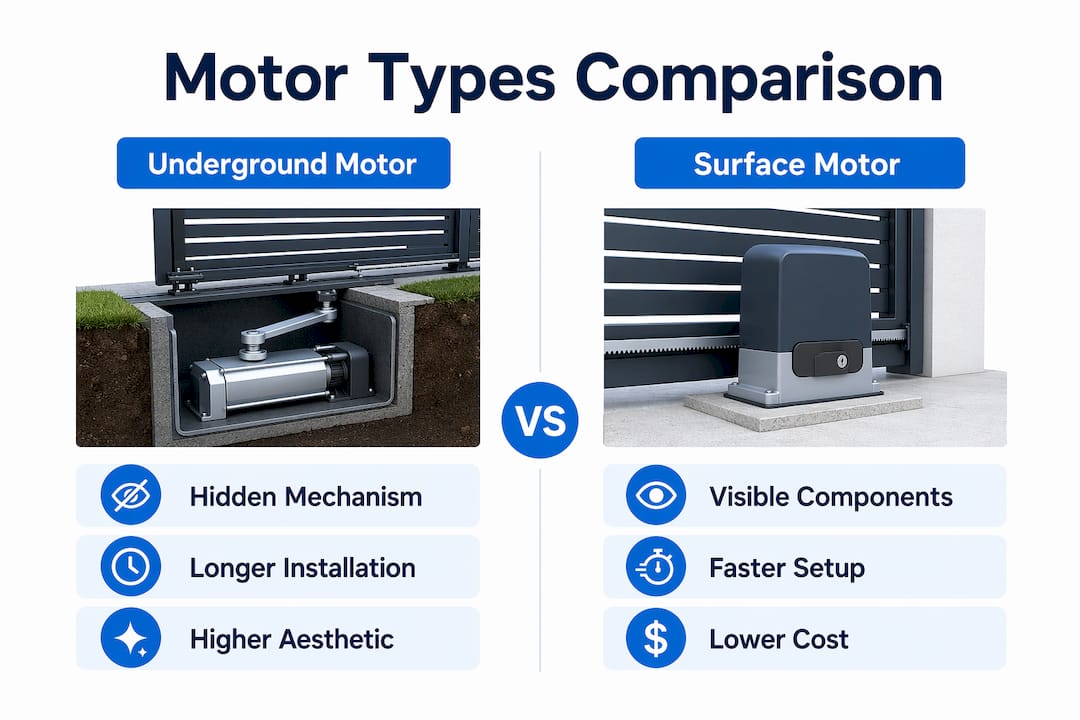
Underground motors offer premium aesthetics because the entire mechanism is hidden below ground. There are no visible arms, brackets, or housings on the gate or post. For high-end residential properties in areas like Bel Air or Santa Monica, that clean visual line is often the deciding factor.
The protection benefits are equally significant. Surface-mounted motors are exposed to UV radiation, rain, dust, and potential vandalism. Underground motors face none of those risks. The sealed foundation box shields the mechanism from weather and tampering, which translates directly into longer service life.
Advantages at a glance:
- Fully concealed design with no visible hardware on the gate or post
- Superior protection from weather, UV exposure, and physical tampering
- Better torque handling for heavy, high-traffic gates
- Reduced vandalism risk because the motor is inaccessible from outside the property
- Longer operational life in demanding environments
Drawbacks to consider:
- Higher upfront cost for equipment and installation compared to surface-mounted options
- Maintenance requires accessing the underground foundation box, which is less convenient
- Installation disrupts landscaping and driveway access for 2–3 days
- Designed exclusively for swing gates, not sliding gates
| Feature Underground motor Surface-mounted motor | ||
| Visibility | Fully hidden | Visible on gate or post |
| Weather protection | Excellent (IP67 rated) | Moderate |
| Installation time | 2–3 days | 1 day |
| Best for | Heavy, high-traffic swing gates | Standard residential swing or slide gates |
| Maintenance access | Requires opening foundation box | Straightforward |
Industry experts confirm that underground systems are the superior choice for heavy, large-scale gates and high-traffic applications. The torque handling and stability advantages become especially clear on gates exceeding 400 kg or gates that cycle dozens of times per day.
How do underground motors handle security and durability in Los Angeles?
Los Angeles properties face a specific set of environmental conditions: intense summer heat, occasional heavy rain events, and the constant UV exposure that degrades exposed hardware quickly. Underground gate motors are engineered to handle all of these conditions without compromise.
The IP67 waterproof rating means the motor continues operating even if the foundation box is temporarily submerged by rainwater or irrigation runoff. That rating is not marketing language. It is a defined international protection standard that requires the unit to survive submersion in up to one meter of water for 30 minutes. For properties in Encino or Culver City where heavy rain can pool near gate posts, that protection is a genuine operational advantage.
Temperature tolerance is equally impressive. These motors operate in ambient temperatures from -40°C to +55°C. Los Angeles summer temperatures rarely threaten that upper limit, which means the motor runs well within its design envelope year-round. That thermal headroom extends the service life of internal components significantly.
The hidden installation also removes a common security vulnerability. Surface-mounted motors can be physically attacked or disabled by someone with basic tools. An underground motor is inaccessible from outside the property. Combined with two-way hydraulic locking, as featured on units like the FAAC 750, the gate becomes mechanically locked in both directions when the motor is at rest. That level of security is difficult to achieve with surface-mounted alternatives.
What should Los Angeles property owners consider before choosing an underground motor?
The right underground gate motor depends on your specific gate, property, and usage pattern. Choosing based on aesthetics alone without accounting for gate weight or cycle frequency leads to premature motor failure.
Key factors to evaluate before purchasing:
- Gate weight and leaf length: Hydraulic underground motors like the FAAC 750 support gates up to 800 kg. Lighter aluminum gates can use smaller electric motor units. Match the motor’s rated capacity to your actual gate specifications.
- Daily cycle frequency: A residential driveway gate that opens 10 times per day has very different demands than a commercial entrance cycling 100 times per day. Confirm the motor’s duty cycle rating matches your usage.
- Drainage conditions: Have a professional assess soil drainage at the gate post location before committing to underground installation. Poor drainage is the primary cause of long-term motor failure.
- Access control integration: Underground motors connect to keypads, intercoms, RFID readers, and smartphone-based access systems. Confirm compatibility with your preferred access control method before installation.
- HOA and permit requirements: Many Los Angeles neighborhoods, particularly in gated communities in Pasadena or West Hollywood, require HOA approval and city permits for gate automation. Check local requirements before installation begins.
Regular maintenance keeps underground motors performing reliably for decades. Review the gate maintenance schedule recommended for your specific motor type and climate. Annual inspections should cover the drive arm connection, drainage clearance, control panel firmware, and safety sensor calibration. The FAAC 750’s modular design allows technicians to service the motor unit without removing the gate leaf, which reduces maintenance downtime considerably on heavy installations.
For a broader view of the full gate automation process, including how underground motors fit into a complete access control system, reviewing the installation steps before your first contractor meeting will sharpen the questions you ask.
Key Takeaways
Underground gate motors are the definitive choice for heavy swing gates where aesthetics, security, and long-term durability outweigh the higher upfront installation cost and complexity.
| Point Details | |
| Core mechanism | Motors convert electrical or hydraulic energy into torque, moving a hidden drive arm to swing the gate. |
| Installation complexity | Professional installation takes 2–3 days and requires precise excavation and drainage engineering. |
| Swing gates only | Underground motors are designed exclusively for swing gates, not sliding gate applications. |
| IP67 protection | The waterproof rating ensures operation even if the foundation box is temporarily submerged. |
| Maintenance planning | Annual inspections of the drive arm, drainage, and safety sensors protect long-term performance. |
Why I think most homeowners underestimate the drainage question
After working with dozens of gate automation projects across Los Angeles, the single most overlooked factor is drainage. Homeowners spend hours comparing motor torque ratings and remote control features, then skip the drainage assessment entirely. That is a costly mistake.
I have seen brand-new underground motor installations fail within two years because the foundation box sat in a low spot that collected irrigation runoff. The IP67 rating protects the motor from temporary submersion, but chronic water pooling around the foundation box corrodes the conduit connections and degrades the arm seals over time. The motor itself survives. The surrounding infrastructure does not.
The technology in these systems is genuinely impressive. Hydraulic locking, virtual encoders, anti-crush sensors: these are not features borrowed from industrial equipment. They were purpose-built for residential and commercial gate applications. But the engineering only delivers its full value when the installation foundation is correct.
My honest recommendation: spend as much time vetting your installer’s drainage plan as you spend comparing motor specifications. Ask to see examples of their previous underground installations. Ask how they handle drainage in clay-heavy Los Angeles soil. The answers will tell you more about long-term reliability than any spec sheet.
The properties in Brentwood and Beverly Hills that have underground gate motors performing flawlessly after 10 or 15 years all share one thing. They had installers who treated the drainage work as seriously as the motor selection.
— Moin
Planning an underground gate motor installation in Los Angeles?
Fence-gate-estimator provides instant, accurate cost estimates for gate automation projects across Los Angeles, including underground motor installations for residential driveways and commercial entrances. The platform uses current local labor and material rates to give you a realistic budget before you speak to a single contractor.
Whether you are planning a custom wrought iron swing gate in Pasadena or a heavy aluminum entrance in Studio City, the gate automation cost calculator gives you a clear starting number in minutes. Fence-gate-estimator also covers permit considerations specific to Los Angeles and connects property owners with professional installation teams. For a complete picture of your project costs, visit the full cost estimator and get your personalized breakdown today.