How to Read Fence Installation Quotes in LA
By BabyLoveGrowth
A fence installation quote is a formal cost proposal that itemizes materials, labor, permits, and site preparation for your specific project. Knowing how to read fence installation quotes correctly is the difference between a budget that holds and one that blows up mid-project. In Los Angeles, where labor rates run higher than the national average and permit requirements vary by city, a poorly understood quote can cost you thousands. This guide breaks down every line item you should expect, how to compare bids fairly, and what LA-specific factors change the math.
What are the key components in fence installation quotes?
A professional fencing estimate must include five core elements: material grade and brand, gate hardware, site preparation, permit responsibility, and warranty terms. Projects missing these details see cost increases of 25–40% from change orders alone. That number reflects what happens when a contractor fills in the blanks mid-project at their discretion, not yours.
Here is what each line item should spell out:
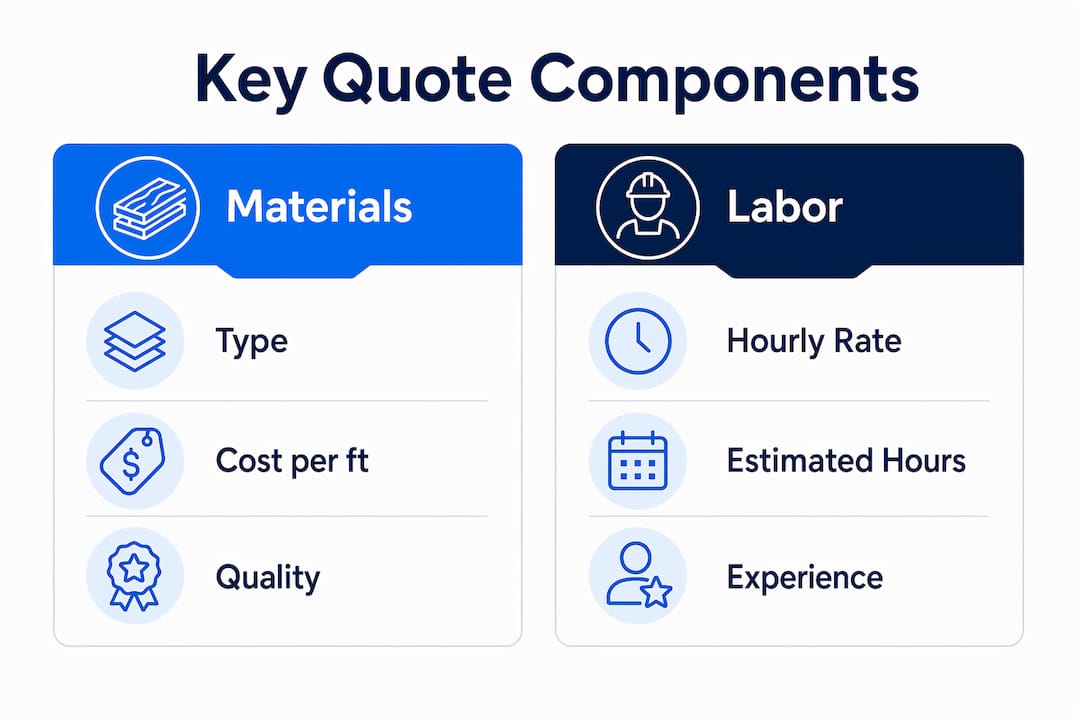
- Material specifications: The quote must name the material type (wrought iron, aluminum, wood, chain link), the grade, and the total linear footage. Costs range from $10 to $65 per linear foot installed depending on material, so vague descriptions like “standard wood fence” are not acceptable.
- Labor charges: Labor should appear as either an hourly rate ($30–$80/hr is the national range, higher in LA) or a fixed per-linear-foot cost. It should never be buried inside a single lump sum.
- Site preparation: This covers clearing vegetation, grading uneven ground, and addressing soil conditions. Rocky or sloped terrain in areas like Bel Air or Encino adds real cost that must appear here.
- Permit fees and responsibility: The quote must state who pulls the permit and who pays for it. In Los Angeles, permit costs can reach several hundred dollars depending on project scope.
- Gate hardware and installation: Swing gates, sliding gates, and automated entry systems each carry different hardware costs. These must be listed separately from the fence line items.
- Warranty terms: Material warranties and labor warranties are not the same thing. A 20-year material warranty means nothing if the labor warranty expires in one year.
- Haul-off and disposal: Removing old fencing adds $3 to $5 per linear foot. If this line is missing and you have an existing fence, ask about it directly.
Pro Tip: Ask the contractor to define every abbreviation on the quote. Terms like “C.F.” (concrete footing), “P.O.C.” (point of connection), and “H.O.” (homeowner) have real cost implications and should never be assumed.
How do you compare fence quotes without getting burned?
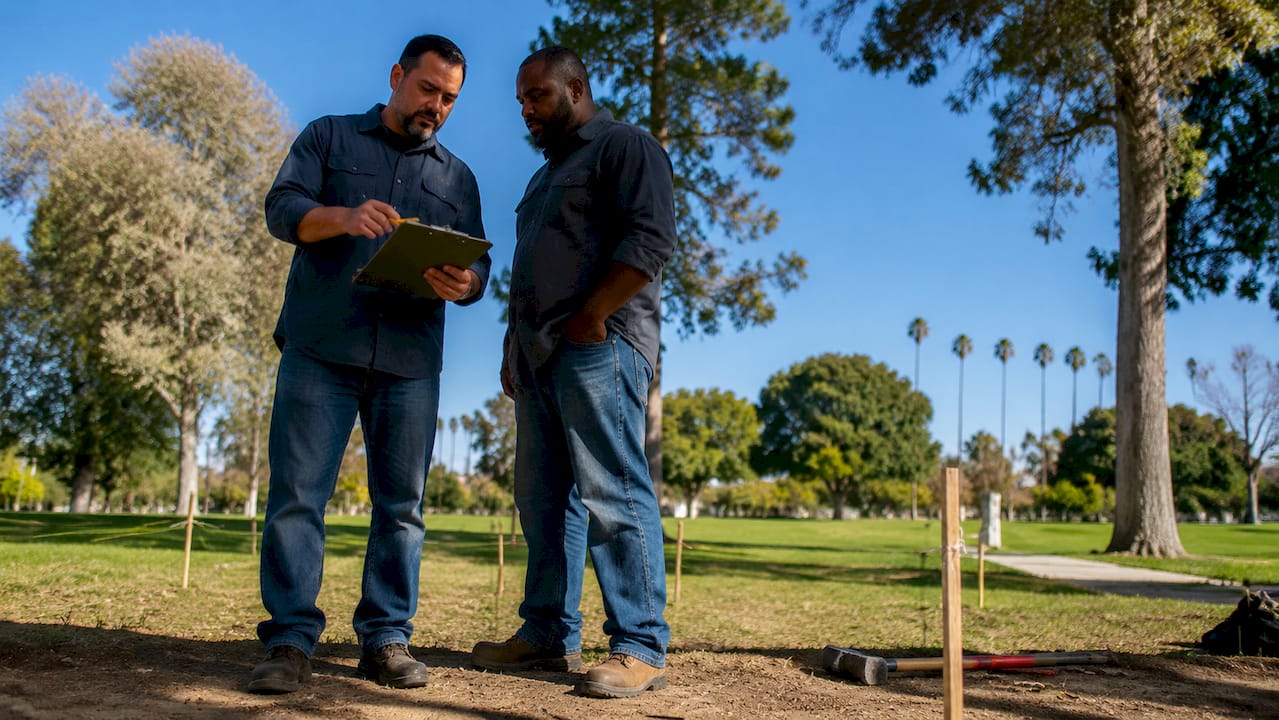
Comparing fencing estimates fairly requires that every quote describes the same scope of work. If one contractor includes debris removal and another does not, you are not comparing the same project. You are comparing two different numbers that look similar on paper.
Follow this process for a fair fence quote comparison:
- Standardize the scope first. Write down your project specs: total linear footage, material type, number of gates, and any automation features. Give every contractor the same written description before they quote.
- Compare line items, not totals. A quote with a lower total but no permit line, no site prep, and no disposal is almost certainly incomplete. Hidden items like site prep and permits inflate mid-project totals by 10–25% when they are not itemized upfront.
- Evaluate post installation details. Posts are the primary failure point in any fence system. Quotes lacking post depth and concrete footing specs often forecast early fence failure. Ask for post diameter, treatment type, and footing depth in writing.
- Assess contractor communication. Clear contractor explanations predict better project management and fewer surprises. If a contractor cannot explain a line item clearly, that is a signal about how they will manage your project.
Use a simple comparison table to organize your bids:
| Line Item Contractor A Contractor B Contractor C | |||
| Materials (per linear ft) | $28 | $22 | $30 |
| Labor (per linear ft) | $18 | $14 | $20 |
| Site preparation | Included | Not listed | Included |
| Permit responsibility | Contractor | Homeowner | Contractor |
| Debris removal | $4/linear ft | Not listed | Included |
| Labor warranty | 2 years | 1 year | 3 years |
| Material warranty | 10 years | 5 years | 15 years |
This format makes it immediately clear which quote is actually competitive and which one is artificially low.
Pro Tip: Request that every contractor sign and date their quote. An unsigned estimate is not a binding proposal. It is just a number on paper.
What la-specific factors impact fence installation quotes?
Los Angeles is not a uniform market. A fence project in Santa Monica faces different cost drivers than the same project in Pasadena or Burbank. Understanding these local variables helps you evaluate whether a quote reflects your actual site conditions.
Permit requirements vary by city
Los Angeles city and county require permits for most fences over six feet. Beverly Hills, West Hollywood, and Culver City each have their own municipal codes with different height limits and setback rules. Permit costs in the LA metro area can range from $50 to several hundred dollars. A quote that does not address permits is incomplete by definition.
Terrain adds real cost
Sloped lots in Brentwood, Bel Air, and the Hollywood Hills require additional grading, longer posts, and sometimes stepped fence panels. Terrain challenges like rocky soil or slopes add measurable cost that a flat-lot quote will not capture. If your property has grade changes of more than two feet across the fence line, expect a site prep surcharge.
Labor rates reflect regional cost of living
National labor costs run $30–$80 per hour, but Los Angeles contractors typically operate at the higher end of that range. Labor constitutes 40–50% of total fence installation cost. That means a 150-linear-foot project in Sherman Oaks will carry a meaningfully higher labor line than the same project in a lower-cost market.
Key LA cost factors at a glance
| Factor Typical Impact on Quote | |
| Permit fees (LA city/county) | $50–$400+ depending on scope |
| Sloped or rocky terrain | 15–30% increase on site prep |
| Debris disposal (LA regulations) | $3–$5 per linear foot for old fence removal |
| Labor (LA metro rate) | $50–$80/hr, higher than national average |
| Seasonal demand (spring/summer) | 5–15% premium during peak scheduling |
Utility marking is a legal requirement
California law requires contractors to call 811 before any digging. Responsibility for utility marking must be clearly stated in the quote. If it is not, you as the property owner may be liable for underground damage. This is a non-negotiable line item in any LA fencing proposal.
What mistakes should you avoid when reading fence quotes?
Reading fencing proposals incorrectly is one of the most common ways homeowners end up over budget or with a fence that fails early. These are the errors worth avoiding:
- Choosing the lowest total price without checking scope. Low bids often exclude essential tasks or quality materials. A quote $500 lower than competitors that omits debris removal, permits, and site prep is not a bargain.
- Ignoring warranty distinctions. Poor labor warranties expose owners to repair costs within 1–3 years even when the material warranty is strong. Always confirm both coverage types and their durations.
- Accepting vague scope descriptions. “Install approximately 100 feet of wood fence” is not a professional quote. You need material grade, post spacing, footing depth, and hardware specs in writing.
- Skipping contractor verification. Confirm the contractor holds a valid California Contractors State License Board (CSLB) license. Ask for two or three references from completed LA projects in the past 12 months.
- Overlooking the post installation plan. Post depth, concrete footing volume, and post treatment type determine how long your fence lasts. These details belong in every quote.
- Not confirming permit and utility responsibilities. If the quote does not state who pulls the permit and who calls 811, assume neither will happen automatically.
- Ignoring the project timeline. A quote without a start date and estimated completion window is a setup for scheduling conflicts and delays, especially during peak spring and summer demand in Southern California.
What i’ve learned reading fence quotes in the los angeles market
After working with hundreds of fencing projects across LA, from Pasadena to Pacific Palisades, one pattern stands out clearly. The homeowners who get the best outcomes are not the ones who found the cheapest contractor. They are the ones who demanded the most detailed quotes.
A thorough quote is not just paperwork. It is a signal about how a contractor thinks and operates. When a contractor itemizes every line, explains post installation standards, and addresses permits without being asked, they are showing you their process. That process is what you are actually buying.
The post installation detail is the one I check first. Concrete footings and post treatment are the foundation of fence longevity, and they are the first thing a low bidder cuts. A fence that fails in three years because posts were set in dirt without concrete is not a savings. It is a second project.
In Los Angeles specifically, the permit and utility marking questions separate professional contractors from the rest. The city is strict, and the underground infrastructure in older neighborhoods like Silver Lake or Glendale is dense. A contractor who handles these details without prompting is worth paying a premium for.
My honest advice: if a quote makes you ask more questions than it answers, that is your answer.
— Moin
Get an instant LA fence cost estimate before you compare quotes
Before you sit down with contractor bids, knowing your realistic budget range puts you in a much stronger position. Fence-gate-estimator.com provides an instant, itemized cost estimate built on current Los Angeles material and labor rates.
The custom fencing cost calculator breaks down your project by material type, linear footage, site conditions, and permit requirements specific to the LA market. You can also explore gate automation options and pedestrian gate pricing to build a complete picture before any contractor walks your property. Use it free, and walk into every quote conversation knowing exactly what fair looks like.
Key takeaways
Reading fence installation quotes accurately protects your budget by requiring itemized line items for materials, labor, site prep, permits, and warranties before any work begins.
| Point Details | |
| Demand full itemization | Every quote must list materials, labor, permits, site prep, and disposal as separate line items. |
| Compare identical scopes | Standardize your project specs in writing before requesting bids to make comparisons valid. |
| Verify post installation specs | Confirm post depth, concrete footing details, and treatment type to avoid early fence failure. |
| Clarify permit and utility duties | Confirm in writing who pulls the permit and who calls 811 before any digging begins. |
| Check both warranty types | A strong material warranty without solid labor coverage leaves you exposed to repair costs within 1–3 years. |