Fence Upgrade Return on Investment: 2026 Guide
By BabyLoveGrowth
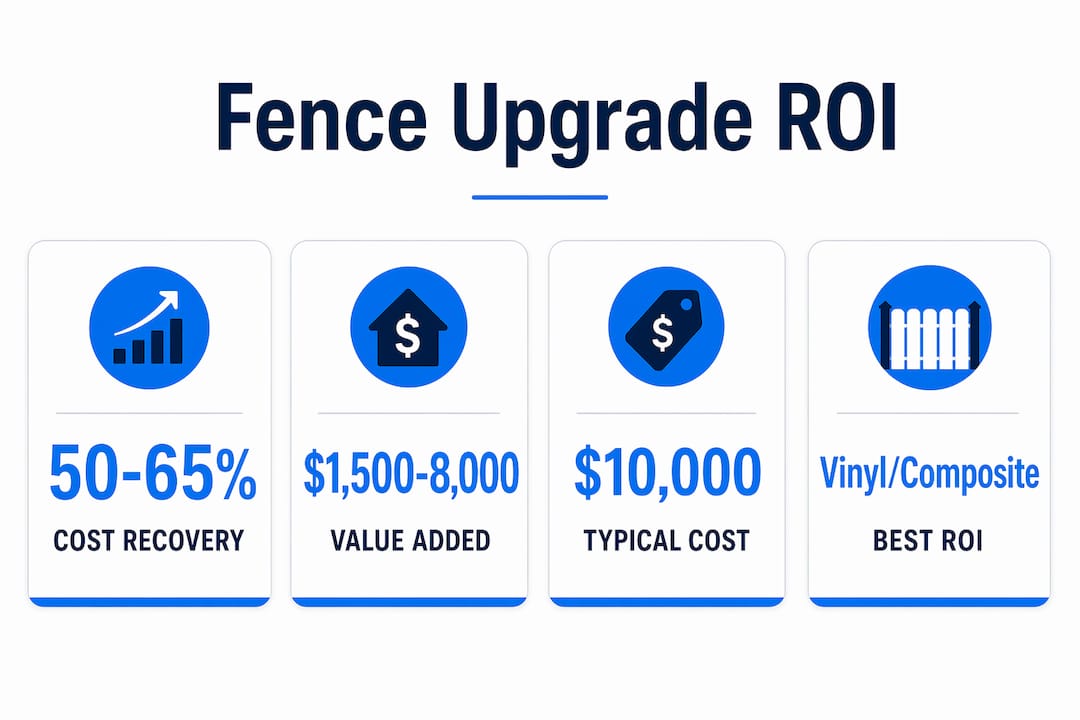
Fence upgrade return on investment is the financial gain a homeowner or real estate investor recovers from improving their property’s fencing, measured as a percentage of the total installation cost recovered through added property value or rental income. Homeowners typically recover 50–65% of fence installation costs upon resale, with property values rising by 3–8% and homes selling roughly 18 days faster. In Los Angeles markets like Beverly Hills, Brentwood, and Santa Monica, where curb appeal and privacy carry a premium, those numbers can push toward the higher end. The material you choose, your neighborhood’s buyer profile, and how well you maintain the fence all determine where your ROI lands.
What factors influence fence upgrade return on investment?
ROI on fence installation is not a fixed number. It shifts based on four core variables: material, location, design, and maintenance.
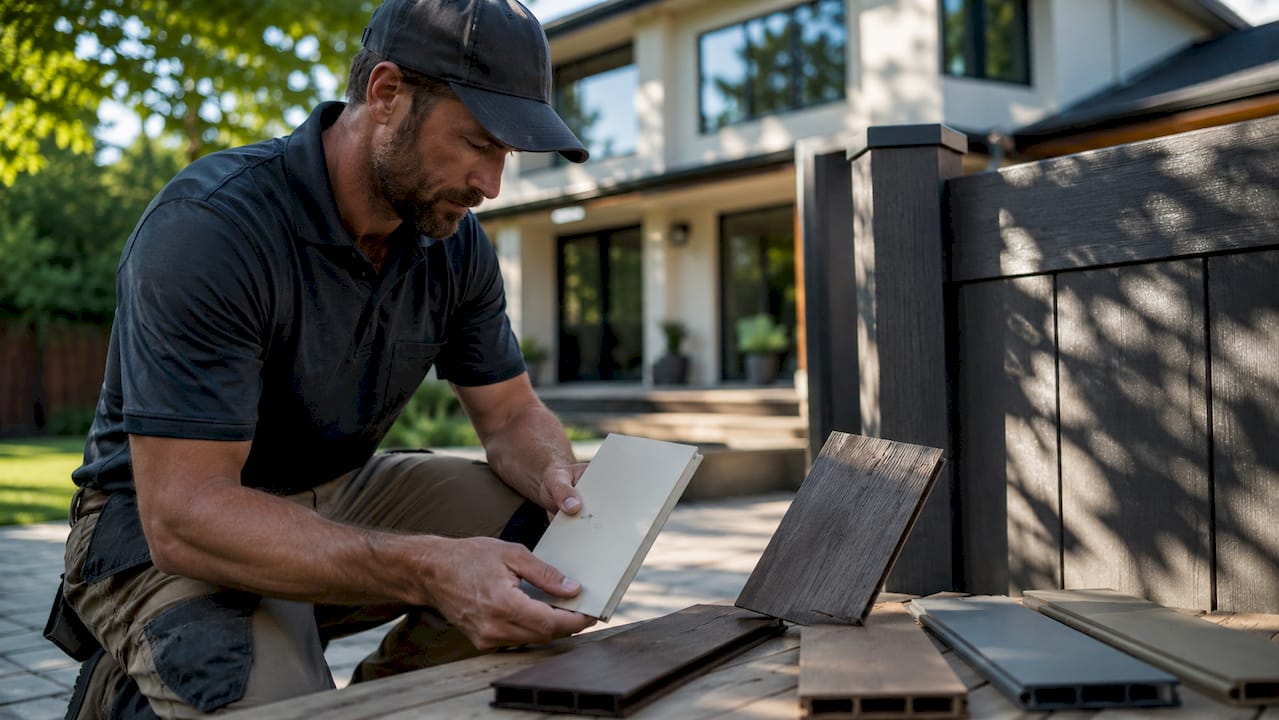
Material type is the single biggest cost driver. Here is how the most common options compare:
- Wood: Costs $25–$65 per linear foot. It is the most popular choice for privacy fences in family neighborhoods, but wood maintenance runs $1,500–$3,000 over a decade, which erodes your net return.
- Vinyl: Costs $24–$60 per linear foot. Vinyl delivers a 10-year ROI averaging 65% by eliminating most maintenance costs. It is a strong choice for busy homeowners in Encino or Sherman Oaks.
- Composite: Costs more upfront but requires near-zero maintenance. A 10-year composite fence costs roughly $8,800 total versus $10,600 for wood, making it the better long-term value.
- Chain link: Low cost, but adds minimal property value in upscale neighborhoods. It works for rental properties where function matters more than aesthetics.
- Wrought iron and steel: High fabrication costs but strong appeal in premium Los Angeles neighborhoods like Bel Air and Pasadena. These materials signal security and quality to buyers.
Neighborhood context shapes buyer expectations. Premium materials add value where buyers prioritize privacy and aesthetics, but can reduce value if they look out of place. A wrought iron fence fits Brentwood. A chain link fence does not.
Fence height and design affect both privacy and perceived security. Taller privacy fences perform best in family-oriented neighborhoods where buyers have children or pets.
Local regulations matter too. Los Angeles has specific permit requirements for fences above a certain height, and California’s Good Neighbor Fence Law governs shared boundary fences. Ignoring either can create legal and financial complications.
How do you calculate fence upgrade costs vs. benefits?
The basic ROI formula for a fence upgrade is straightforward: subtract the total fence cost from the value added to the property, then divide by the total cost and multiply by 100.
A practical example for a Los Angeles homeowner:
- Estimate installation cost. A vinyl privacy fence for a standard lot in Studio City might run $8,000–$12,000 installed, including materials and labor.
- Estimate value added. A quality fence adds $1,500–$8,000 in resale value. Use the midpoint of $4,750 as a conservative estimate.
- Factor in maintenance savings. Choosing vinyl over wood saves $1,500–$3,000 in maintenance over 10 years. Add that to your benefit column.
- Account for rental income. Rental properties with fenced yards command $50–$150 more in monthly rent. Over 12 months, that is $600–$1,800 in additional annual income.
- Calculate net ROI. Add resale value gain plus maintenance savings plus rental premium, then divide by installation cost.
| Scenario Cost Benefit Estimated ROI | |||
| Wood fence, resale only | $10,000 | $5,000 value added | 50% |
| Vinyl fence, resale + maintenance savings | $9,000 | $5,850 value + $2,500 savings | 92% |
| Rental property, vinyl fence | $9,000 | $1,200/yr rental premium | Payback in 7.5 years |
The rental income angle is one most homeowners overlook. A fenced yard in Culver City or Burbank can justify a higher asking rent, and that monthly premium compounds over time.
Pro Tip: Use the Fence-gate-estimator cost calculator to get a real-time breakdown of material and labor costs specific to your Los Angeles property before running your ROI numbers.
How to plan a fence upgrade for maximum ROI
A well-planned upgrade protects your budget and your return. Follow these steps to get it right.
- Assess your current fence condition. If more than 30% of the fence needs repair, full replacement is more cost-effective. Patching a deteriorating fence costs nearly as much as replacing it, and the result looks worse to buyers.
- Choose materials that match your market. Research what buyers in your specific neighborhood expect. In Pasadena and West Hollywood, buyers expect clean aesthetics. In Glendale rental markets, durability and low maintenance matter more than design.
- Coordinate with your neighbor before starting. California’s Good Neighbor Fence Law requires neighbors to share 50% of reasonable standard fence replacement costs. Notify your neighbor in writing before work begins to avoid disputes and protect your legal standing.
- Pull the required permits. Los Angeles requires permits for fences above specific heights. Unpermitted work can delay a home sale and trigger fines. Your contractor should handle this, but verify before work starts.
- Hire a licensed professional installer. Professional installation protects your warranty and produces a finished result that holds up to buyer scrutiny. DIY work often shows visible flaws that buyers discount heavily.
- Plan for maintenance from day one. Schedule annual inspections and budget for minor repairs. A fence that looks neglected at listing time can cost you $5,000–$10,000 in buyer price reduction demands.
Pro Tip: Ask your installer about premium fencing options designed for upscale Los Angeles neighborhoods. The right material for your zip code matters more than the most expensive option on the market.
Common mistakes that reduce fencing investment returns
Most fence upgrades that underperform share the same set of avoidable errors.
- DIY installation in premium neighborhoods. Buyers in Beverly Hills and Santa Monica expect professional-grade work. Uneven posts, mismatched panels, and visible gaps signal deferred maintenance and invite lowball offers.
- Choosing materials that clash with the neighborhood. A high-end composite fence in a neighborhood where buyers expect simple wood privacy fencing adds cost without adding proportional value. Match the standard, then slightly exceed it.
- Skipping maintenance after installation. Wood fences can require over 130 hours of labor across 10 years. Owners who skip that work end up with a fence that hurts their sale price rather than helping it.
- Ignoring California fence laws. Upgrading a shared fence without notifying your neighbor can trigger a legal dispute. Under California Civil Code 841, only standard replacement costs are split 50/50. If you want a premium material, you cover the difference.
- Over-investing without cost sharing. A $20,000 custom wrought iron fence on a shared boundary is a luxury upgrade. Your neighbor is not legally required to split that cost. Budget accordingly or negotiate a written agreement before fabrication begins.
“Deferred fence maintenance leads to buyer discounts and perceived hassle premiums of $5,000–$10,000.” — Composite fencing cost breakdown
The pattern is consistent: the homeowners who see the weakest fencing investment returns are the ones who treat the fence as an afterthought rather than a planned asset.
Key takeaways
A fence upgrade recovers 50–65% of installation costs at resale, with vinyl and composite materials delivering the strongest long-term returns by eliminating high maintenance expenses.
| Point Details | |
| ROI range | Homeowners recover 50–65% of fence costs at resale, with property values rising 3–8%. |
| Best materials for ROI | Vinyl and composite outperform wood over 10 years by cutting maintenance costs significantly. |
| Rental income advantage | Fenced rental properties can earn $50–$150 more per month, accelerating cost recovery. |
| 30% repair rule | Replace rather than repair when more than 30% of the fence is damaged for better value. |
| California fence law | Neighbors share 50% of standard replacement costs; luxury upgrades are the initiator’s expense. |
My take on fence upgrades as a financial strategy in Los Angeles
I have seen homeowners in Encino spend $15,000 on a custom fence and recover nearly all of it at sale. I have also seen investors in Glendale install a $4,000 vinyl fence on a rental and add $100 per month to their rent within 60 days. The difference between those outcomes is not luck. It is planning.
The biggest mistake I see is treating a fence upgrade as a cosmetic decision rather than a financial one. You need to know your neighborhood’s buyer profile before you pick a material. A wrought iron gate reads as premium in Bel Air. The same gate on a modest street in Burbank looks out of place and adds little value.
Maintenance-free materials are worth the higher upfront cost for anyone who does not want to spend weekends painting or sealing. Vinyl and composite fences hold their appearance for years without intervention. That matters at listing time, when a buyer’s first impression is formed at the curb.
Professional installation is non-negotiable if you want the ROI to show up at appraisal. A licensed contractor produces work that passes inspection, holds up over time, and signals quality to buyers. The upgrade benefits compound when the installation is done right the first time.
For rental investors specifically, the math is simple. A fenced yard justifies higher rent. Higher rent recovers the installation cost faster than waiting for a resale event. In a market like Los Angeles, where rental demand stays strong year-round, that income advantage is real and repeatable.
— Moin
Plan your fence upgrade with Fence-gate-estimator
Knowing your ROI potential is only useful if you know your actual costs first. Fence-gate-estimator gives Los Angeles homeowners and investors an instant, itemized cost estimate based on your property size, material choice, and design preferences. The platform uses current local labor and material rates for neighborhoods across Los Angeles, from Santa Monica to Pasadena.
Whether you are budgeting for a custom fencing project or exploring gate automation to add security and smart home value, Fence-gate-estimator gives you the numbers you need before you commit. For homeowners in Beverly Hills, Brentwood, or West Hollywood looking to maximize their fencing investment returns, start with an accurate estimate and build your ROI case from there.