Cost-Saving Fencing Ideas for Los Angeles Homeowners
By BabyLoveGrowth
Cost-saving fencing ideas are practical, budget-conscious approaches that help Los Angeles homeowners secure and define their property without overspending on materials or labor. The right strategy combines low-cost fencing materials like chain link, welded wire, and pressure-treated pine with creative design choices that maximize privacy and curb appeal. In a city where labor rates run high and lot configurations vary from compact West Hollywood bungalows to sprawling Encino estates, knowing which affordable fencing solutions fit your specific property context is the difference between a smart investment and a costly mistake.
1. The most cost-saving fencing ideas start with the right material
Choosing the right material is the single biggest lever you have on total fence cost. The industry term for this decision is “material specification,” and getting it right before you buy a single post saves you from expensive mid-project changes.
| Material Cost per Linear Foot Lifespan Maintenance Privacy Level | ||||
| Welded wire | $3–$8 | 15–20 years | Low | Minimal |
| Chain link | $8–$18 | 20–30 years | Low | Minimal |
| Pressure-treated pine | $15–$30 | 15–20 years | Medium | High |
| Western Red Cedar | $20–$35 | 20–30 years | Medium | High |
| Vinyl | $25–$50 | 30–50 years | Very low | High |
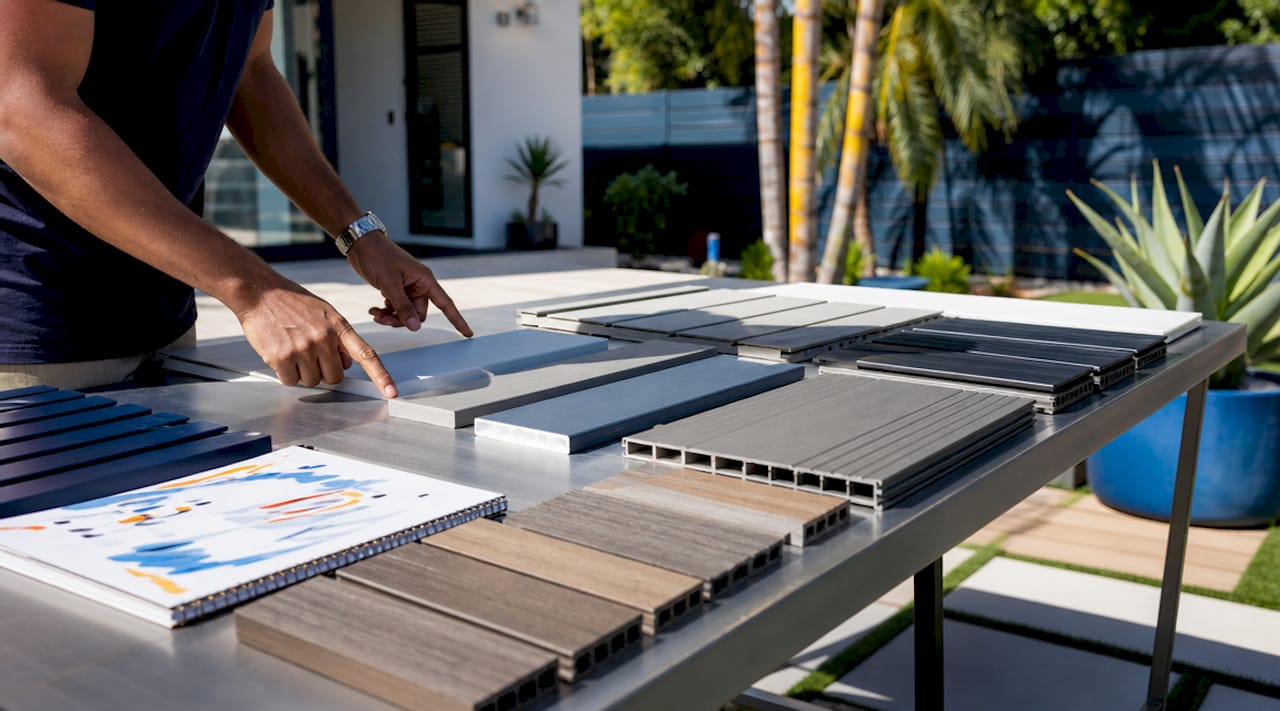
Chain link fencing costs $8–$18 per linear foot for a 4-foot height, making it the most affordable security option in the market. That price point works well for backyards in Burbank or Glendale where security matters more than aesthetics. Vinyl costs $25–$50 per linear foot upfront but lasts 30–50 years with virtually no upkeep, meaning the 20-year total cost often beats wood. Western Red Cedar’s rot resistance adds real value in shaded or moist microclimates, particularly in canyon-adjacent neighborhoods like Brentwood or Bel Air.
Pro Tip: Compare cost per linear foot over a 20-year horizon, not just the purchase price. A $30/lf cedar fence that lasts 25 years with basic staining beats a $15/lf pine fence that needs full replacement in 12.
2. Strategic privacy placement cuts costs dramatically
Strategic privacy placement is the practice of installing full-height privacy panels only in the areas you actually use, rather than fencing your entire perimeter with expensive materials. Installing privacy panels only around seating or patio areas reduces total material costs without sacrificing the privacy that matters most to you.
A typical approach: run a low-cost welded wire or chain link fence around the full perimeter, then add cedar or vinyl privacy sections behind your patio, pool, or outdoor dining area. This hybrid method gives you complete boundary definition at a fraction of the cost of a full privacy fence. For a standard 150-foot backyard in Sherman Oaks or Studio City, this approach can cut material costs by 30 to 40 percent compared to running privacy fencing the full length.
3. Welded wire with a wood top rail offers the best value combination
Welded wire fences run about $3–$8 per linear foot, and adding a cedar top rail costs only $1–$2 more per linear foot. The result is a fence that looks intentional and polished rather than purely utilitarian. This combination works particularly well for garden borders, side yards, and pet containment in properties across Pasadena and Culver City.
The wood top rail also gives you a natural surface to train climbing vines like jasmine or bougainvillea, which are both fast-growing and well-suited to the Los Angeles climate. Over one growing season, those vines add visual privacy and soften the industrial look of the wire without any additional fencing cost.
4. Pallet fencing is the lowest-cost DIY option available
Pallet fencing costs $0–$50 in materials when you source reclaimed wood pallets from local businesses, warehouses, or online marketplaces like Craigslist and Facebook Marketplace. That makes it the most economical DIY fence project for homeowners who want a rustic or industrial aesthetic on a tight budget.
The structural approach is straightforward: set 4x4 posts in concrete, then attach pallets horizontally or vertically between posts. Sanding and painting the pallets adds durability and transforms the look entirely. A painted pallet fence in a muted gray or white reads as a deliberate design choice rather than a budget workaround, which matters in neighborhoods like West Hollywood where curb appeal carries real weight.
5. Living fences with fast-growing plants deliver long-term privacy at low cost
Fast-growing saplings like Arborvitae or Privet cost under $20 each, making a living fence one of the most affordable long-term privacy solutions available. Planted along a simple wire frame or welded wire fence, these shrubs fill in within two to three growing seasons and require no painting, staining, or panel replacement.
Mixing metal posts and wire with bamboo or vines creates a privacy fence that looks far more expensive than it costs. Bamboo roll fencing attached to an existing chain link fence is a particularly popular choice in Los Angeles because bamboo is drought-tolerant, grows quickly, and suits the Southern California aesthetic. You can find bamboo rolls at Home Depot or OSH for $20–$60 per 8-foot section.
Pro Tip: In Los Angeles, choose drought-tolerant species like Privet, Podocarpus, or Carolina Laurel Cherry for living fences. They thrive in the local climate and require minimal irrigation once established.
6. DIY installation saves 40 to 60 percent on total fence cost
DIY installation cuts labor costs entirely, saving 40–60% of the total project cost compared to hiring a professional crew. For a 150-linear-foot wood fence in Los Angeles, that translates to roughly $2,000–$3,000 in labor savings. The tools you need are a post hole digger, a level, a circular saw, a drill, and basic hand tools.
The realistic time commitment for a first-time DIY fence project is one full weekend for a 100-foot run, assuming you have a helper. Before you break ground, check Los Angeles permit requirements. Fence permits in Los Angeles cost $20–$200 depending on fence height and location, with front yards capped at 4 feet and rear yards at 6 feet. Pulling the permit yourself is straightforward and avoids the markup contractors add for permit processing.
For a detailed breakdown of what professional installation includes and where the labor costs actually go, this homeowner’s guide to professional installation gives you a clear picture of what you’re saving when you go the DIY route.
- Confirm your property lines using a survey or LA County parcel map before digging any posts.
- Call 811 (Dig Safe) at least three business days before digging to mark underground utilities.
- Set posts in concrete and allow 24 hours of cure time before attaching rails or panels.
- Use a string line and level at every post to keep the fence straight and plumb.
- Apply a wood sealer or primer coat before final paint or stain to maximize weather resistance.
7. Buying materials off-season reduces costs by 10 to 20 percent
Purchasing fence materials off-season, specifically from late fall through early spring, saves 10–20% on material costs at most lumber yards and home improvement retailers. Demand for fencing materials peaks in spring and summer when contractors are booking projects, which drives prices up. Buying in January or February and storing materials in your garage until you’re ready to install is a straightforward way to capture that discount.
Los Angeles-area suppliers like Pacific Coast Lumber and local Home Depot or Lowe’s locations often run clearance pricing on fencing panels and posts in November and December. Pairing off-season purchasing with bulk buying, ordering 10 to 15 percent more material than your linear footage requires to account for cuts and waste, maximizes your savings per linear foot.
Pro Tip: Ask your local lumber yard about “mill direct” pricing on cedar or pine. Buying a full unit (typically 280 boards) rather than individual pieces can reduce your per-board cost by 15–25%.
8. Choosing the right fence type for your specific LA property context
The right budget-friendly fence option depends on your property size, privacy needs, pet containment requirements, and neighborhood character. Here is a breakdown by common Los Angeles property scenarios:
- Small front yards in Beverly Hills or Santa Monica: A painted picket fence or low garden border fence at 3–4 feet delivers curb appeal without requiring a permit in most cases. Pressure-treated pine painted white costs $15–$20 per linear foot installed DIY.
- Backyards needing full privacy: Cedar or vinyl privacy fences are the standard choice. For tighter budgets, bamboo rolls on chain link deliver 80 percent of the visual privacy at 40 percent of the cost.
- Large properties or hillside lots in Encino or Bel Air: Post-and-wire or welded wire fencing covers large perimeters at $3–$8 per linear foot. Terrain affects labor and material costs significantly, so factor in slope and soil conditions before finalizing your budget.
- Pet containment: Welded wire with dig guards buried 6 inches below grade is the most cost-effective dog-safe fencing solution. Add a wooden top rail for a cleaner look.
- Decorative or industrial aesthetic: Corrugated metal panels on wood frames cost $15–$25 per linear foot and suit the modern farmhouse style popular in Culver City and Pasadena.
For homeowners considering an upgrade from their current setup, this guide on residential fence upgrades covers the cost-benefit case clearly.
9. Regular maintenance extends fence life and prevents costly replacement
Wood fence maintenance costs $2–$5 per linear foot every 2–3 years for staining or sealing, and it directly extends the fence’s functional lifespan by 5–10 years. Skipping maintenance on a pressure-treated pine fence in Los Angeles’s sun-intense climate accelerates UV degradation and moisture damage, particularly in coastal areas like Santa Monica where salt air adds to the wear.
A simple maintenance schedule: inspect annually for loose posts, cracked boards, and rust on metal hardware. Re-stain or re-seal wood every two to three years. Replace individual damaged boards rather than full sections whenever possible. This approach keeps a $20/lf wood fence performing for 20 years instead of 12, which is a far better return than buying cheap and replacing early.
Key takeaways
The most cost-effective fencing strategy for Los Angeles homeowners combines low-cost perimeter materials with targeted privacy panels, DIY installation, and off-season purchasing to maximize value per linear foot.
| Point Details | |
| Material choice drives total cost | Welded wire at $3–$8/lf and chain link at $8–$18/lf offer the lowest entry points for perimeter fencing. |
| Strategic privacy placement saves 30–40% | Install full-height privacy panels only around patios and seating areas, not the entire perimeter. |
| DIY installation cuts costs by 40–60% | Labor is the largest cost driver; basic tools and a weekend are enough for most residential projects. |
| Off-season buying saves 10–20% | Purchase materials from late fall through early spring when contractor demand is lowest. |
| Maintenance prevents early replacement | Staining or sealing wood every 2–3 years at $2–$5/lf extends fence life by 5–10 years. |
What I’ve learned about fencing budgets after years of LA projects
Most homeowners approach fencing as an all-or-nothing decision: either fence the whole property with one material or don’t bother. That thinking costs money. The smarter move is to treat your fence as a system with different zones, each with different requirements and different budgets.
I’ve seen Pasadena homeowners spend $12,000 on a full cedar privacy fence when a $4,000 welded wire perimeter with $3,000 in targeted cedar panels would have given them the same functional result. The difference was a failure to plan by zone before buying materials.
The other mistake I see repeatedly is skipping maintenance to save money short-term. A $300 staining job every three years on a 150-foot wood fence is not optional. It’s the cost of ownership. Homeowners who skip it end up replacing boards at $8–$15 each within five years, which adds up faster than the maintenance would have.
My honest recommendation: start with a clear linear footage measurement, decide which zones actually need privacy, and build your material spec from there. If your budget is tight, go welded wire for the perimeter and invest in two or three quality cedar or vinyl panels where privacy matters. You can always add more panels later. You cannot un-spend money on materials you didn’t need.
— Moin
Get an accurate fence cost estimate for your Los Angeles property
Planning a fence project without a realistic budget is the fastest way to overspend. Fence-gate-estimator provides instant, transparent cost estimates for fence and gate installations across Los Angeles, using current local material and labor rates.
Whether you’re pricing a welded wire perimeter for a large Encino lot or a custom cedar privacy fence for a West Hollywood backyard, the custom fencing cost calculator gives you a detailed breakdown by material, linear footage, and gate type in minutes. If you’re considering adding gate automation as a value-adding upgrade, the gate automation estimator covers swing, sliding, and automated options with LA-specific pricing. No guesswork. No surprise quotes.
Recommended
- How terrain impacts fence costs in Los Angeles: smart choices | LA Electric Gate Service
- Types of Premium Fencing for Upscale LA Homes in 2026 | LA Electric Gate Service
- Why Upgrade Residential Fences: A Homeowner’s Guide | LA Electric Gate Service
- Security Fence Features List for LA Homeowners | LA Electric Gate Service