How to Select a Gate Access Control System
By BabyLoveGrowth
A gate access control system is defined as any combination of hardware, software, and credentials that regulates who enters or exits a property through a gate. Knowing how to select a gate access control system correctly determines whether your property stays secure, your daily routine stays convenient, and your long-term costs stay predictable. The best residential gate access systems feature integrated video intercoms, cloud-based credential management, and documented offline access policies. Getting these three elements right from the start separates a system you’ll rely on for years from one you’ll replace in two.
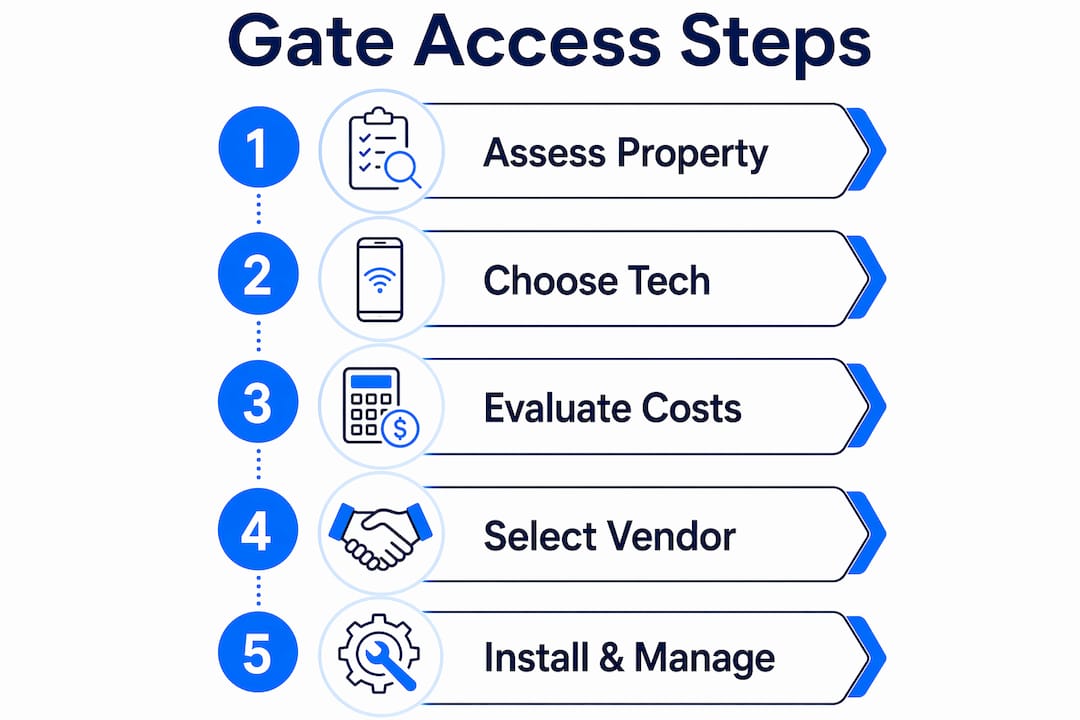
How to select a gate access control system: start with your property and users
The most common mistake homeowners make is shopping for technology before understanding their own property. Your gate system has to fit your specific situation, not a generic checklist.
Start by defining your property type and size. A single-family home in Beverly Hills with one driveway gate has very different needs than a multi-unit community in Pasadena with resident, guest, and delivery traffic. Traffic volume directly shapes which technology will hold up over time. A keypad that works fine for a family of four will frustrate a 50-unit building where residents, guests, and service providers all need access on different schedules.
Next, clarify your security priorities versus your convenience needs. These two goals often pull in opposite directions. A high-security gate with multi-factor authentication slows entry. A simple key fob speeds things up but creates risk if a fob is lost. The right balance depends on your neighborhood, your property value, and how often you have visitors or contractors on-site.
Connectivity and infrastructure matter more than most homeowners expect. Properties in older neighborhoods like Brentwood or West Hollywood may lack conduit runs or reliable Wi-Fi at the gate location. Partnering with professional integrators early helps manage the complexity of balancing location, traffic volume, and desired security levels. Knowing your infrastructure limits before you choose a system prevents expensive surprises later.
Finally, think about scalability. Your needs today may not match your needs in five years. A system that cannot add users, integrate with cameras, or expand to a second gate will cost you more in the long run than a slightly more capable system purchased upfront.
Key factors to assess before choosing:
- Property type: single-family home, gated community, or mixed-use
- Daily traffic volume and user types (residents, guests, delivery drivers, contractors)
- Security priority level versus convenience requirements
- Existing power and network infrastructure at the gate location
- Future expansion plans, including additional gates or camera integration
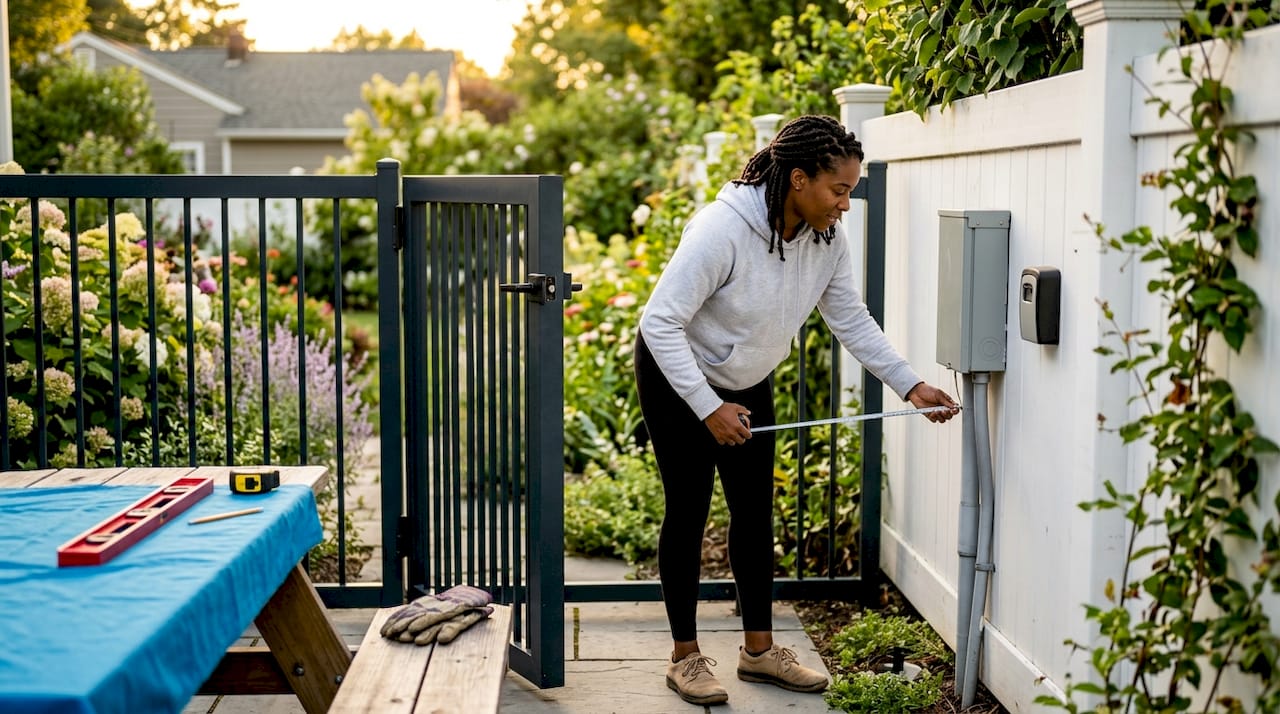
Pro Tip: Walk your gate location before contacting any vendor. Note the distance from your electrical panel, the presence of conduit, and your Wi-Fi signal strength. This 10-minute audit will save hours of back-and-forth with installers.
What are the main gate access technologies?
Four main gate access technologies exist: keypad entry, remote key fobs, proximity cards and tags, and app-based or GSM systems. Each has a distinct security and convenience profile.
Keypad and PIN systems are the most affordable entry point. They require no physical credential, so there is nothing to lose or replace. The downside is that PINs get shared. A code given to a contractor in january can circulate well beyond that job. For low-traffic residential gates in areas like Encino or Sherman Oaks, keypads work well when codes are changed regularly.
Remote key fobs offer fast, one-touch entry and work without network connectivity. They are popular for driveway gates in Bel Air and Santa Monica because they feel effortless. The risk is loss or theft. A lost fob requires deactivation, which is easy on a cloud-based system but impossible on older standalone controllers.
Proximity cards and tags are common in multi-unit properties. They allow fast entry and easy user management. Adding or removing a card takes seconds in the admin panel. The tradeoff is the cost of issuing and replacing physical cards over time.
App-based and GSM systems give you remote control from anywhere. You can open your gate from your phone, grant temporary access to a guest, and review entry logs in real time. Cloud-based credential management is especially valuable for properties with high user turnover, since access changes happen remotely without on-site visits. The dependency on network connectivity is the main vulnerability. A power outage or internet disruption can lock out users if the system lacks an offline fallback.
Video intercom integration adds a visual layer to any of the above technologies. You see who is at the gate before granting access. For luxury homes in Beverly Hills or Brentwood, video intercoms are now standard. They also create an audit trail of every entry attempt.
Multi-factor authentication combines two or more methods, such as a PIN plus a mobile app confirmation. This is the highest-security option and suits properties where unauthorized entry carries serious risk.
| Technology Best for Key risk | ||
| Keypad/PIN | Low-traffic residential | Code sharing |
| Key fob | Single-family driveways | Loss or theft |
| Proximity card | Multi-unit communities | Physical card costs |
| App/GSM | Remote management needs | Network dependency |
| Video intercom | High-security or luxury homes | Higher upfront cost |
Pro Tip: For most Los Angeles homeowners, an app-based system with a video intercom gives the best combination of remote control and visual verification. Add a keypad as a backup for power outage scenarios.
How to evaluate hardware, installation, and long-term costs
Gate hardware and installation costs are where budgets most often go wrong. The technology choice is only part of the equation. The physical gate structure, the operator, and the infrastructure underneath it all drive the final number.
Gate operators come in swing and slide configurations, each with a rated duty cycle. A residential-grade operator handles a set number of cycles per day. A busy rental property or a community gate in Culver City or Glendale needs a commercial-grade operator with a higher duty cycle. Buying a residential operator for a high-traffic gate leads to premature failure and replacement costs.
Power and network infrastructure planning is a major cost driver that must be addressed before installation starts. Trenching, conduit runs, and electrical panel upgrades can add thousands of dollars to a project. Getting this scoped in advance prevents the most common and expensive form of rework in gate installations.
A detailed vendor quote should itemize every cost: gate fabrication, operator warranty and duty cycle rating, controller and software fees, credential expenses, intercom costs, civil work, permit fees, and the maintenance plan. Quotes that bundle these items together often hide ongoing fees. Vendors frequently obscure subscription costs for cloud services and credential management inside a single monthly figure. Ask for line-item pricing on every recurring cost before signing.
Maintenance and warranty terms define your long-term reliability. A system with a one-year parts warranty and no service plan will cost more over five years than a system with a three-year warranty and an annual maintenance visit included. Offline operation policy matters too. Know exactly what happens to your gate if the internet goes down or the power fails. Backup power options, such as battery backup units, are worth the added cost for any property where gate failure creates a safety or access problem.
Pro Tip: Ask every vendor: “What happens to my gate during a power outage?” If they cannot answer clearly, that is a red flag. A reliable system always has a documented offline fallback.
Many gate upgrades do not require full replacement. Replacing the operator and access control module on an existing gate structure can modernize a system at a fraction of the cost of a full rebuild. This retrofit approach is common in older Los Angeles neighborhoods where the gate structure itself is still sound.
What steps should you follow to select a vendor and implement your system?
A structured vendor selection process protects you from overpaying and from choosing a system that does not fit your property.
- Define your requirements in writing. List your property type, daily traffic volume, technology preferences, infrastructure constraints, and budget range before contacting any vendor. This document becomes your evaluation standard.
- Get at least three itemized quotes. Compare quotes line by line, not total price. A lower total quote with hidden subscription fees often costs more over three years than a higher upfront quote with transparent ongoing costs.
- Verify permits and inspection requirements. Los Angeles requires permits for gate automation in most jurisdictions. Requirements vary by city, so a project in Pasadena follows different rules than one in West Hollywood. Local certified installers provide better compliance with Los Angeles permits and regulations, which simplifies inspections and avoids stop-work orders.
- Confirm integration compatibility. If you have an existing alarm system, cameras, or a smart home platform, verify that the gate system integrates with them before purchase. Integrated hardware and software from manufacturers offering centralized control improves long-term management and makes expansion far easier.
- Plan user enrollment and credential management. Decide how you will issue credentials, how you will revoke access when someone moves out or a contractor finishes a job, and who manages the admin panel day to day. For properties with frequent turnover, cloud-based management is not optional. It is the only practical approach.
- Test the system before final sign-off. Run every access method, test the video intercom, trigger the offline fallback, and confirm the entry log records correctly. Do not accept a completed installation without a full functional test in your presence.
For smart home integration in luxury Los Angeles properties, confirm that the gate system supports your existing platform, whether that is Apple HomeKit, Google Home, or a dedicated security panel, before finalizing your vendor choice.
Key Takeaways
Selecting the right gate access control system requires matching technology, hardware, and management approach to your specific property before evaluating any vendor quote.
| Point Details | |
| Assess property and users first | Define traffic volume, user types, and infrastructure before choosing any technology. |
| Match technology to your needs | App-based systems with video intercoms offer the best balance of security and remote control for most LA homeowners. |
| Demand itemized quotes | Line-item pricing reveals hidden subscription and credential fees that inflate total cost of ownership. |
| Plan power and network early | Infrastructure gaps are the leading cause of costly rework during gate system installation. |
| Use local certified installers | Los Angeles permit requirements vary by city; local installers navigate compliance faster and more reliably. |
What I’ve learned about gate access decisions that most guides skip
The guides that focus purely on technology specs miss the most important part of this decision: long-term management. A gate system is not a one-time purchase. It is an ongoing operational commitment. The true value of an access control system comes from how it is designed, integrated with other security systems, and maintained over time, not from the hardware alone.
I have seen homeowners in Bel Air spend significant money on high-end gate hardware, then struggle for years because the software required a separate login, the cameras did not talk to the intercom, and the installer was out of state. The technology was excellent. The system design was poor.
The single most underrated factor in choosing gate access technology is the admin experience. You will manage credentials, review logs, and troubleshoot issues far more often than you will admire the gate hardware. A system that is difficult to administer will either be mismanaged or abandoned. Choose a platform where adding a user, revoking a credential, or pulling an entry log takes under two minutes.
For Los Angeles homeowners specifically, the permit process is where projects stall most often. City of Los Angeles, Beverly Hills, and Santa Monica each have their own requirements for automated gate installations. Starting the permit process before finalizing your vendor choice gives you a realistic timeline and prevents the frustration of a completed installation sitting idle while paperwork catches up.
My recommendation: hire a local integrator for the design consultation before you buy anything. That single conversation will clarify your infrastructure requirements, your permit timeline, and your realistic budget. It costs less than one round of rework.
— Moin
Fence-gate-estimator: your local partner for gate access in Los Angeles
Choosing the right gate access system is only half the work. Getting it installed correctly, on budget, and in compliance with Los Angeles permit requirements is where most projects succeed or fail.
Fence-gate-estimator specializes in gate automation and access control for residential properties across Los Angeles, from driveway gates in Beverly Hills to pedestrian gates in Santa Monica. The platform provides instant, itemized cost estimates based on your property size, gate type, and automation preferences, using current local labor and material rates. You get a transparent breakdown before any contractor sets foot on your property. For custom fencing paired with gate access, the custom fencing estimator covers wrought iron, steel, and aluminum options with full automation integration. Get your estimate today and go into vendor conversations with real numbers in hand.