How to Negotiate Fence Contractor Pricing in Los Angeles
By BabyLoveGrowth
Negotiating fence contractor pricing is the process of securing a fair installation cost by comparing detailed quotes, understanding what drives price variation, and using contract terms to your advantage. In Los Angeles, fence installation costs vary widely based on materials, terrain, permit requirements, and gate specifications. Homeowners who enter negotiations with itemized quotes and knowledge of local market rates consistently pay less without sacrificing quality. The strategies in this article apply whether you are fencing a Brentwood estate, a Sherman Oaks backyard, or a Pasadena rental property.
How many fence contractor quotes should you get?
The industry standard for residential fence projects is 3 to 5 quotes. Quote variation of 30% to 50% is normal for identical work in the same Los Angeles neighborhood. That spread means a project quoted at $8,000 by one contractor could come in at $5,600 from another for the same linear footage and material grade.
Collecting multiple quotes does more than reveal the lowest price. It shows you the market rate for your specific project, which is the foundation of any effective negotiation. A quote that sits far below the others is not automatically a bargain. It may exclude old fence removal, permit fees, or concrete for post footings.
When you receive each quote, compare it line by line across these categories:
- Labor cost per linear foot (installation, post setting, concrete)
- Material grade and brand (pressure-treated wood, wrought iron, aluminum, steel)
- Site preparation (grading, root removal, rocky soil handling)
- Gate hardware and automation features
- Debris removal and haul-away
- Permit and inspection fees specific to Los Angeles or your city
Pro Tip: Ask each contractor to provide a fully itemized quote in writing, not a single lump-sum number. A line-item breakdown lets you compare scope accurately and identify exactly where prices differ.
What hidden costs should you watch for in fence contractor quotes?
Hidden costs are the most common reason fence projects exceed budget. Extras like fence removal, permits, terrain prep, and gate upgrades add 10% to 40% to base installation quotes. That range is wide because Los Angeles properties vary so much, from flat lots in Culver City to hillside terrain in Bel Air.
The most frequent add-ons that contractors omit from initial quotes include:
- Old fence removal and disposal: Hauling away an existing wood or chain-link fence can cost $300 to $800 depending on length and material.
- Permit and inspection fees: Los Angeles and surrounding cities like Glendale, Burbank, and Pasadena each have their own permit schedules. Fees vary by project scope and are not always included in contractor quotes.
- Terrain and site prep: Rocky soil, tree roots, and underground utilities require extra labor and equipment. Honest contractors include contingency costs upfront; low-ball bids often leave these out entirely.
- Gate hardware and design upgrades: Gate pricing adds $500 to $6,000 or more depending on hardware quality, gate size, and whether automation is included. A sliding driveway gate with a motor and keypad costs significantly more than a basic swing gate.
- Change orders mid-project: Any scope change after signing can trigger additional charges if not addressed in the original contract.
| Hidden Cost Item Typical Impact How to Address It | ||
| Old fence removal | $300–$800 | Confirm inclusion in writing |
| Permit fees (Los Angeles) | Varies by city and scope | Ask contractor to itemize or pull permit separately |
| Terrain and site prep | Significant on hillside lots | Request contingency line item in quote |
| Gate hardware upgrades | $500–$6,000+ | Get gate specs and hardware grade in writing |
| Debris haul-away | Often excluded | Confirm disposal is included before signing |
Understanding how terrain impacts fence costs in Los Angeles is particularly useful before you call your first contractor.
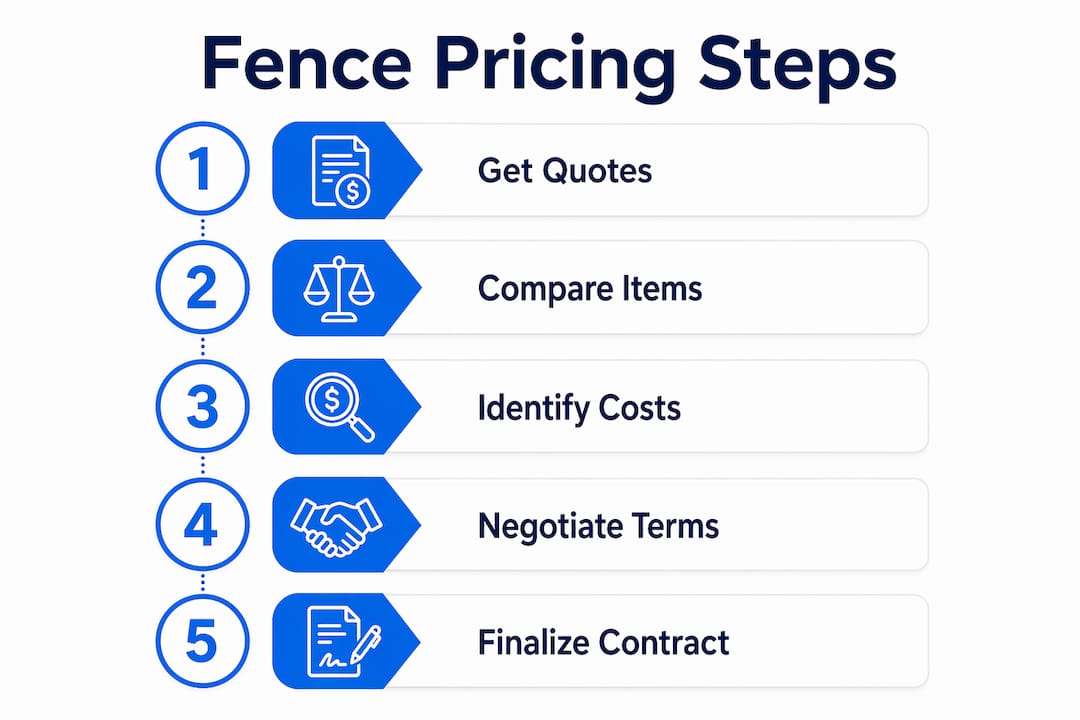
How to compare fence quotes fairly without sacrificing quality
The most common mistake homeowners make is choosing the lowest total price without comparing what that price actually includes. Successful negotiation compares scope elements like post depth, concrete type, material grade, and warranty coverage, not just the bottom line. A quote that looks $1,500 cheaper may use shallower post footings or lower-grade aluminum that corrodes within five years.
Use this numbered checklist when reviewing each quote side by side:
- Post depth and concrete: Standard residential posts in Los Angeles should be set at least 24 inches deep with concrete. Shallower posts fail faster, especially in expansive clay soils common in the San Fernando Valley.
- Material grade: Confirm the specific grade of steel, aluminum, or wood specified. “Aluminum fence” covers a wide range of thicknesses and coatings.
- Warranty coverage: Ask for the warranty in writing. Workmanship warranties of one to two years are standard; material warranties vary by product.
- Timeline and payment schedule: A realistic timeline protects you from contractors who overcommit. Confirm start date, estimated completion, and milestone-based payment triggers.
- Change order policy: Require that any scope change carries written homeowner approval before work proceeds. Written change order approvals prevent surprise charges that inflate final invoices.
Pro Tip: If a quote is significantly below the others, ask the contractor to walk you through exactly what is and is not included. A good contractor will welcome the question. One who deflects or gets defensive is showing you something important.
A quote that includes contingencies for site conditions is a sign of an experienced contractor, not an inflated price. Contractors who include site condition buffers upfront are less likely to hit you with costly change orders later.

What contractor pricing strategies improve negotiation outcomes?
Effective negotiation rarely comes from demanding a lower number. Contractors respond better to flexible approaches like timing flexibility and payment options than to hard discount requests. Understanding this shifts your negotiation from confrontational to collaborative, which produces better results.
Practical strategies that work in the Los Angeles market include:
- Schedule during off-peak months: Fence contractors in Los Angeles tend to be busiest in spring and early summer. Scheduling work in late fall or winter, particularly in november or january, often unlocks better pricing or faster timelines because contractors have more availability.
- Bundle multiple projects: If you need a driveway gate, a side yard fence, and a pedestrian gate, negotiate them as a single contract. Contractors price bundled work more favorably because it reduces mobilization costs and keeps crews on-site longer.
- Offer preferred payment terms: Paying by check or bank transfer rather than credit card saves contractors processing fees. That saving is sometimes passed back to you as a small discount or a value-add.
- Negotiate value-adds instead of price cuts: Ask for extras like a free post-installation inspection, a fence cleaning service included in the contract, or an upgrade to a higher-grade gate latch at no extra cost. Contractors are more willing to add value than to cut margin.
- Use your competing quotes as leverage: Presenting a lower competing quote and asking if the contractor can match the scope at a similar price is a legitimate and effective tactic. Frame it as wanting to work with them, not as a threat.
What payment terms and contract conditions protect your budget?
Payment structure is where many homeowners lose money. The industry standard deposit is 25% to 35% upfront, with the remaining balance due after project completion and your inspection. Any contractor requesting 50% or more upfront, or demanding full payment before work begins, is outside normal professional practice.
Contract conditions that protect you include:
- Written, itemized scope: Every material, labor task, and included service must appear in the contract. Verbal agreements do not hold up when disputes arise.
- No cash-only payment terms: Cash-only arrangements often mean no paper trail and no recourse if work is incomplete or substandard.
- Milestone-based payment triggers: Tie payments to completed phases, such as post setting, panel installation, and gate installation, rather than calendar dates.
- Written change order requirement: No scope change proceeds without your written approval and a revised price. This single clause prevents the majority of budget overruns on fence projects.
- Final inspection before last payment: Walk the completed fence with the contractor before releasing the final payment. Test gate operation, check post stability, and confirm all agreed materials were used. For automated gates, test the motor, sensors, and remote operation. The smart gate installation workflow used by experienced contractors in Beverly Hills and Santa Monica includes a full operational test before sign-off.
Paying the final balance only after a satisfactory inspection gives you real leverage to ensure the work meets the agreed standard.
Key takeaways
Homeowners who collect 3 to 5 itemized quotes, identify hidden costs upfront, and use timing and bundling as negotiation tools consistently secure better fence installation pricing in Los Angeles without compromising quality.
| Point Details | |
| Get 3 to 5 quotes | Quote variation of 30% to 50% is normal; multiple bids reveal the true market rate. |
| Watch for hidden costs | Permits, terrain prep, removal, and gate hardware can add 10% to 40% to base quotes. |
| Compare scope, not just price | Post depth, material grade, and warranty coverage determine long-term value. |
| Negotiate flexibility, not discounts | Off-peak scheduling, bundling, and payment terms produce better outcomes than demanding price cuts. |
| Protect yourself with contract terms | A 25% to 35% deposit, written change orders, and final inspection before payment are non-negotiable. |
What I have learned negotiating fence pricing in Los Angeles
After working with homeowners across neighborhoods from Encino to West Hollywood, the pattern I see most often is this: the homeowner who pays too much is almost never the one who asked too many questions. The one who overpays is the one who accepted a lump-sum quote and signed quickly.
Los Angeles has specific conditions that affect fence pricing in ways that homeowners in other markets do not face. Hillside lots in Bel Air or Studio City require deeper posts and sometimes engineered footings. Permit requirements differ between unincorporated LA County and cities like Burbank or Pasadena. A contractor who does not ask about your terrain or your city’s permit process before quoting is either inexperienced or cutting corners.
My honest advice is to slow down the process deliberately. Request itemized quotes from at least four contractors. Give yourself a week to compare them. Research each contractor’s license status through the California Contractors State License Board before signing anything. A licensed, insured contractor with verifiable reviews is worth paying slightly more for.
The negotiation tactic I find most effective is not about price at all. It is about showing the contractor you are an informed buyer. When you ask specific questions about post depth, concrete mix, material grade, and change order policy, contractors take you more seriously. They are less likely to pad the quote and more likely to offer genuine value-adds to earn your business.
Patience and preparation consistently outperform aggressive bargaining. Know your numbers before you pick up the phone.
— Moin
How Fence-gate-estimator helps you negotiate with confidence
Before you call a single contractor, knowing your realistic cost range puts you in a far stronger position at the negotiating table. Fence-gate-estimator is built specifically for Los Angeles homeowners who want that clarity before committing to anything.
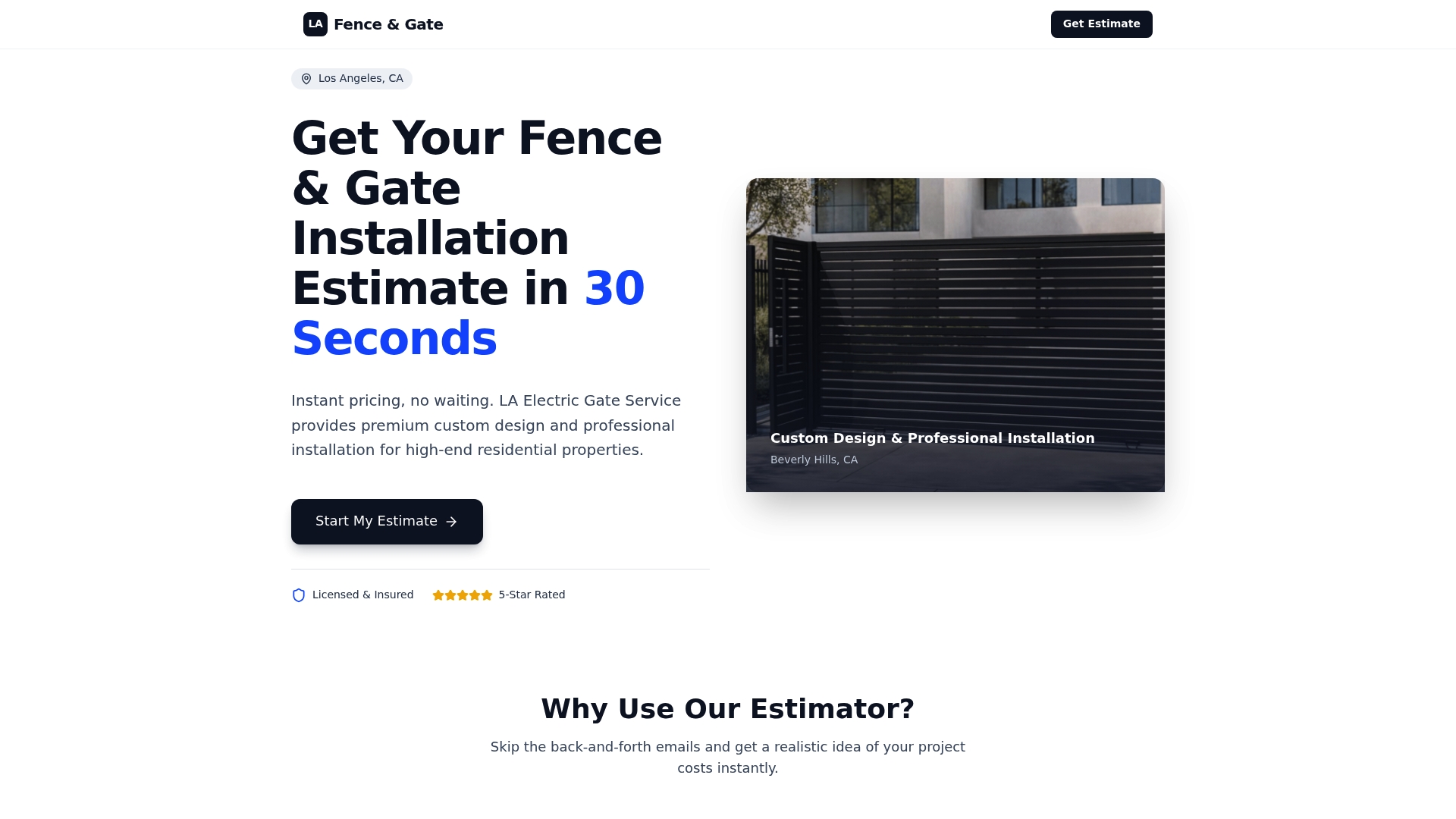
The fence and gate cost calculator generates itemized estimates based on your property size, material preferences, terrain type, and gate specifications, using current Los Angeles labor and material rates. You get a realistic budget range that reflects what projects like yours actually cost in your neighborhood, whether that is a wrought iron fence in Beverly Hills or an aluminum panel fence in Santa Monica. Use that estimate to evaluate every contractor quote you receive and spot the outliers immediately. For homeowners considering automated gates or custom fencing services, the platform also breaks down those costs by component so nothing catches you off guard.